Practice subtraction Addition Worksheets for Ages 7-8
5 filtered results
-
From - To
Welcome to our Practice Subtraction and Addition Worksheets page for ages 7-8! These engaging worksheets are designed to help young learners strengthen their math skills through interactive and fun activities. With a variety of subtraction and addition problems, your child will build confidence while mastering essential concepts. Our resources cater to different learning styles, making it easy for parents and educators to support young mathematicians effectively. Download and print our carefully crafted worksheets to provide your child with ample practice opportunities, allowing them to understand and enjoy math while developing a strong foundation for future success. Start your child's math journey today!
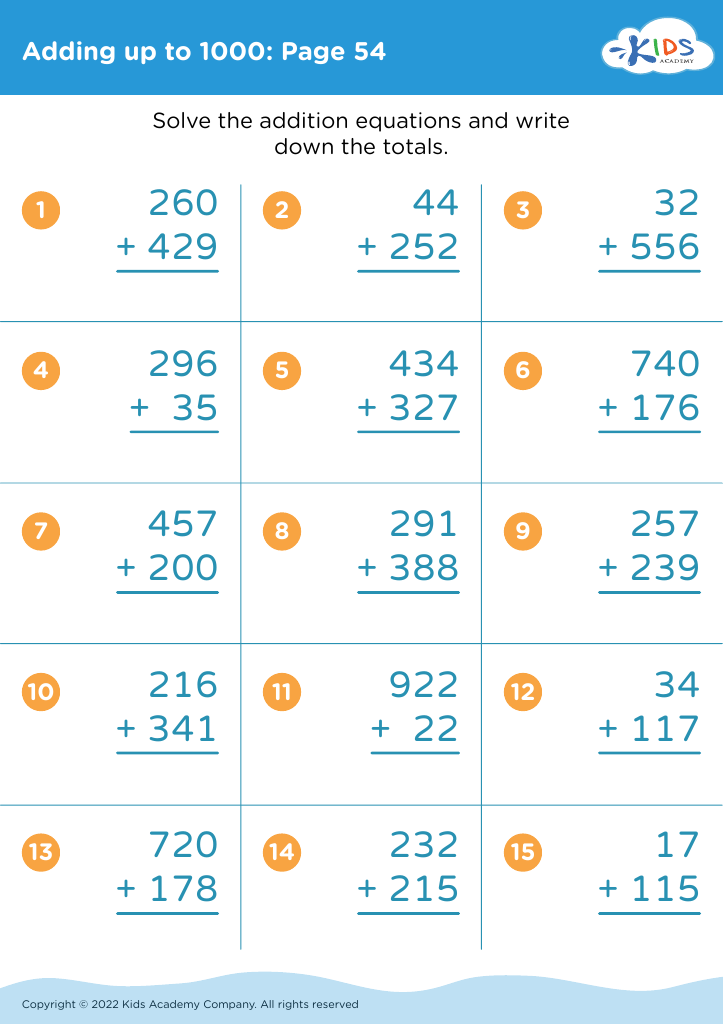
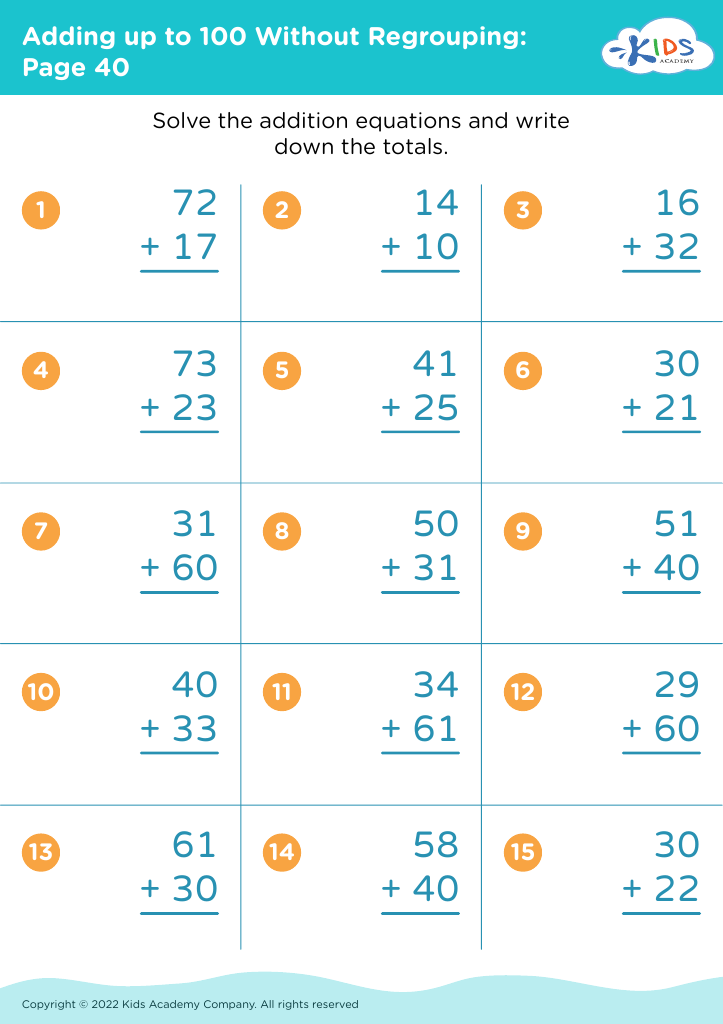
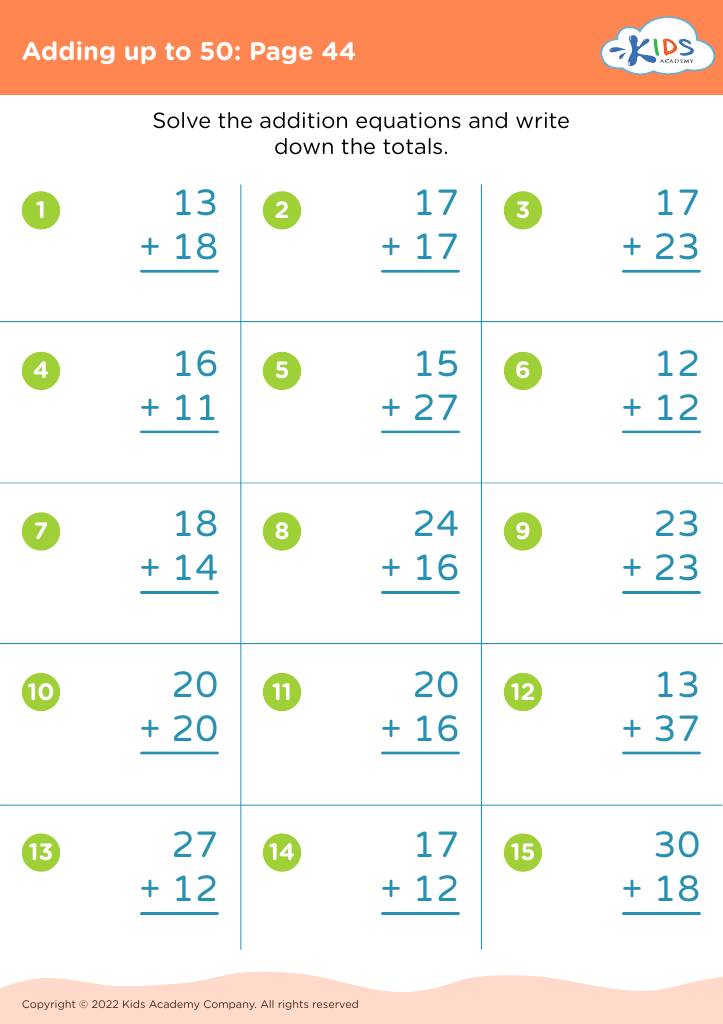
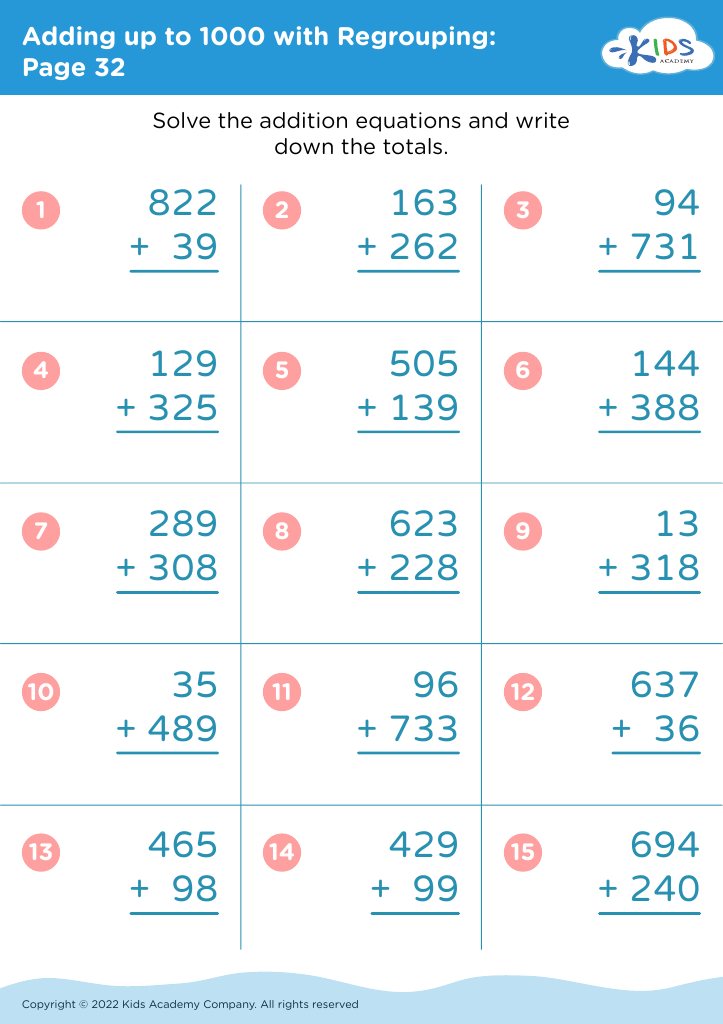
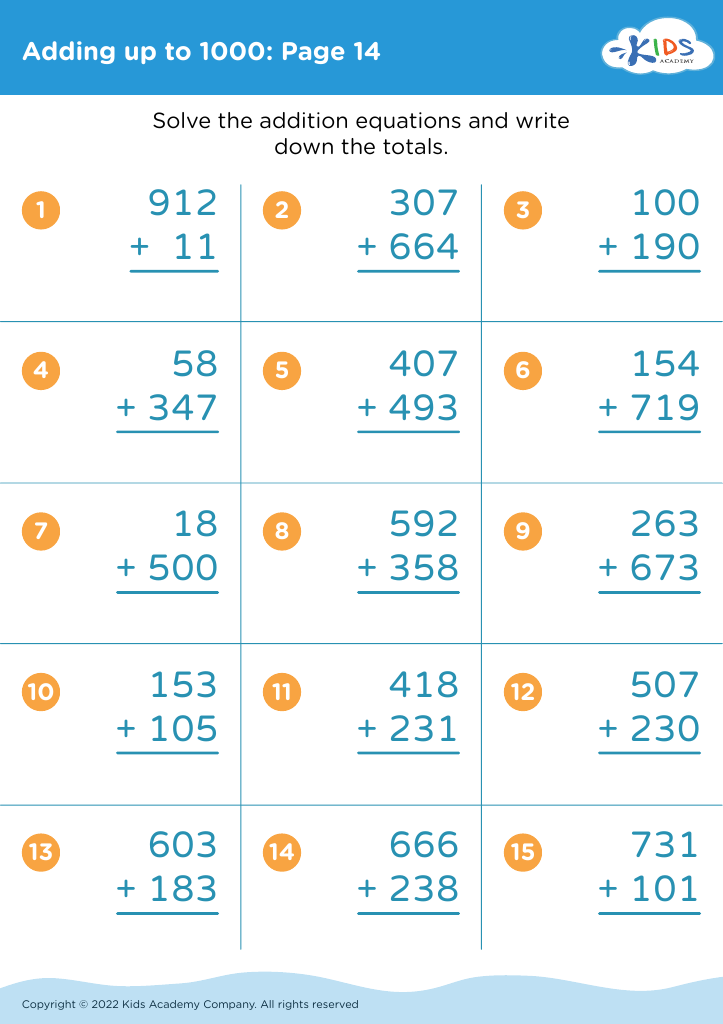








Practicing addition and subtraction for children aged 7-8 is crucial for several reasons. Firstly, these foundational math skills form the building blocks for more complex topics in mathematics, such as multiplication and division, which students will encounter later. A solid grasp of addition and subtraction helps them develop number sense and an intuitive understanding of how numbers interact.
Secondly, practicing these operations enhances critical thinking and problem-solving skills. Engaging in math exercises encourages children to approach problems logically and strategically, teaching them how to break down complex situations into manageable parts.
Moreover, consistent practice helps build confidence. Mastery in these basic skills allows children to participate actively in class discussions, complete homework with ease, and enjoy math activities without hesitation.
In a collaborative environment, where parents and teachers actively participate in a child's math practice, relationships are strengthened. It creates an open line of communication about learning, and allows parents to understand their child’s educational journey better.
Ultimately, nurturing a solid mathematical foundation through practical exercises supports academic success and long-term love for learning, which persists beyond the classroom and into everyday life. For holistic growing and learning, parents and teachers should prioritize these fundamental skills.








