Recognizing numbers Addition Worksheets for Ages 7-8
3 filtered results
-
From - To
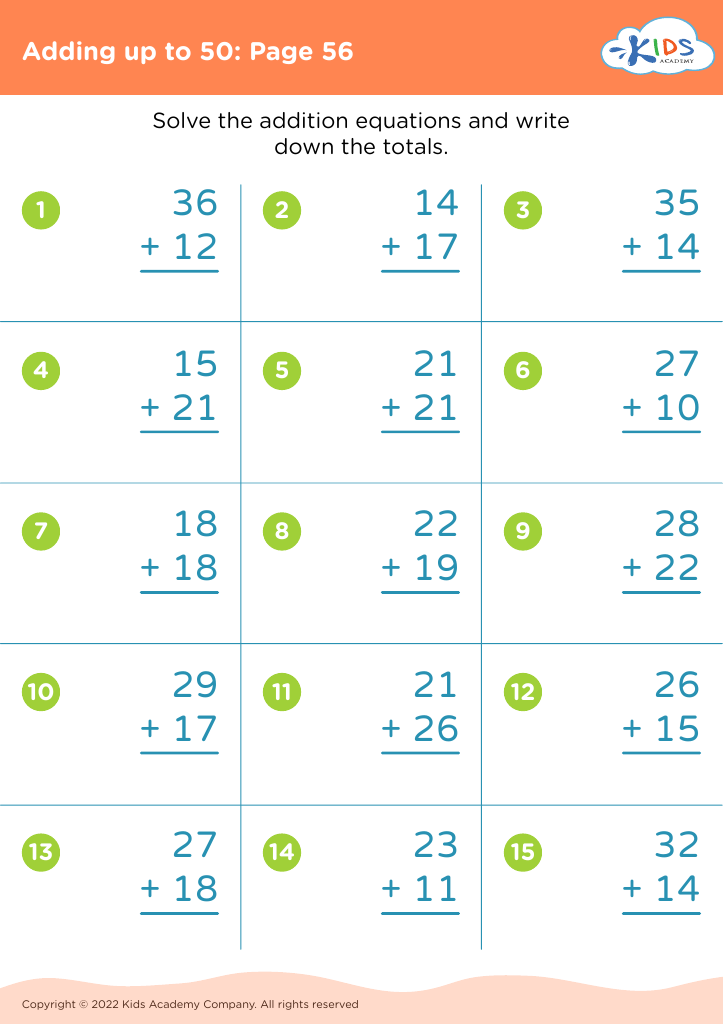
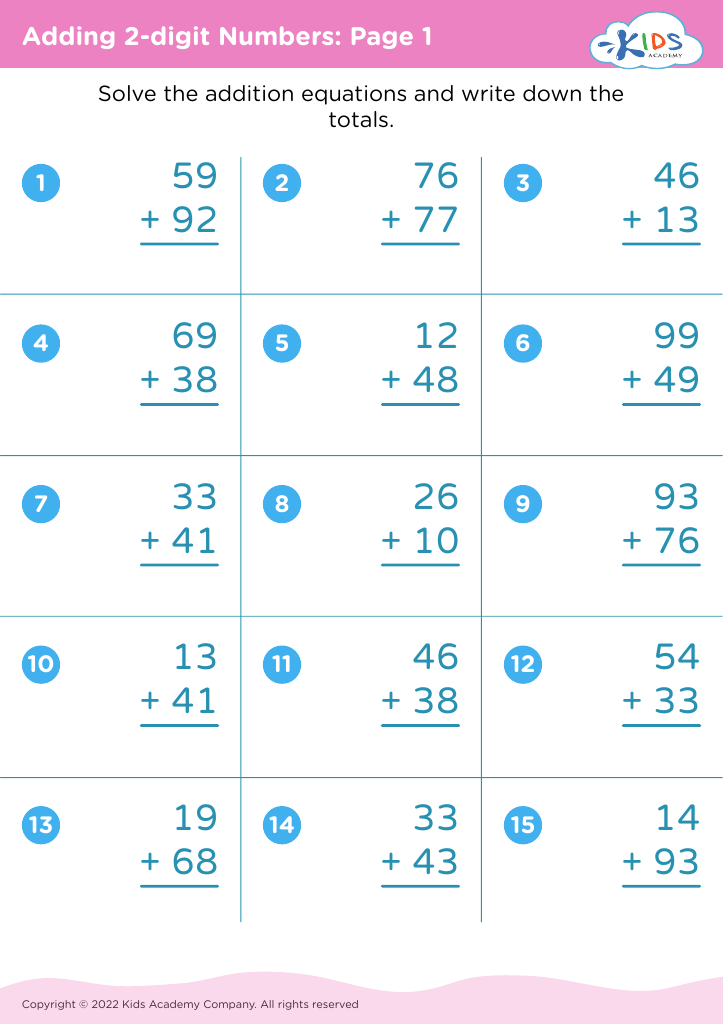
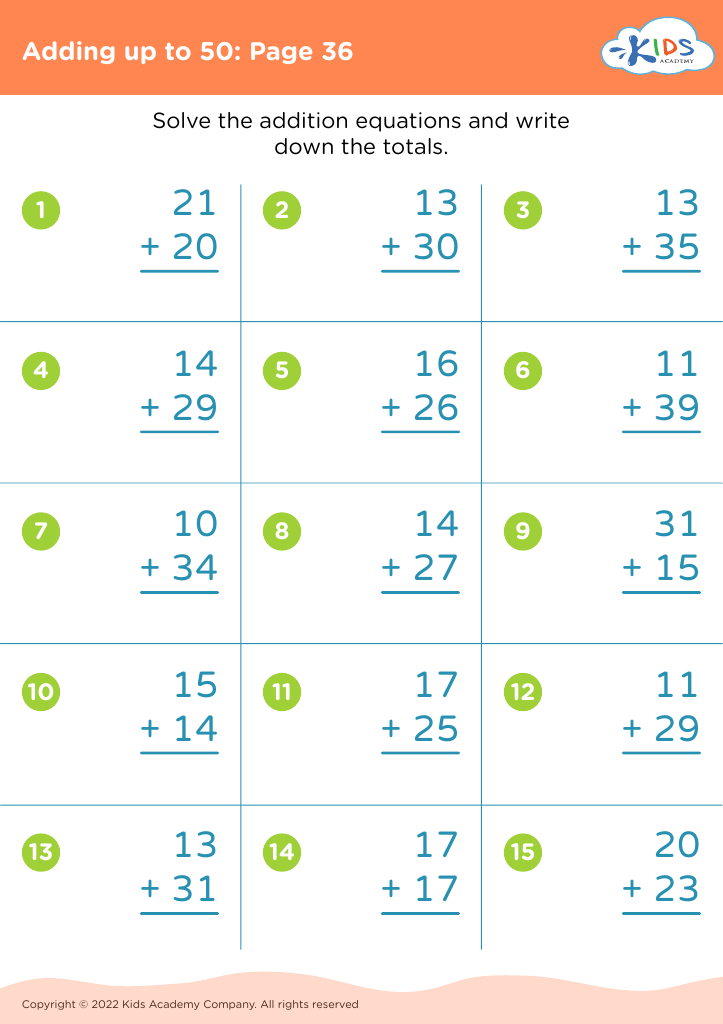
Welcome to our "Recognizing Numbers Addition Worksheets" for children aged 7-8! These engaging worksheets are designed to enhance your child's mathematical skills through fun and interactive activities. With a focus on identifying numbers and mastering addition, each worksheet provides a variety of exercises that encourage young learners to practice number recognition while solving addition problems. Perfect for at-home learning or classroom use, these worksheets aim to build confidence and pave the way for mastery in essential math concepts. Explore our collection and help your child shine in their math journey today!





.jpg)


Recognizing numbers and understanding addition are foundational skills for children aged 7-8, and they play a crucial role in their academic development. At this age, children transition from basic number recognition to applying it in more complex mathematical concepts. When parents and teachers prioritize these skills, they lay the groundwork for future mathematical learning and problem-solving abilities.
Recognizing numbers helps children develop number sense, enabling them to see patterns, understand quantities, and make connections between numbers and real-world situations. This competency also boosts their confidence as they tackle more challenging math concepts.
Furthermore, mastering addition fosters logical reasoning and critical thinking. Children learn not only to add in isolation but also to use addition in daily activities, from counting change to organizing items in groups. This skill is fundamental in teaching them the importance of mathematics beyond the classroom.
Additionally, encouraging recognition of numbers and addition promotes a growth mindset. Celebrating small successes encourages resilience and a positive attitude toward learning. By supporting children's mathematical journeys, parents and teachers play an essential role in shaping capable, confident, and competent learners ready to take on more complex challenges in the years to come.








