Sorting skills Addition Worksheets for Ages 7-8
3 filtered results
-
From - To
Enhance your child's addition skills with our engaging Sorting Skills Addition Worksheets, designed specifically for children aged 7-8. These worksheets help young learners master the concept of sorting while reinforcing their addition abilities. Through fun and interactive activities, kids will sort numbers, objects, and math problems, fostering critical thinking and problem-solving skills. The colorful graphics and age-appropriate challenges make learning enjoyable and effective. Ideal for home or classroom use, these resources provide a solid foundation in math while aiding in the development of essential sorting skills. Begin your child's journey to mathematical proficiency today with our comprehensive worksheets!
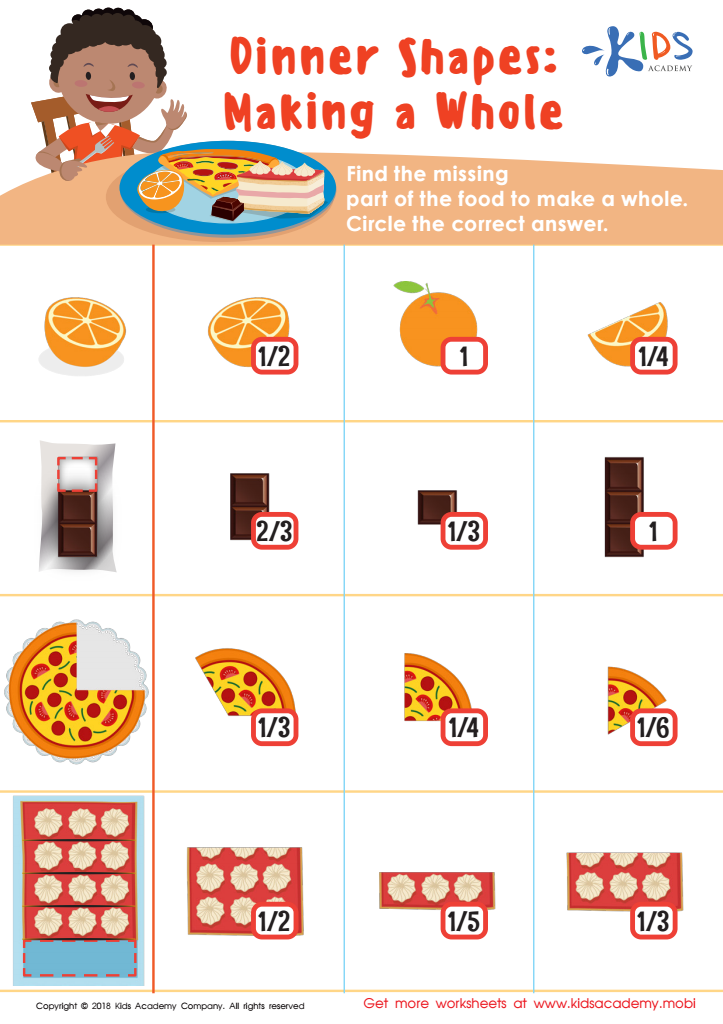
Dinner Shapes: Making a Whole Worksheet
 Assign to My Students
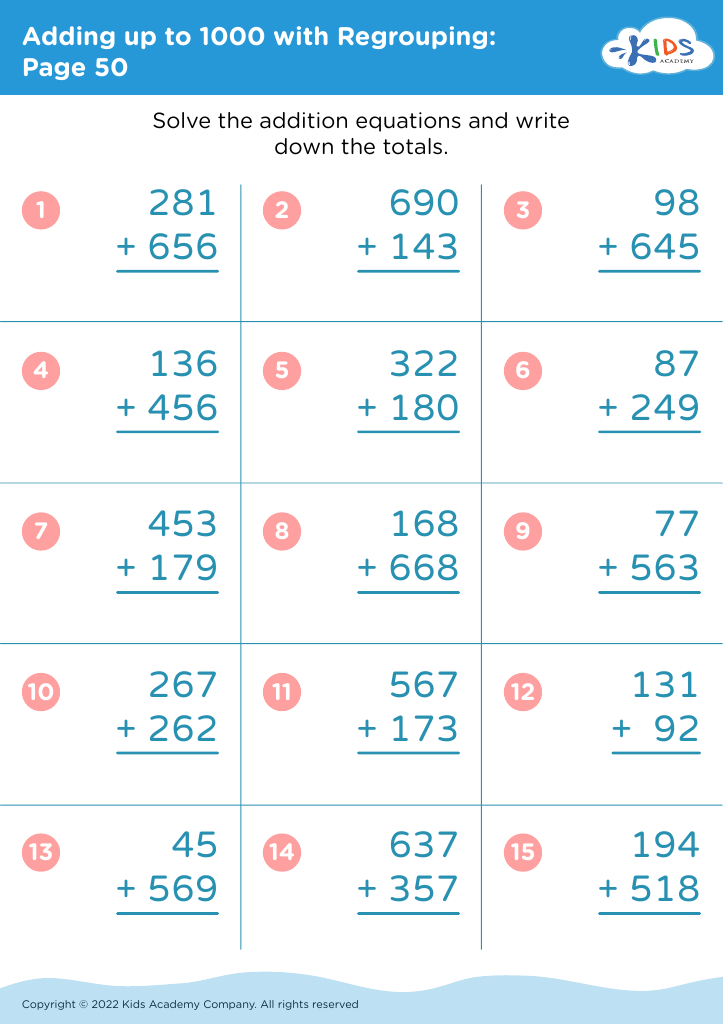
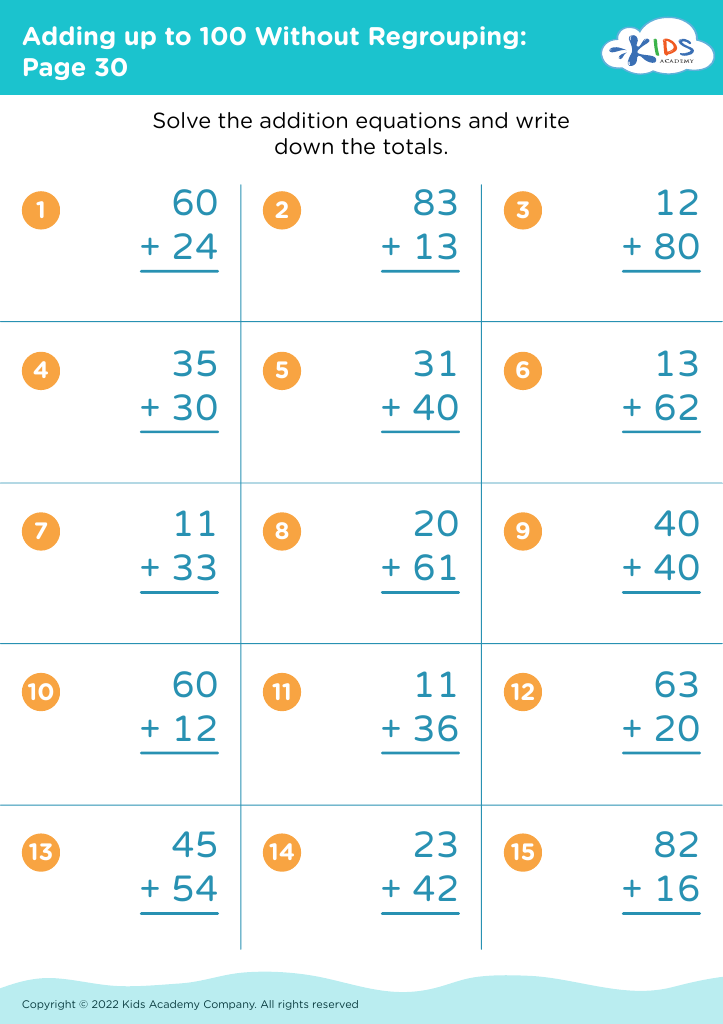


.jpg)





Sorting skills are vital for 7- to 8-year-olds as they form the foundation for various mathematical concepts, particularly in addition. At this age, children begin to grasp abstract thinking and engage in more complex problem-solving. Sorting items based on specific attributes—such as size, color, or shape—helps children develop critical thinking skills and improves their ability to categorize information. This skill aids in group activities, language development, and understanding mathematical operations.
When it comes to addition, sorting fosters an understanding of numerical relationships. For example, arranging numbers in ascending or descending order facilitates easier addition, as children can quickly identify pairs or groupings that create sums. By developing sorting skills, children learn to recognize patterns, comprehend place values, and enhance their ability to analyze data.
Moreover, these skills contribute to their mathematical fluency, enabling them to solve problems more efficiently. For teachers and parents, nurturing sorting abilities can lead to greater confidence in students, reduce math anxiety, and lay the groundwork for future academic success. Ultimately, emphasizing sorting skills supports children in becoming competent, capable mathematicians who can tackle increasingly challenging concepts as they progress in their education.








