Understand sequences Addition Worksheets for Ages 7-8
5 filtered results
-
From - To
Explore our "Understand Sequences Addition Worksheets" designed specifically for children ages 7-8. These engaging resources help young learners develop essential addition skills by recognizing patterns and sequences through fun exercises. Our worksheets encourage critical thinking as kids practice solving sequence problems, enhancing their mathematical confidence. With a variety of colorful designs and interactive activities, your child will be motivated to learn and improve their addition abilities. Ideal for both classroom and home settings, these worksheets make learning math enjoyable while laying a strong foundation for future success in mathematics. Start your child's journey to mastering addition sequences today!
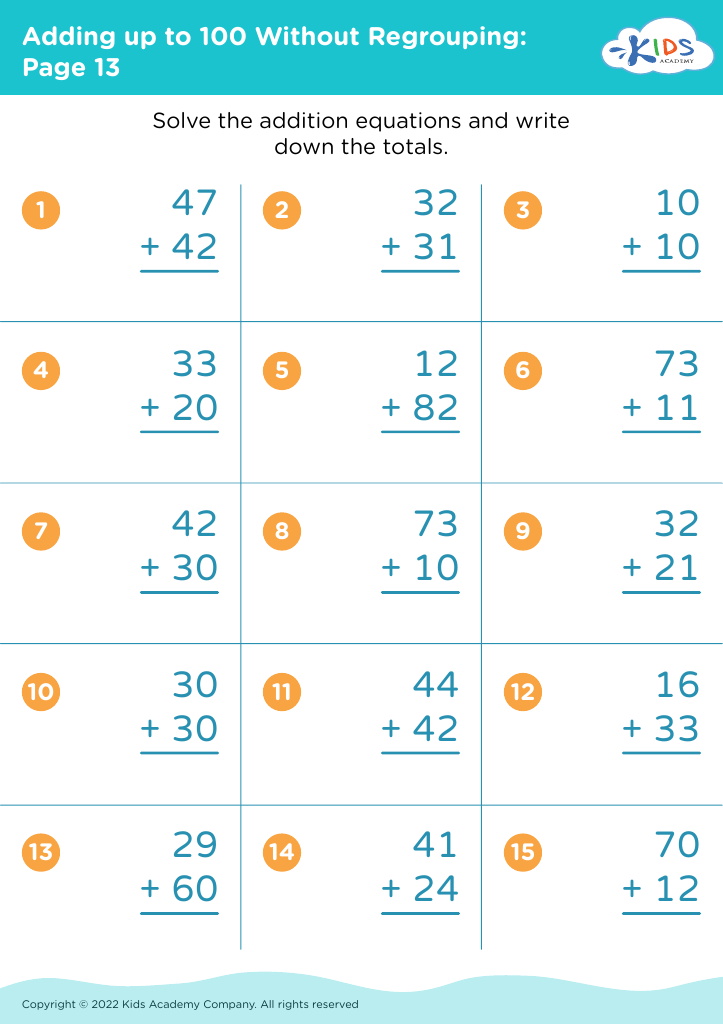
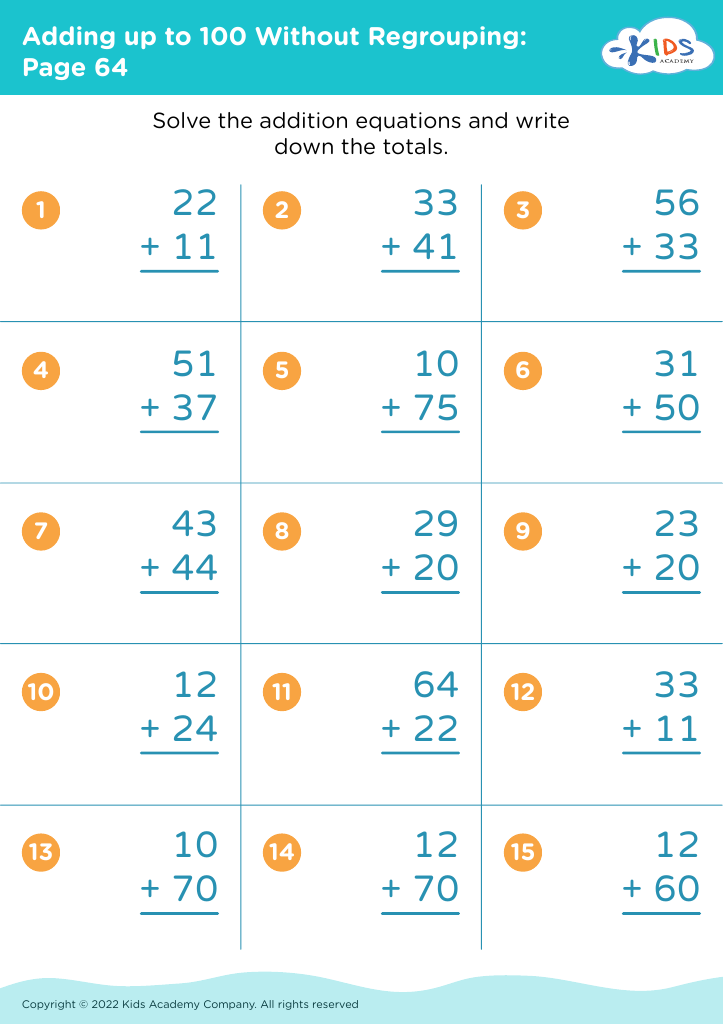
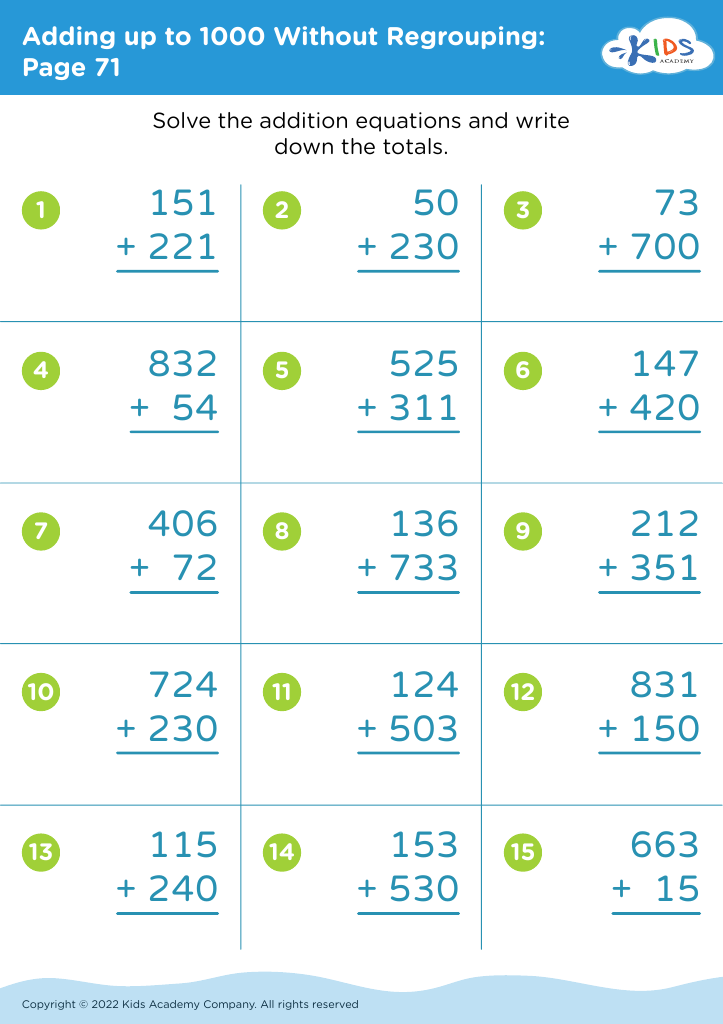
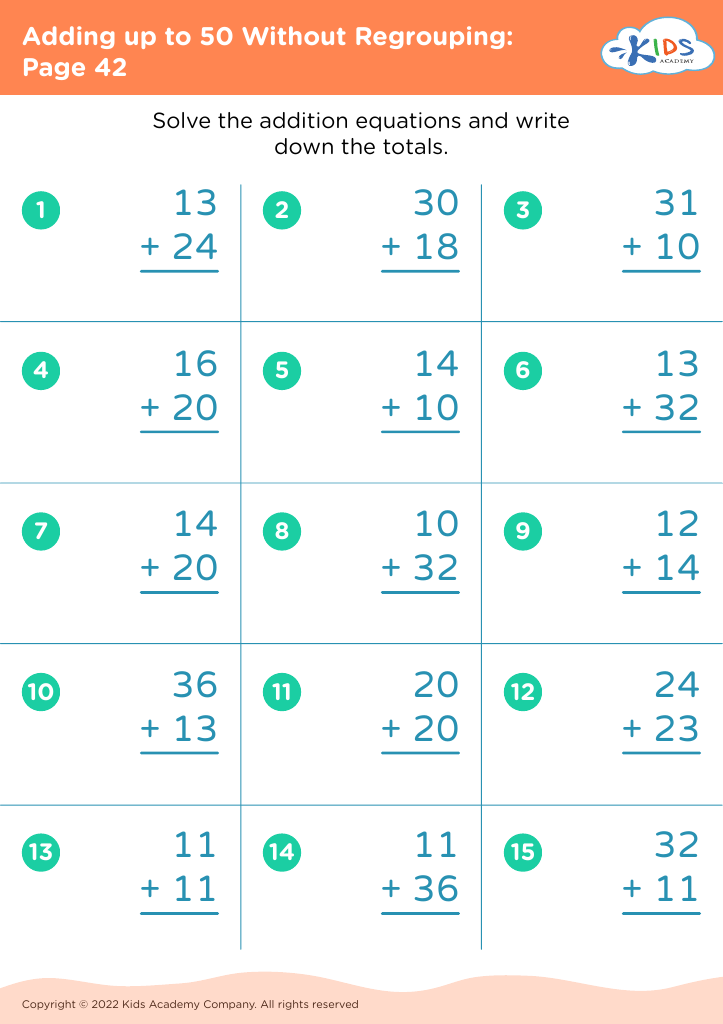
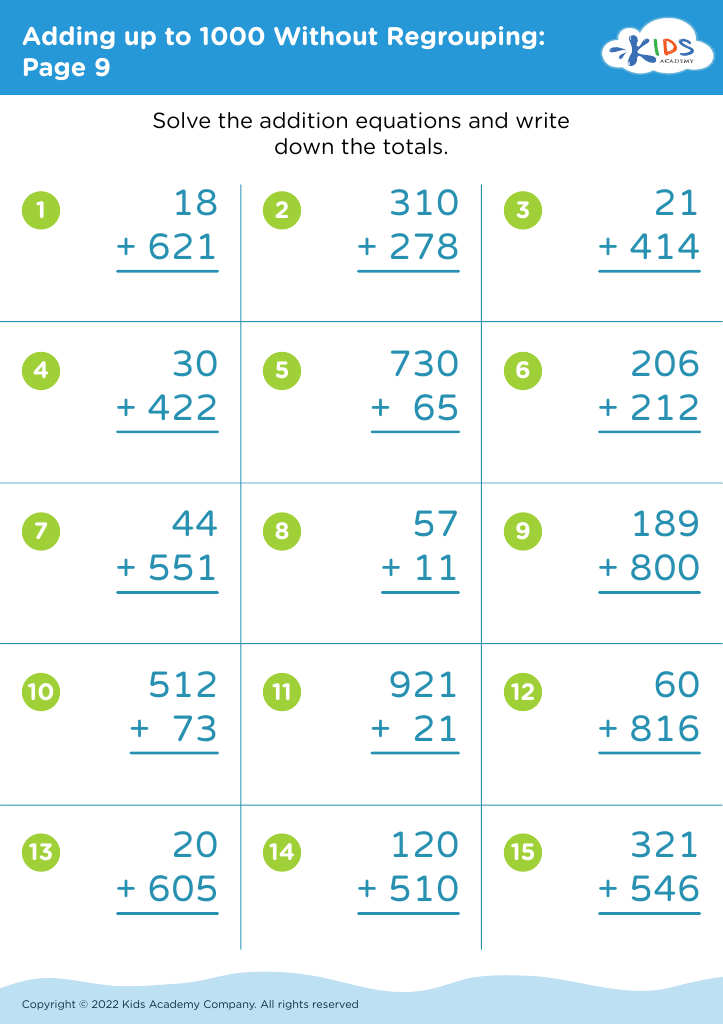








Understanding sequences in addition is crucial for children aged 7-8 because it lays the foundation for more advanced mathematical concepts. At this age, children are transitioning from simple addition to multi-digit calculations, and recognizing patterns in numbers enhances their problem-solving skills. When children grasp sequences, they learn to predict outcomes and recognize relationships between numbers, which fosters a deeper comprehension of mathematics.
Moreover, math develops critical thinking, which is essential not only in academics but in everyday life. Teachers and parents should care about this area of learning because it helps children build confidence in their abilities. A strong grasp of addition sequences enables them to tackle more challenging math tasks in the future, preparing them for algebra and beyond.
Encouraging mastery of sequences also promotes engagement and enjoyment of math. When children see patterns, they become more curious and motivated to explore further. Collaborating with teachers and reinforcing these concepts at home can significantly enhance a child’s learning experience, ensuring they have a solid foundation that will support all areas of their education. Ultimately, investing time and attention into this aspect of math is an investment in a child’s future success.








