Understanding quantity Addition Worksheets for Ages 7-8
7 filtered results
-
From - To
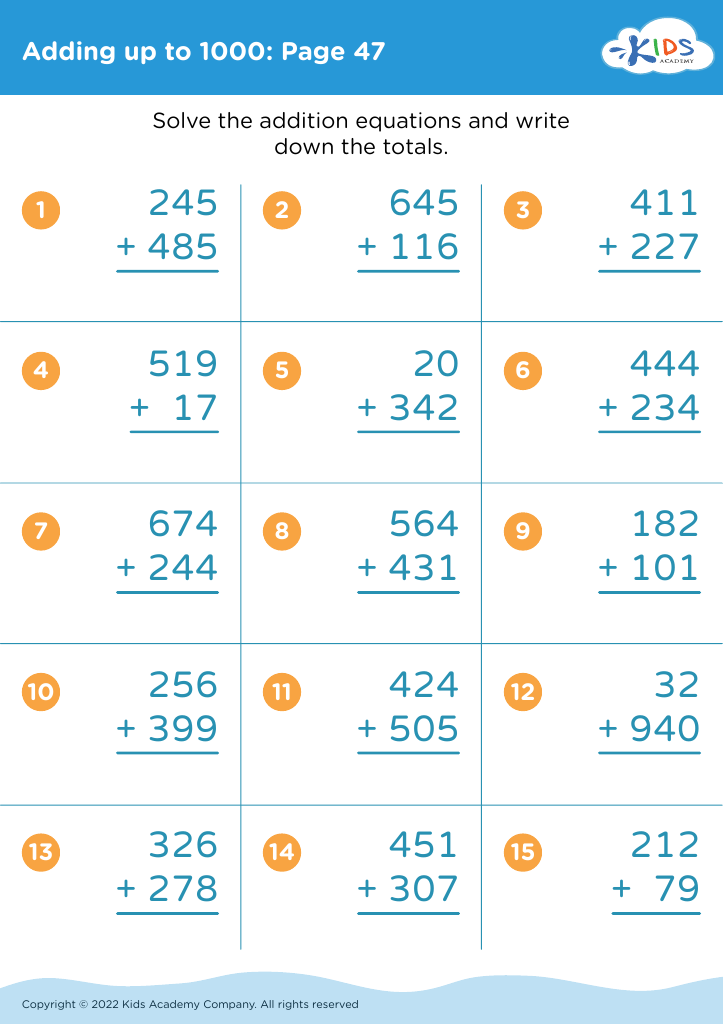
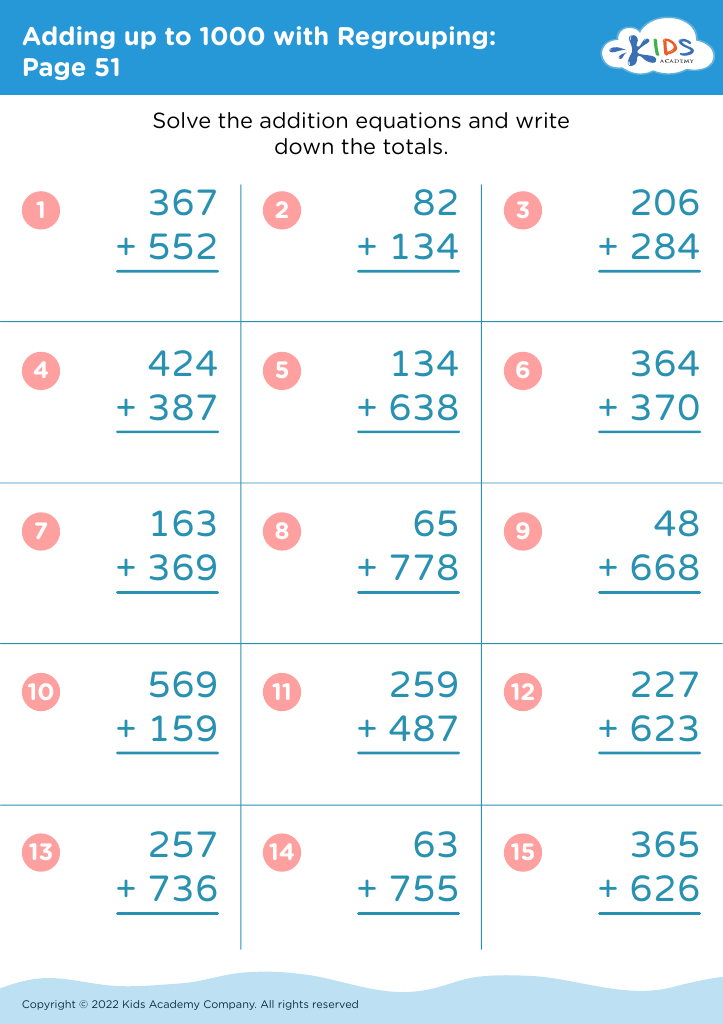
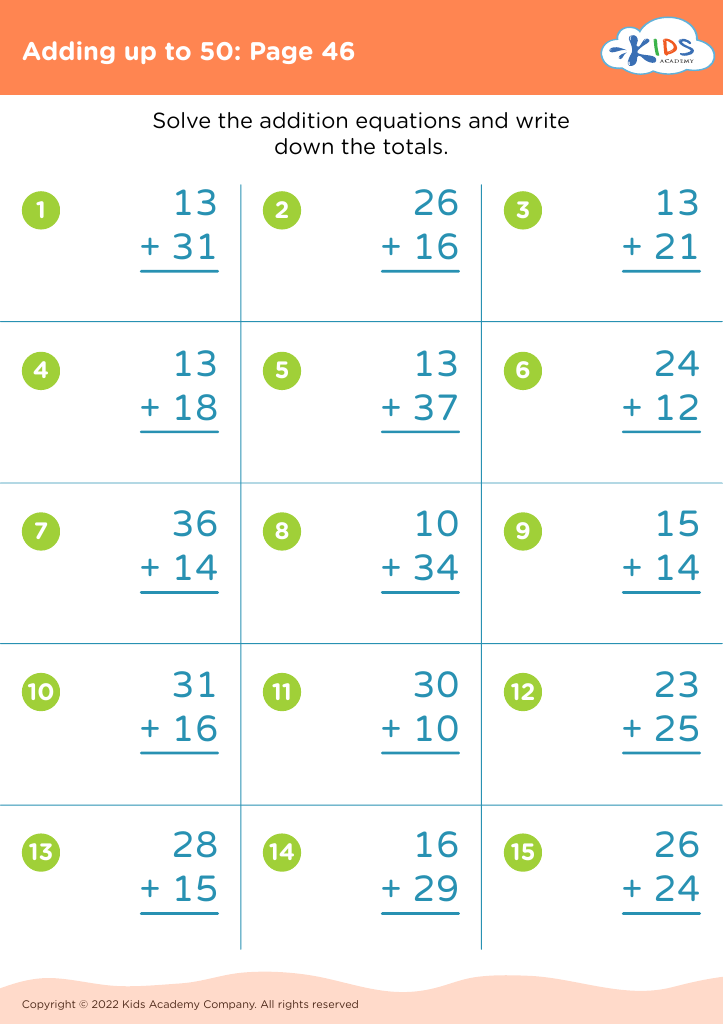
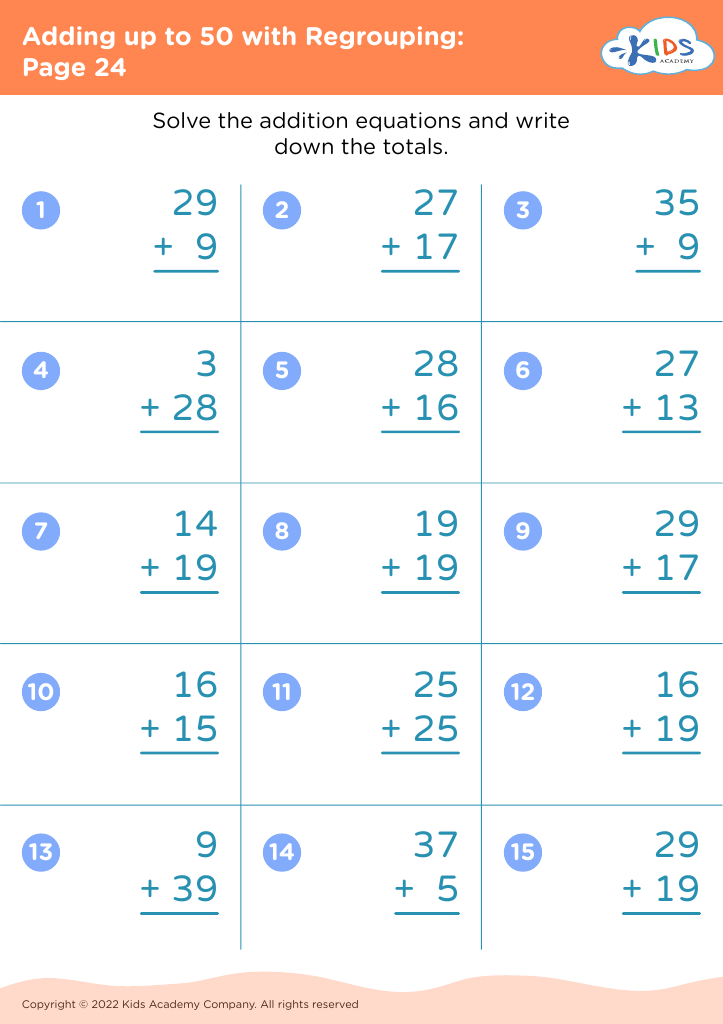
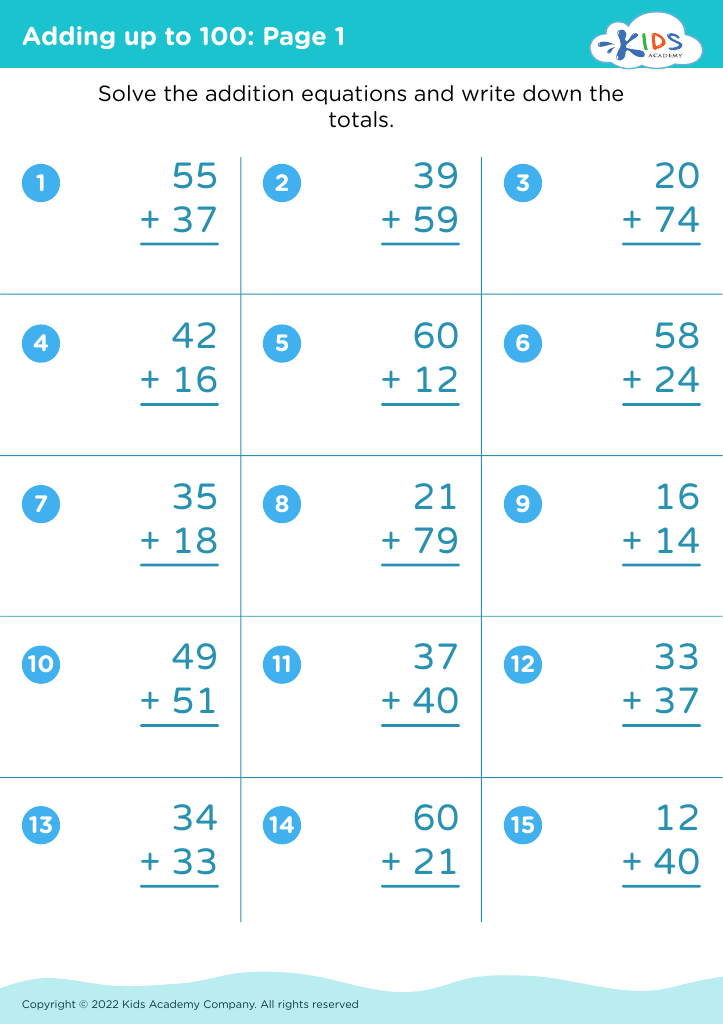
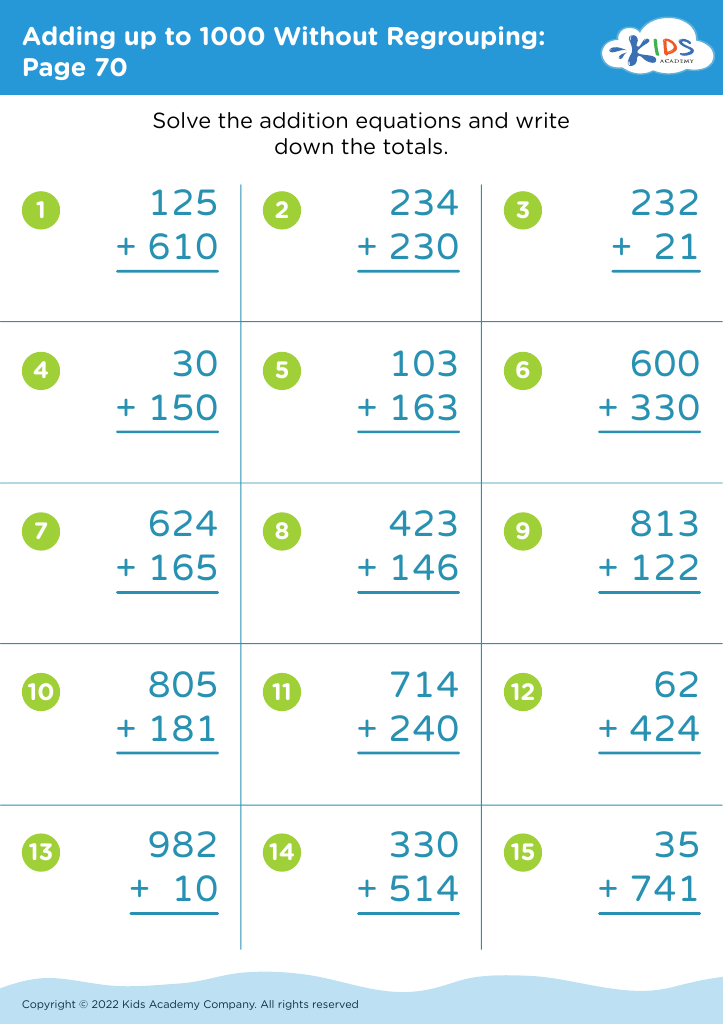
Discover our engaging "Understanding Quantity Addition Worksheets" designed specifically for children aged 7-8. These interactive resources help young learners grasp the concept of quantity through fun and stimulating activities, enhancing their addition skills. By using visual aids and practical exercises, kids will learn to compare and combine numbers effectively, fostering a solid mathematical foundation. Perfect for reinforcing classroom lessons or facilitating home learning, our worksheets cater to diverse learning styles. Encourage your child's love for math while boosting their confidence in addition. Explore our collection now and support your child on their journey to mastering quantity concepts in mathematics!
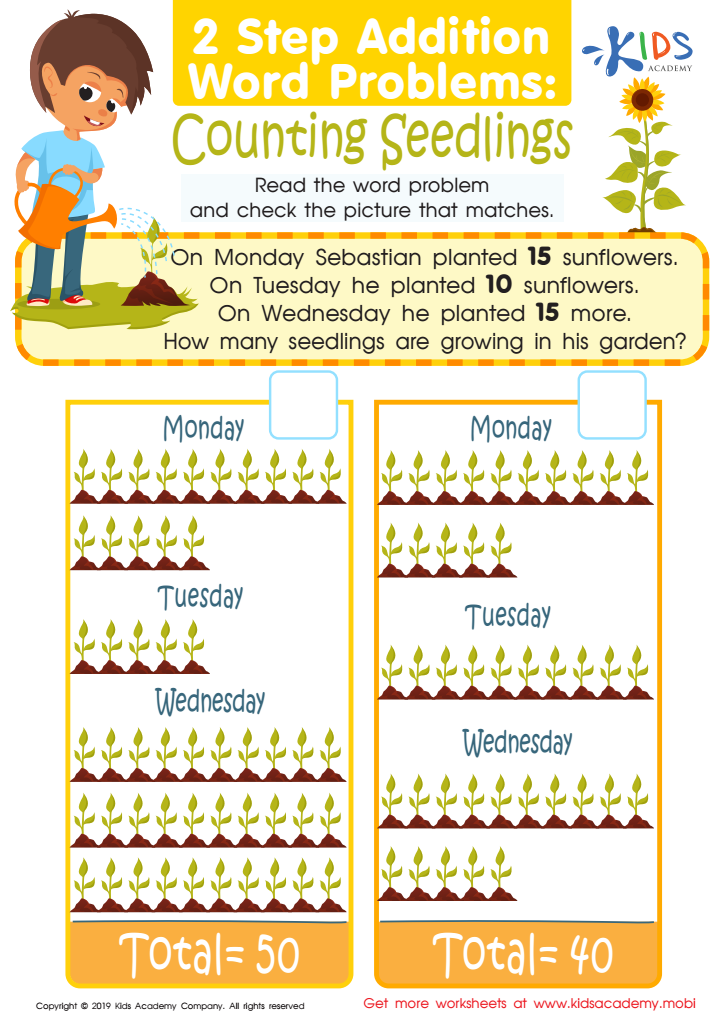
Counting Seedlings Worksheet
 Assign to My Students




.jpg)


.jpg)
Understanding quantity and addition is crucial for children aged 7-8 because it lays the foundation for more complex mathematical skills they'll encounter in later years. At this age, children transition from concrete understanding to more abstract reasoning, making it essential for them to grasp these concepts deeply. Mastery of addition helps students develop problem-solving skills and boosts confidence in their abilities.
Additionally, understanding quantity helps children relate mathematics to real-life situations. Activities such as counting items in a grocery store or measuring ingredients in a recipe foster practical skills that apply outside the classroom. When parents and teachers promote a solid understanding of addition, children's analytical thinking enhances, enabling them to tackle subtraction, multiplication, and division with greater ease.
Furthermore, the cognitive skills developed during this stage go beyond mathematics; they improve children's overall academic performance. By caring about and actively engaging with their understanding of quantity addition, parents and teachers create a supportive learning environment. This involvement encourages children to ask questions, seek help when necessary, and cultivate a lifelong love for learning. In short, fostering advanced understanding at this critical stage significantly contributes to children's future academic success and self-confidence in their abilities.








