Understanding sequencing Addition Worksheets for Ages 7-8
7 filtered results
-
From - To
Unlock your child’s potential with our "Understanding Sequencing Addition Worksheets for Ages 7-8". Designed to enhance math proficiency, these printable sheets help young learners grasp the concept of addition through engaging sequencing exercises. Tailored for 7-8 year olds, the worksheets blend fun and learning, empowering kids to master basic math operations step-by-step. Encourage independent learning and critical thinking as they practice adding numbers in a specific order. Ideal for both classroom and at-home learning, our worksheets simplify complex ideas, making math enjoyable and accessible. Equip your child with essential skills for academic success today!
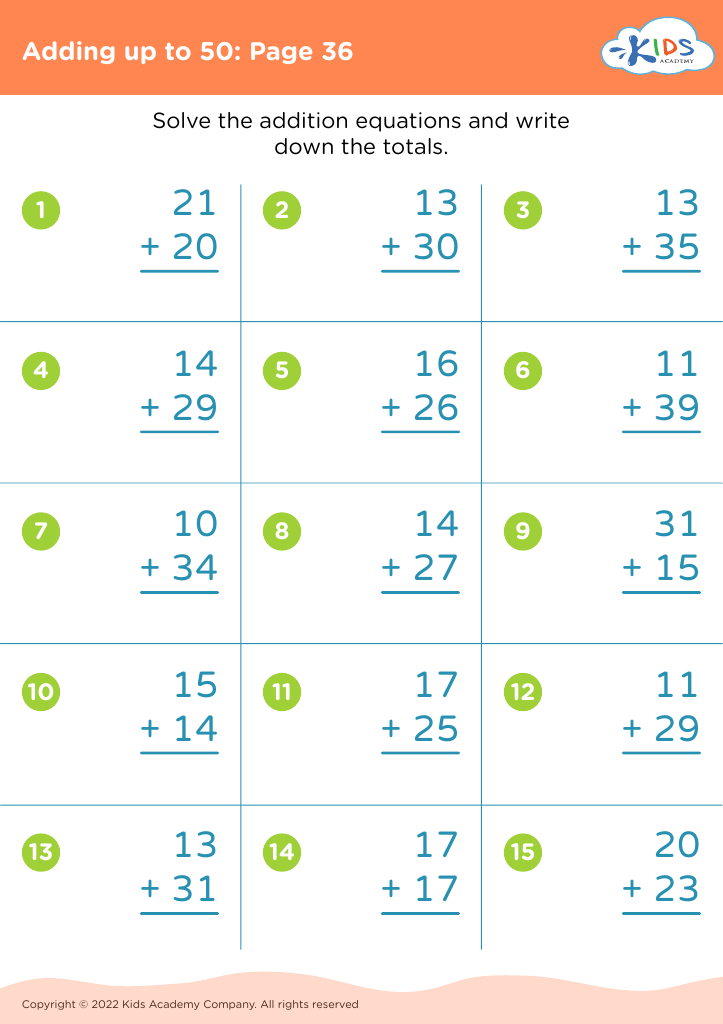
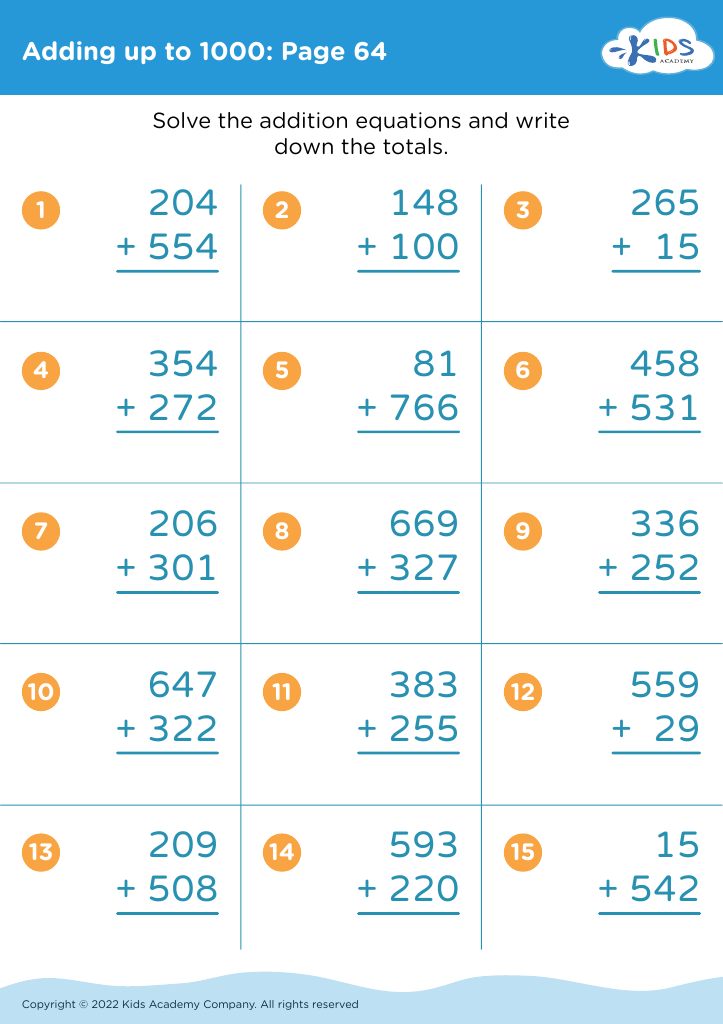
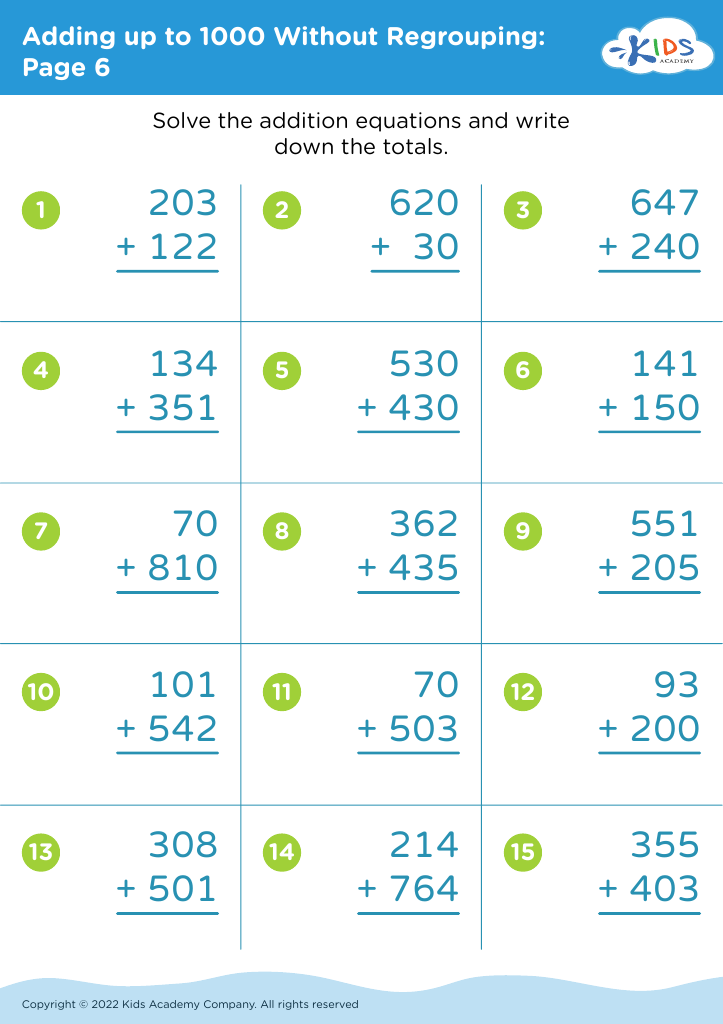
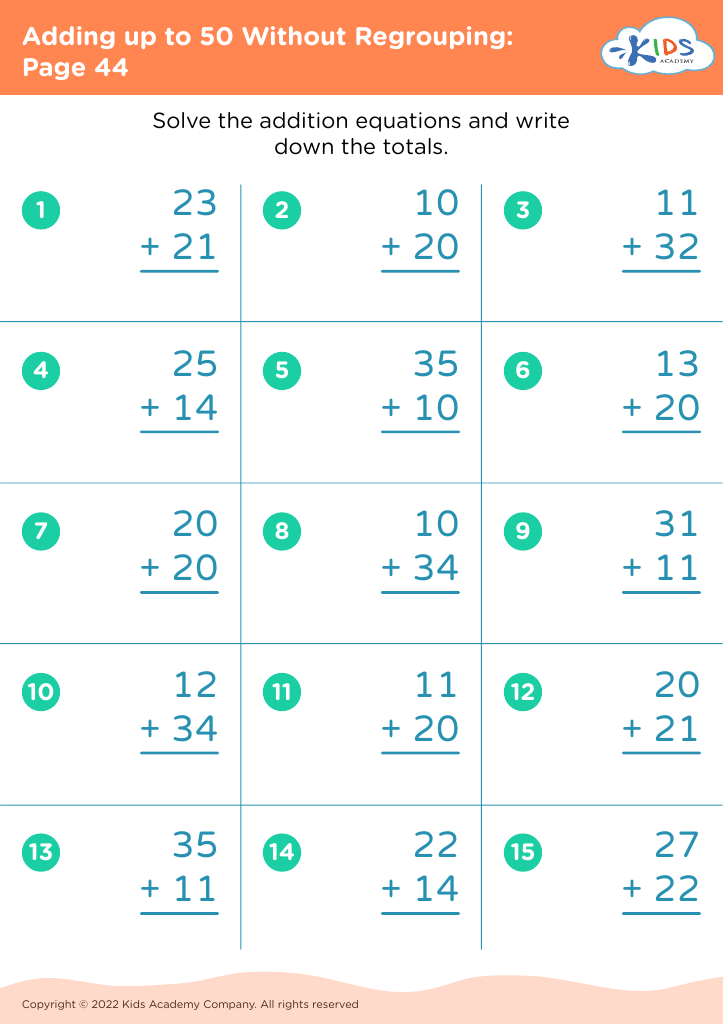
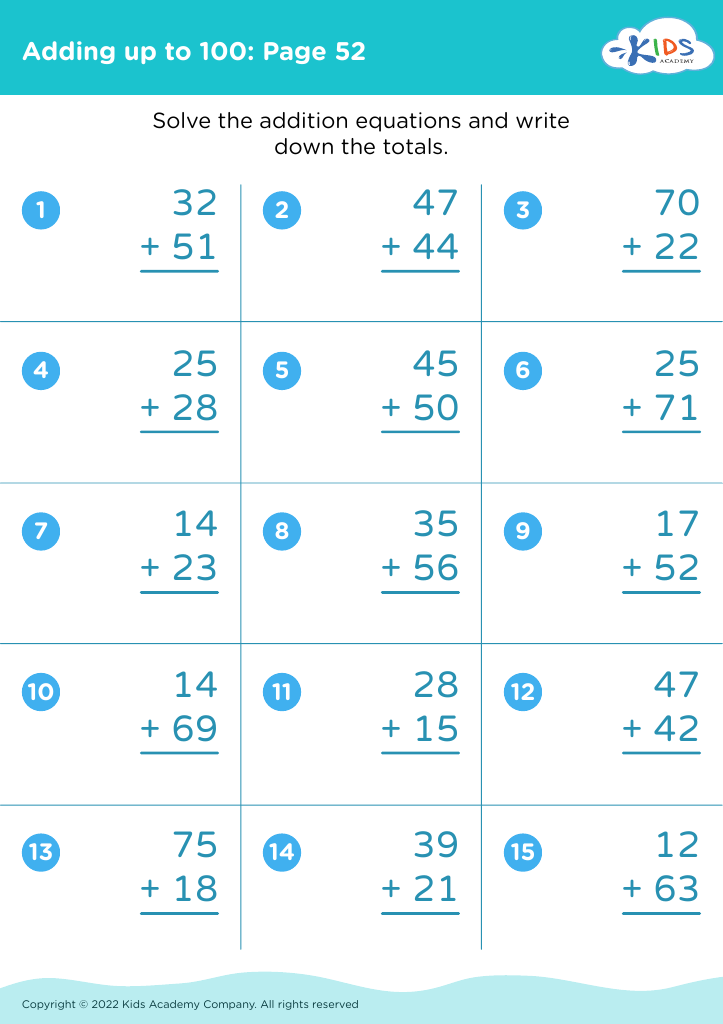
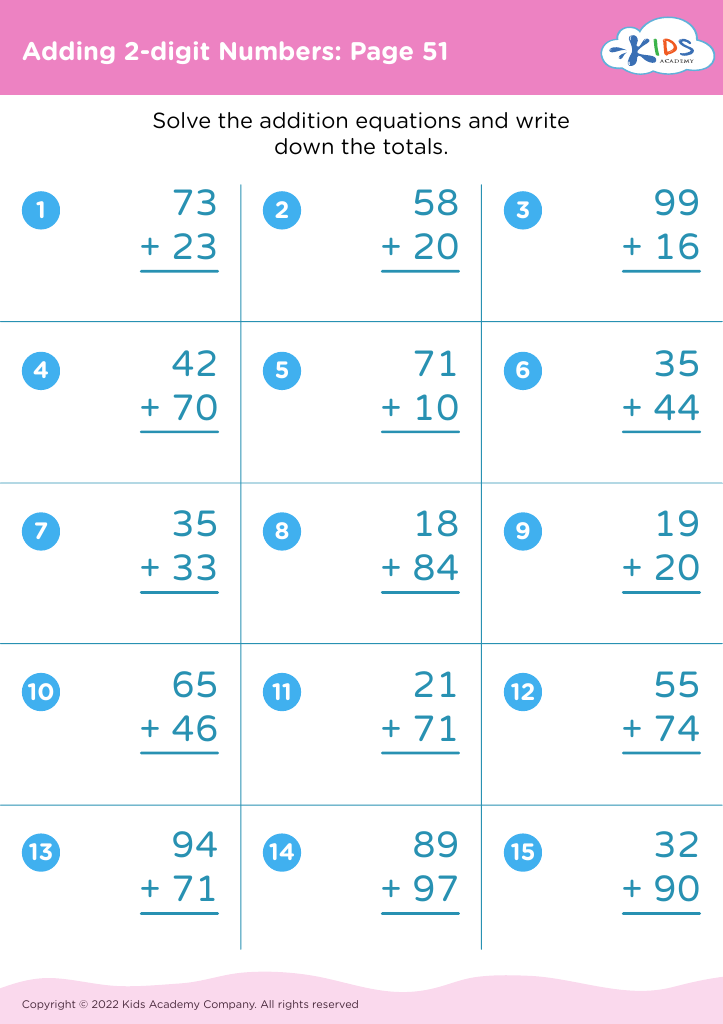
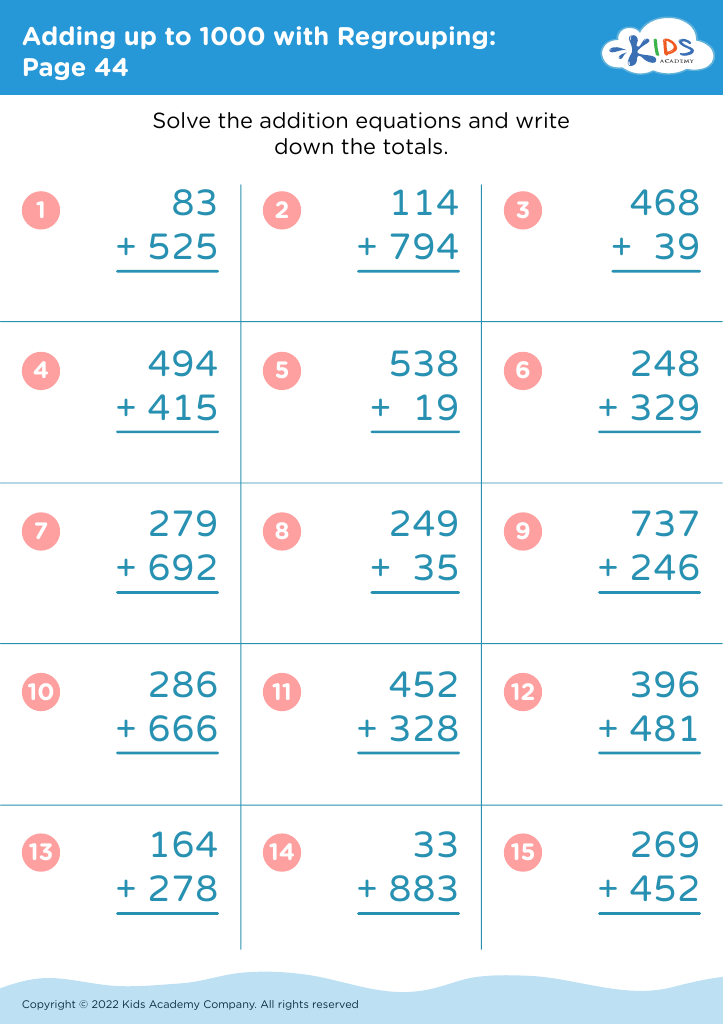








Understanding sequencing in addition is crucial for children aged 7-8 because it lays the foundation for more complex mathematical concepts and problem-solving skills. At this age, children are transitioning from simple arithmetic to more intricate operations that require logical thinking and order.
Sequencing involves arranging objects or numbers in a specific, logical order. In addition, this means recognizing that the order in which numbers are added can affect the method we use to find the answer, although it doesn't change the final sum (commutative property). Understanding this concept helps children develop clarity and flexibility in thinking.
Grasping sequencing also enhances cognitive skills such as memory and attention to detail, benefiting academics beyond mathematics. It helps children follow multi-step instructions and break down complex problems into manageable steps.
Moreover, it boosts confidence. When children understand the importance of sequence in addition, they’re more likely to tackle problems methodically and accurately. This confidence transfers to other areas, building a more comprehensive academic skill set.
Finally, sequencing in addition is practical in everyday life situations like organizing tasks, planning, and executing daily routines efficiently. Hence, educators and parents should prioritize this aspect of learning to ensure holistic development and long-term success in mathematics and beyond.








