Money recognition Money Worksheets for Ages 7-8
5 filtered results
-
From - To
Explore our engaging Money Recognition Worksheets designed for children ages 7-8! These interactive resources help young learners master the essential skill of identifying and understanding different denominations of money. Our worksheets feature colorful graphics and real-world scenarios, making learning fun and relatable. Packed with various activities, including counting coins, matching bills, and solving practical money problems, these worksheets support children's cognitive development while enhancing their math skills. Perfect for homeschoolers, educators, or parents looking to reinforce financial literacy, our worksheets are a valuable tool for helping children gain confidence in their money recognition abilities. Start your child's money mastery journey today!
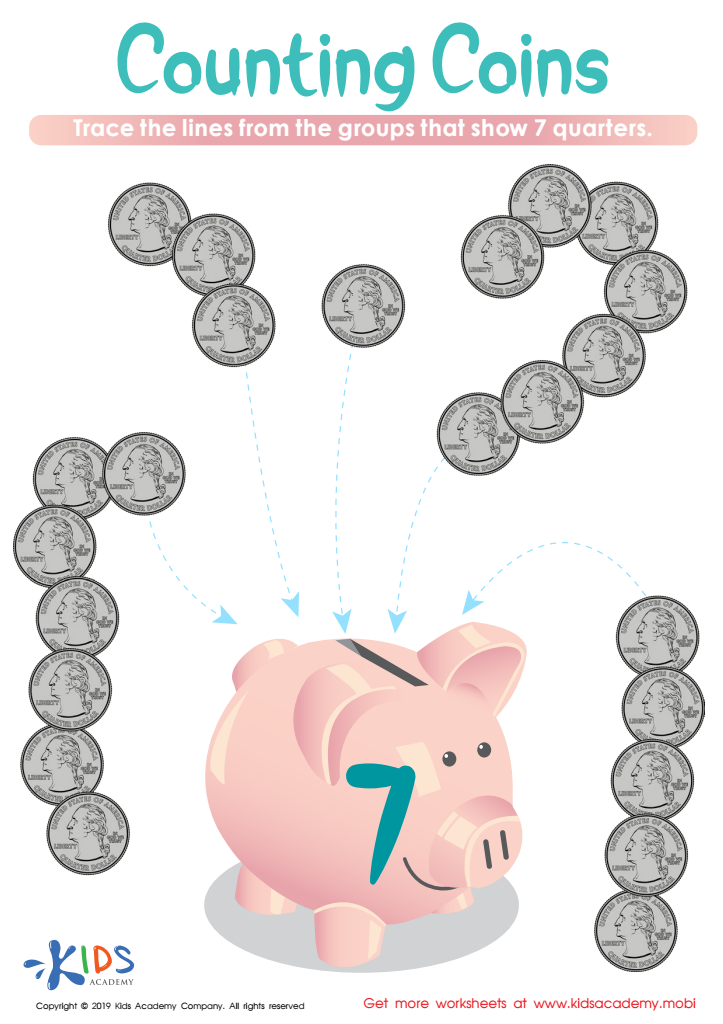
Counting Coins Worksheet
 Assign to My Students
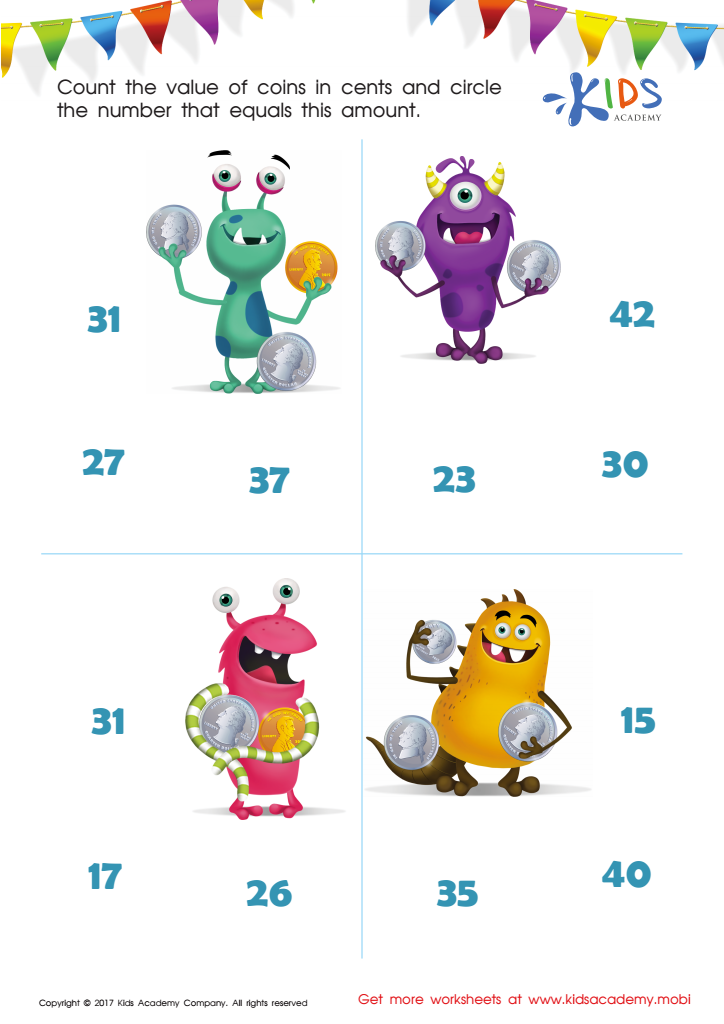
How Many Coins Money Worksheet
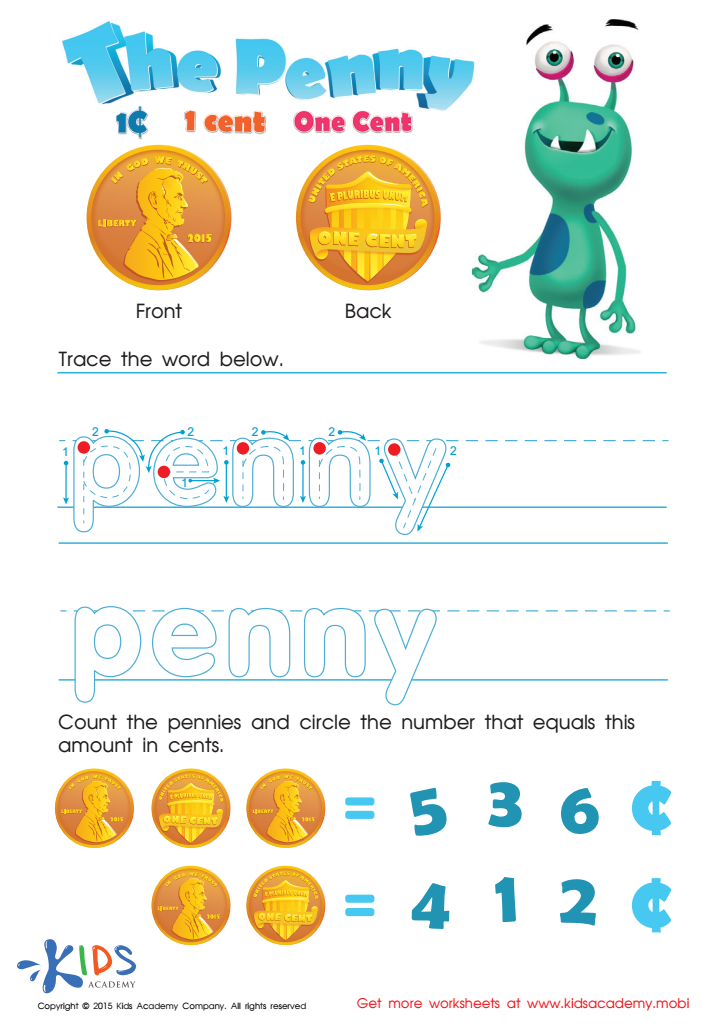
One Cent or the Penny Money Worksheet
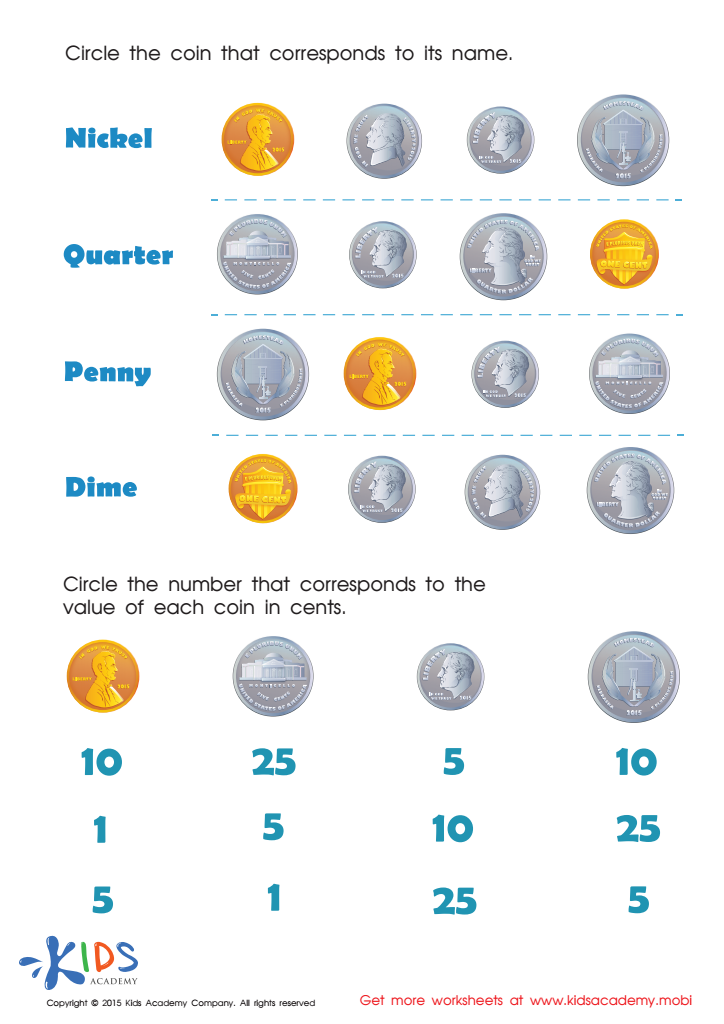
Coin Names and Values Money Worksheet
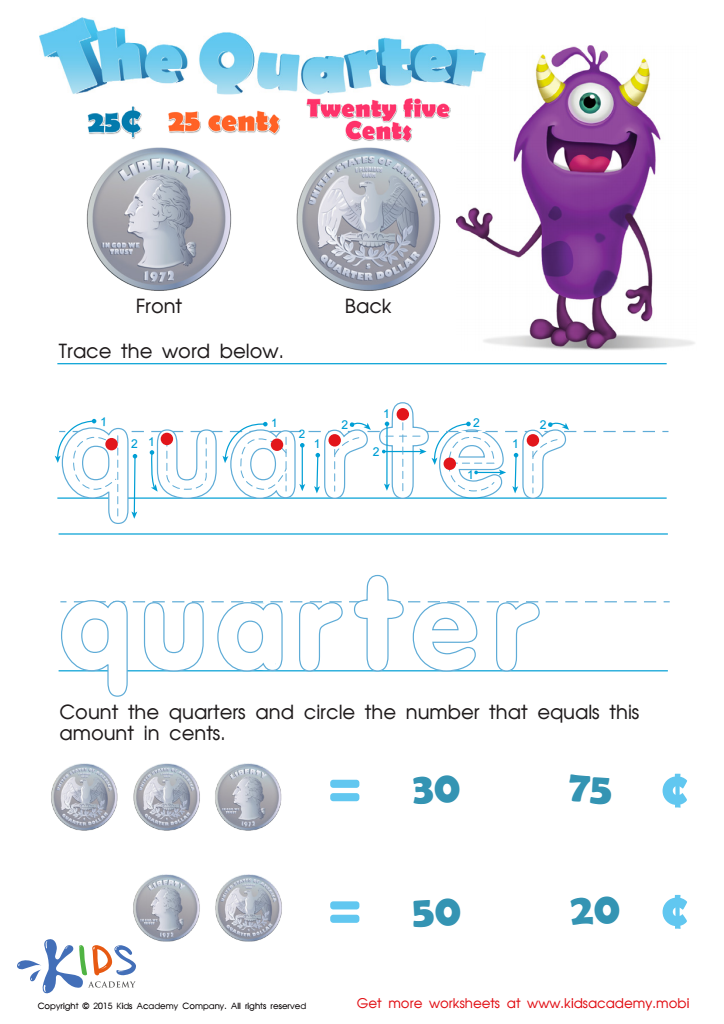
Twenty Five Cents or the Quarter Money Worksheet







Money recognition is a crucial skill for children aged 7-8, as it lays the foundation for financial literacy and responsible money management in their future. At this age, children are often introduced to concepts like saving, spending, and making change, making it an ideal time to develop their understanding of money.
Parents and teachers should care about money recognition because it empowers children to become informed consumers. Understanding different denominations and how to distinguish between them helps children navigate real-world situations, from shopping to managing allowances. This skill cultivates a sense of independence and confidence when making financial decisions.
Moreover, effective money recognition encourages critical thinking. Children learn to assess value, compare prices, and make choices based on their resources. By integrating money recognition into daily activities, such as budgeting for a purchase or saving for a desired item, educators and parents can reinforce practical math skills in a meaningful context.
Lastly, fostering money recognition at this stage can cultivate positive financial habits early on, preventing potential future issues with debt and financial mismanagement. Therefore, it is essential for parents and teachers to prioritize money recognition as part of a child's overall education and development.








