Filters

7 filtered results

Clear all filters
Favorites
With answer key
Interactive

7 filtered results

Difficulty Level

Grade


Enhance your child's fine motor skills and understanding of fractions with our engaging worksheets tailored for ages 7-8. Crafted by education experts, these worksheets blend fun and learning to help children master fractions of shapes through coloring, cutting, and pasting activities. Each exercise is designed to improve precision, hand-eye coordination, and mathematical concepts. Perfect for classroom or at-home practice, our worksheets will boost your child's confidence and competence in math while keeping them entertained. Support their development and watch them thrive with our Fine Motor Skills Fractions of Shapes worksheets.

Check out this FREE Trial Lesson on Fractions of Shapes for age 7-8!

Cut Rectangles: Halves and Wholes

Favorites
With answer key
Interactive
  • 7-8
  • Fine Motor Skills
  • Fractions of Shapes
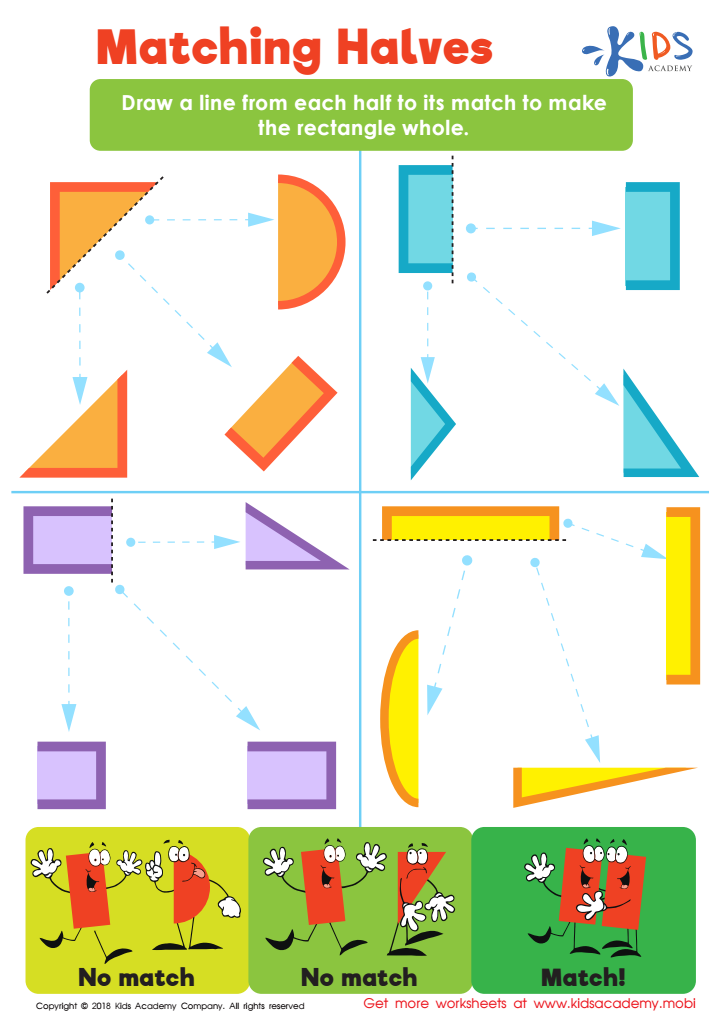
Matching Halves Worksheet

Matching Halves Worksheet

See how your child fares in matching two halves to form a complete rectangle. Provide them with four options, and ask them to draw a line connecting the two correct halves. Put their shape knowledge to the test with this simple worksheet!
Matching Halves Worksheet
Worksheet
Woodpecker and Triangles Worksheet

Woodpecker and Triangles Worksheet

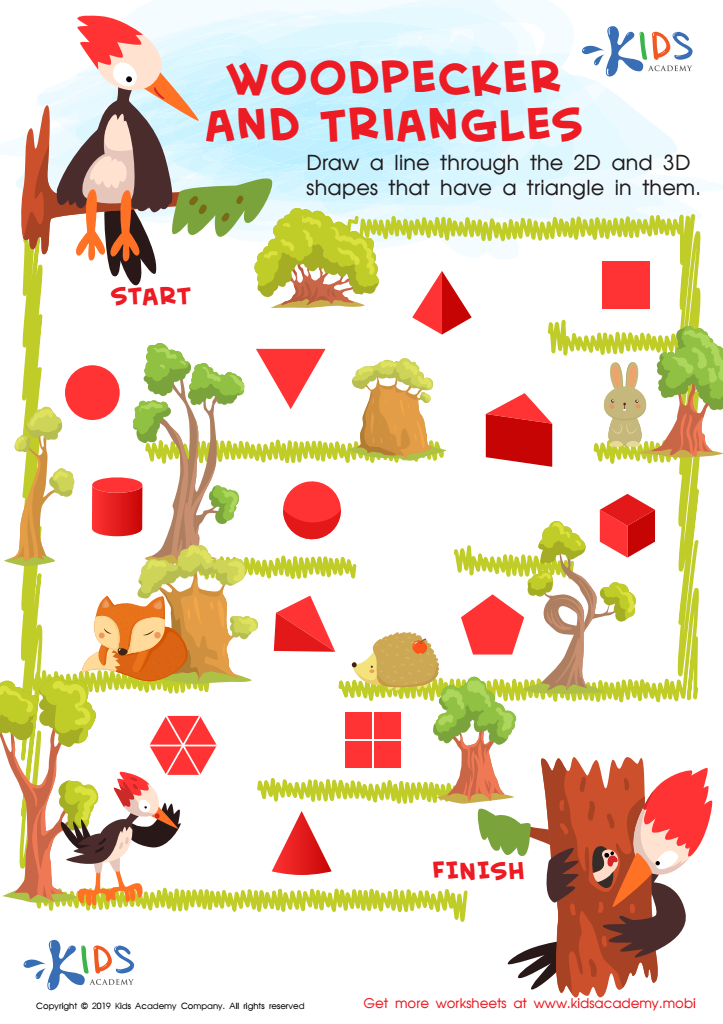
Woodpeckers peck wood, and this printout helps kids learn about triangles. Ask your kindergartners to draw a triangle, then draw a line through the shapes that have a triangle in them to help the woodpecker get out of the maze.
Woodpecker and Triangles Worksheet
Worksheet
Cutting Rectangles with Alien Worksheet

Cutting Rectangles with Alien Worksheet

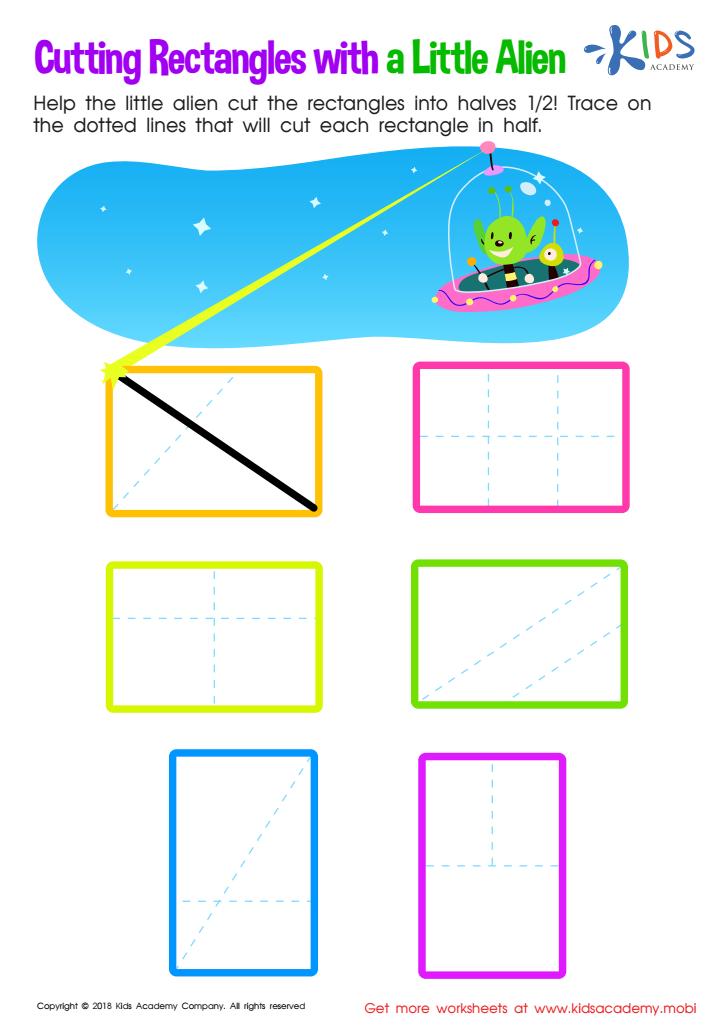
If your students are interested in aliens and otherworldly events, they'll love this exercise! It requires them to help a small alien cut rectangles into halves (½). They must trace the dotted lines to accurately cut each rectangle.
Cutting Rectangles with Alien Worksheet
Worksheet
Cutting in Halves Worksheet

Cutting in Halves Worksheet

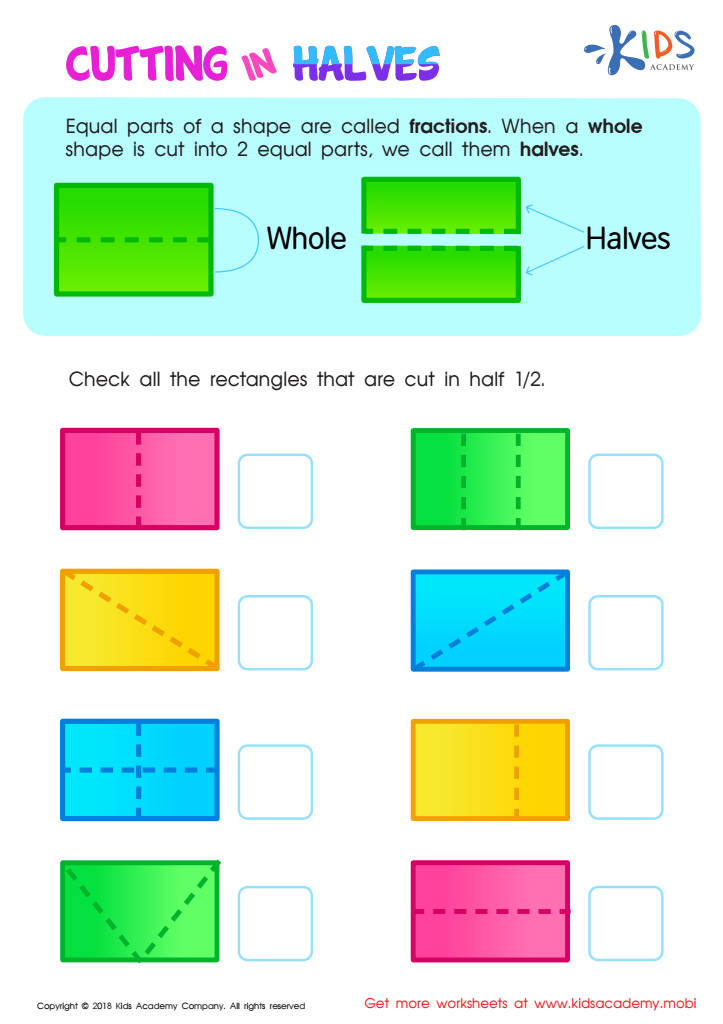
Show your child how to divide a whole shape, like a square, into smaller pieces to become fractions. Point out when a shape is divided into two equal parts, it's called a half. Look at the worksheet together, and identify all rectangles that are cut in half (½).
Cutting in Halves Worksheet
Worksheet
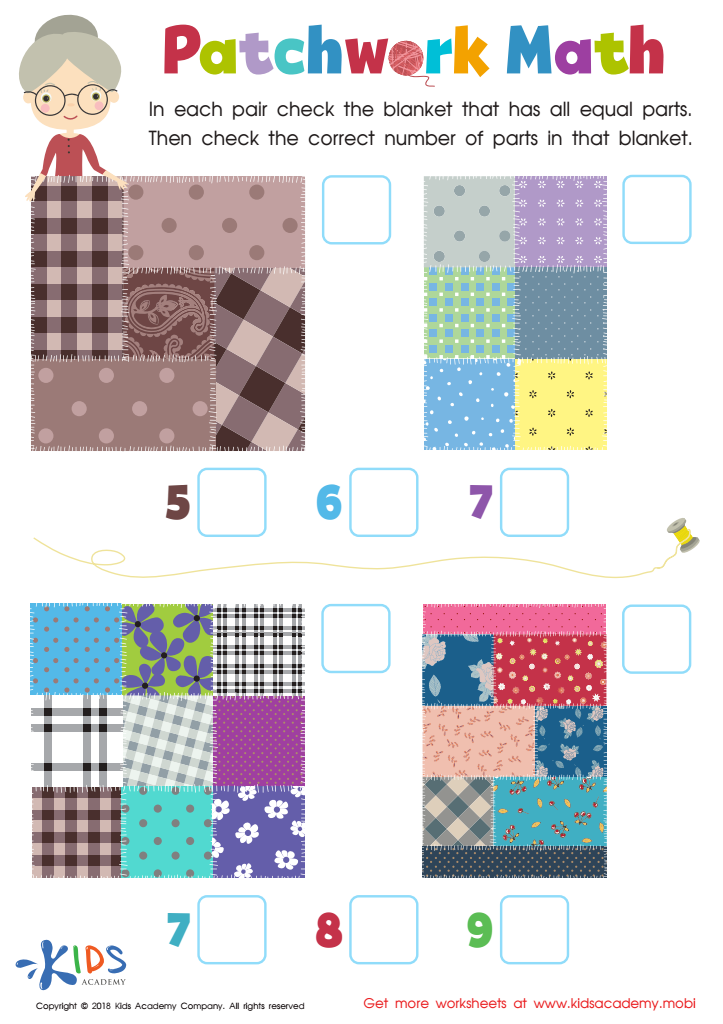
Patchwork Math Worksheet

Patchwork Math Worksheet

Test your children's knowledge with this colorful worksheet. They'll need to identify which of the blanket pairs have been cut in equal parts and count the number of parts. Check the provided options to ensure the correct answer.
Patchwork Math Worksheet
Worksheet
Circle Laser Cutting Worksheet

Circle Laser Cutting Worksheet

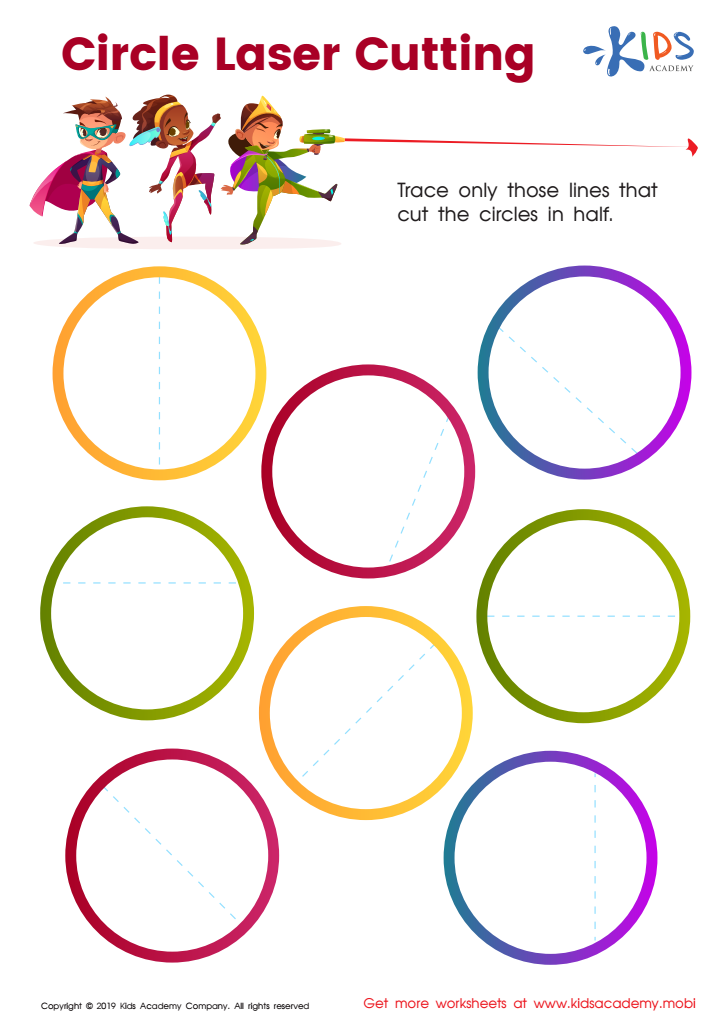
Encourage your kids to learn geometry! Remind them that when shapes are cut into two equal parts, they are called halves. Have them look at the circles in the worksheet, and trace the lines that cut the circles in half. Geometry is an essential part of education, and although it may not be exciting, it's a valuable skill to have.
Circle Laser Cutting Worksheet
Worksheet
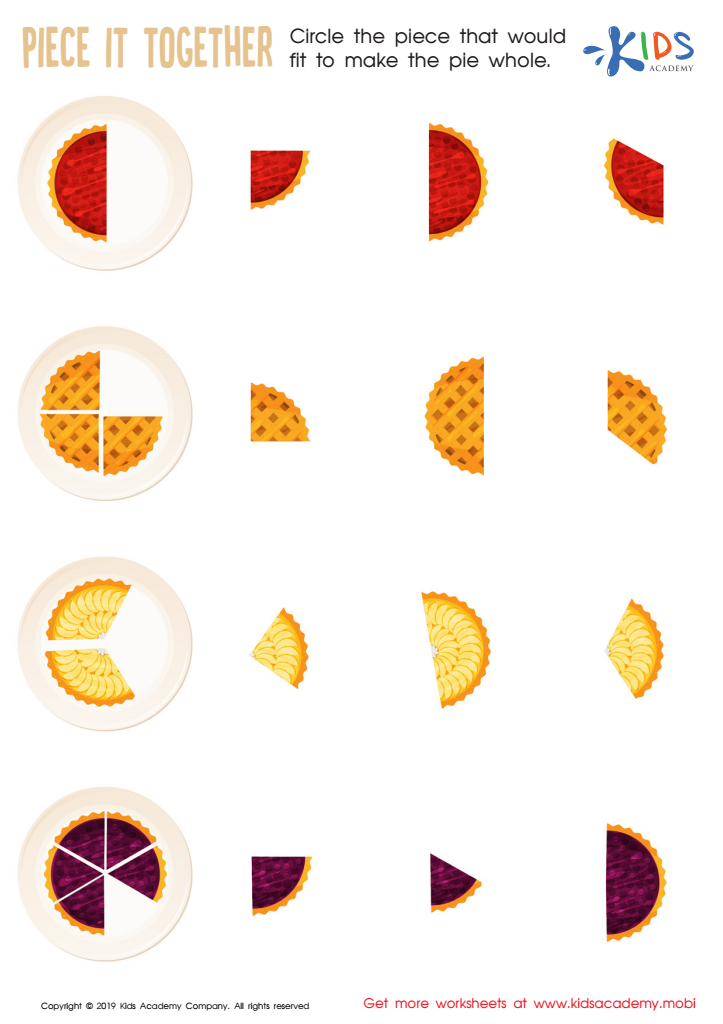
Piece it together Worksheet


Piece it together Worksheet

Help your kids learn fractions! Even if they're not eager, teach them as they get older. Teachers will provide enough lessons and homework, but you can go a step further. Look at a worksheet with your kids and help them circle the piece that would make the pie whole.
Piece it together Worksheet
Worksheet


Fine motor skills and the understanding of fractions in shapes are both critical in the developmental stage of children ages 7-8. From the perspective of a parent or teacher, investing in these areas can offer significant benefits not only academically but also in overall child development.

Firstly, enhancing fine motor skills through activities like drawing fractions of shapes or cutting them out helps to build hand-eye coordination, precision, and dexterity. These are foundational for many everyday tasks and studies have shown that they improve handwriting, increased speed, and accuracy in tasks like tying shoelaces, using utensils, and even in sports.

Secondly, the introduction of fractions in the context of shapes provides a tangible and visual method to understand mathematical concepts. This early exposure to geometry and division encourages logical thinking and problem-solving skills. When children manipulate and talk about parts of shapes, they develop spatial reasoning, which is essential in subjects like science, technology, engineering, and math (STEM).

Understanding fractions also lays the groundwork for more advanced math topics in later grades. Additionally, fraction exercises promote critical thinking and analytical skills, as children compare sizes, sections, and ratios. By connecting fine motor skill development with cognitive skills through fractions, parents, and teachers nurture a well-rounded, confident, and competent learner.