Problem-Solving Skills Fractions Worksheets for Ages 7-8
3 filtered results
-
From - To
Enhance your child's mathematical abilities with our "Problem-Solving Skills Fractions Worksheets" designed specifically for ages 7-8. These engaging worksheets focus on developing critical problem-solving skills through interactive fraction exercises. Children will learn to apply their knowledge of fractions to real-world scenarios, fostering both cognitive development and practical understanding. Featuring a variety of problems, from simple tasks to more complex challenges, these worksheets make learning fun and effective. Perfect for homeschooling or classroom use, our resources aim to build confidence and skill in handling fractions. Download now and empower your child to tackle math problems with ease and enthusiasm!
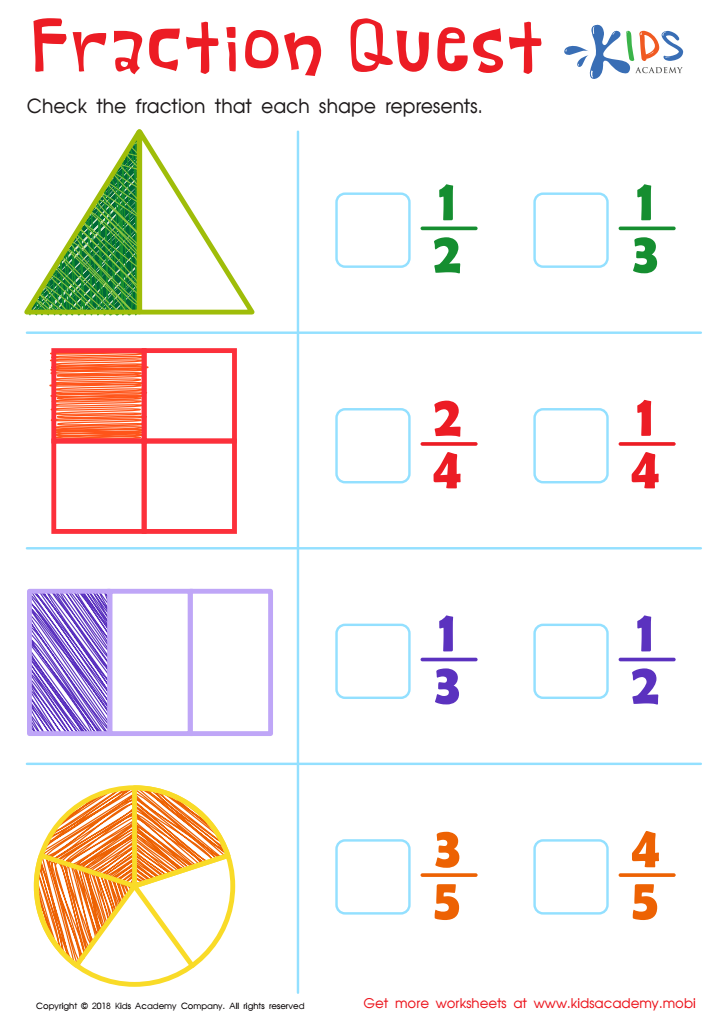
Fraction Quest Worksheet
 Assign to My Students
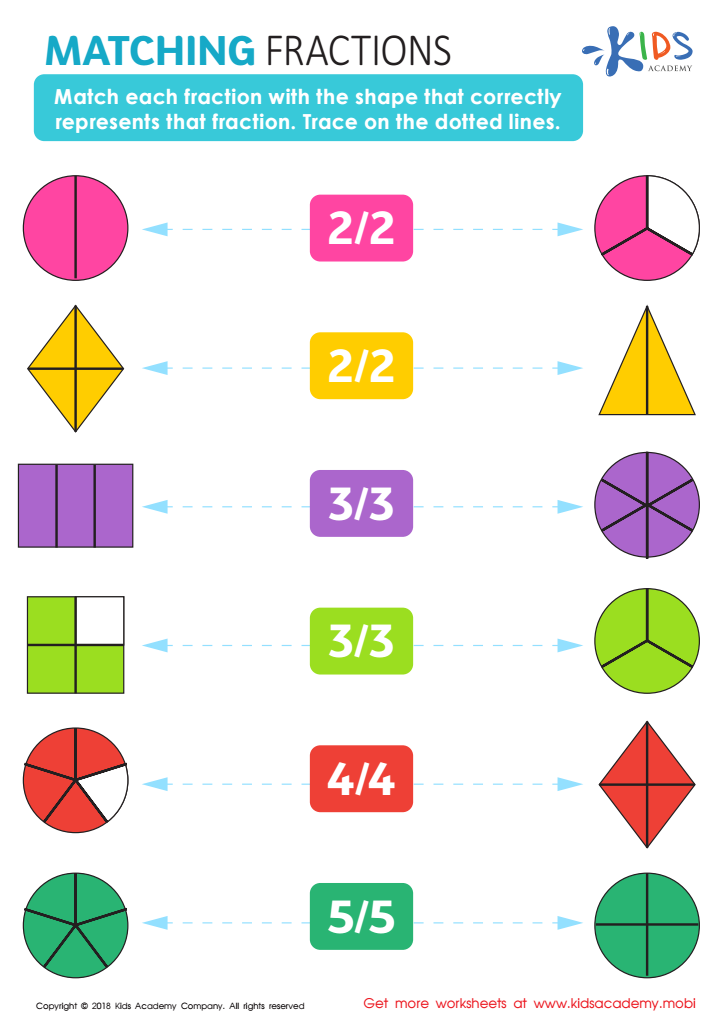
Matching Fractions Worksheet
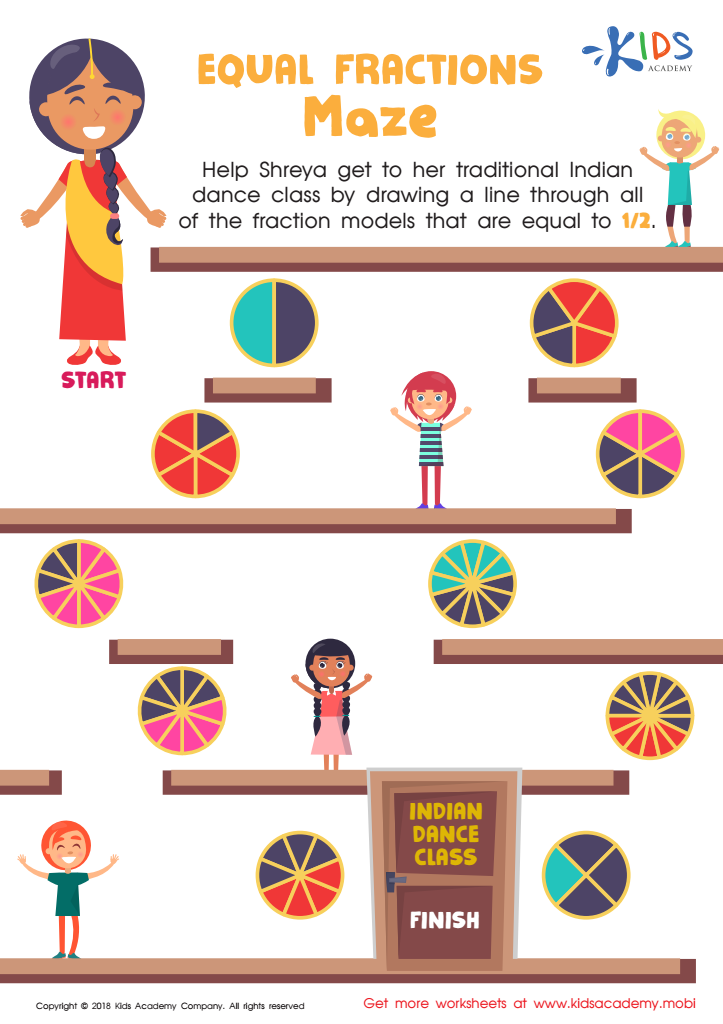
Equal Fractions Maze Worksheet








Problem-solving skills are essential for children ages 7-8, particularly when dealing with fractions, as they lay the foundation for more complex mathematical concepts. At this age, children begin to encounter fractions in practical situations, such as sharing pizza or dividing candy, which makes understanding fractions relatable and engaging. Developing problem-solving skills in this context encourages kids to think critically and make connections between their mathematical knowledge and everyday life.
Parents and teachers should prioritize these skills because they foster logical reasoning and creativity in approaching challenges. As 7- and 8-year-olds learn to visualize fractions and manipulate them, they cultivate a deeper comprehension that will serve them in future math problems. Moreover, these skills empower them to approach real-world challenges with confidence.
Additionally, engaging students in problem-solving tasks related to fractions galvanizes communication and collaboration skills, as they often work together to find solutions. This social interaction not only makes learning enjoyable but also instills a sense of community and teamwork in the classroom. Ultimately, by nurturing problem-solving skills in fractions, parents and teachers equip children with the tools they need for lifelong learning and success, promoting not just mathematical proficiency, but also competence in everyday decision-making.








