Logical Reasoning Geometry Worksheets for Ages 7-8
4 filtered results
-
From - To
Enhance your child's critical thinking and spatial awareness with our "Logical Reasoning Geometry Worksheets for Ages 7-8." These engaging worksheets are designed to make geometry fun and accessible, focusing on developing logical reasoning skills. Through a variety of activities, such as shape identification, pattern recognition, and spatial relationships, students will build a strong foundation in geometric concepts. Perfect for classroom use or at-home practice, these worksheets cater to different learning styles, ensuring each child can progress at their own pace. Our meticulously crafted resources will turn learning geometry into an exciting adventure that boosts your child's confidence and competence.
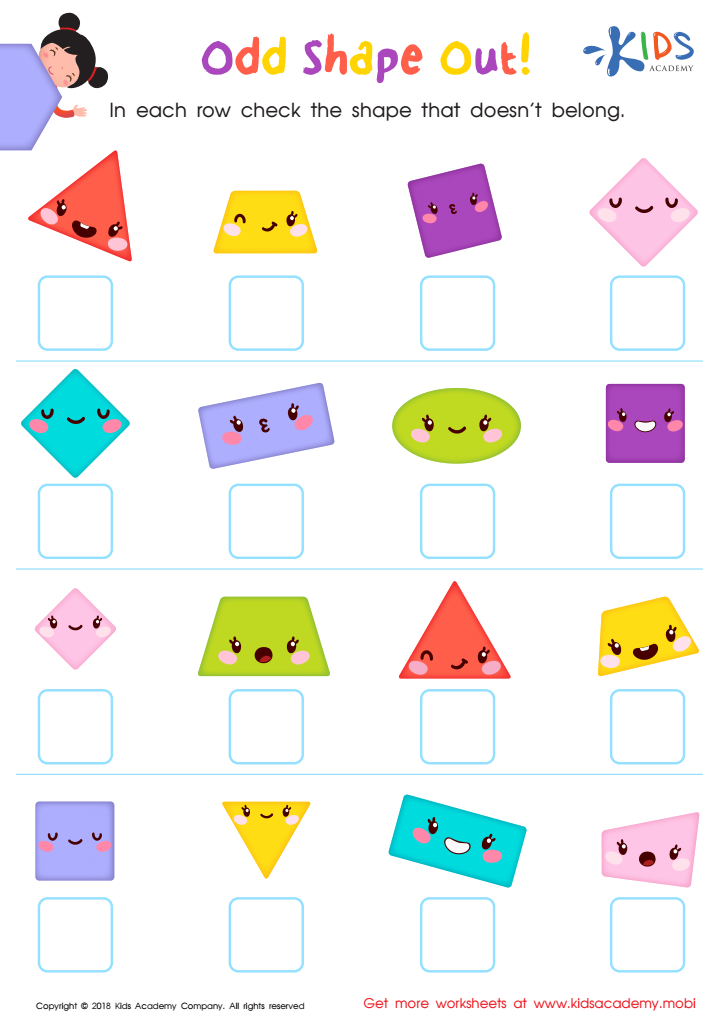
Odd Shape Out Worksheet for Grade 3
 Assign to My Students











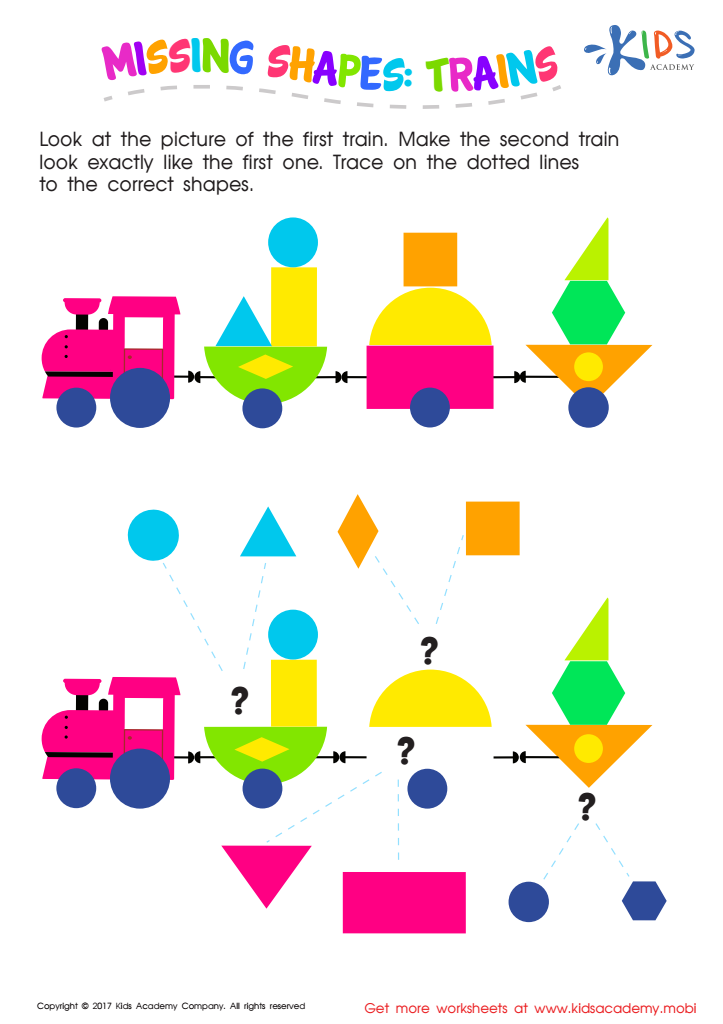
Missing Shapes: Trains Worksheet
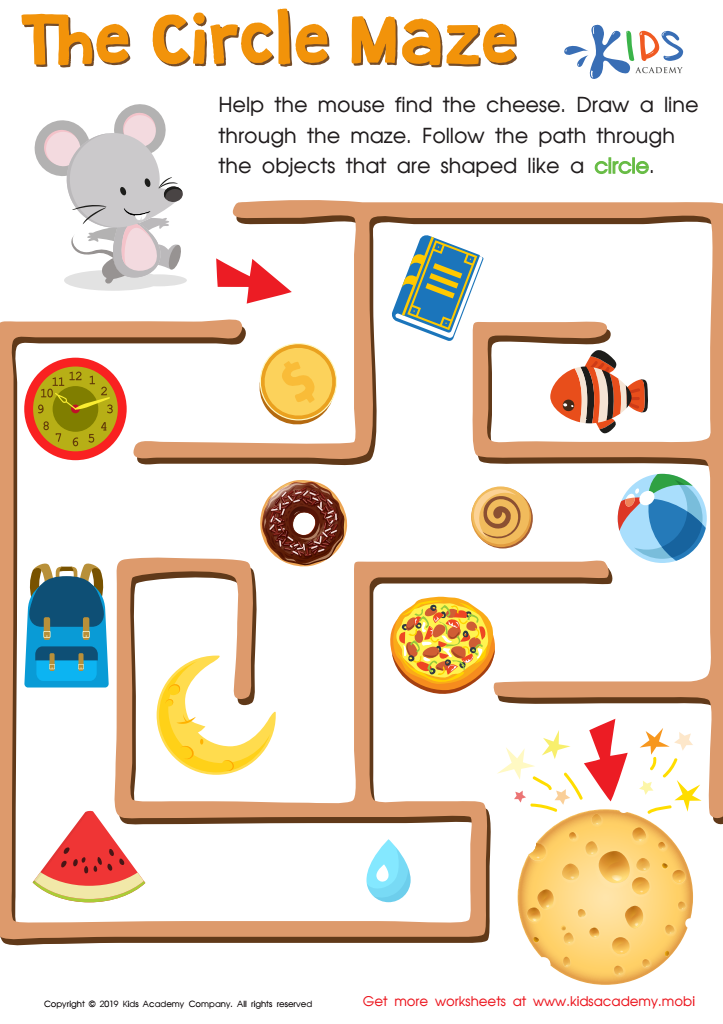
The Circle Maze Worksheet
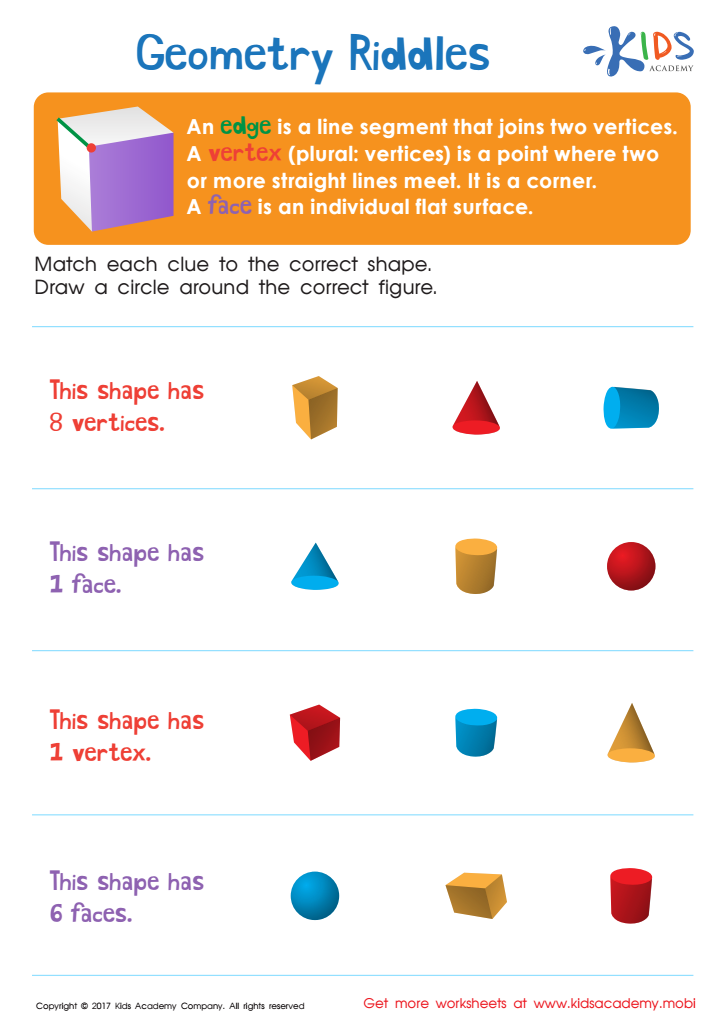
Geometry Riddles Printable








Logical reasoning in geometry for ages 7-8 is essential because it lays the cornerstone for critical thinking and problem-solving skills that are vital throughout life. At this age, children are wonderfully curious and receptive to new concepts. Introducing them to geometric shapes, patterns, and simple spatial relationships offers multiple cognitive benefits beyond just mathematical prowess.
Firstly, understanding geometry enhances spatial awareness. Kids learn to recognize shapes and patterns in their environment, helping them to make sense of the world around them. This foundational knowledge supports tasks ranging from simple puzzles to understanding maps and diagrams.
Secondly, logical reasoning skills in geometry foster critical thinking. By solving geometry problems, children start to learn how to approach problems methodically, breaking them down into manageable parts and exploring different solutions. This is invaluable not just in mathematics, but in real-life situations where decision-making is required.
Moreover, early exposure to logical reasoning builds a natural proficiency in STEM (Science, Technology, Engineering, and Math) disciplines. Studies show that children introduced to these concepts early on are more likely to excel in these subjects later in life.
In sum, teaching logical reasoning in geometry to young children doesn't just make them better at math; it primes their minds for a lifetime of effective thinking and problem-solving.








