Matching skills Geometry Worksheets for Ages 7-8
3 filtered results
-
From - To
Discover our collection of engaging Matching Skills Geometry Worksheets tailored for ages 7-8. These educational resources from Kids Academy are designed to enhance your child's understanding of geometric concepts while boosting their critical thinking and spatial reasoning skills. Our worksheets feature a variety of activities, including shape identification, symmetry matching, and pattern recognition. With colorful, interactive designs, kids will enjoy learning as they match shapes, find similarities and differences, and solve puzzles. Perfect for both classroom and home use, these worksheets make mastering geometry fun and accessible. Start empowering your child’s learning journey with our effective geometry matching exercises.
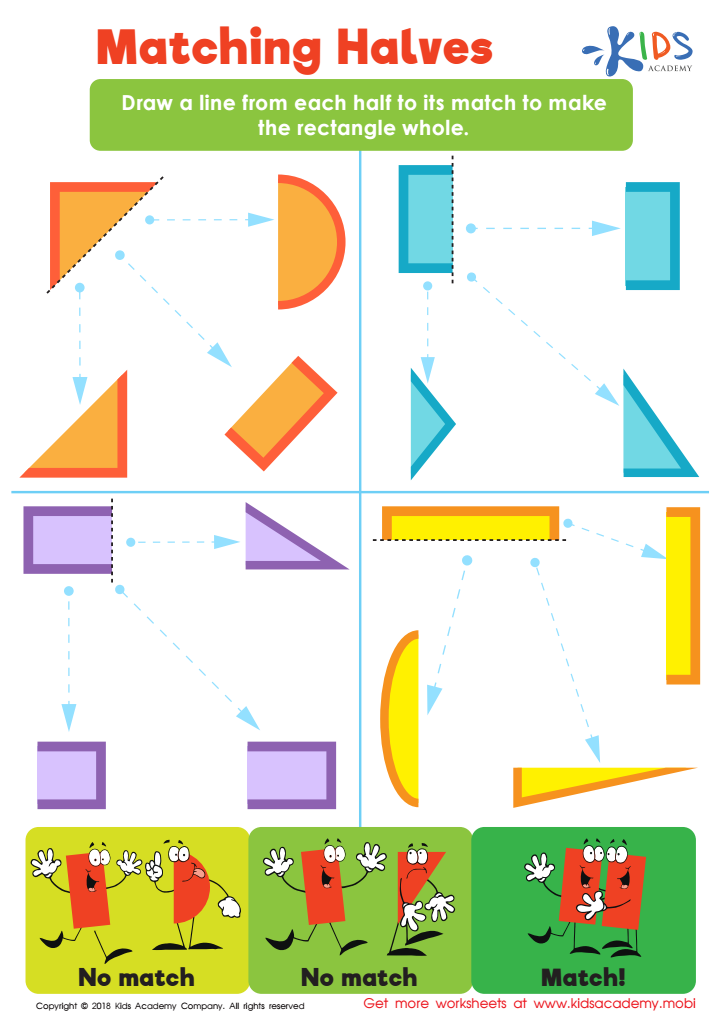
Matching Halves Worksheet
 Assign to My Students











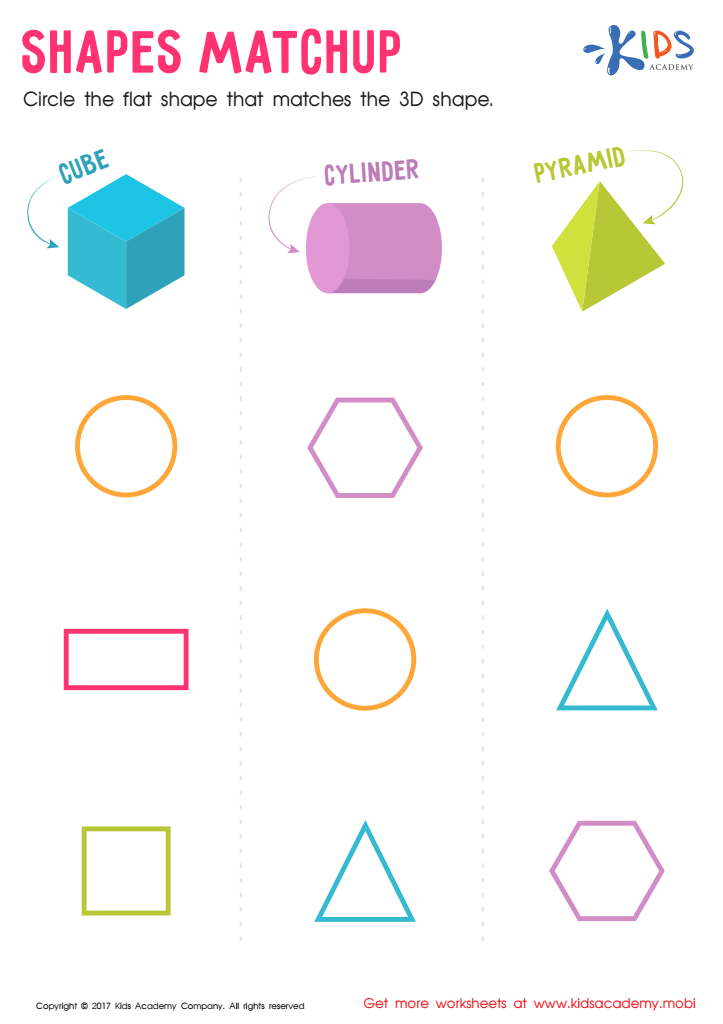
Shapes Matchup Worksheet
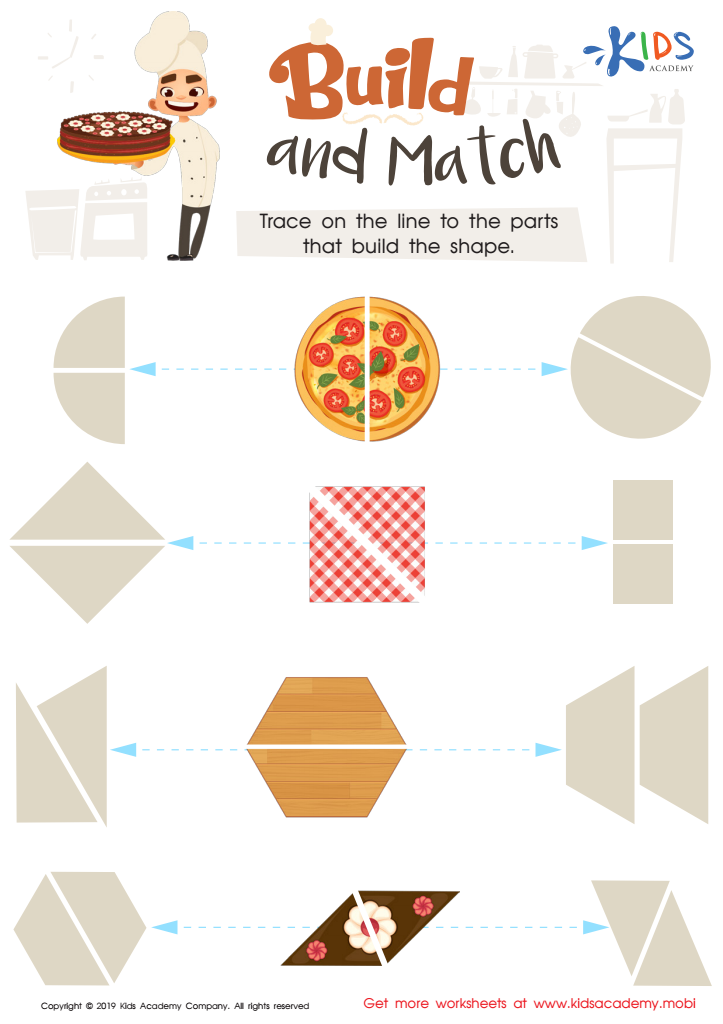
Build and Match Worksheet








Fostering matching skills in geometry for children aged 7-8 is essential for cognitive and academic development. At this age, children are in the crucial period of developing their spatial awareness and reasoning abilities. Matching skills in geometry help solidify these foundational competencies, forming the basis for more advanced mathematical concepts introduced later.
For parents and teachers, emphasizing these skills can significantly enhance a child's problem-solving and logical thinking capabilities. Geometry requires children to recognize patterns, understand shapes and spatial relationships, and develop critical visual skills that are not only essential in mathematics but also in daily life activities, such as reading maps, organizing spaces, and even understanding the physical world around them.
Moreover, early exposure to matching geometry skills cultivates perseverance and attention to detail. These activities often require children to focus and differentiate between subtle differences and similarities, boosting their attention span and encouraging meticulous work habits.
Research also indicates a strong correlation between early geometry skills and future success in STEM fields. By prioritizing geometry matching exercises, parents and teachers provide children with a competitive edge, equipping them with the confidence and competence needed for future academic challenges, fostering both their educational growth and overall intellectual development.








