Visual Learning Geometry Worksheets for Ages 7-8
5 filtered results
-
From - To
Unlock the world of shapes and spatial understanding with our Visual Learning Geometry Worksheets for ages 7-8. Designed to captivate young minds, these worksheets use engaging visuals and interactive tasks to make geometry concepts easy and fun to learn. As your child explores patterns, symmetry, and geometric relationships, they’ll build a strong foundation and boost their confidence in math. Our easily downloadable and printable activities are perfect for at-home practice, school reinforcement, or enrichment programs. Visit Kids Academy for curated geometry resources that support your child’s growth and make learning an enjoyable adventure!
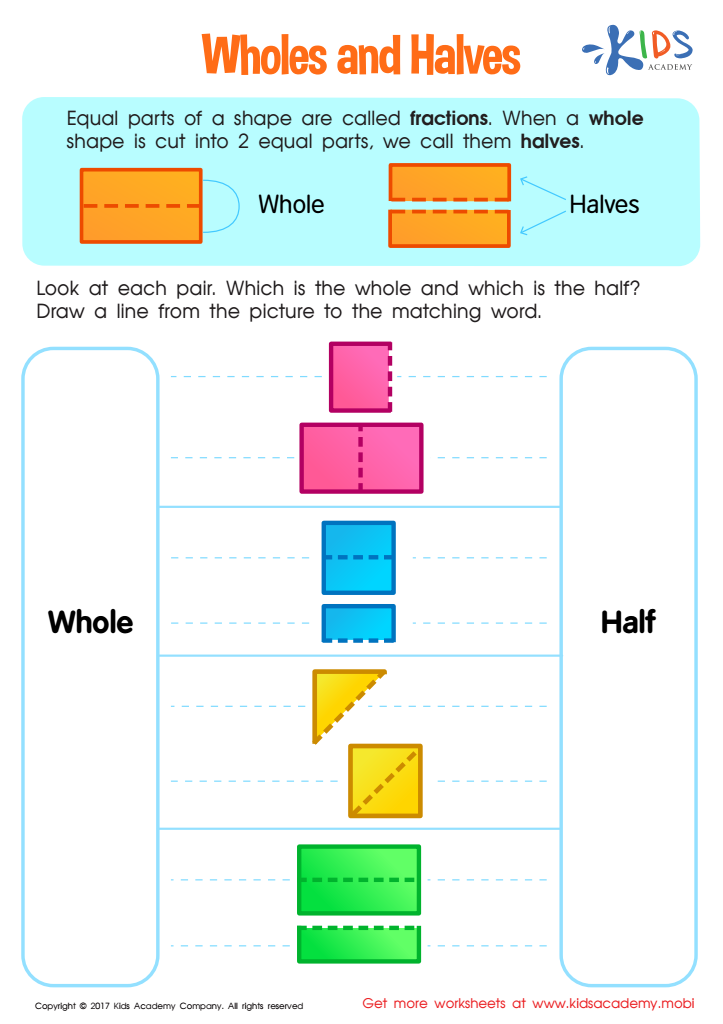
Wholes and Halves Worksheet
 Assign to My Students











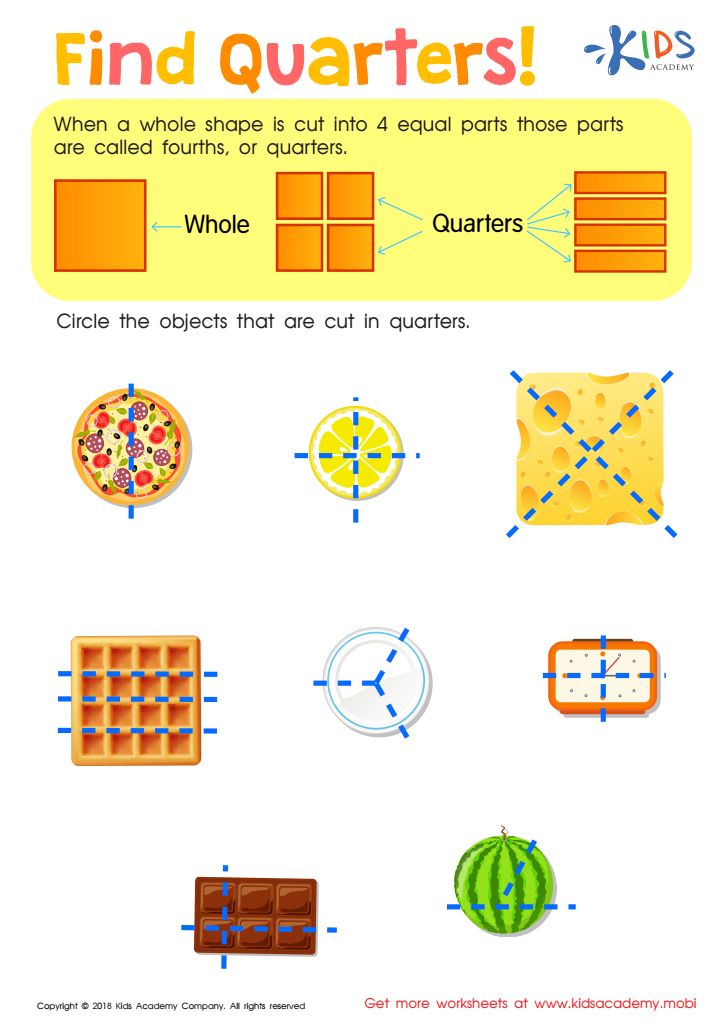
Find Quarters Worksheet
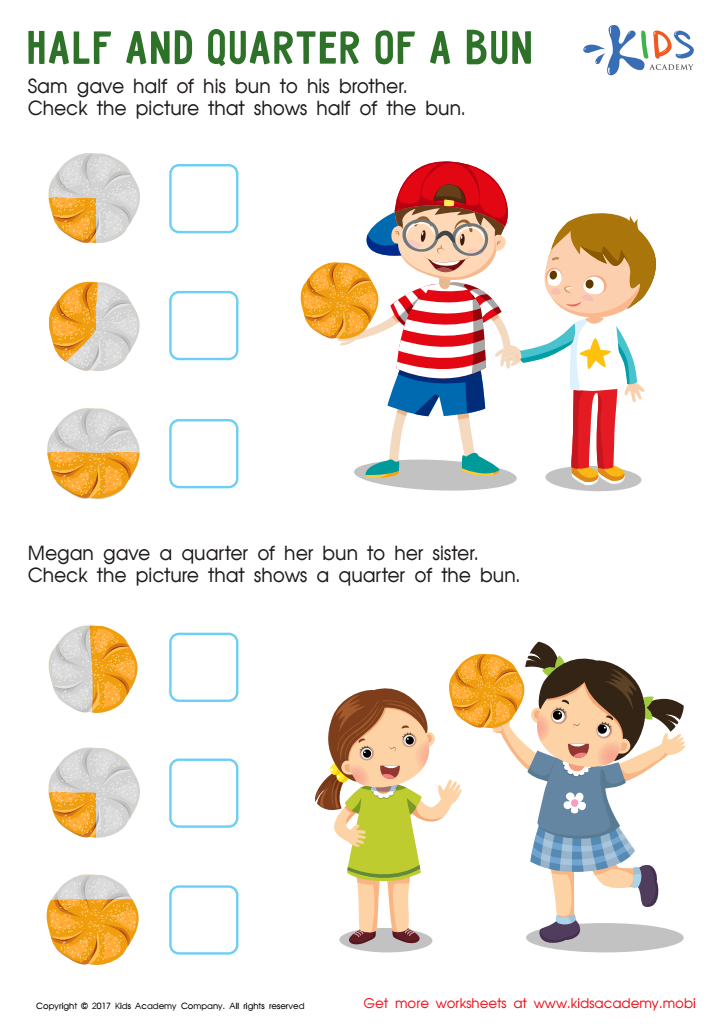
Half and Quarter of a Bun Worksheet
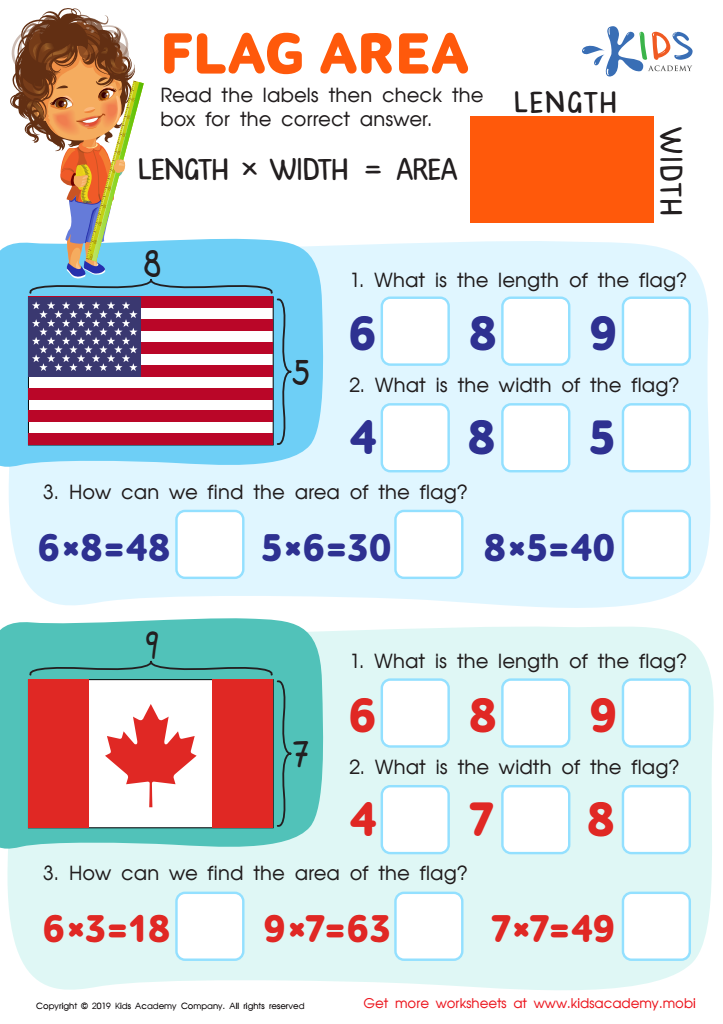
Flag Area Worksheet
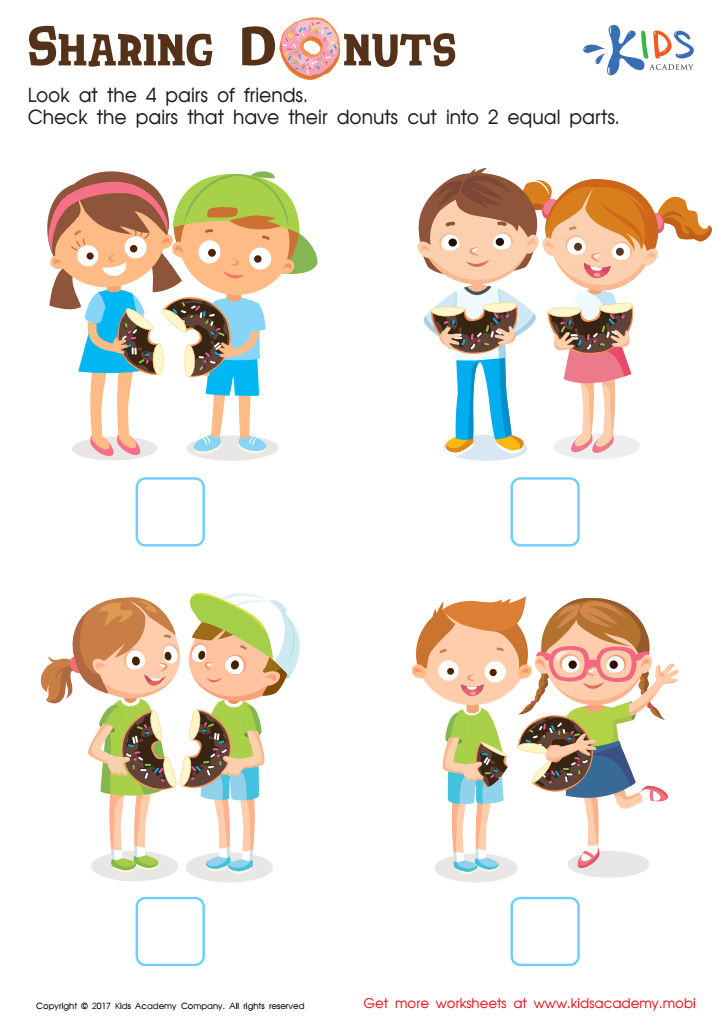
Sharing Donuts Worksheet








Visual learning geometry for children aged 7-8 is crucial for their cognitive development and understanding of the world around them. At this stage, kids are naturally curious and tend to learn best through hands-on and visual methods. Geometry helps them recognize shapes, sizes, and patterns, which are all around them in everyday life. This foundational knowledge lays the groundwork for more complex mathematical concepts they will encounter later on.
Moreover, engaging in visual geometry activities enhances spatial reasoning skills, which are essential for problem-solving and critical thinking. For instance, when children work with different shapes, they learn how to visualize and manipulate objects, strengthening their ability to understand and solve problems from various angles.
Visual learning also caters to different learning styles. Some children may find traditional numerical and text-based learning challenging but can excel when information is presented visually. By incorporating visual geometry, teachers and parents can ensure that diverse learners have the opportunity to grasp essential concepts effectively.
In addition, these activities often involve teamwork, enhancing social skills such as communication and collaboration. Overall, integrating visual learning geometry into early education helps build a strong mathematical foundation, improves cognitive abilities, and supports holistic child development, making it a vital component of early learning curricula.








