Vocabulary enhancement Geometry Worksheets for Ages 7-8
5 filtered results
-
From - To
Discover our engaging Vocabulary Enhancement Geometry Worksheets designed for children aged 7-8! These worksheets are specifically crafted to improve mathematical terminology while exploring key geometric concepts. Young learners will enjoy playful activities that not only strengthen their vocabulary but also enhance their understanding of shapes, angles, and spatial reasoning. With fun and interactive exercises, students can connect geometric vocabulary to real-life scenarios, making learning both relevant and enjoyable. Ideal for classroom use or at-home practice, our resources foster confidence and knowledge in young mathematicians. Equip your child with the language skills needed to excel in geometry today!
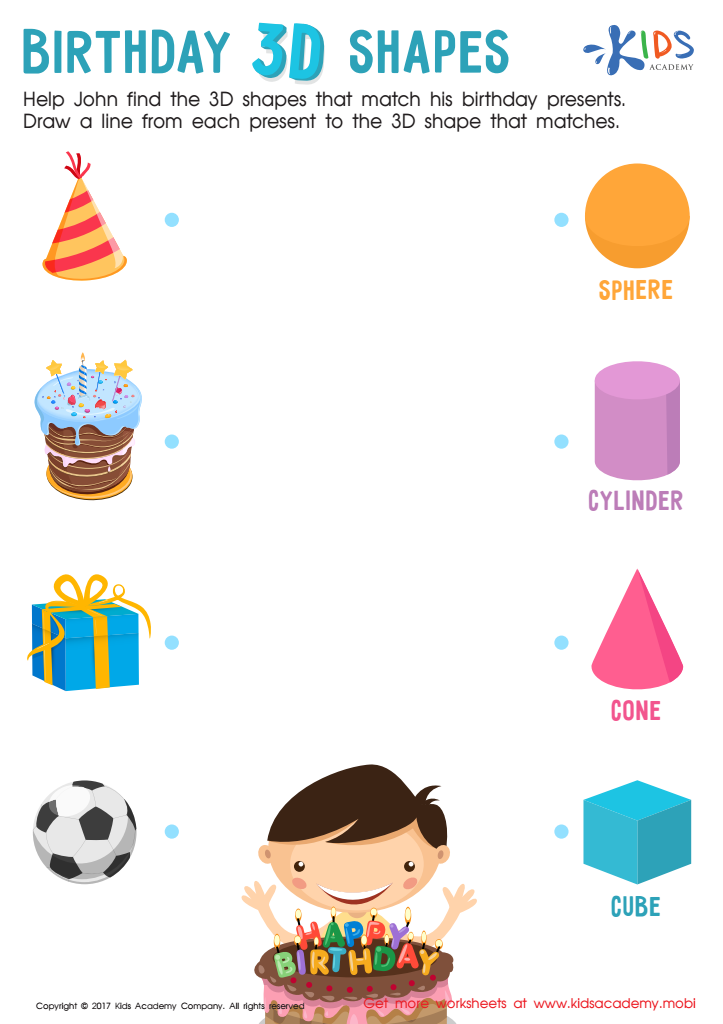
Birthday 3D Shapes Worksheet
 Assign to My Students











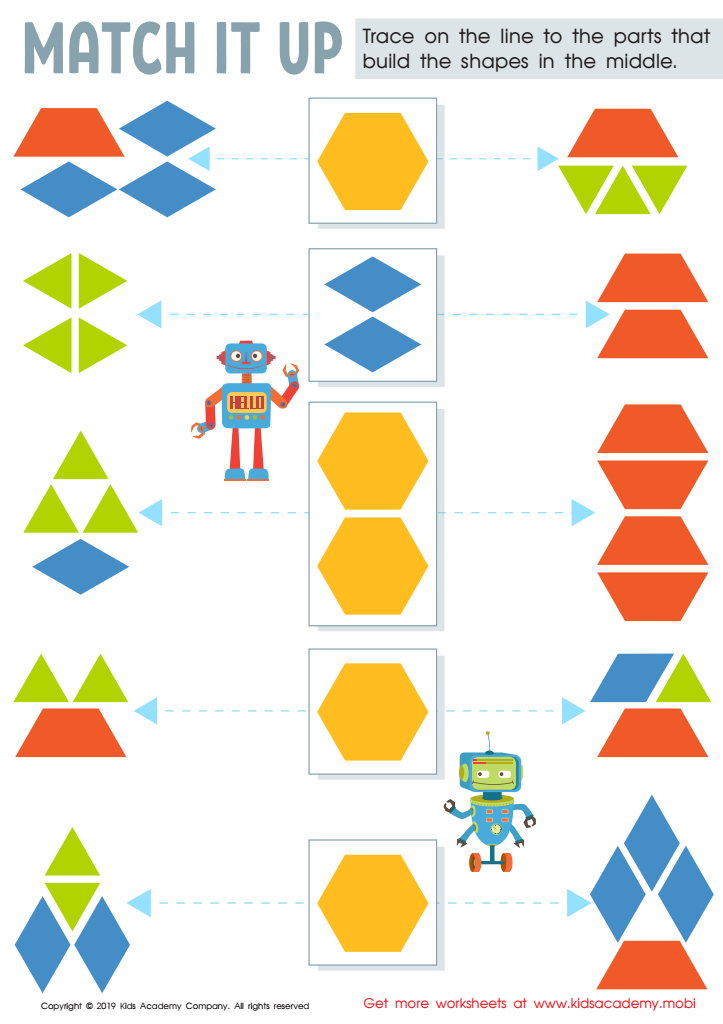
Match It up Worksheet
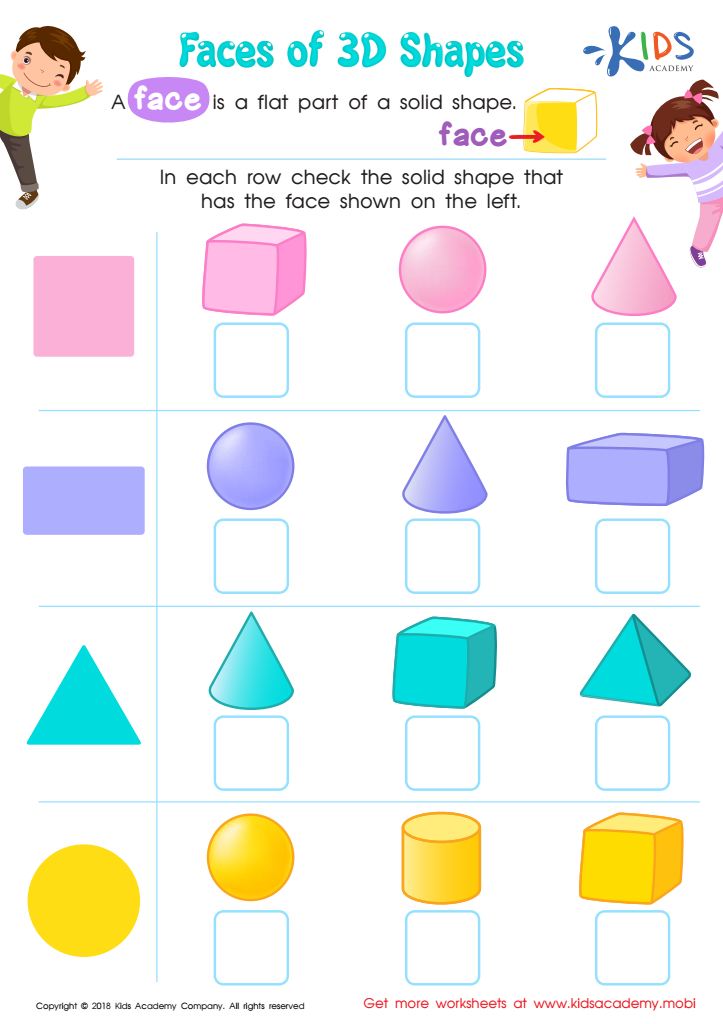
Faces of 3D Shapes Worksheet
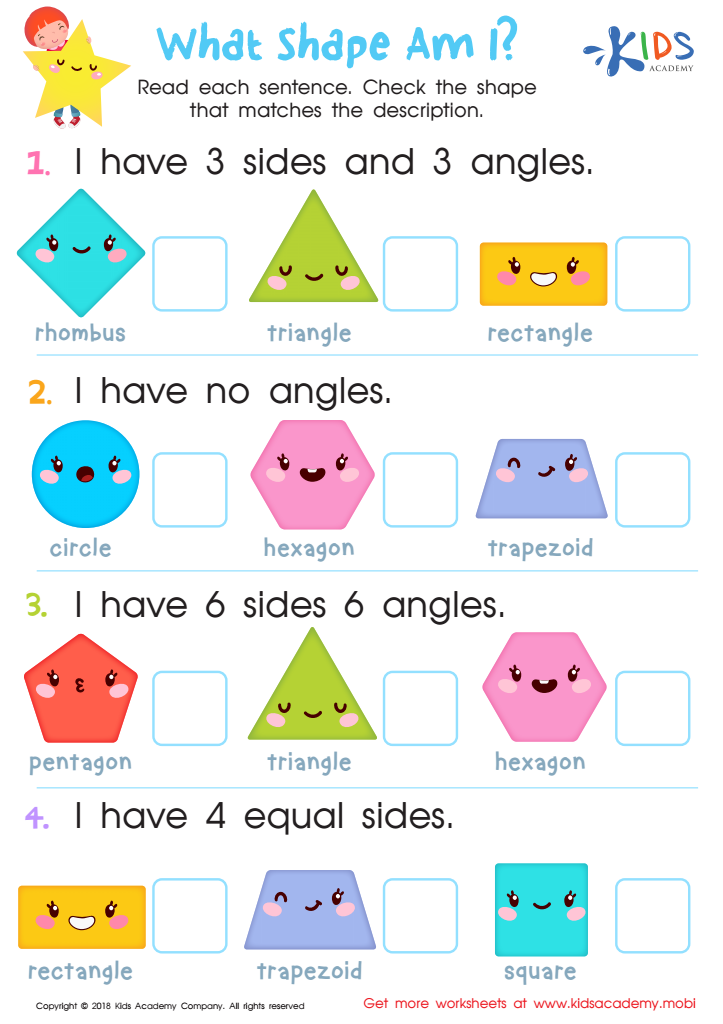
What Shape Am I? Worksheet
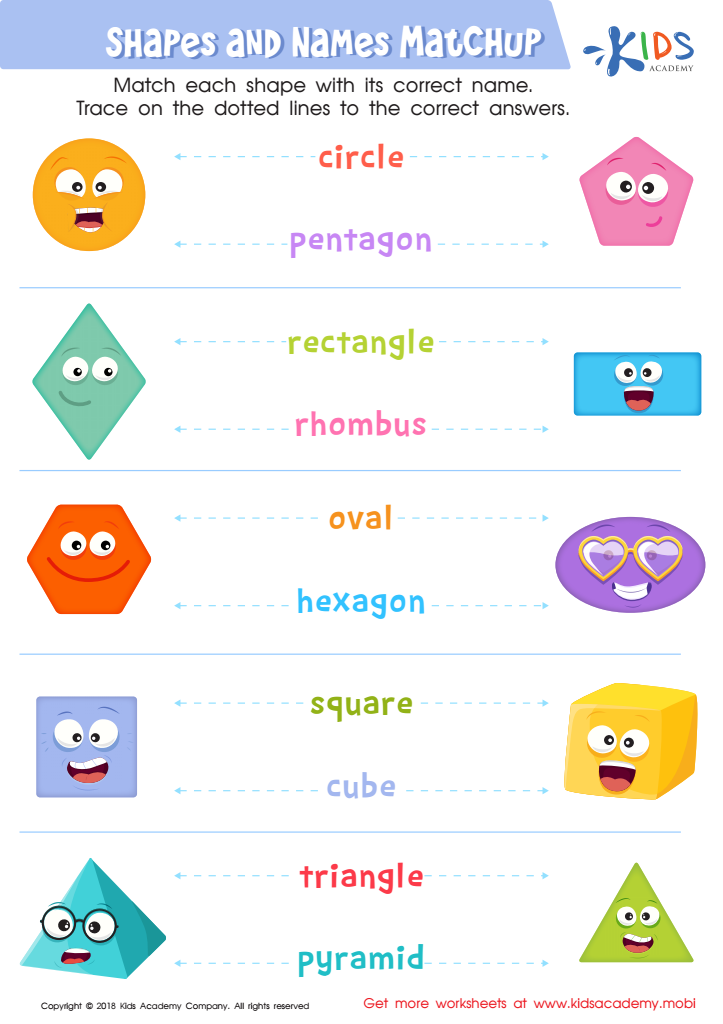
Shapes and Names Matchup Worksheet








Vocabulary enhancement in geometry for children ages 7-8 is crucial as it lays the foundation for mathematical understanding and critical thinking. At this age, students begin to explore basic geometric concepts such as shapes, angles, and spatial relationships. A rich vocabulary empowers them to articulate their understanding, discuss ideas confidently, and solve problems effectively.
When parents and teachers prioritize vocabulary development in geometry, they help children make connections between mathematical terms and real-world applications. Mastering terms like “triangle,” “perimeter,” and “symmetry” fosters spatial reasoning skills and encourages curiosity about the world around them. Enhanced vocabulary also aids in comprehension when children encounter geometry in more advanced mathematical contexts or standardized tests.
Additionally, engagement with geometric vocabulary promotes collaboration among peers. Children learn to communicate their thought processes clearly, fostering a supportive learning environment that enhances problem-solving abilities.
Overall, investing time in vocabulary enhancement in geometry enriches a child's educational experience, developing not just their mathematical skills but also their communicative abilities, critical thinking, and confidence. Involvement from parents and teachers ensures that children gain a well-rounded foundation in math that will serve them throughout their academic journey.








