Understanding number relationships Numbers Worksheets for Ages 7-8
3 filtered results
-
From - To
Enhance your child's math skills with our "Understanding Number Relationships" worksheets, designed specifically for ages 7-8. These engaging printable resources help young learners explore the connections between numbers through various fun activities, including number comparisons, ordering, and simple addition and subtraction. By reinforcing key concepts, our worksheets promote a strong foundation in numerical understanding, crucial for future math success. Each activity encourages critical thinking and helps solidify number relationships in a playful way. With colorful illustrations and age-appropriate challenges, these worksheets provide an effective approach to learning that will keep your child excited about math. Download your worksheets today!
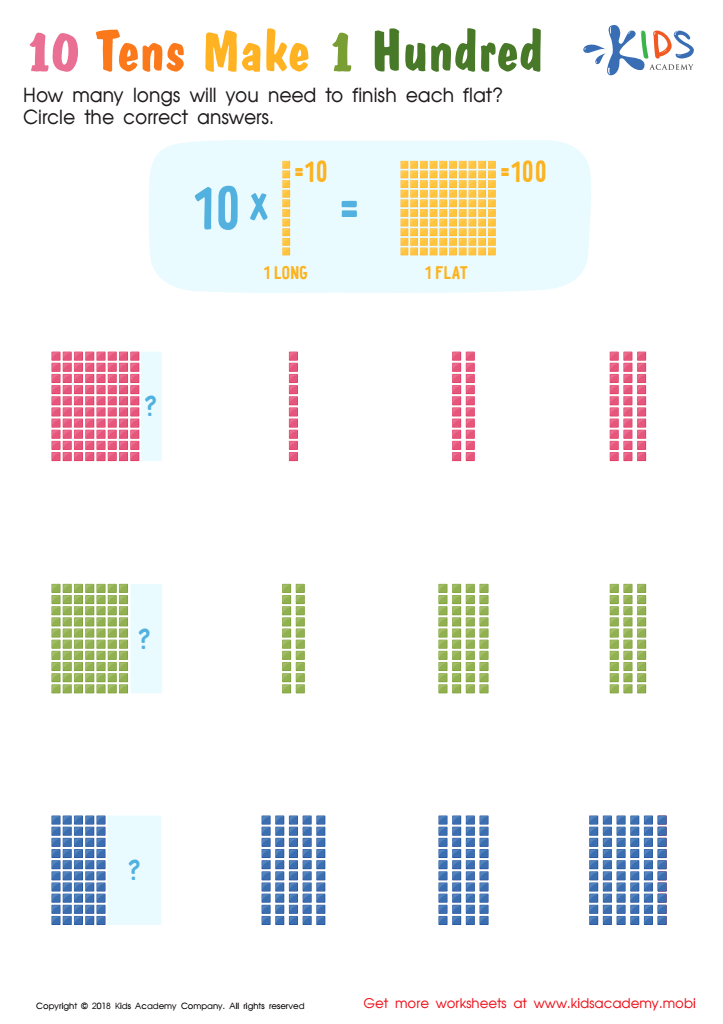
10 Tens Make 1 Hundred Worksheet
 Assign to My Students
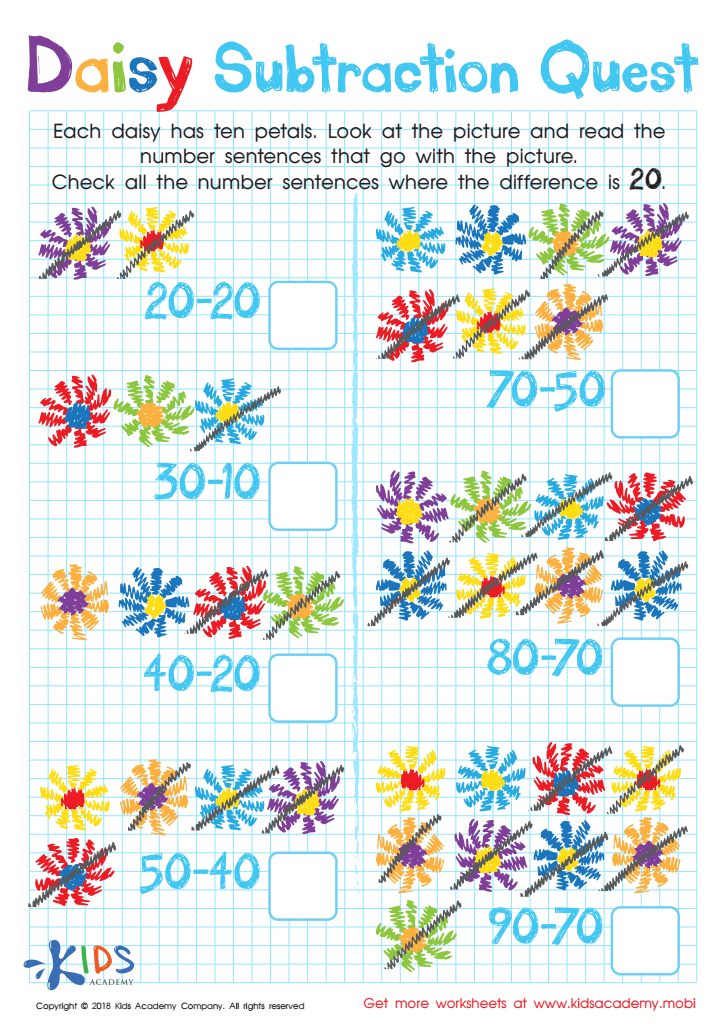
Daisy Subtraction Quest Worksheet
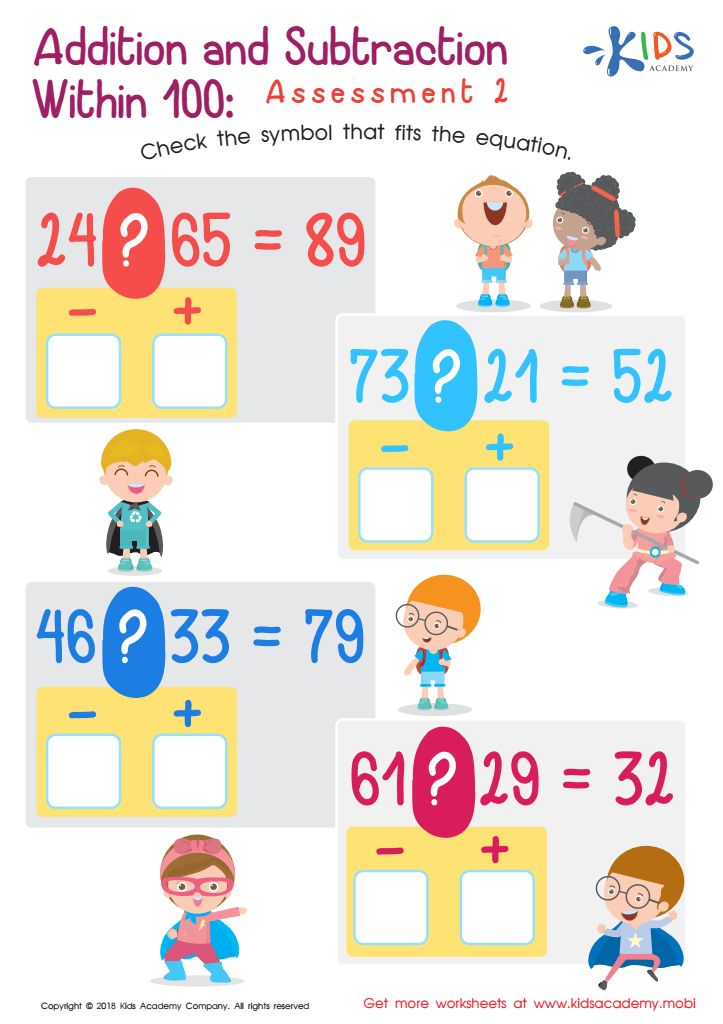
Addition and Subtraction Within 1: Assessment 2 Worksheet








Understanding number relationships is a crucial building block in a child's mathematical development, especially for ages 7 to 8. At this age, students transition from simple arithmetic to more complex mathematical concepts, which include addition, subtraction, multiplication, and division. Grasping the relationships between these numbers allows children to develop a deeper comprehension of how numbers interact, assisting them in solving problems more efficiently.
When parents or educators emphasize the importance of number relationships, they help students build a strong foundation for future mathematical learning. Children learn to identify patterns, which fostering critical thinking and problem-solving skills. This comprehension not only enhances their ability to tackle math challenges but also builds their confidence in the subject.
Furthermore, understanding number relationships promotes the development of mental math skills, enabling students to work with numbers flexibly and creatively. It sets the stage for advanced concepts such as fractions, decimals, and algebra later on.
By nurturing a solid understanding of number relationships at this formative age, parents and teachers play an essential role in shaping students into proficient and enthusiastic learners, equipping them with tools they need for academic success and everyday life. The implications of strong numerical understanding reach far beyond the classroom, influencing overall cognitive development.








