
Visual perception Numbers Worksheets for Ages 7-8
8 filtered results
Difficulty Level
Grade
Age
-
From - To
Subject
Activity
Standards
Enhance your child's learning with our Visual Perception Numbers Worksheets designed for ages 7-8! These engaging, printable resources help children develop essential skills in recognizing and interpreting numbers through fun activities. Our worksheets include exercises that challenge visual discrimination, visual memory, and spatial awareness, creating a solid foundation for future mathematical concepts. Ideal for home or classroom use, these worksheets encourage critical thinking and promote a deeper understanding of numbers in a visually stimulating format. Foster your child's love for learning while improving their visual perception skills today! Access our collection and watch them thrive on their mathematical journey!
Favorites
With answer key
Interactive
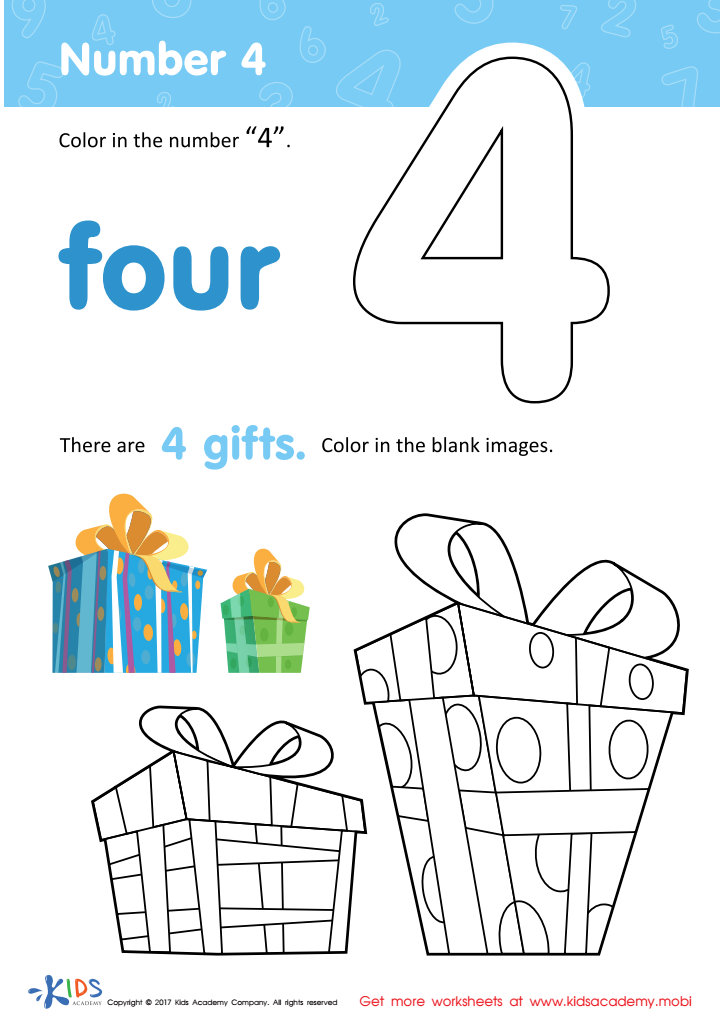
Number 4 Printable
Kids love gifts! Give your child a learning opportunity with this number 4 coloring page. As they design their own wrapping paper, they'll learn to read and recognize the number four. An exciting way to have fun and learn at the same time!
Download (PDF)
 Assign to My Students
Assign to My Students
Number 4 Printable
Worksheet
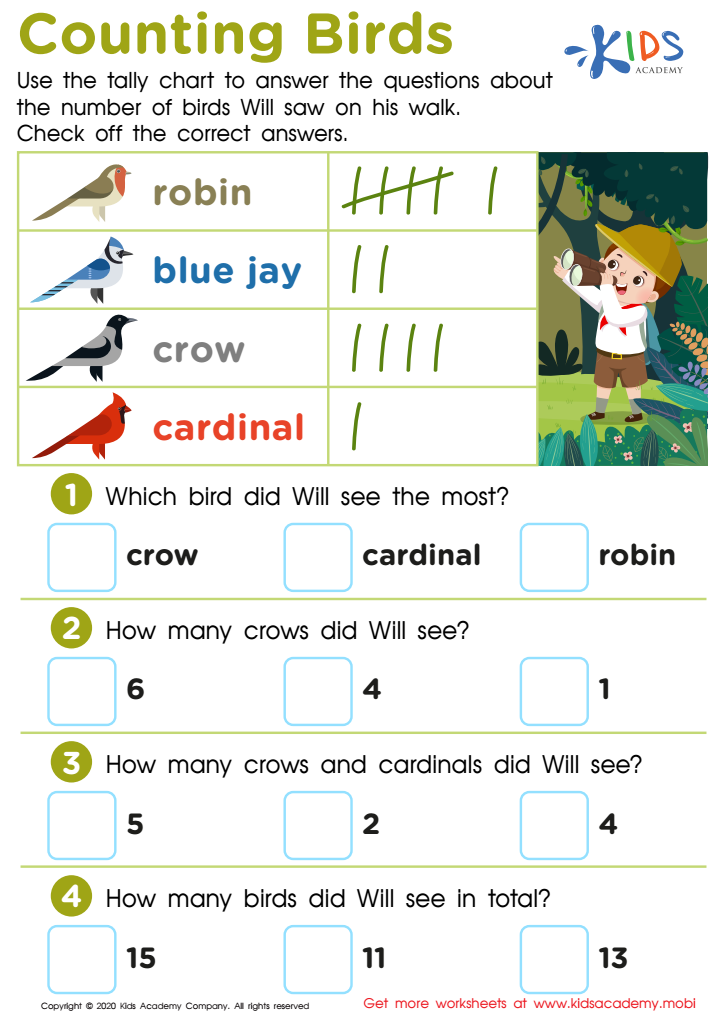
Counting Birds Worksheet
Introduce your child to the exciting activity of bird watching! This PDF worksheet features a tally chart of the different types of birds Will saw on his walk. Have your kid use the tally chart to organize information and use it to answer the questions that follow, thus boosting early science and math skills.
Counting Birds Worksheet
Worksheet
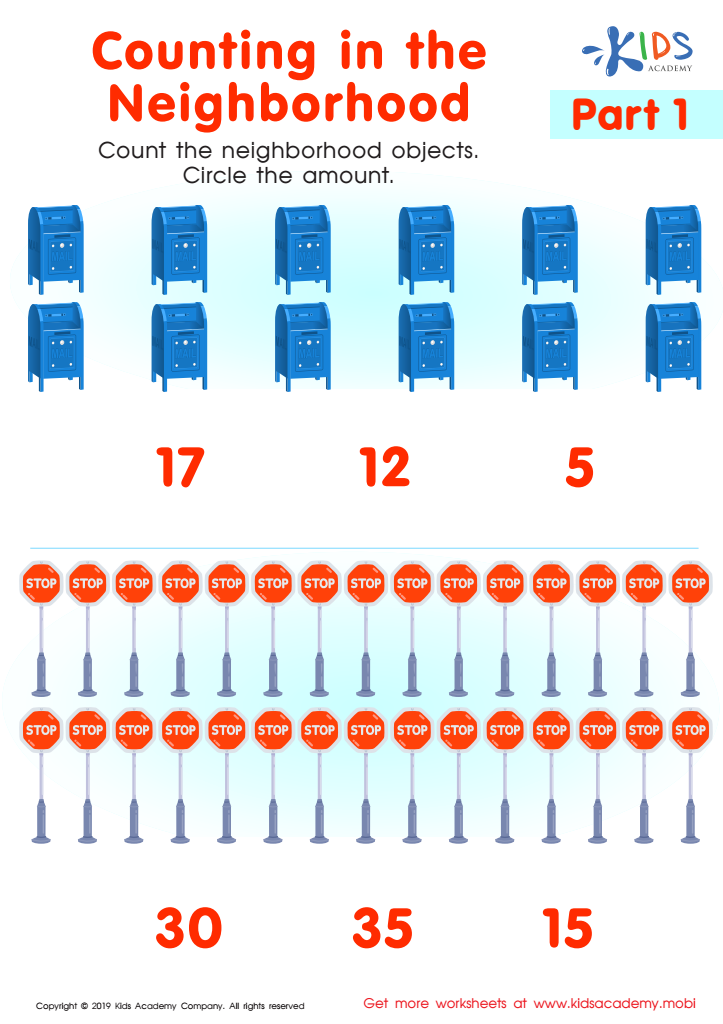
Counting in the Neighborhood Part1 Worksheet
Counting using one-to-one representation is a great way to develop a child's number sense. Use objects, pictures and images to help counting beyond the fingers. This worksheet uses everyday objects to practice counting. It encourages children to find the correct number and count forward. Give it a try!
Counting in the Neighborhood Part1 Worksheet
Worksheet
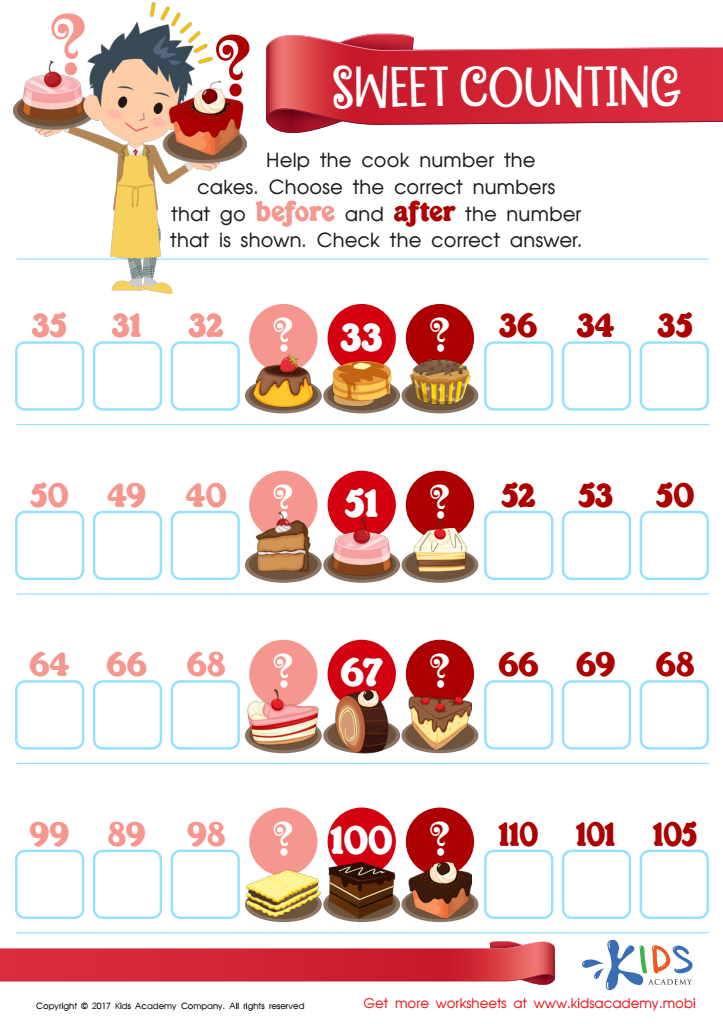
Sweet Counting - Part 1 Worksheet
Help your child learn numbers by counting cakes! Download this fun worksheet and have them fill in the numbers missing in the line of cakes. They'll have fun helping the cook and be learning at the same time!
Sweet Counting - Part 1 Worksheet
Worksheet
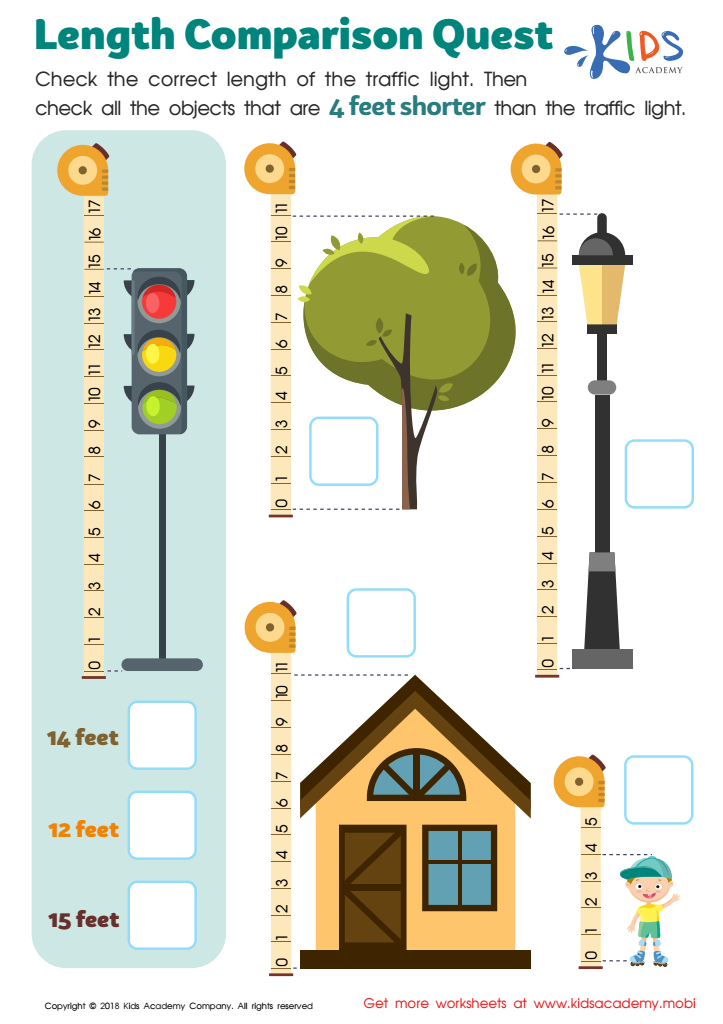
Length Comparison Quest Worksheet
Knowing measurement tools and how to use them is just the start. To be proficient, your kid must be able to accurately compare objects and their lengths. With the 'Length Comparison Quest' worksheet, they will check the correct length of the traffic light in the picture and then compare other objects to it, marking those that measure 4 feet shorter.
Length Comparison Quest Worksheet
Worksheet
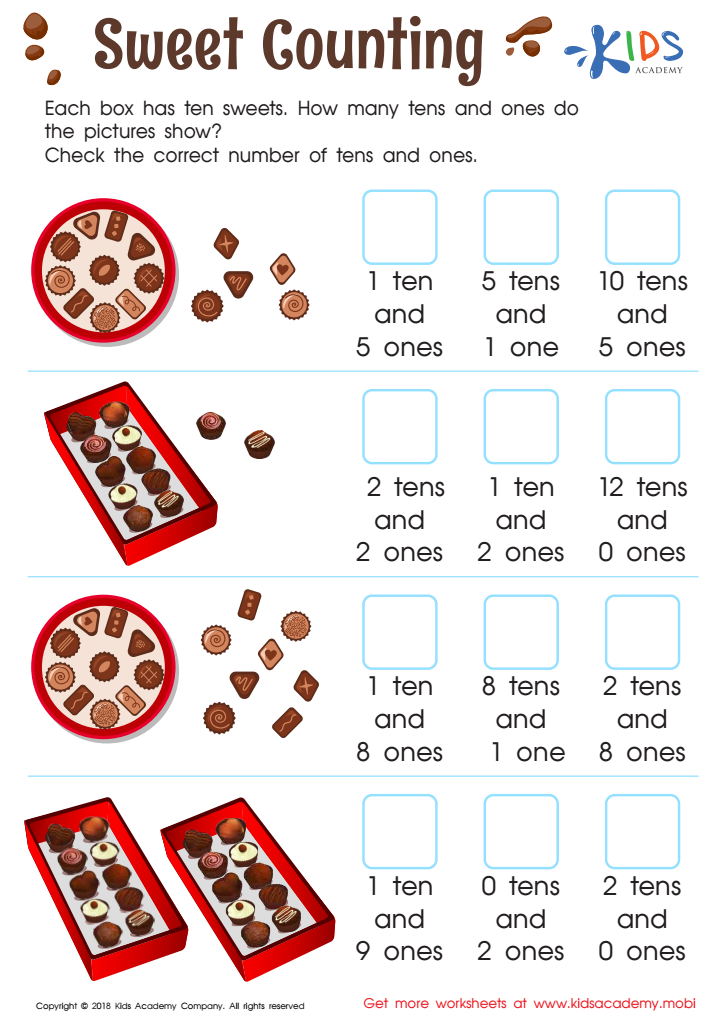
Sweet Counting - Part 2 Worksheet
Kids adore sweets! Make counting fun with this sweet-themed worksheet. Guide your child to count chocolates in boxes of 10, plus individual candies. Group them into tens and ones. Ask: "How many ones and tens are in each row?" Check the answer and complete the practice sheet.
Sweet Counting - Part 2 Worksheet
Worksheet
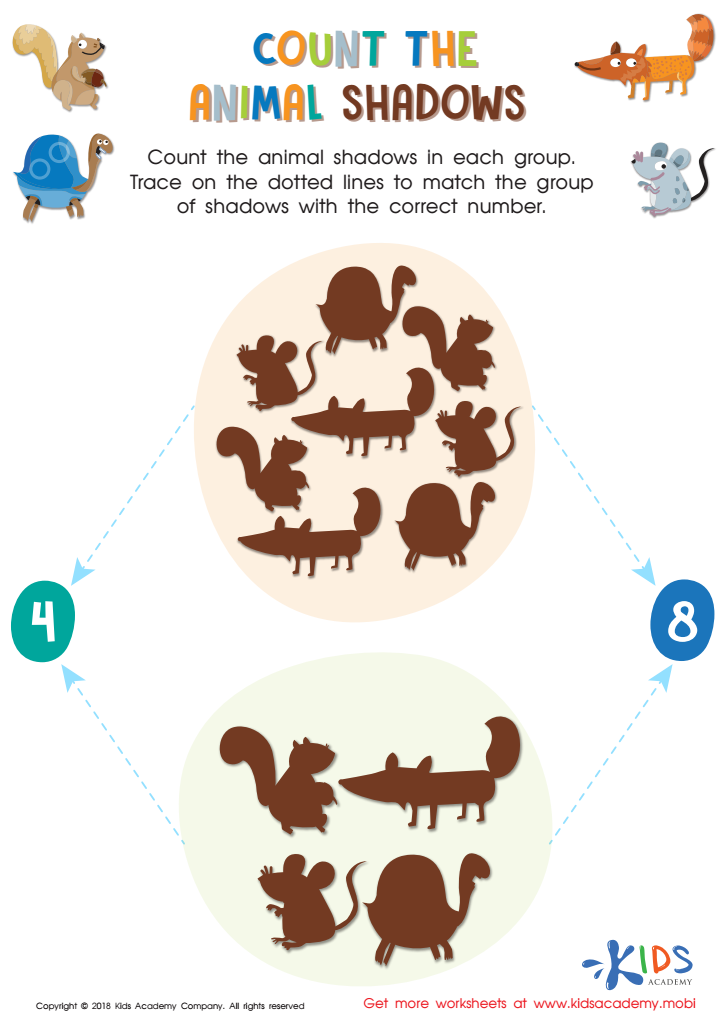
Count the Animal Shadows Worksheet
Our shadows accompany us wherever we go. Even your kids have seen theirs! Did they know that animals have shadows too? Count the animal shadows in each group with this worksheet. Ask your child to identify the animals pictured, then help them trace the dotted lines to match with the right number.
Count the Animal Shadows Worksheet
Worksheet
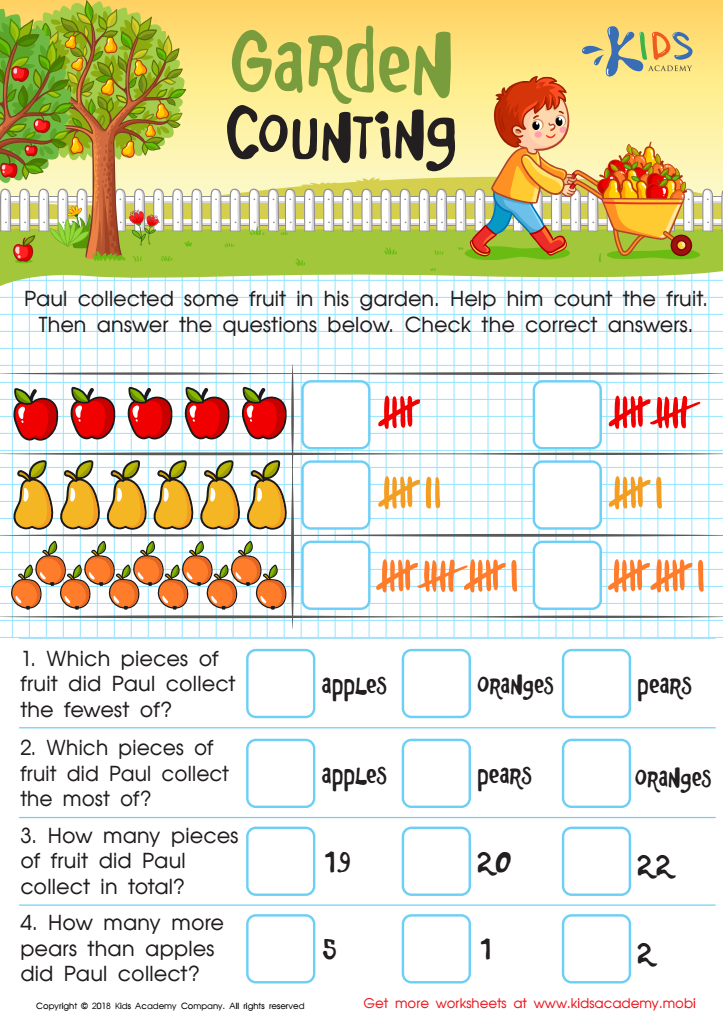
Garden Counting Worksheet
Help Paul count his fruit! Look at each type and count the total; check the box with the right number. Answer the questions below to report your findings and the types of fruit. Let's help Paul count his delicious harvest!
Garden Counting Worksheet
Worksheet
Join Kids Academy for Free
Who is primarily going to use this learning content?






%20(1).jpg)
Visual perception is a crucial skill for children aged 7-8, as it forms the foundation for understanding numbers and mathematical concepts. At this age, children are refining their abilities to recognize, interpret, and organize visual information, which directly impacts their proficiency in math. Parents and teachers should care about enhancing visual perception numbers because these skills are essential for success in various academic tasks and everyday situations.
Children using visual perception effectively can quickly distinguish between similar quantities, recognize patterns, and grasp spatial relationships—key components when working with numbers. Strong visual perception skills support mathematical problem-solving, enabling children to visualize solutions and strategies. Furthermore, difficulties in visual perception can lead to challenges such as confusion in reading graphs, interpreting charts, or completing math problems accurately, ultimately affecting their confidence and attitudes towards learning.
By focusing on visual perception, parents and teachers can help children develop not only their numerical understanding but also critical thinking and analytical skills, laying the groundwork for higher-level math and logic in the future. Engaging in activities that promote visual perception—like puzzles, manipulatives, or interactive games—can make learning enjoyable and effective, fostering a lifelong love of learning and discovery in mathematics.








