Analog Clock Understanding Math Worksheets for Ages 7-8
3 filtered results
-
From - To
Explore our "Analog Clock Understanding Math Worksheets" designed specifically for ages 7-8! These engaging worksheets help young learners grasp the concept of time through interactive activities that reinforce their ability to read analog clocks. Kids will practice identifying hour and minute hands, telling time to the nearest five minutes, and solving time-related problems. With colorful illustrations and age-appropriate challenges, these worksheets make learning about analog clocks enjoyable and effective. Perfect for classroom use or at-home learning, this resource supports foundational math skills that children will build on throughout their education. Start your child's journey to mastering time today!
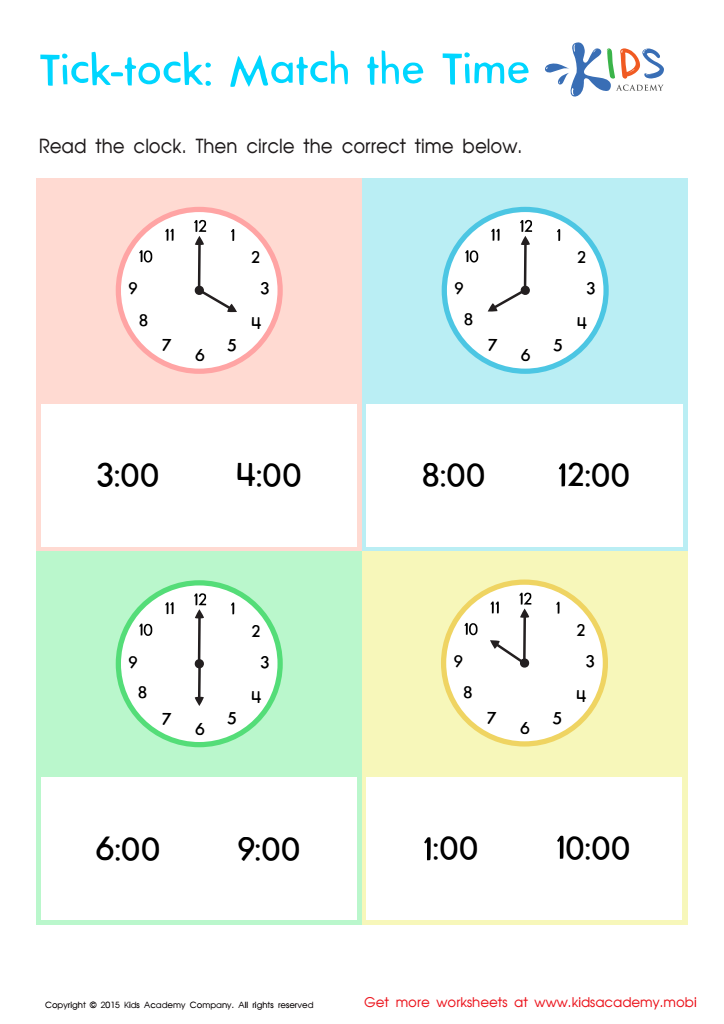
Telling The Time Worksheet: Part 4
 Assign to My Students
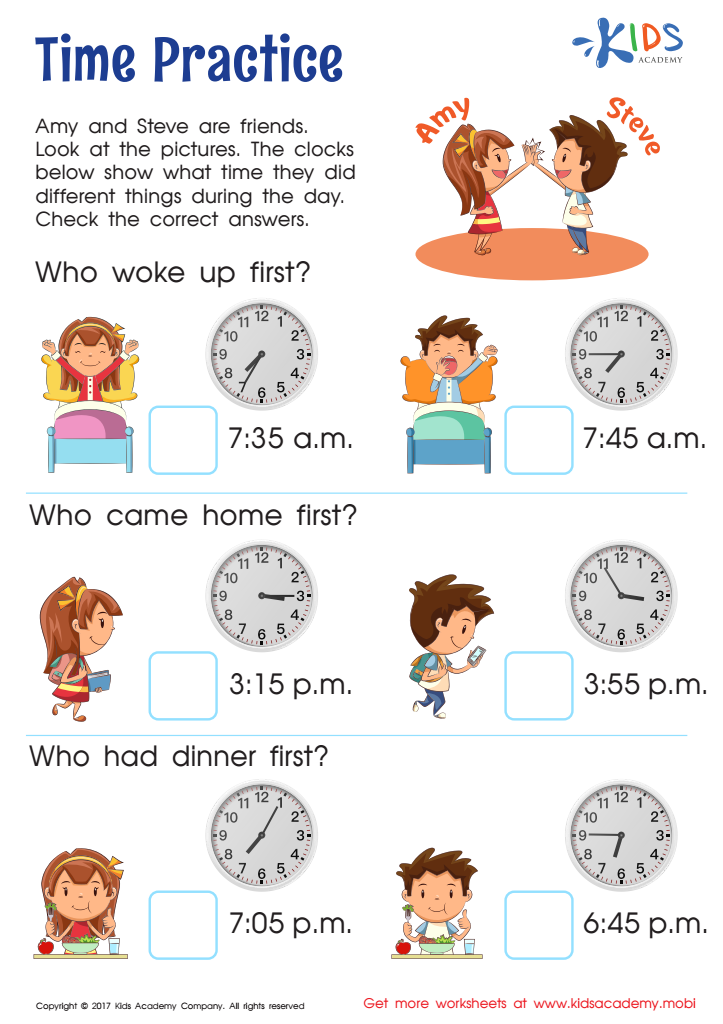
Time Practice Worksheet
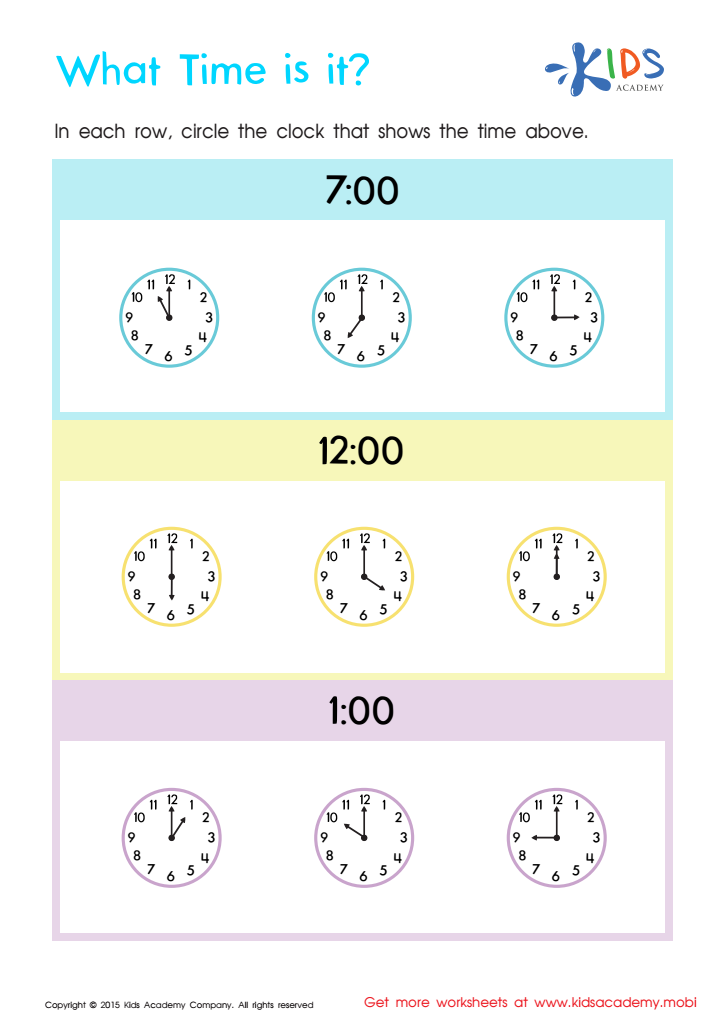
Telling The Time Worksheet: Part 3








Understanding how to read an analog clock is crucial for children aged 7-8 as it fosters essential cognitive and practical skills. First, learning to tell time on an analog clock enhances mathematical abilities, as it involves concepts like division, addition, and fractions. Children learn to divide the clock into hours and minutes, helping them grasp the idea of fractions and the relationship between numbers.
Moreover, analog clocks promote spatial awareness and help develop fine motor skills as children manipulate clock hands. This tactile experience aids in cognitive development, reinforcing learning through interaction.
Beyond academics, proficiency in reading an analog clock is vital for real-world applications. It cultivates independence, encouraging children to manage their time effectively, whether it’s arriving at school on time, participating in extracurricular activities, or allocating study sessions.
Additionally, in a digital age, where screens prevail, ensuring children can read traditional clocks cultivates a balanced skill set. It allows them to engage with a variety of real-life situations, from public transport to participating in activities where an analog clock is present. Therefore, parents and teachers must prioritize analog clock understanding to equip children with fundamental life skills and enrich their overall mathematical education.








