
Animal identification Math Worksheets for Ages 7-8
3 filtered results
Difficulty Level
Grade
Age
-
From - To
Subject
Activity
Standards
Discover our engaging Animal Identification Math Worksheets designed specifically for children ages 7-8! These worksheets combine fun animal-themed activities with essential math skills, fostering a love for learning while enhancing critical reasoning and problem-solving abilities. Ideal for classroom or at-home learning, each worksheet features vibrant illustrations and thought-provoking exercises that challenge kids to identify various animals while practicing their math skills. With a variety of problems tailored to different learning levels, these worksheets will help your child build confidence in math while expanding their knowledge of the animal kingdom. Explore the wonders of nature and math together today!
Favorites
With answer key
Interactive
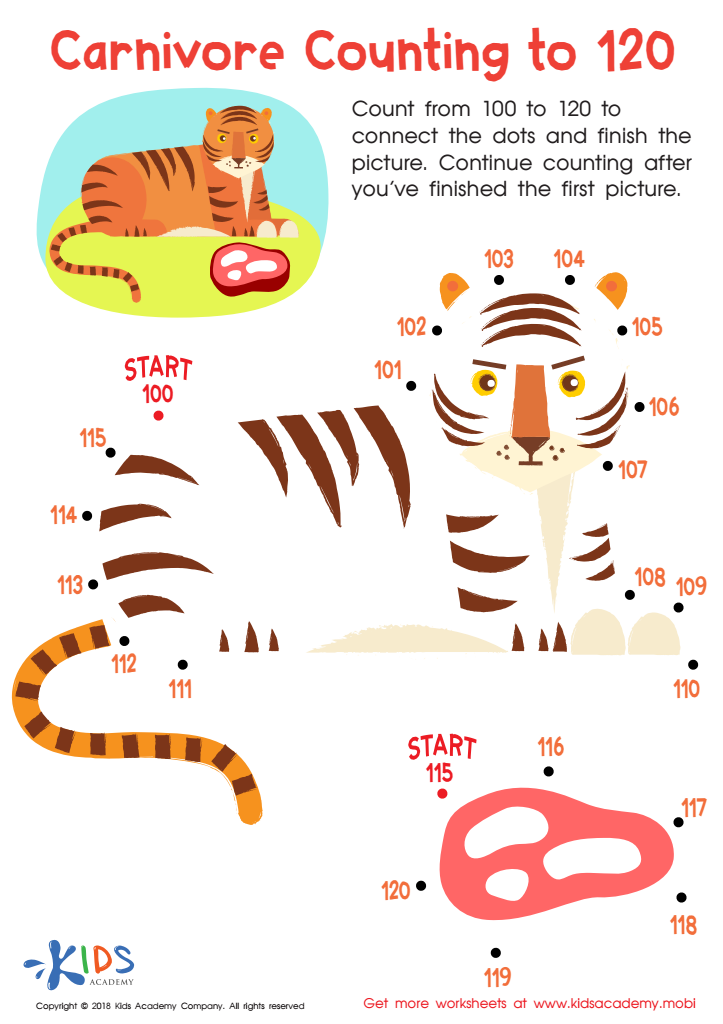
Carnivore Counting to 120 Worksheet
Ask your child to name some popular carnivores. Can they tell you what the animal in the worksheet is? A Tiger? Get them to count from 100 to 120 to connect the dots. After they finish the first picture, keep counting to help them practice!
 Assign to My Students
Carnivore Counting to 120 Worksheet
Worksheet
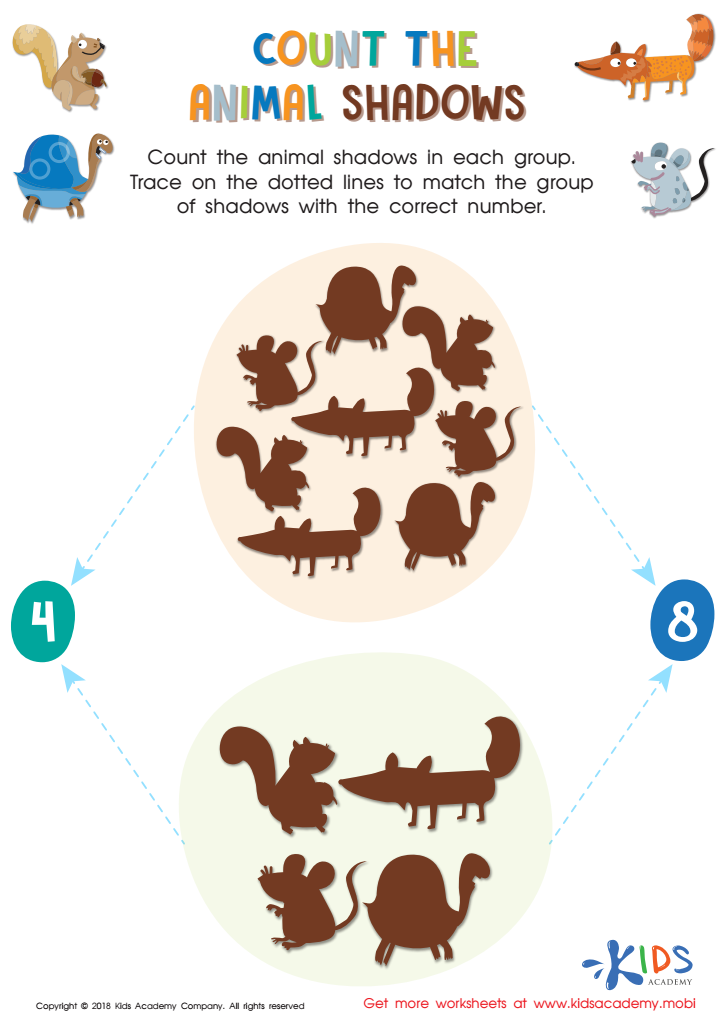
Count the Animal Shadows Worksheet
Our shadows accompany us wherever we go. Even your kids have seen theirs! Did they know that animals have shadows too? Count the animal shadows in each group with this worksheet. Ask your child to identify the animals pictured, then help them trace the dotted lines to match with the right number.
Count the Animal Shadows Worksheet
Worksheet
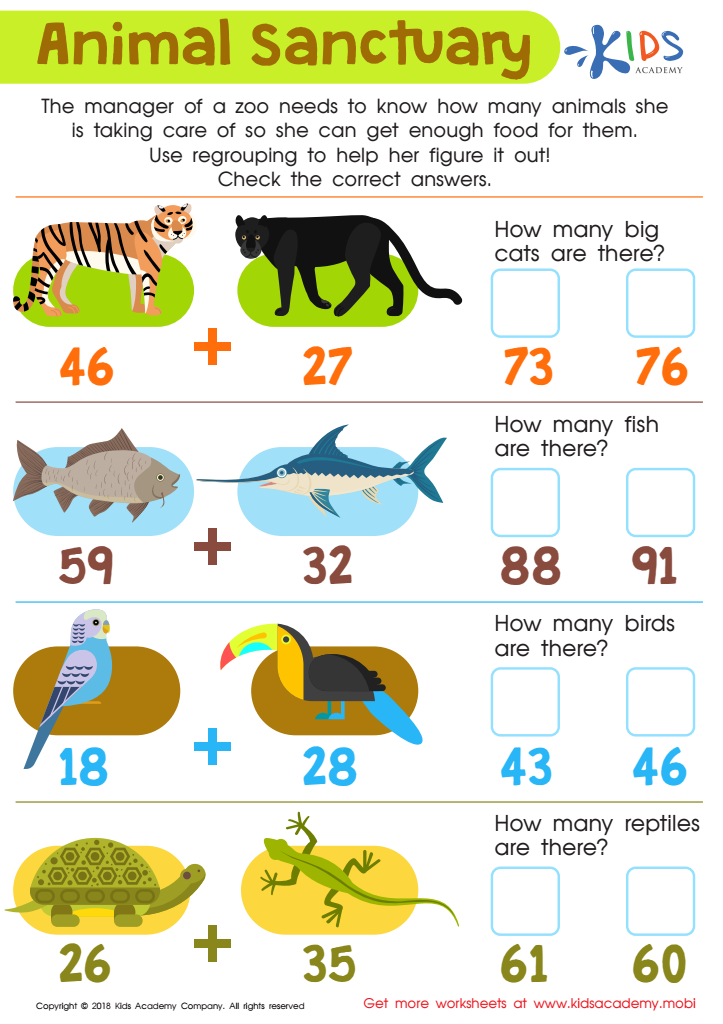
Animal Sanctuary Worksheet
Do your kids love visiting the zoo? Ask which animals they remember & which ones they liked the most. The manager needs help to get enough food for all the animals. Help your child use regrouping to figure out how many animals there are. And ask them to check the answers.
Animal Sanctuary Worksheet
Worksheet
Join Kids Academy for Free
Who is primarily going to use this learning content?


.jpg)





Animal identification math is a crucial educational tool for children aged 7-8 as it seamlessly blends math skills with engaging, real-world contexts, making learning both enjoyable and applicable. At this age, students are developing foundational math skills such as addition, subtraction, and categorization. Incorporating animals into these mathematical concepts not only captivates their attention but also enhances their understanding through tangible experiences.
By learning to identify and classify animals, children can practice measurements, tallying, and basic statistics. This process encourages critical thinking and problem-solving, helping them grasp concepts like comparison and sequences. Understanding animal characteristics (such as size, habitat, and diet) can foster scientific inquiry, promoting curiosity about nature and the environment.
Additionally, this approach encourages cross-curricular learning, connecting math with science and language arts. Parents and teachers should prioritize animal identification math to nurture a holistic development framework that cultivates a love for learning. Not only does this method equip young learners with essential math skills, but it also builds empathy and awareness of biodiversity, instilling values of conservation and respect for wildlife from an early age. Overall, it's a powerful way to bridge math education with meaningful real-world connections.








