Boost your child's math proficiency with our Categorization Skills Math Worksheets for ages 7-8. These engaging, age-appropriate worksheets from Kids Academy are designed to enhance your child's critical thinking and problem-solving abilities. Through fun, interactive activities, children will learn to categorize and classify items, which reinforces their understanding of mathematical concepts. Perfect for strengthening foundational skills, our worksheets help students recognize patterns, sort objects by various attributes, and develop logical reasoning. Ideal for both classroom and at-home learning, these worksheets support young learners in building the skills they need for future math success.
Check out this FREE Trial Lesson on Math for age 7-8!

Categorizing Shapes

Favorites
With answer key
Interactive
  • 7-8
  • Categorization skills
  • Math
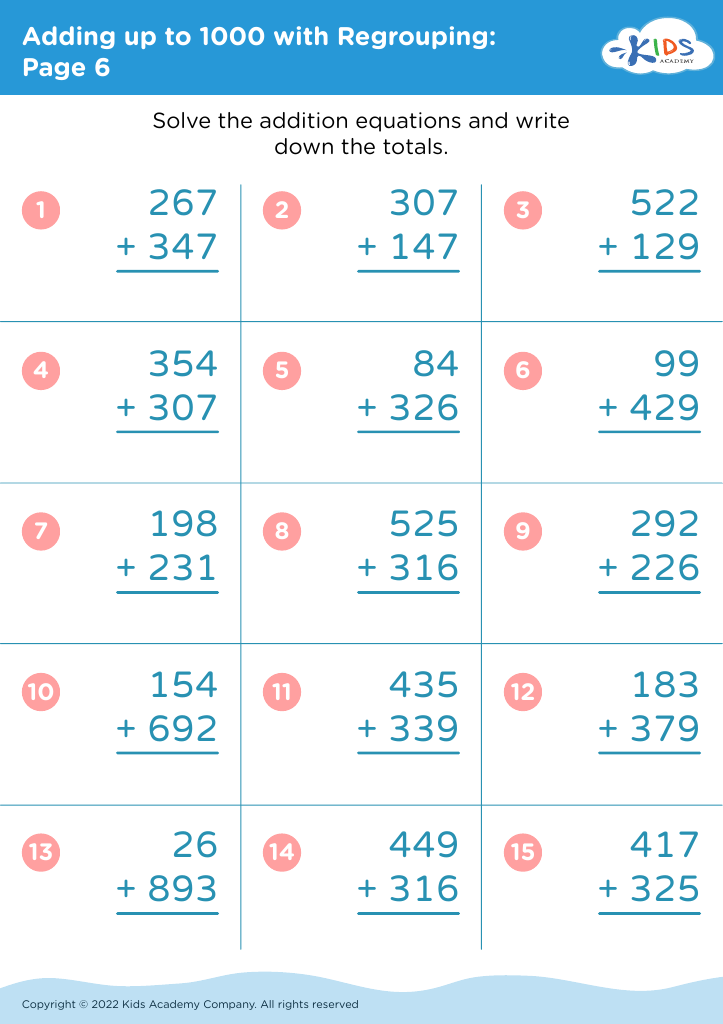
Adding up to 1000 with Regrouping: Page 6
Worksheet
Sorting Jewels Worksheet

Sorting Jewels Worksheet

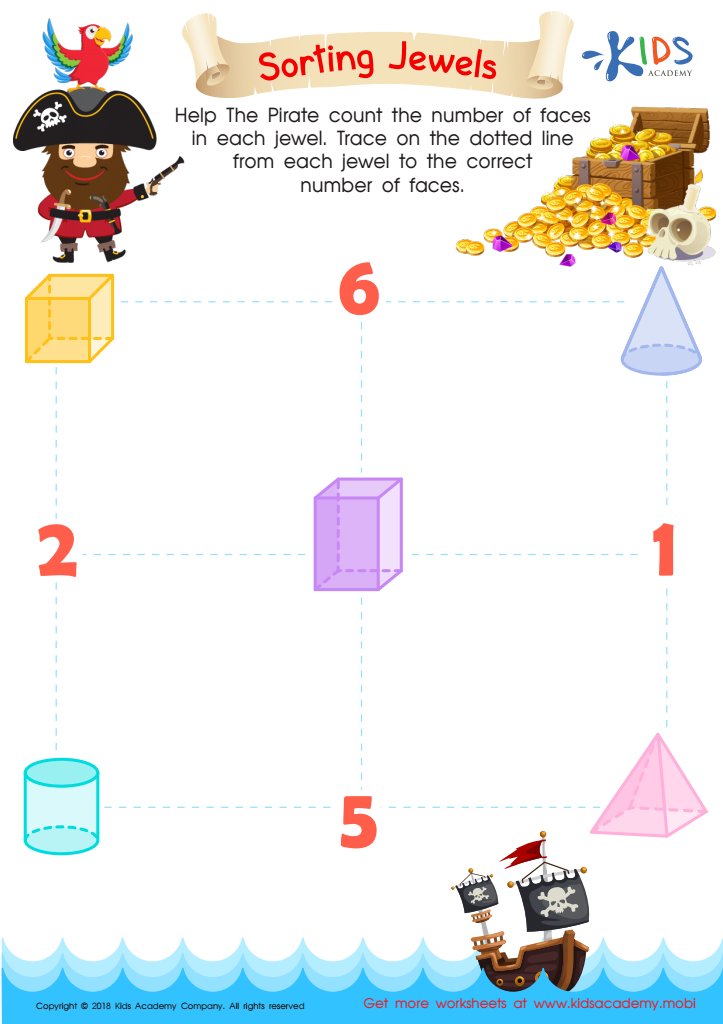
Help your kids explore their pirate fantasies with this tracing sheet. Ask them to count the number of faces in each jewel and then trace the dotted line to the correct number. How many faces does a rectangle have? What about a triangle and a cone? This fun worksheet is a great way to teach your kids the basics of identifying the number of faces on shapes.
Sorting Jewels Worksheet
Worksheet
Dinner Shapes: Making a Whole Worksheet

Dinner Shapes: Making a Whole Worksheet

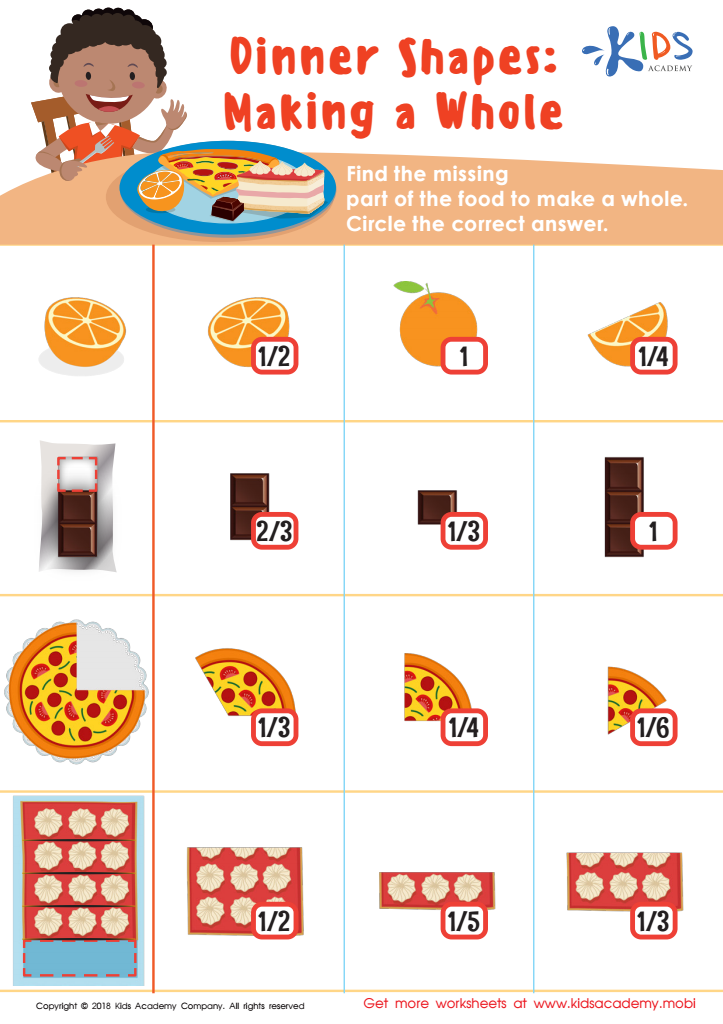
Using food and snacks to stimulate learning and interest in topics is a great strategy. Fractions can prove tricky, but this worksheet can help your child become an expert. Have them look for the missing parts of the food to make a whole, then circle the answer.
Dinner Shapes: Making a Whole Worksheet
Worksheet
Sorting Shapes Worksheet

Sorting Shapes Worksheet

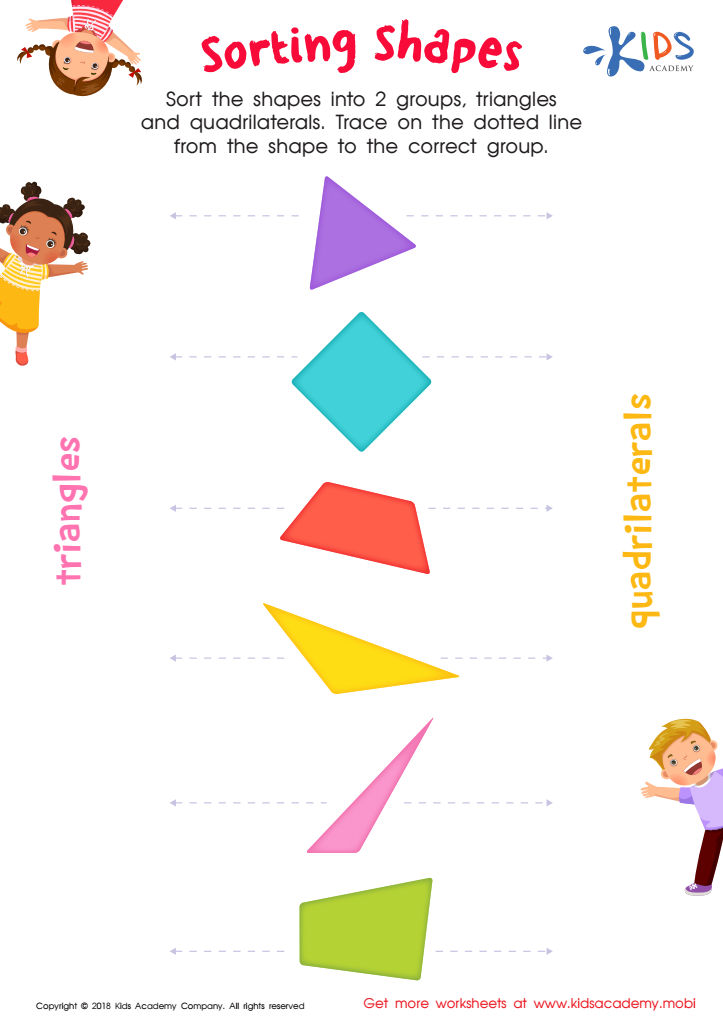
Before beginning, ensure your child is familiar with quadrilaterals (4 sides) and triangles (3 sides). This tracing exercise is easy: sort the shapes into the two groups and trace the dotted lines to the correct group.
Sorting Shapes Worksheet
Worksheet
Solid, Liquid, and Gas Writing Numbers Worksheet

Solid, Liquid, and Gas Writing Numbers Worksheet

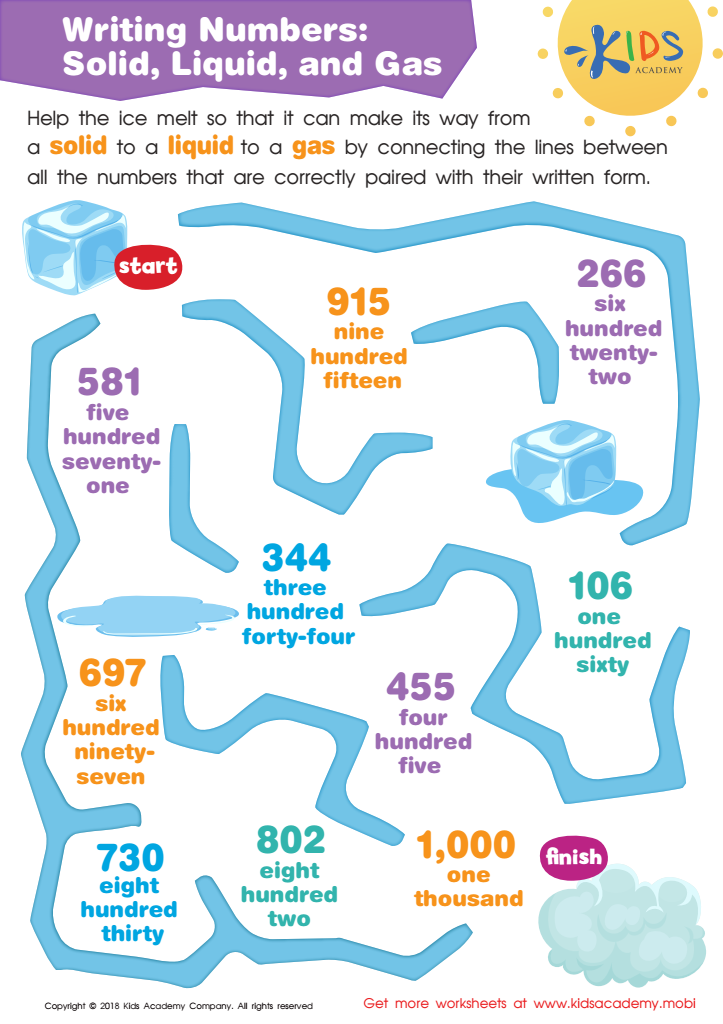
Your student can see the math/science connection in this fun maze! Download the PDF and help the ice melt by navigating a maze of number words and numeral representations. To the finish line! Only the paired words and numbers that match get you there.
Solid, Liquid, and Gas Writing Numbers Worksheet
Worksheet
Matching Worksheet for Toddlers

Logic Game Sorting Worksheet

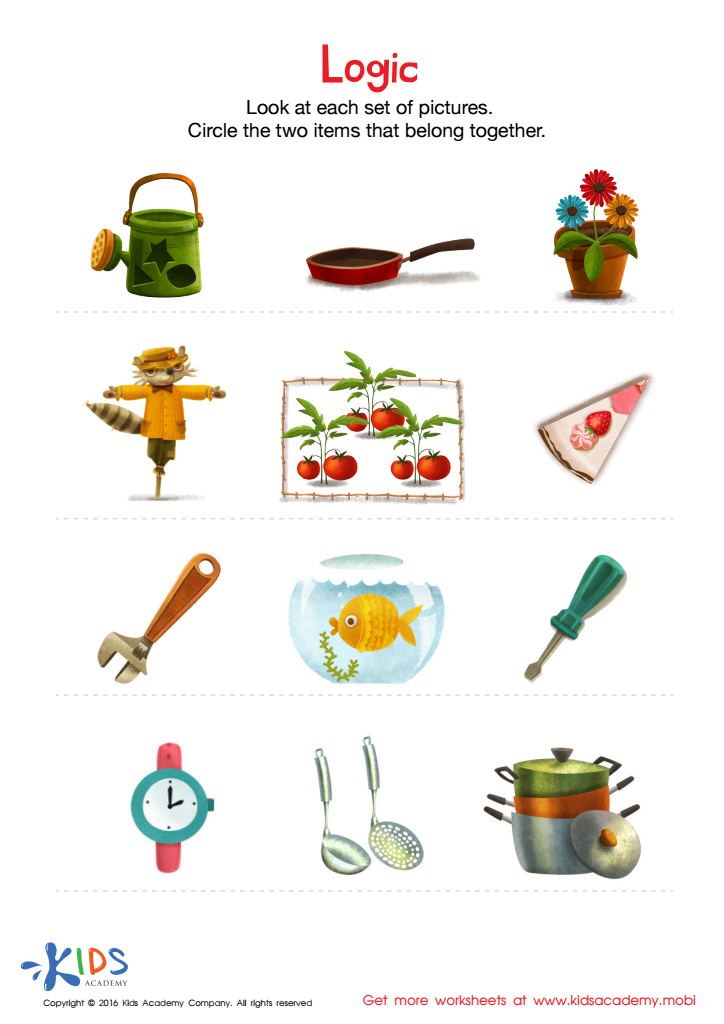
Start your child's logic and reasoning development early with this fun matching worksheet! Through cute images and simple conversations, your little one can learn problem-solving, categorization, and matching skills. Plus, it's a great way for children to explore how items are used in real life. Try it and watch them boost skills with ease and fun!
Logic Game Sorting Worksheet
Worksheet
Shape Sorter Worksheet

Shape Sorter Worksheet

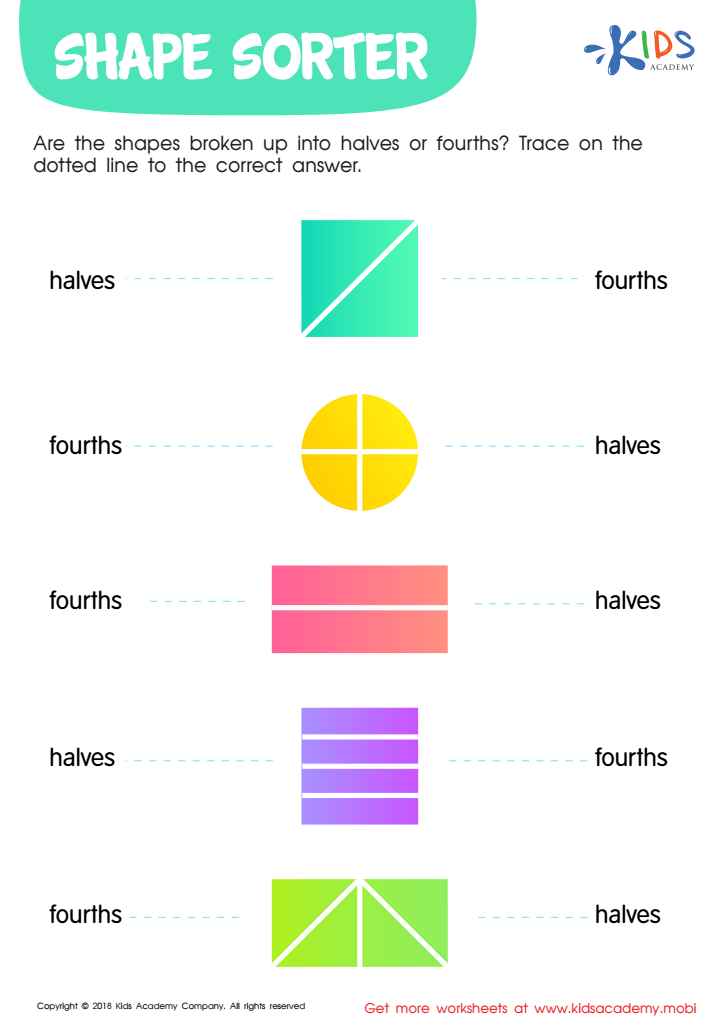
Ask your child if they know halves and fourths. If not, explain that halves are when a shape is divided into two equal parts and fourths is when a shape is divided into four equal parts. Look through this worksheet with your child and let them trace the dotted lines to the correct answer to show whether the shapes are cut into halves or fourths.
Shape Sorter Worksheet
Worksheet


Categorization skills in math are crucial for children aged 7-8 as they form the bedrock of logical thinking and problem-solving abilities. At this developmental stage, kids are transitioning from concrete to more abstract thinking. By learning to group objects, numbers, and ideas into categories, they start understanding relationships and patterns, which are fundamental for advanced math concepts.

Firstly, categorization enhances cognitive development by improving memory and attention to detail. It also supports language development, as children learn specific terminology and concepts. For example, understanding categories of shapes or types of numbers (odd/even) enriches their math vocabulary.

Secondly, effective categorization skills foster higher-order thinking skills. When children practice sorting and classifying, they develop critical thinking and the ability to make inferences. These skills are transferable across subjects and everyday problem-solving situations.

Thirdly, it aligns with math curriculum standards, emphasizing mastery of basic concepts such as place value, properties of operations, and measurement. These foundational skills open the door to understanding more complex topics like fractions and algebraic thinking in later grades.

Parents’ and teachers’ roles in promoting these skills through games and targeted activities ensure that children approach math with confidence and curiosity, paving the way for future academic success.