Counting objects Math Worksheets for Ages 7-8
10 filtered results
-
From - To
Discover our engaging "Counting Objects Math Worksheets for Ages 7-8," designed to make math fun and interactive. These worksheets help children reinforce essential counting skills through various activities, including grouping, tallying, and number comparisons. Perfect for both classroom and at-home learning, each worksheet combines colorful illustrations with challenging problems to keep kids focused and motivated. Enhance your child's mathematical abilities with our educator-approved resources, allowing them to confidently grasp counting concepts while enjoying their learning journey. Ideal for early grade schoolers, our worksheets turn math practice into an exciting and rewarding experience!
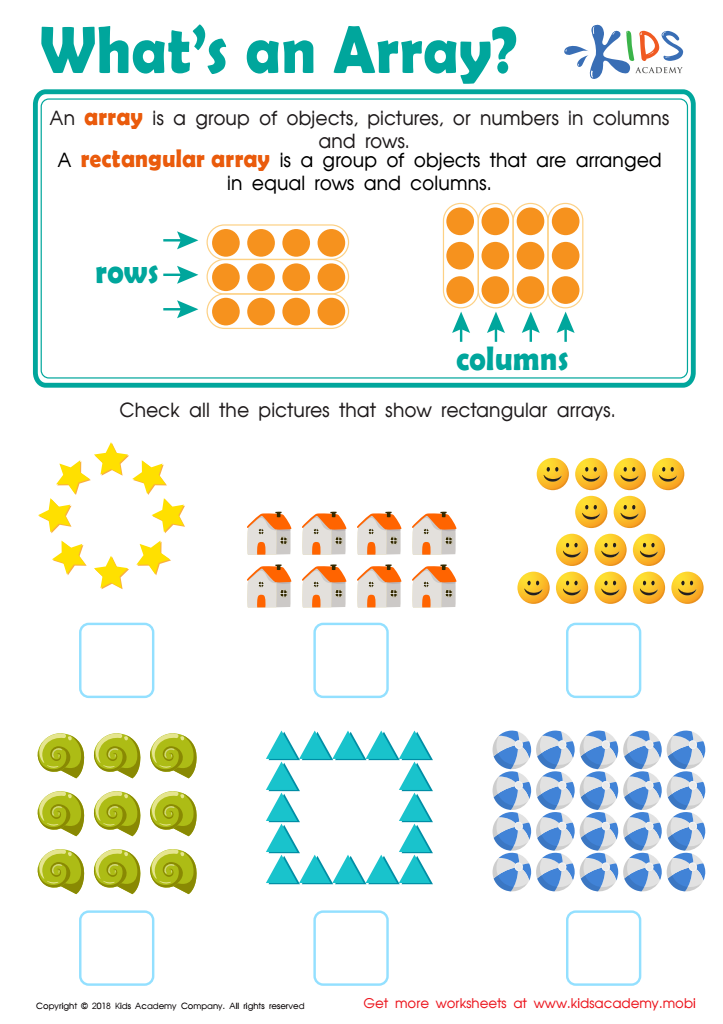
What's an Array? Worksheet
 Assign to My Students
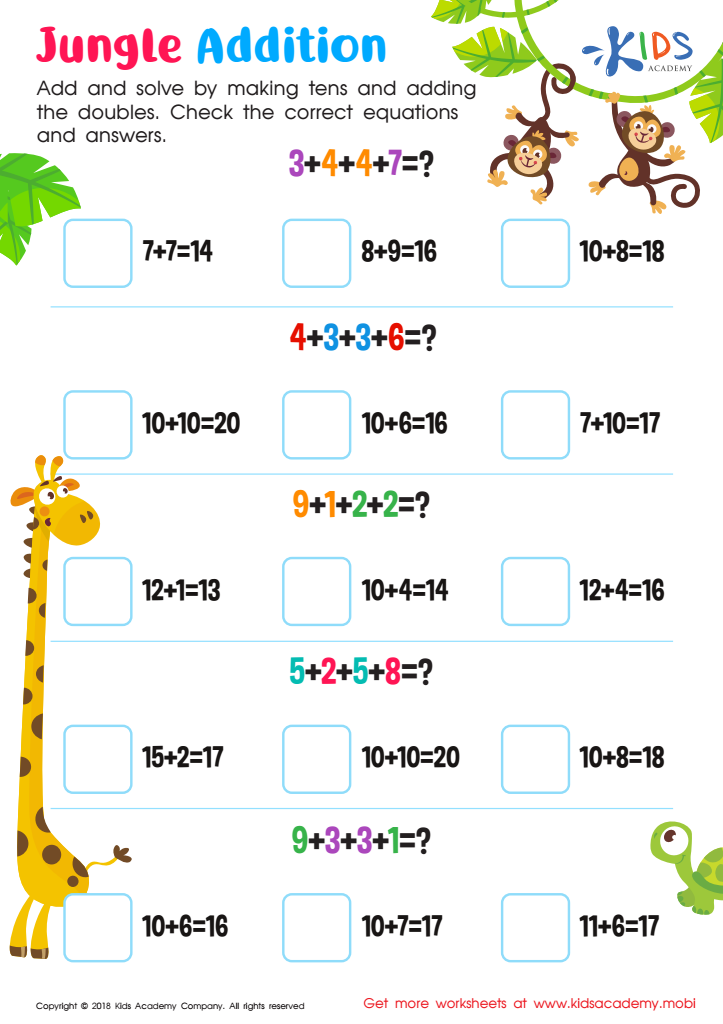
Jungle Addition Worksheet
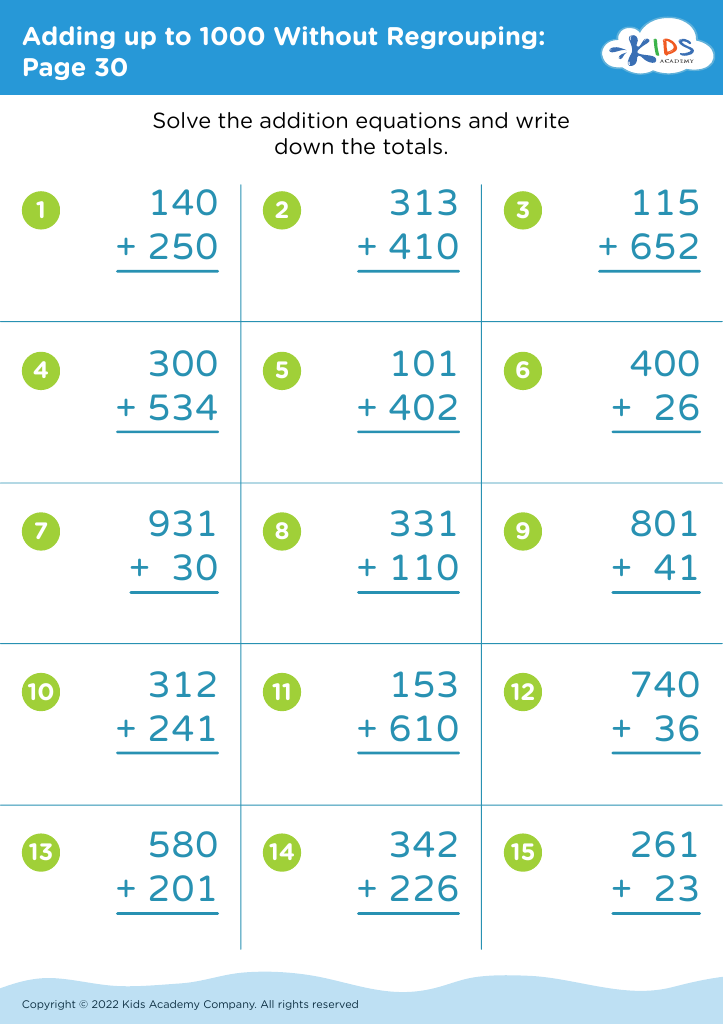
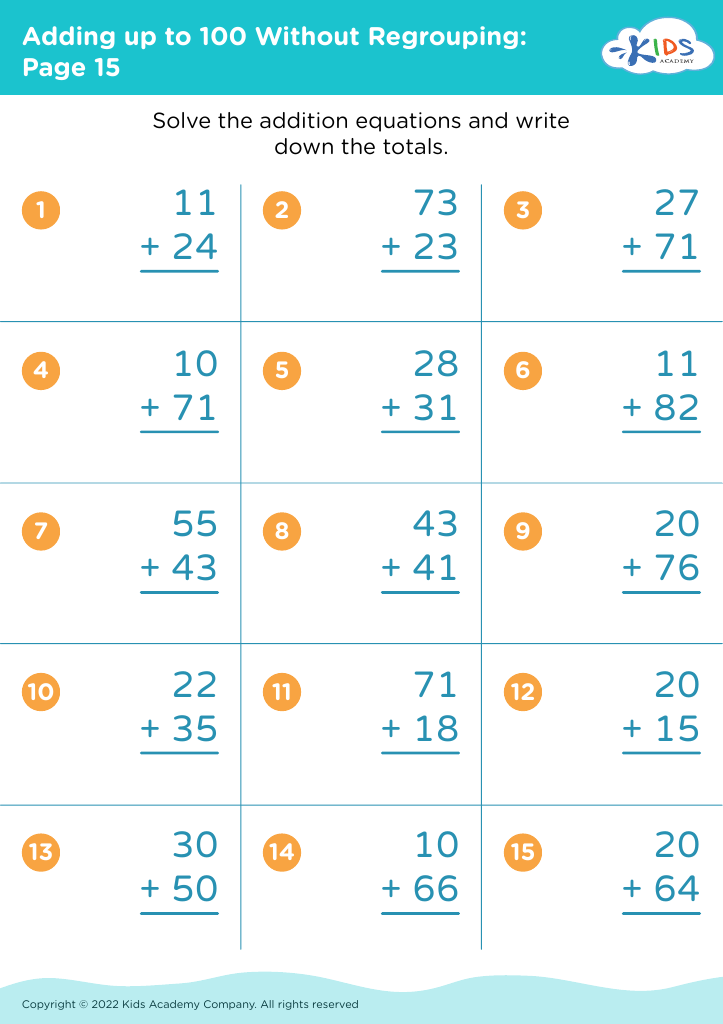






.jpg)
Counting objects is a foundational skill that plays a crucial role in a child's mathematical development, especially for children aged 7-8. At this age, students are transitioning from simple recognition of numbers to more complex mathematical operations. Engaging in counting activities helps solidify their understanding of the number system, paving the way for addition, subtraction, and problem-solving skills.
For parents and teachers, nurturing this skill can enhance a child's ability to grasp more intricate math concepts in later stages. Counting objects involves one-to-one correspondence, a basic principle that enables children to count each item in a set once. This teaches them that numbers represent quantities and helps refine their accuracy and precision.
Moreover, counting objects acts as a practical application of number sense, which is the intuitive understanding of numbers, their magnitude, relationships, and how they are affected by operations. Excellent number sense serves as a predictor of a student's future success in math. In the context of early childhood development, enhancing counting skills also fosters critical thinking and problem-solving abilities. By incorporating counting into everyday activities, parents and teachers provide relevant and interactive experiences that make learning enjoyable and meaningful, making children more adept and confident in math.








