Develop counting skills Math Worksheets for Ages 7-8
5 filtered results
-
From - To
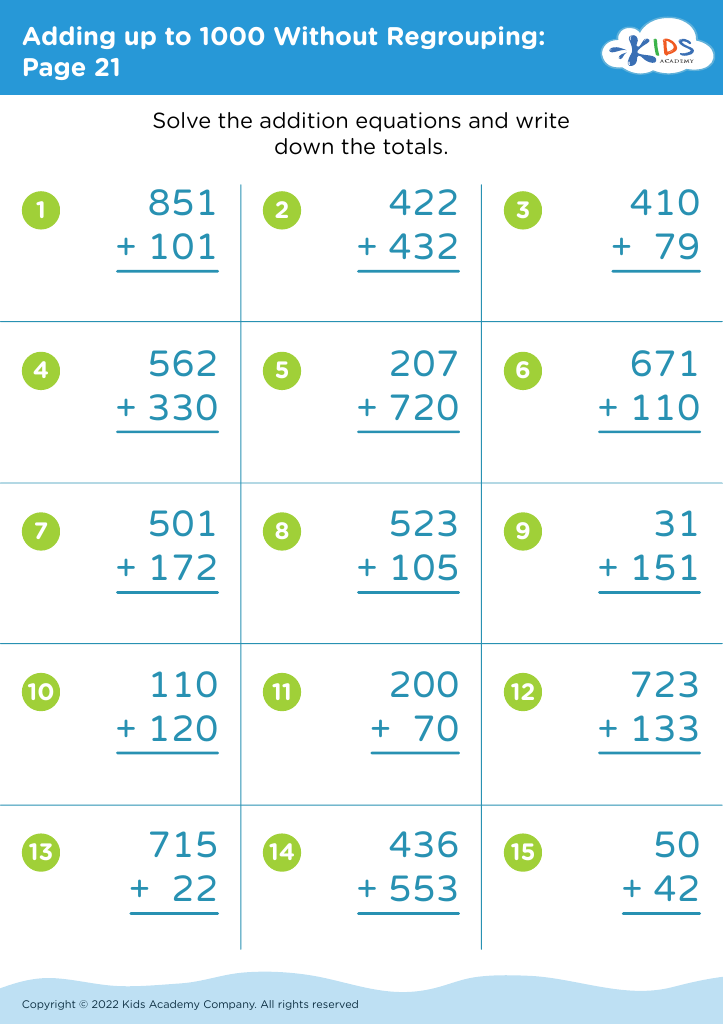
Unlock your child's potential with our engaging counting skills math worksheets designed for ages 7-8. These thoughtfully crafted resources boost numerical fluency through fun, interactive activities, ensuring learning stays enjoyable. Our worksheets cover various counting concepts, including skip counting, number sequences, and grouping, providing essential practice that aligns with educational standards. Perfect for classroom use or at-home learning, our downloadable worksheets make it easy to track progress and reinforce skills. Encourage critical thinking and problem-solving while enhancing your child's confidence in math. Explore our collection today and help your child master counting with ease and excitement!
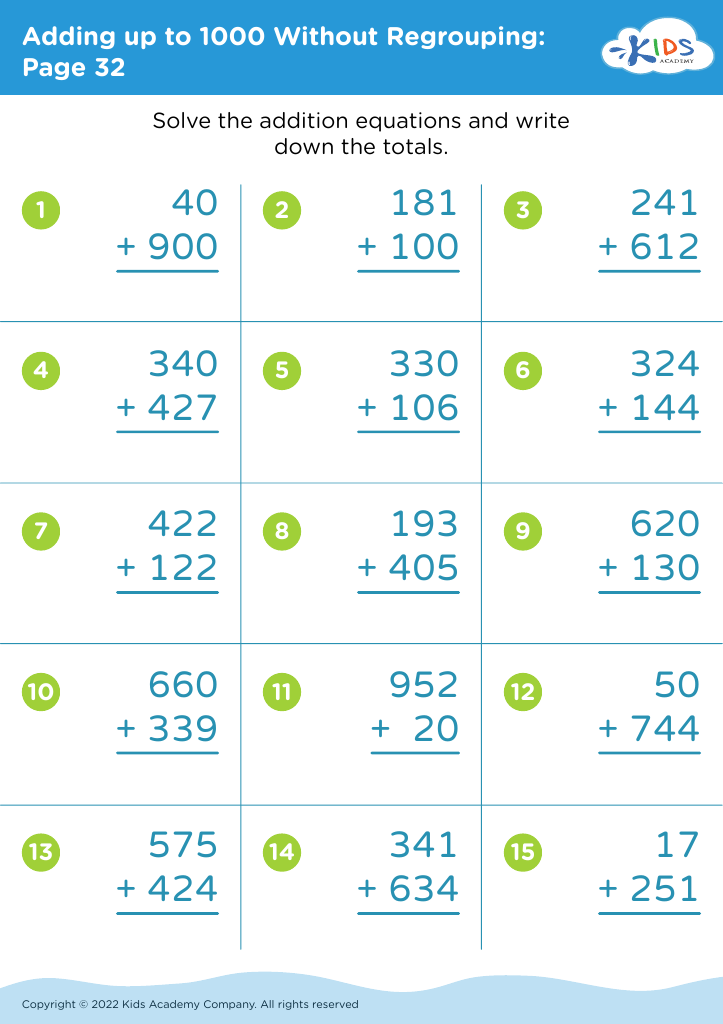
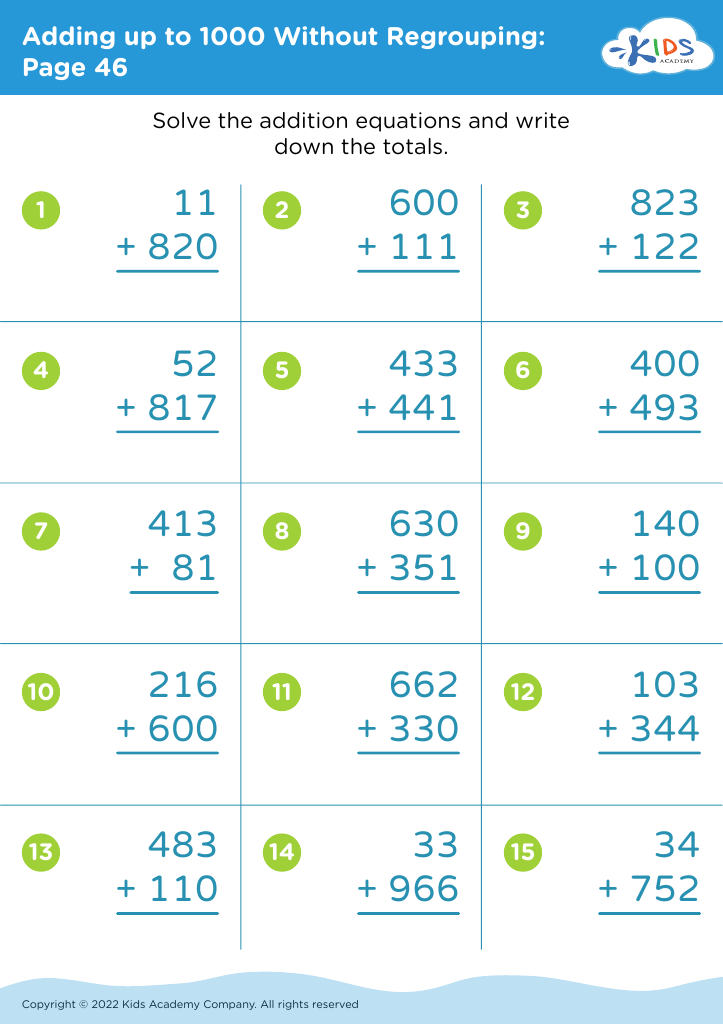
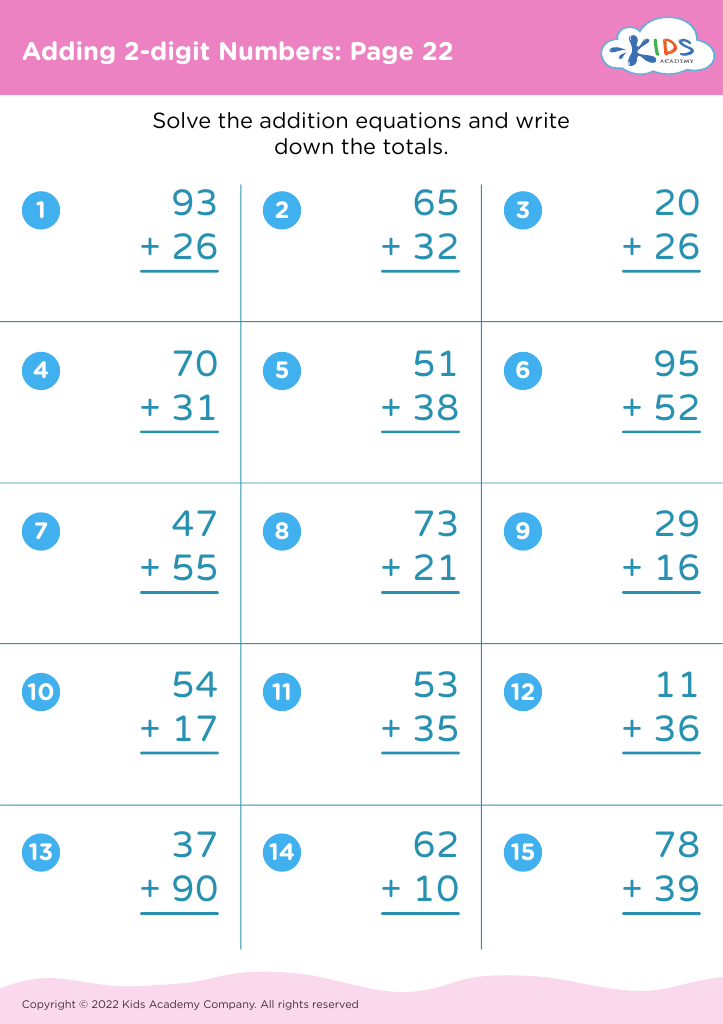
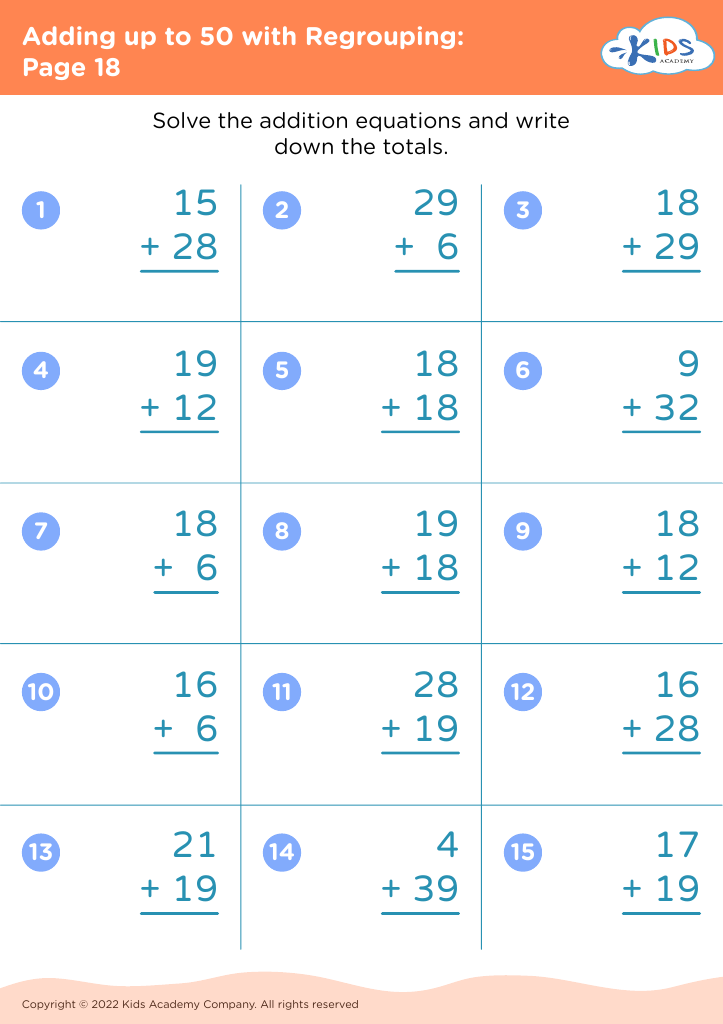



.jpg)
.jpg)



Developing counting skills in children aged 7-8 is crucial for their overall mathematical understanding and cognitive development. At this age, children are transitioning from basic counting to more complex mathematical concepts, making it a pivotal time for solidifying their foundational skills. Strong counting abilities not only enhance arithmetic skills but also support problem-solving, pattern recognition, and logical reasoning.
Parents and teachers should prioritize these skills because they directly contribute to children's academic success. Mastery of counting aids in understanding more advanced topics such as addition, subtraction, and later, multiplication and division. Furthermore, a solid grasp of counting empowers children to solve real-life mathematical problems, enhancing their confidence and independence.
Moreover, counting skills serve as a bridge to other subjects, particularly in science and economics, where quantitative reasoning is vital. Encouraging children to explore and practice counting through games, everyday activities, and hands-on experiences makes learning enjoyable and engaging.
Investing time in developing these skills not only prepares children for higher academic challenges but also fosters a positive attitude towards mathematics as they grow. Ultimately, counting skills lay the groundwork for a child’s lifelong relationship with math and analytical thinking.








