Developing observation skills Math Worksheets for Ages 7-8
5 filtered results
-
From - To
Enhance your child's mathematical abilities with our "Developing Observation Skills Math Worksheets for Ages 7-8". Tailored specifically for young learners, these worksheets focus on sharpening critical observation skills essential for understanding math concepts. Each engaging activity challenges kids to notice patterns, identify relationships, and solve puzzles, fostering analytical thinking and attention to detail. Perfect for both classroom and home use, our fun and interactive exercises make learning math an enjoyable adventure. Empower your 7-8-year-olds with these essential tools, setting a solid foundation for future math success. Start cultivating keen observation skills today!
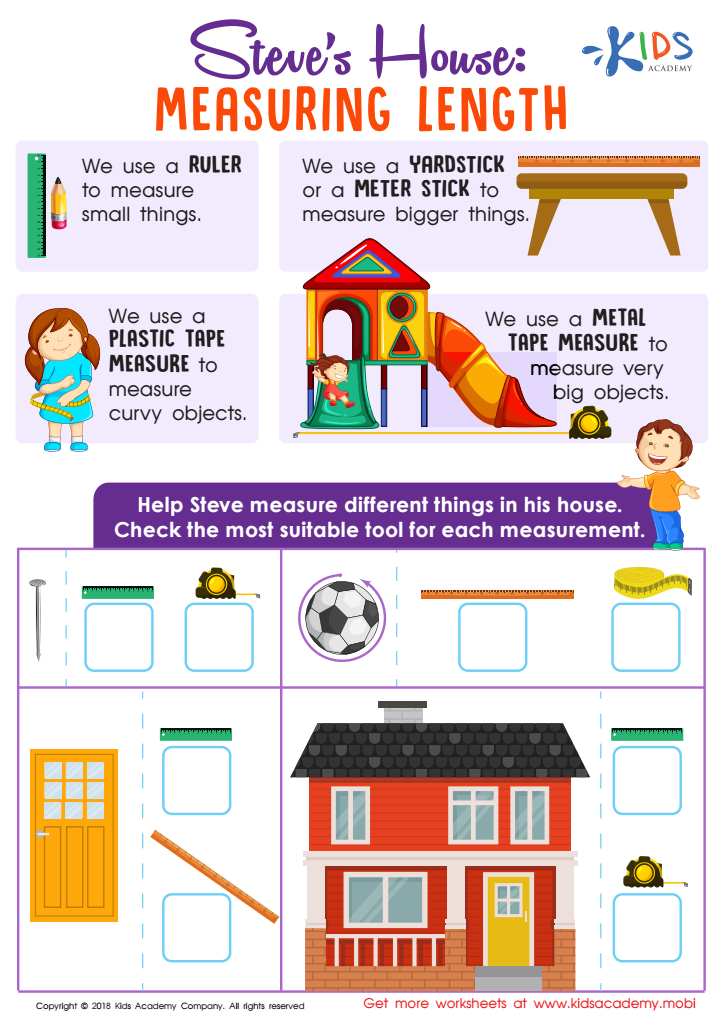
Steve's House: Measuring Length Worksheet
 Assign to My Students
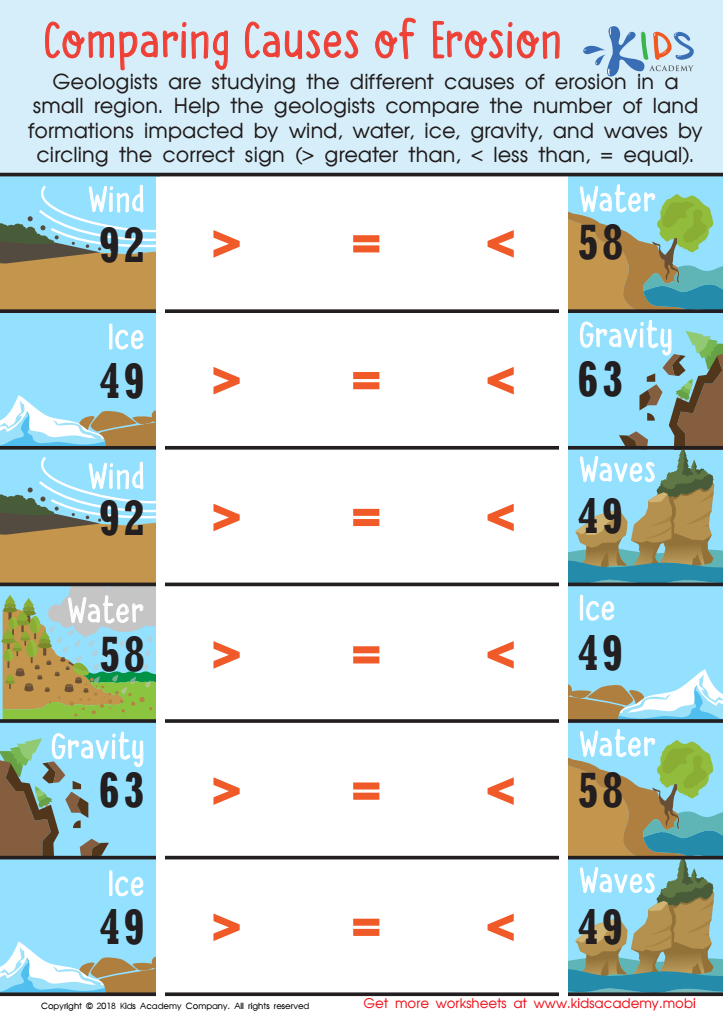
Comparing Causes of Erosion Worksheet
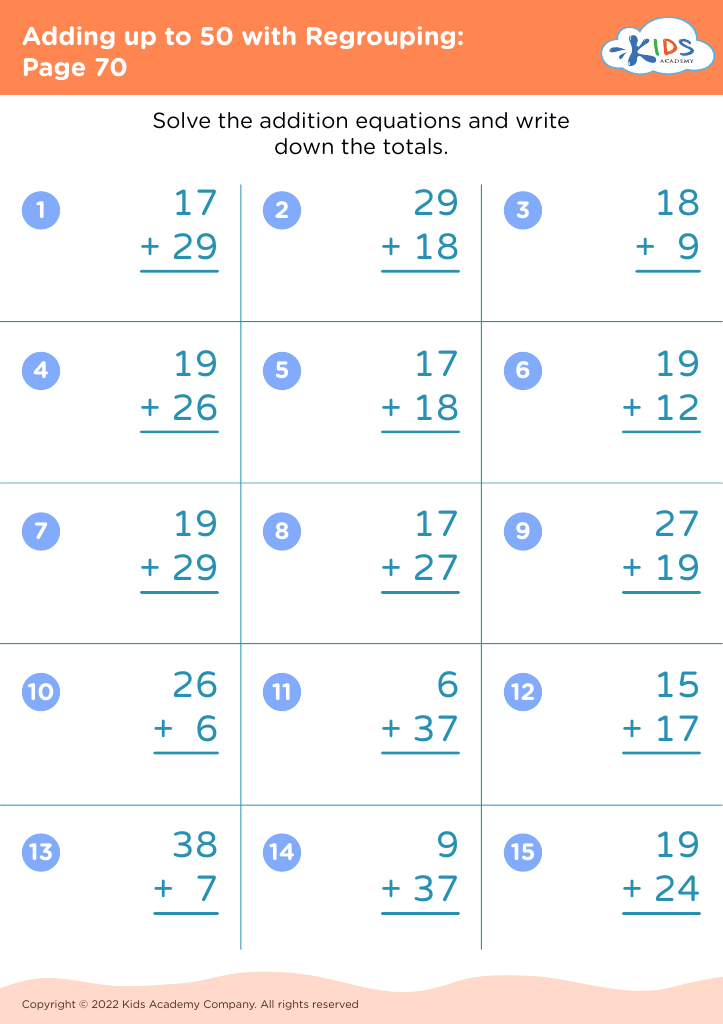
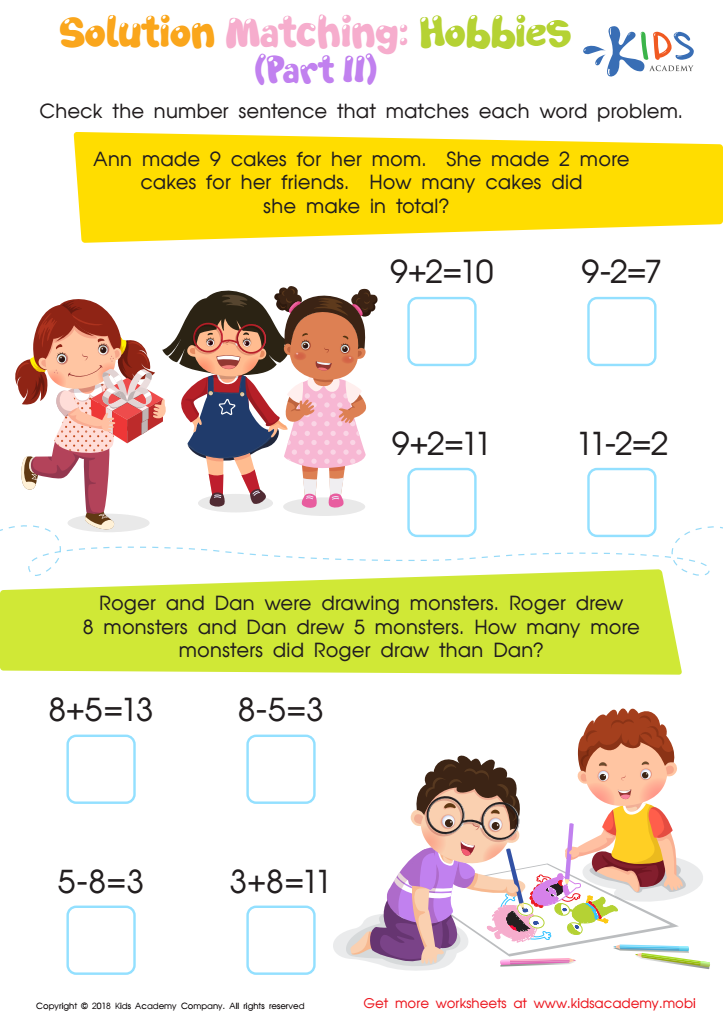
Solution Matching: Hobbies. Part 2 Worksheet
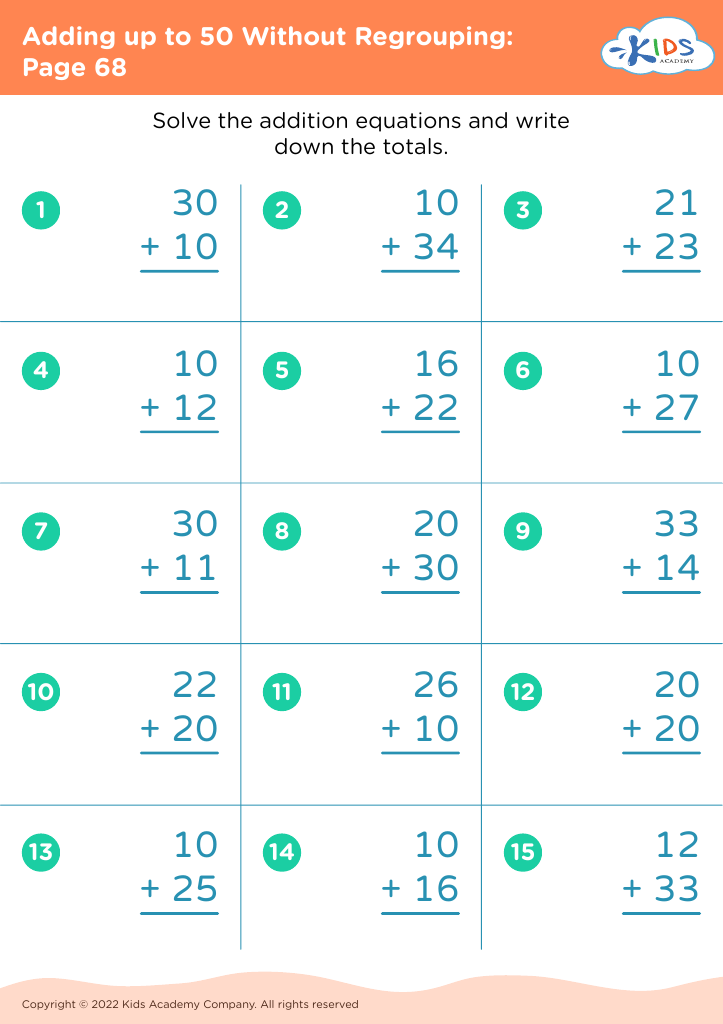








Developing observation skills in math for children aged 7-8 is crucial as it lays the groundwork for comprehensive cognitive and analytical abilities. At this stage, children are naturally curious and their ability to engage in detailed observation can significantly enhance their understanding of mathematical concepts. Observation skills help children notice patterns and relationships between numbers, shapes, and quantities, enabling them to grasp abstract concepts more concretely.
For parents and teachers, fostering these skills means empowering children to become attentive and careful thinkers. By engaging with their surroundings through a mathematical lens, children start to make connections between everyday experiences and mathematical ideas. This not only strengthens their problem-solving abilities but also builds a solid foundation for more complex mathematical learning in later years.
Moreover, developing good observation skills supports other key educational areas such as science and literacy, where recognizing patterns, sequencing, and categorizing is essential. Attention to detail helps in tasks ranging from reading graphs to solving word problems. Encouraging these skills through engaging activities can boost a child's confidence and interest in math, transforming a challenging subject into an enjoyable and rewarding learning experience.
Ultimately, nurturing observation skills equips children with tools for lifelong learning, enabling them to approach not only math but all academic areas with clarity and precision.








