Developing problem-solving skills Math Worksheets for Ages 7-8
9 filtered results
-
From - To
Enhance your child's mathematical abilities with our "Developing Problem-Solving Skills Math Worksheets" designed specifically for ages 7-8. These carefully curated worksheets engage young learners with fun and challenging exercises that promote critical thinking and boost confidence in solving real-world problems. Our resources cover various topics such as addition, subtraction, and word problems, ensuring a comprehensive learning experience. Perfect for both classroom and home learning, these worksheets foster creativity and encourage a growth mindset in your child. Discover the joy of math and help your child become a proficient problem solver today!
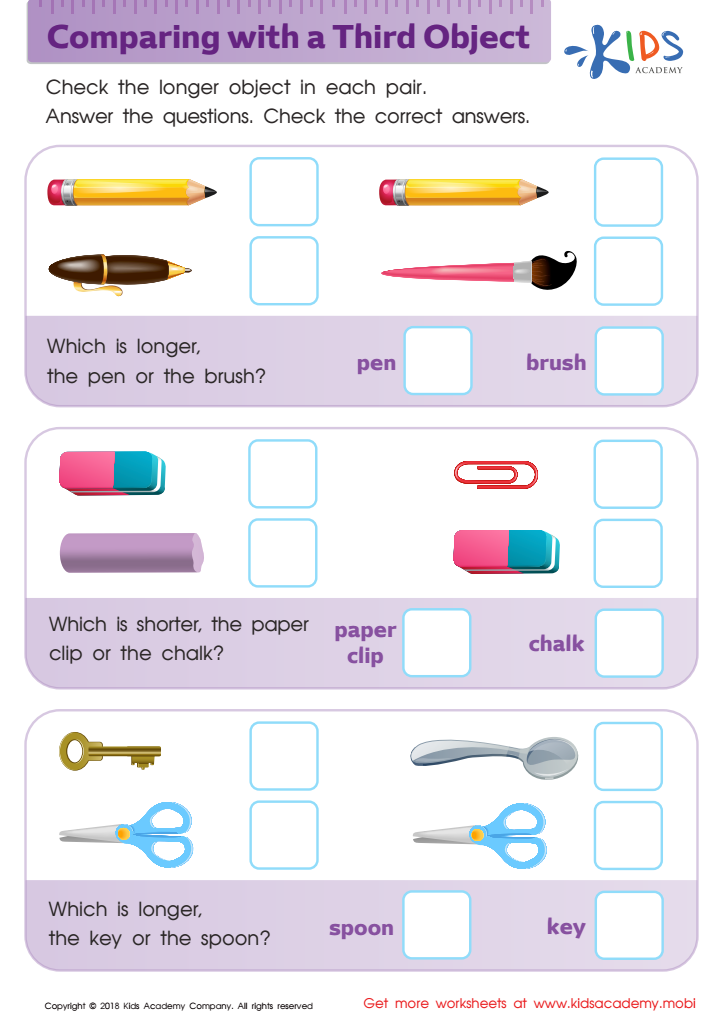
Comparing with a Third Object Worksheet
 Assign to My Students
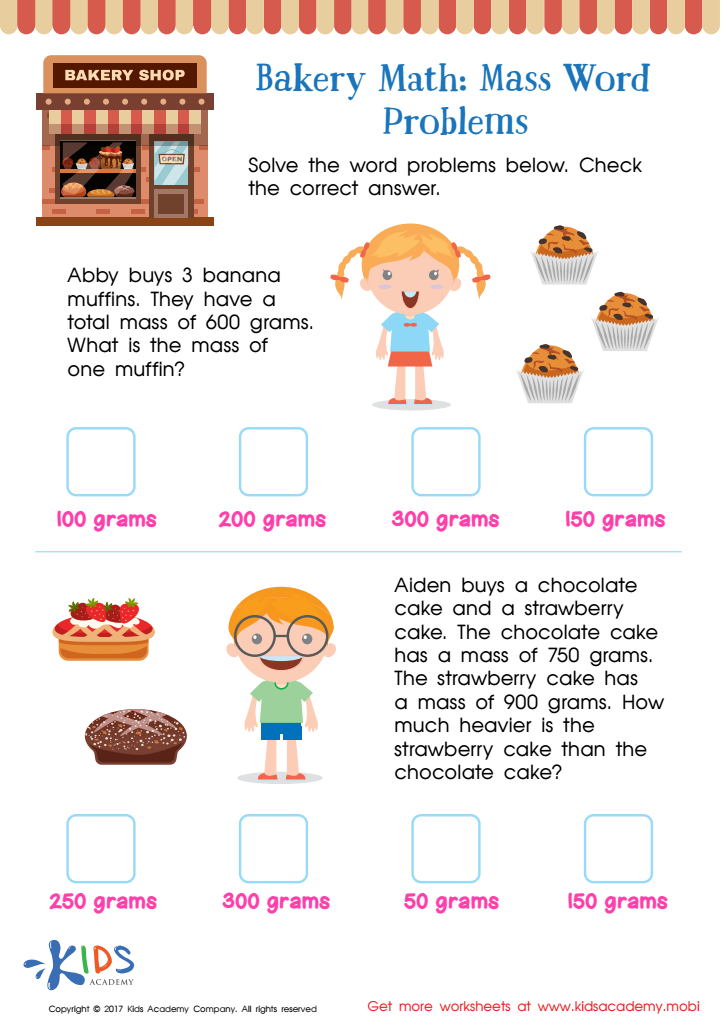
Mass Word Problems Worksheet
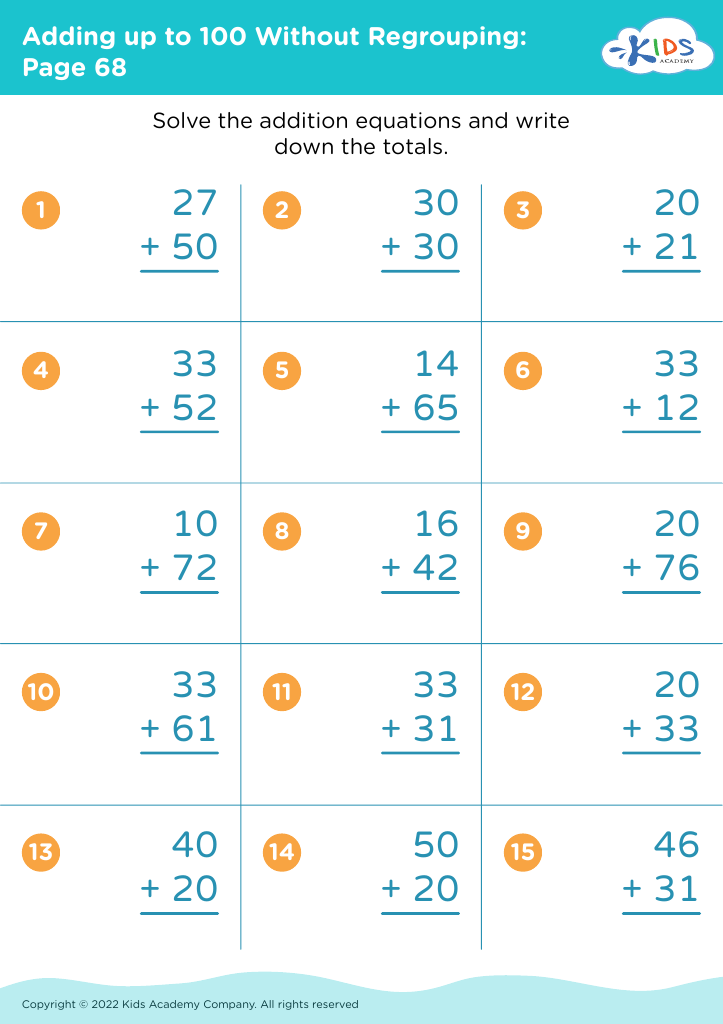
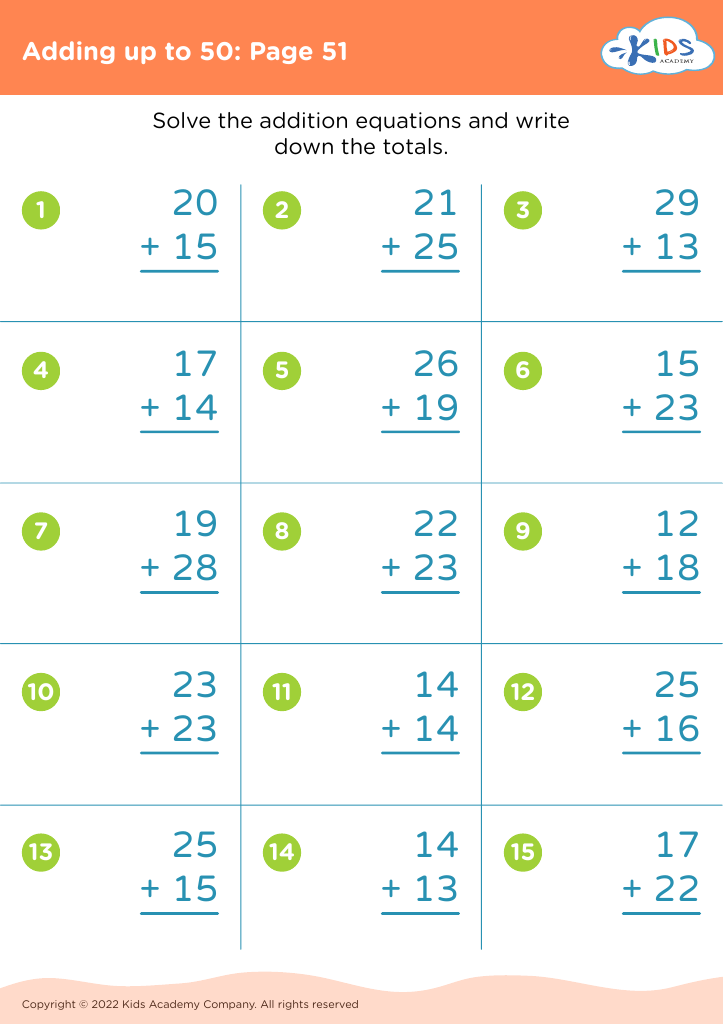
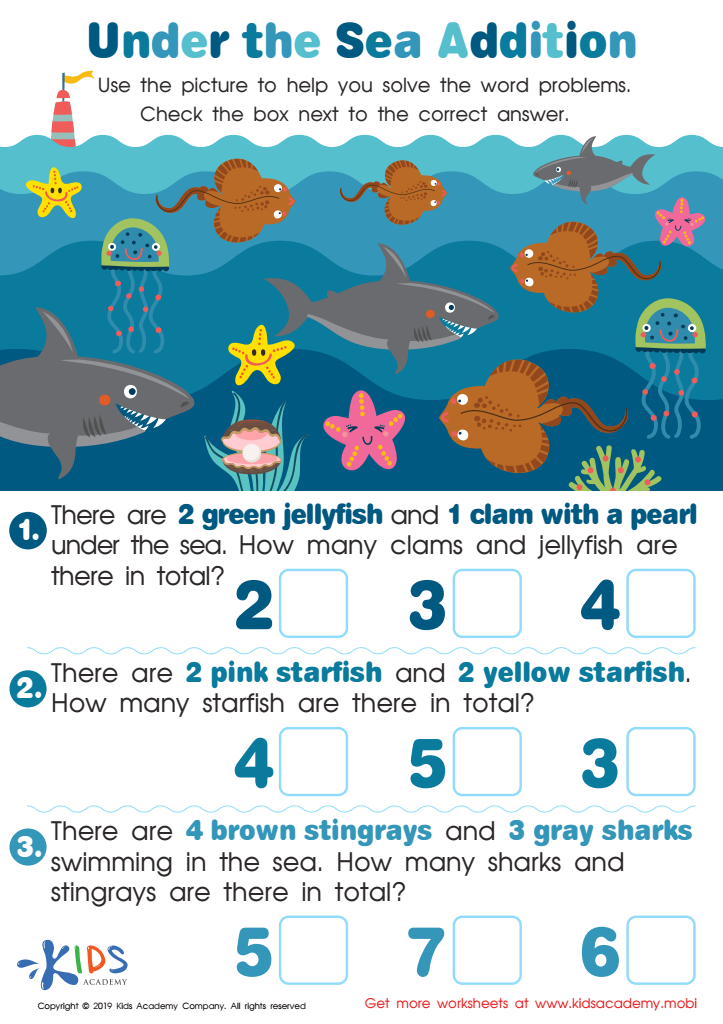
Under the Sea Addition Worksheet
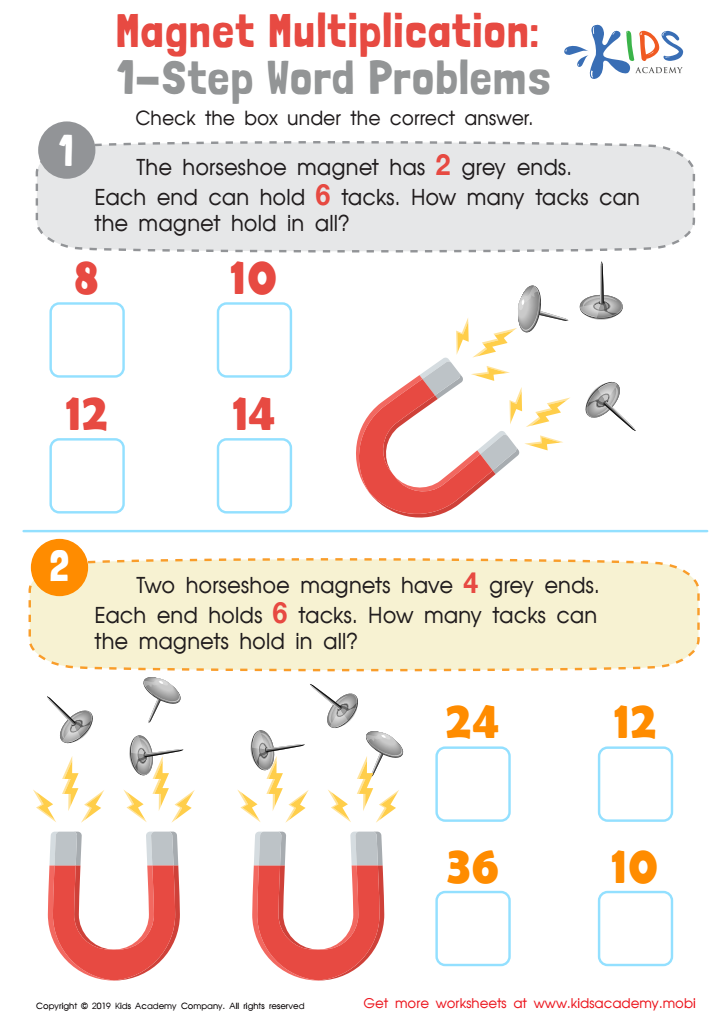
Magnet Multiplication: 1-Step Word Problems Worksheet
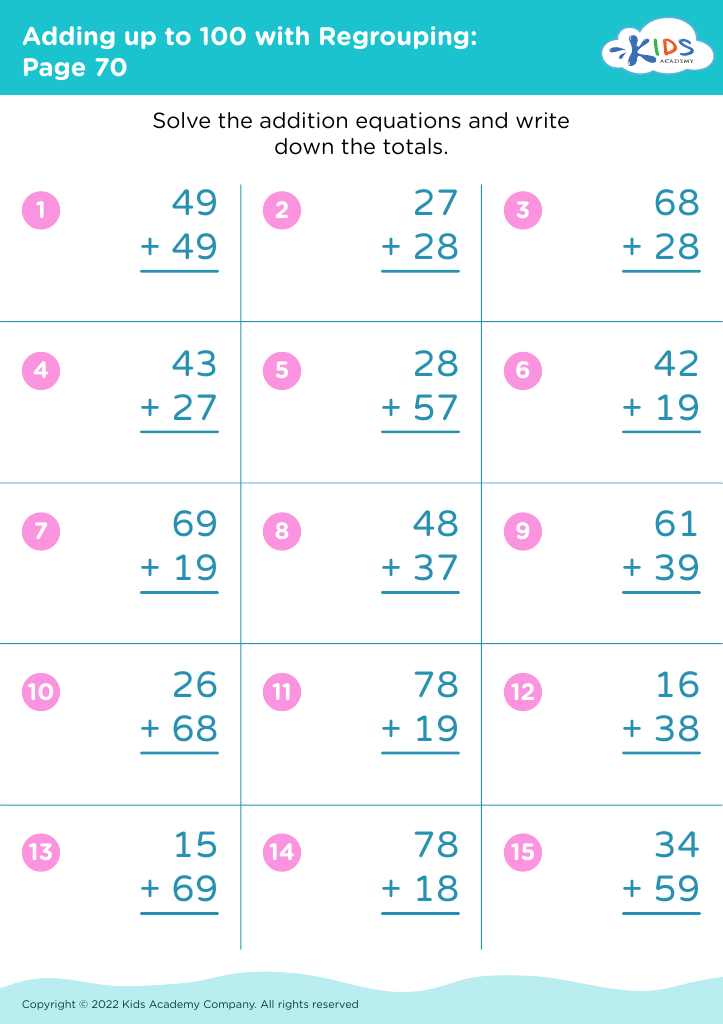
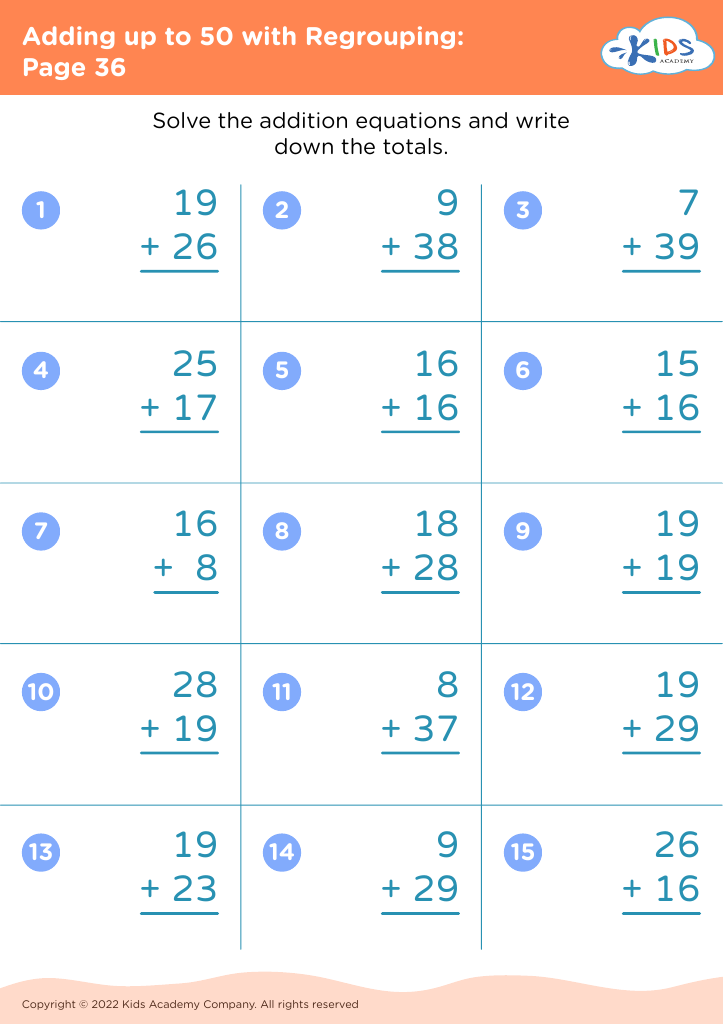






.jpg)

Developing problem-solving skills in math for children aged 7-8 is crucial for their cognitive growth and future academic success. At this age, kids are transitioning from simple arithmetic to more complex concepts that require critical thinking and reasoning. Fostering these skills enables children to approach challenges methodically and build resilience when faced with difficulties.
By engaging in math problem-solving, children learn to break down problems into manageable parts, recognize patterns, and apply strategies to find solutions. These skills extend beyond mathematics; they enhance overall cognitive development and prepare students for real-life situations where logical thinking and decision-making are essential.
Furthermore, cultivating an environment that values problem-solving fosters a positive attitude towards learning. Children gain confidence in their abilities, knowing they can tackle tough problems with persistence. This mindset encourages curiosity and exploration, qualities that are vital for lifelong learning.
Parents and teachers play a pivotal role in nurturing these skills by providing supportive learning environments, introducing engaging math-related activities, and encouraging open-ended questions. Ultimately, investing in developing problem-solving skills at this formative age sets the foundation for students’ future educational journeys and personal growth.








