Developing spatial awareness Math Worksheets for Ages 7-8
3 filtered results
-
From - To
Unlock your child's potential with our "Developing Spatial Awareness Math Worksheets" designed specifically for ages 7-8! These engaging worksheets help young learners explore key mathematical concepts through the lens of spatial awareness. Kids will enhance their understanding of shapes, sizes, and distances as they tackle fun exercises that promote critical thinking and problem-solving skills. Our resources are aligned with educational standards, making them ideal for both classroom and home use. Encourage your child's curiosity and confidence in math while supporting their overall cognitive development. Discover the world of shapes and space today and watch your child thrive in their learning journey!
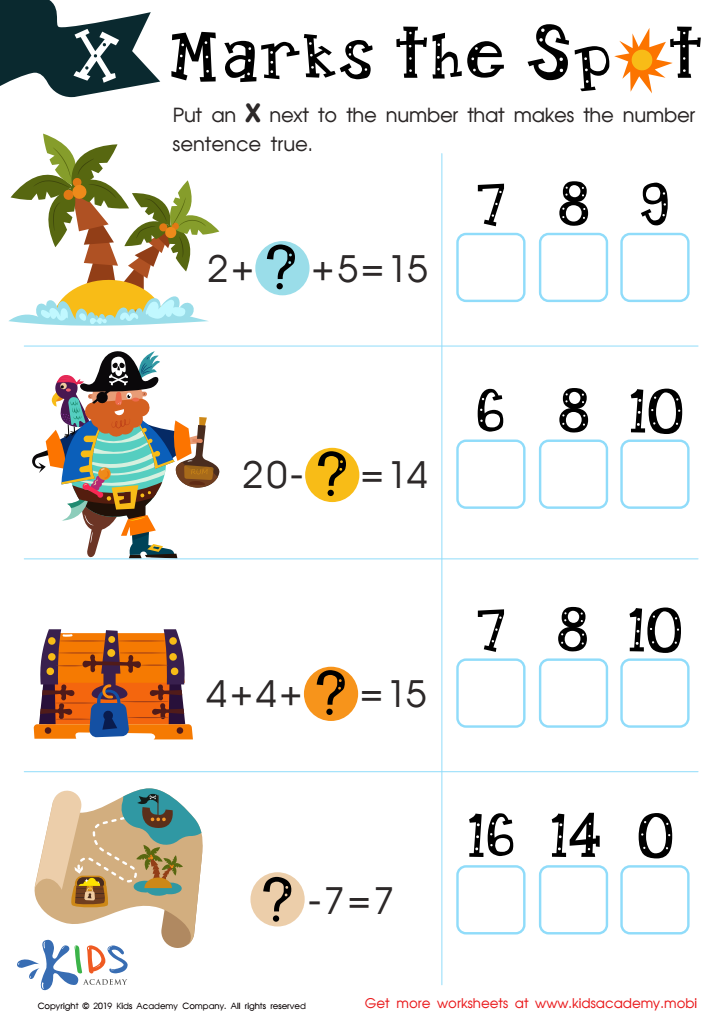
X Marks the Spot Worksheet
 Assign to My Students
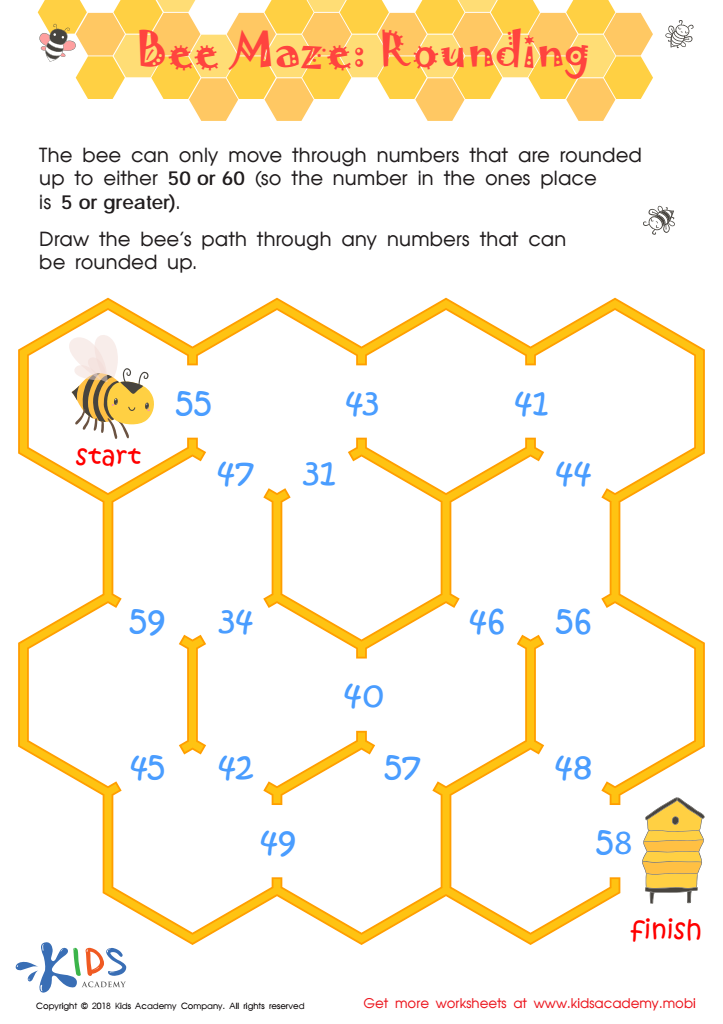
Bee Maze Rounding Worksheet
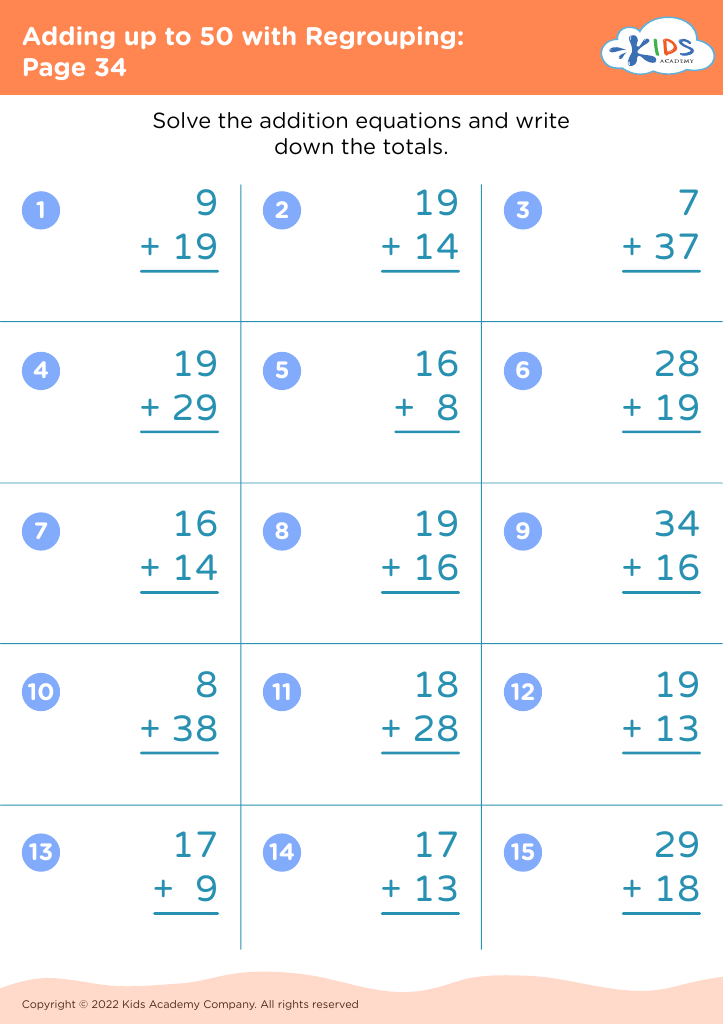







Developing spatial awareness in children aged 7-8 is crucial for several reasons, particularly in relation to mathematics. At this age, children begin to engage with more complex mathematical concepts, such as geometry, measurement, and problem-solving. Spatial awareness—the ability to understand, reason, and remember the spatial relations among objects—forms the foundation for these concepts.
Firstly, strong spatial skills improve not only math proficiency but also overall academic performance. Research has shown that children who excel in spatial reasoning tend to outperform their peers in mathematics, as they can visualize problems, manipulate shapes, and understand dimensions effectively.
Secondly, spatial awareness fosters critical thinking and creativity. It enables children to visualize and plan solutions to multidimensional problems, an essential skill in today's STEM-focused world. By encouraging activities that cultivate spatial awareness, such as puzzles, building blocks, and interactive games, parents and teachers can enhance children’s cognitive development.
Moreover, developing spatial skills goes beyond academics; it's applicable in everyday life, from understanding maps to organizing physical spaces. By prioritizing spatial awareness in education, parents and teachers help children build essential skills for life, ultimately ensuring their success in mathematics and beyond.








