Enhances number recognition Math Worksheets for Ages 7-8
4 filtered results
-
From - To
Boost your child's number recognition skills with our engaging math worksheets designed specifically for ages 7-8. These printable resources feature a variety of fun activities that encourage children to identify, compare, and manipulate numbers confidently. Incorporating vibrant visuals and interactive exercises, our worksheets not only make learning enjoyable but also cater to various learning styles. As kids practice recognizing numbers in different contexts, they will develop a solid foundation in mathematics. Perfect for home or classroom use, these worksheets will enhance your child's numeric competence and prepare them for more advanced math concepts. Discover the joy of learning with Kids Academy!
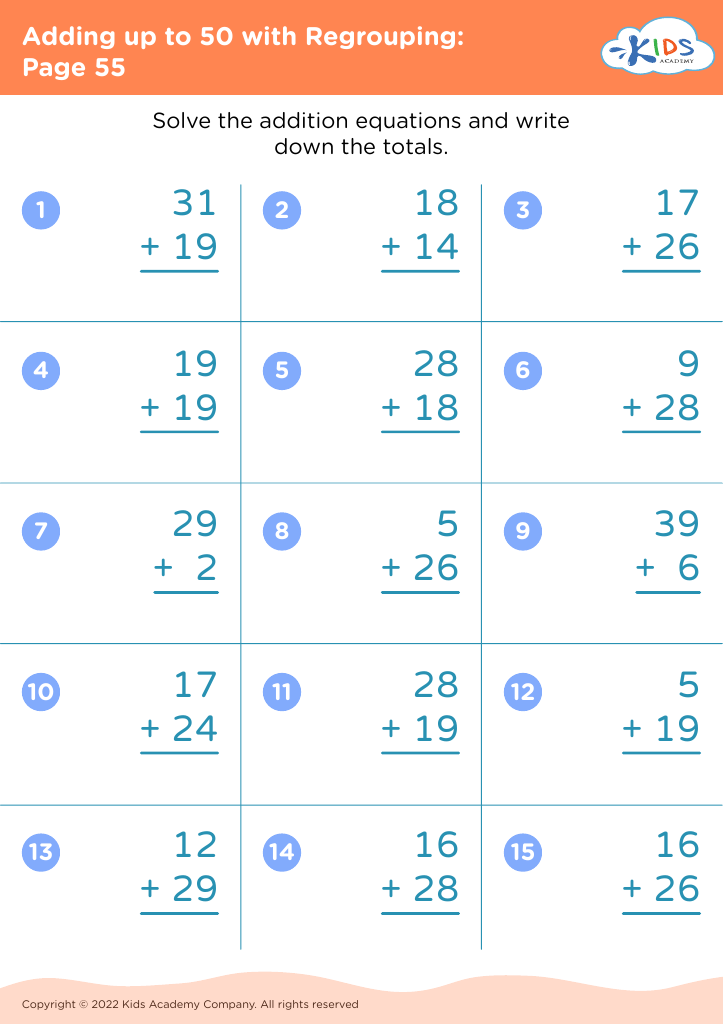
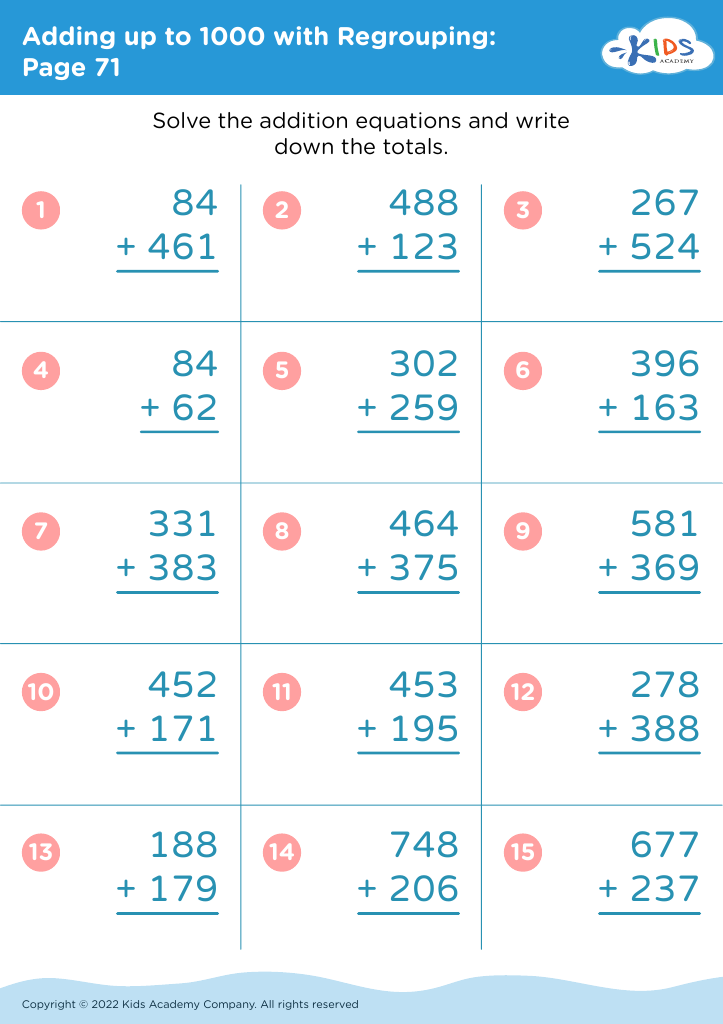
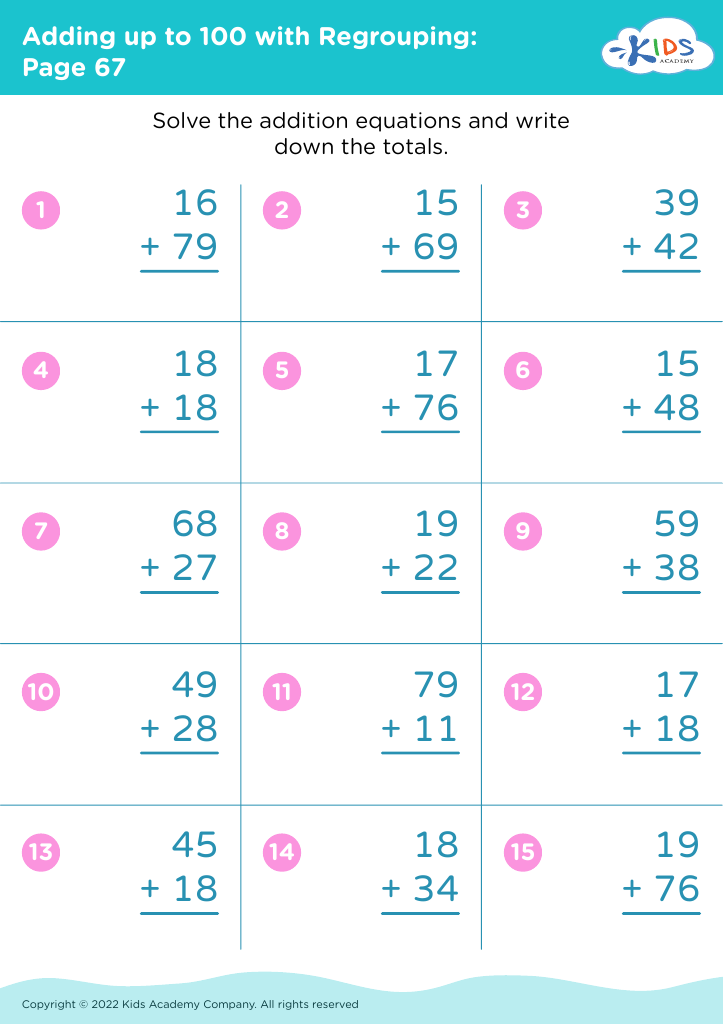
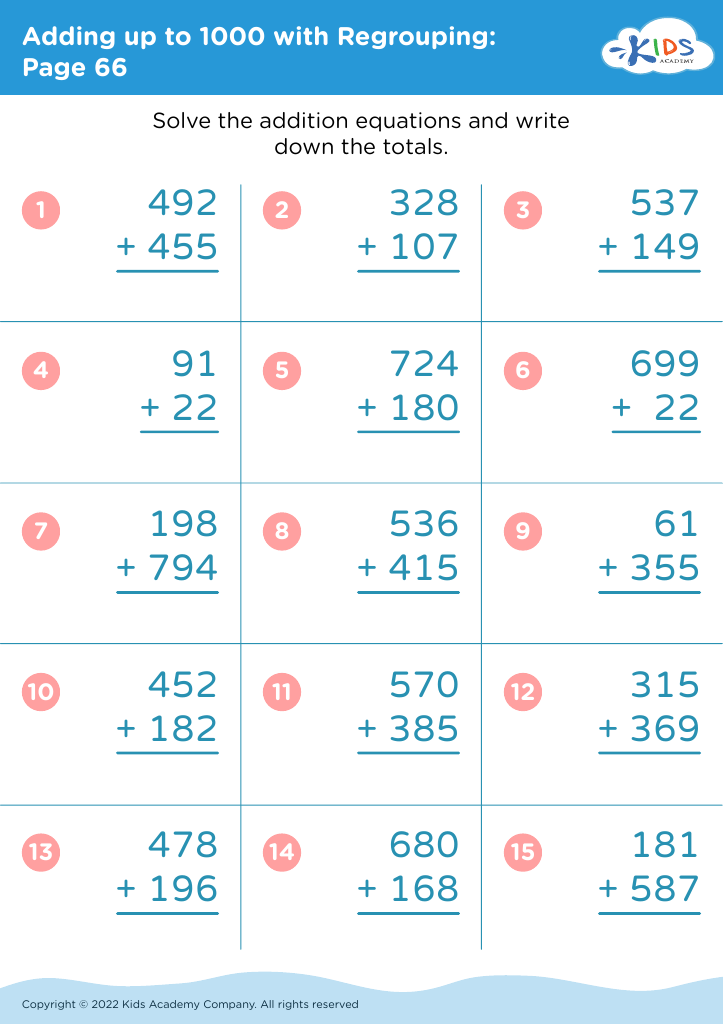






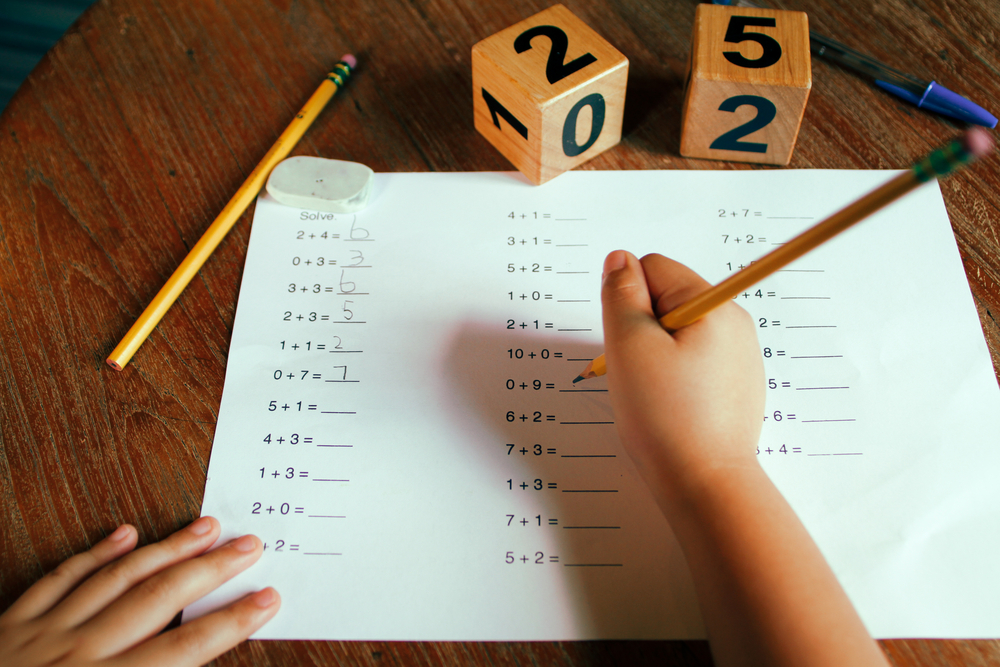
Enhancing number recognition in children aged 7-8 is crucial for building a strong foundation in mathematics, which is vital for their academic success. At this age, children begin to explore more complex mathematical concepts, such as addition, subtraction, and simple multiplication. A solid understanding of number recognition allows them to quickly identify and utilize numbers in various contexts, promoting problem-solving and critical thinking skills.
Parents and teachers should be invested in fostering this skill as it directly impacts children's confidence and motivation in math. When children are comfortable recognizing numbers, they are more likely to engage with math-related activities and enjoy the learning process. Additionally, strong number recognition can alleviate math anxiety, which is common in children.
Furthermore, enhancing number recognition supports the development of other important skills, such as estimation, measuring, and understanding place value. These concepts are essential not only in school but also in daily life, promoting practical application of math skills outside the classroom.
Ultimately, prioritizing number recognition enriches children's daily experiences and lays the groundwork for more advanced math learning, setting them on a path to academic achievement and lifelong success. Engaged parents and teachers can use various fun and interactive approaches to support this vital area of development.








