Fine motor skills development Math Worksheets for Ages 7-8
7 filtered results
-
From - To
Enhance your child's fine motor skills with our engaging math worksheets designed specifically for ages 7-8! At Kids Academy, we understand the importance of developing both math skills and fine motor abilities during this crucial learning stage. Our worksheets feature a variety of fun tasks, such as tracing, cutting, and connecting dots, seamlessly integrating fine motor practice with essential math concepts. Whether your child is reinforcing number recognition, basic addition, or geometry, these activities promote dexterity and coordination while fostering a love for learning. Explore our collection today and support your child in mastering math through hands-on experiences!
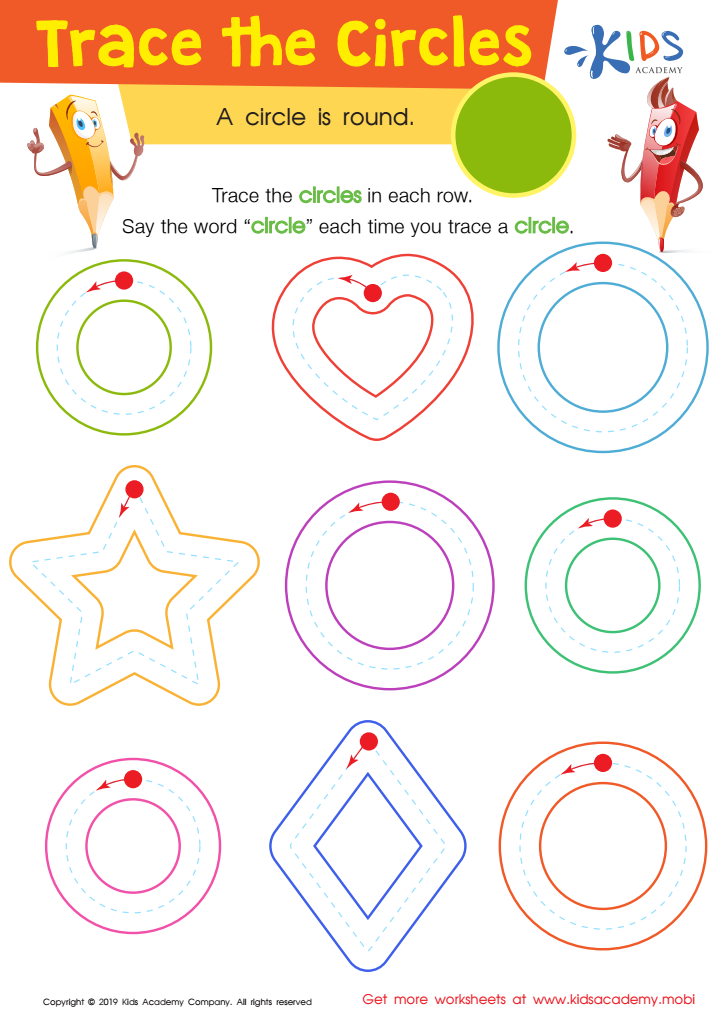
Trace The Circles Worksheet
 Assign to My Students
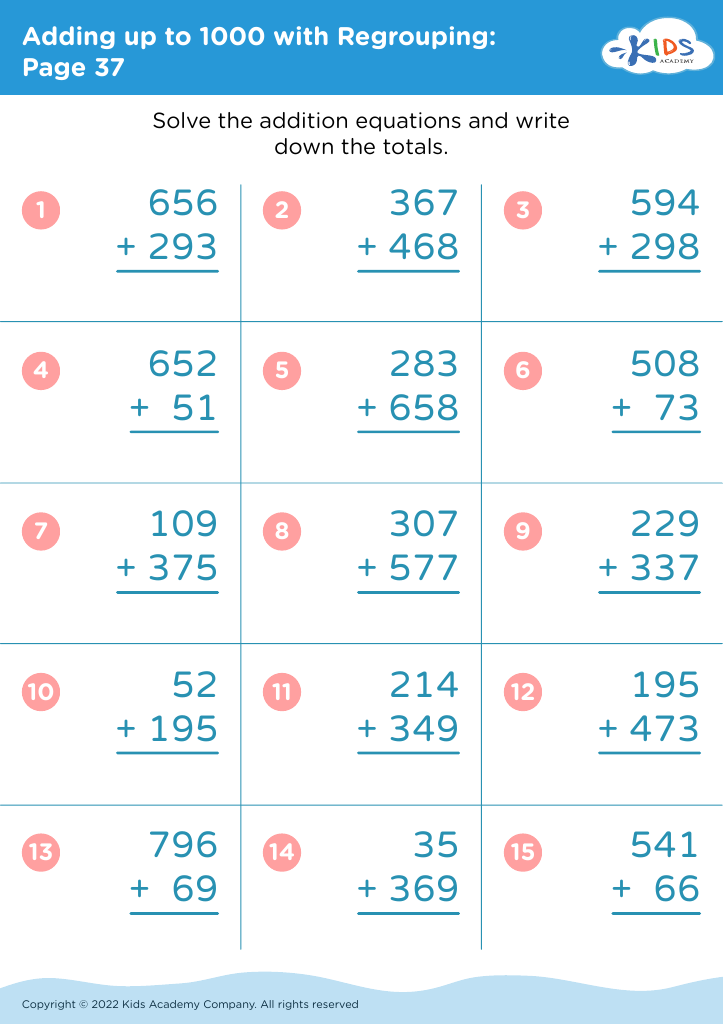
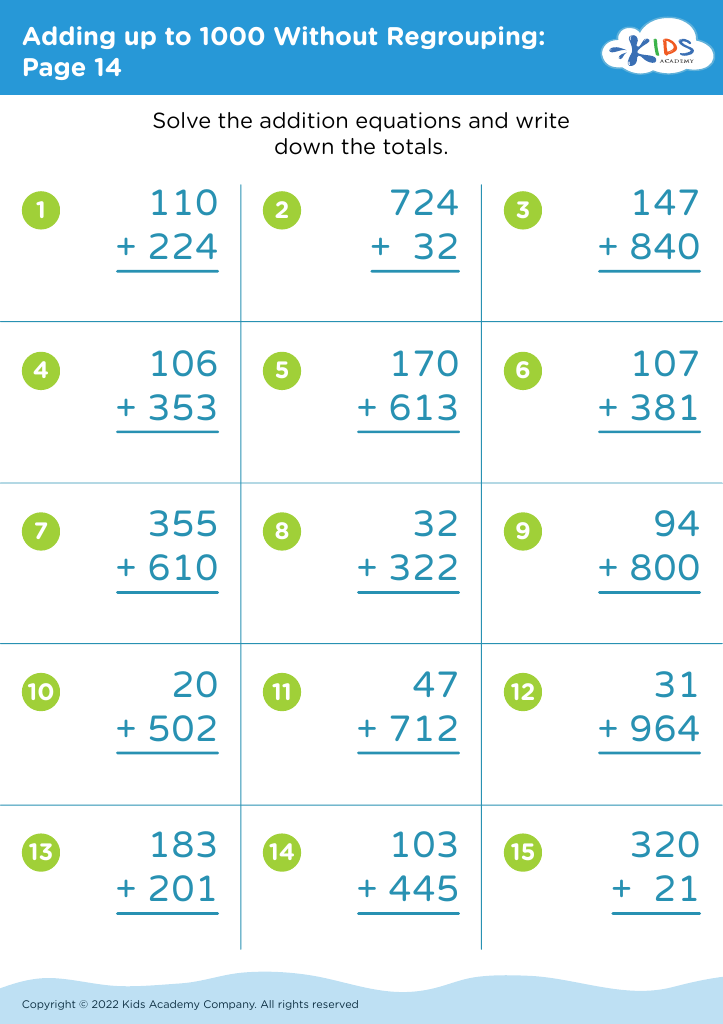
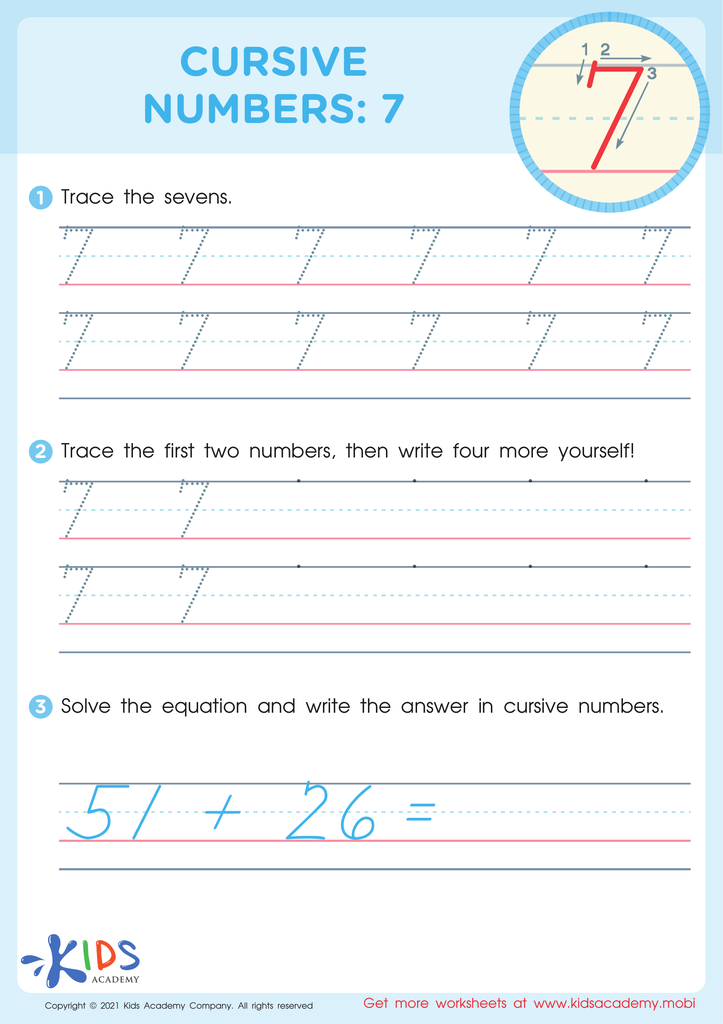
Cursive Numbers: 7 Worksheet
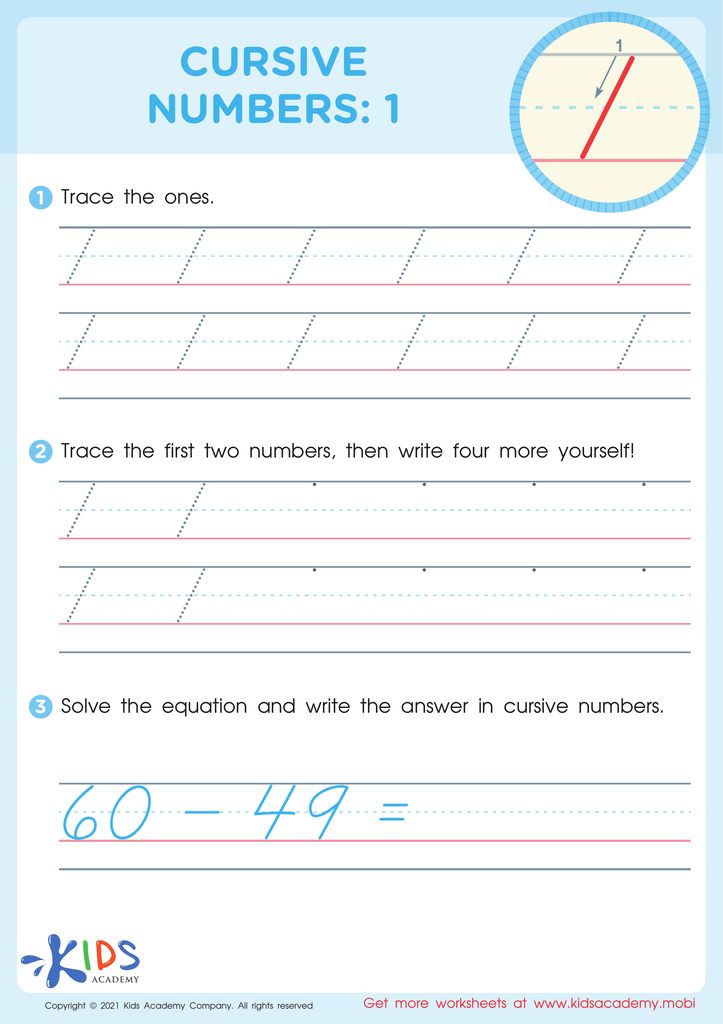
Cursive Numbers: 1 Worksheet
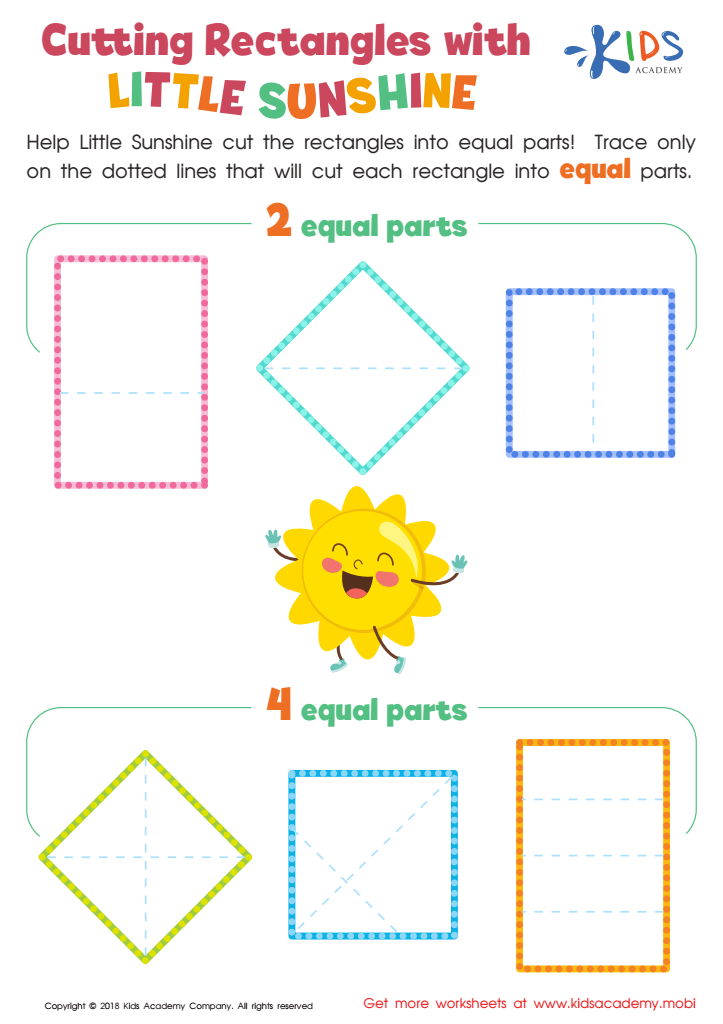
Cutting Rectangles with Little Sunshine Worksheet
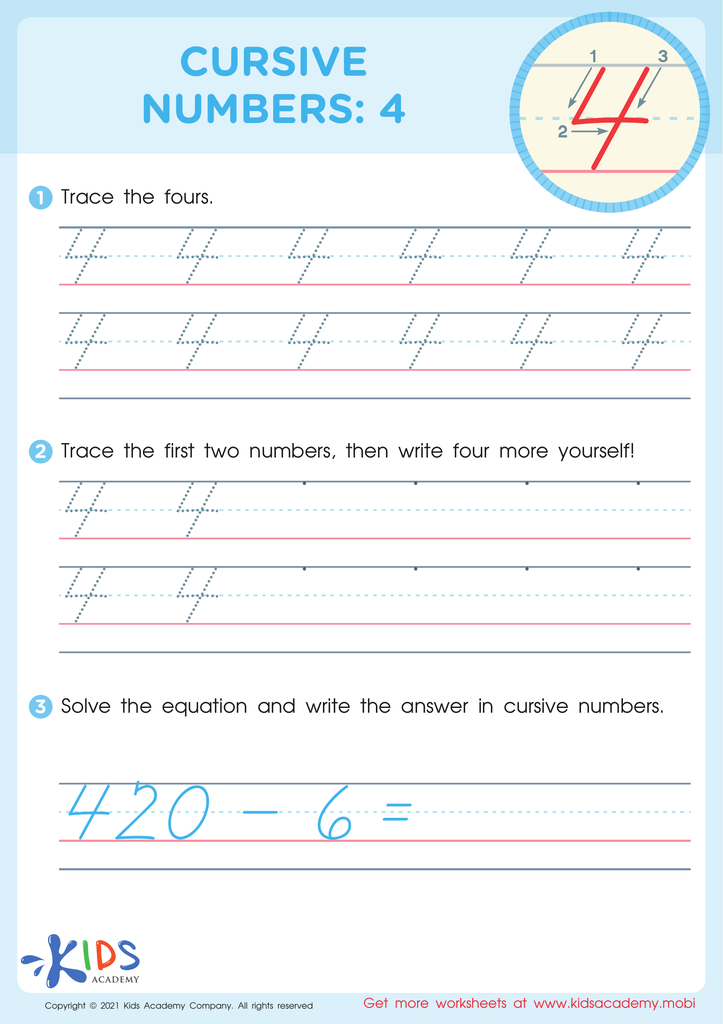
Cursive Numbers: 4 Worksheet








Fine motor skills are crucial for the holistic development of children, particularly in the context of mathematics for ages 7-8. At this developmental stage, children are acquiring more complex mathematical concepts, such as addition, subtraction, and basic geometry. Fine motor skills enhance hand-eye coordination and dexterity, which are essential when handling tools like pencils, markers, rulers, and manipulatives such as counting blocks and geometric shapes.
Parents and teachers should care about fine motor skills development because these abilities directly impact a child's mathematical performance and confidence. Strong fine motor skills allow children to effectively perform tasks such as writing numbers neatly, constructing figures accurately, and engaging in hands-on math activities that reinforce learning concepts. Furthermore, children with well-developed fine motor skills tend to demonstrate better focus and persistence in problem-solving activities.
Moreover, providing opportunities for fine motor practice can foster a child's enthusiasm for learning math. Engaging activities, such as crafting number games or playing with puzzles, can make math enjoyable while simultaneously boosting fine motor development. Investing in these skills not only supports academic success but also contributes to a child's overall confidence and independence in tackling future learning challenges. Hence, fostering fine motor skills should be a priority for both parents and educators.








