Math problem-solving skills Math Worksheets for Ages 7-8
4 filtered results
-
From - To
Discover our collection of Math Problem-Solving Skills Worksheets, specially designed for ages 7-8! These engaging sheets help build critical thinking and analytical abilities. Covering topics like basic arithmetic, word problems, and logical puzzles, our worksheets make learning fun and effective. They cater to the grade 2 math curriculum, ensuring a solid foundation for young learners. With colorful illustrations and varied activities, kids stay motivated while honing their problem-solving skills. Perfect for classroom use or extra practice at home, these worksheets are an invaluable resource for students and educators alike. Foster a love for math today with Kids Academy!
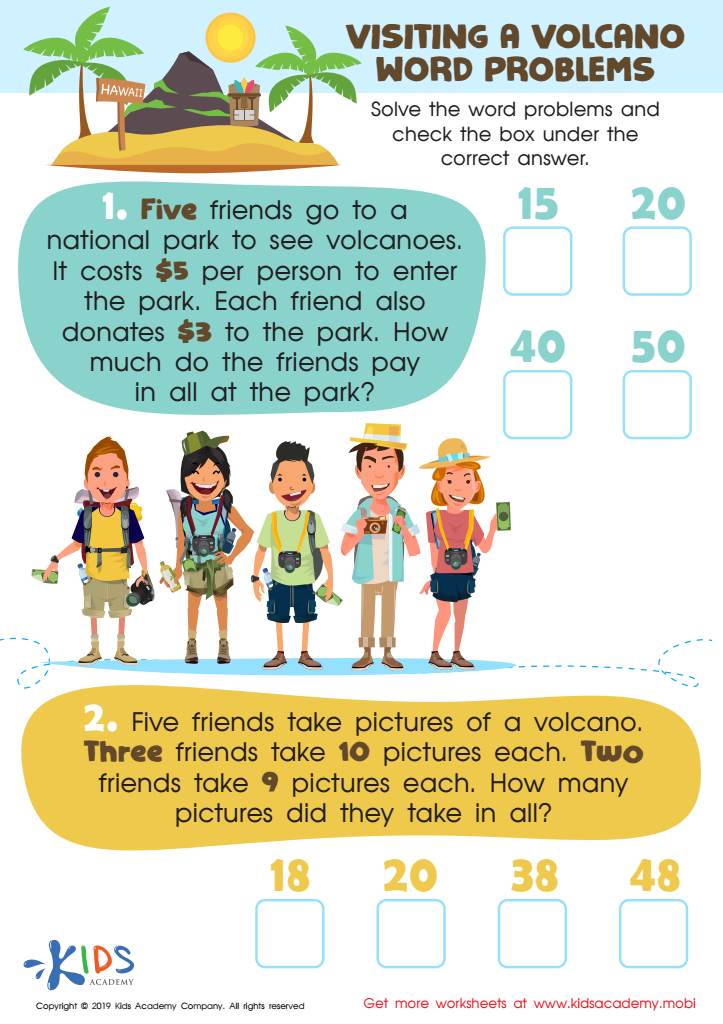
Visiting a Volcano Word Problems Worksheet
 Assign to My Students







.jpg)
Parents and teachers should care immensely about developing math problem-solving skills for children ages 7-8. At this developmental stage, children are not only learning basic arithmetic but also beginning to understand how to apply these skills in practical situations. Problem-solving helps kids to think logically and critically, build perseverance, and improve their analytical skills. These are foundational abilities crucial for success in all academic areas and everyday life.
By emphasizing problem-solving, children learn how to break down complex problems into manageable steps, fostering a deep understanding beyond rote memorization. This helps boost their confidence and reduces math anxiety, creating a positive attitude toward future mathematical challenges. Skills learned through math problem-solving at this age are transferable to other subjects, enhancing overall academic performance.
Additionally, teaching problem-solving at a young age cultivates curiosity and intellectual independence. Kids learn to explore different approaches and solutions, fostering creativity and innovation. Parental and teacher support in this area lays the groundwork for lifelong learning and adaptability, equipping children with the tools needed to tackle diverse and complex real-world issues as they grow. Therefore, focusing on math problem-solving is investing in a child's intellectual and emotional development, making them more resilient and resourceful learners.








