Reading clocks Math Worksheets for Ages 7-8
7 filtered results
-
From - To
Enhance your child’s understanding of time with our engaging Reading Clocks Math Worksheets designed for ages 7-8! These printable resources provide a fun and interactive way for young learners to master reading analog and digital clocks. Our worksheets include a variety of activities, from matching times to clocks, to solving word problems involving time. Each worksheet focuses on building essential skills in a playful environment, fostering both confidence and comprehension. Ideal for classroom use or home practice, our Reading Clocks Worksheets ensure that children not only learn to tell time but also develop critical thinking and problem-solving skills. Get started today!
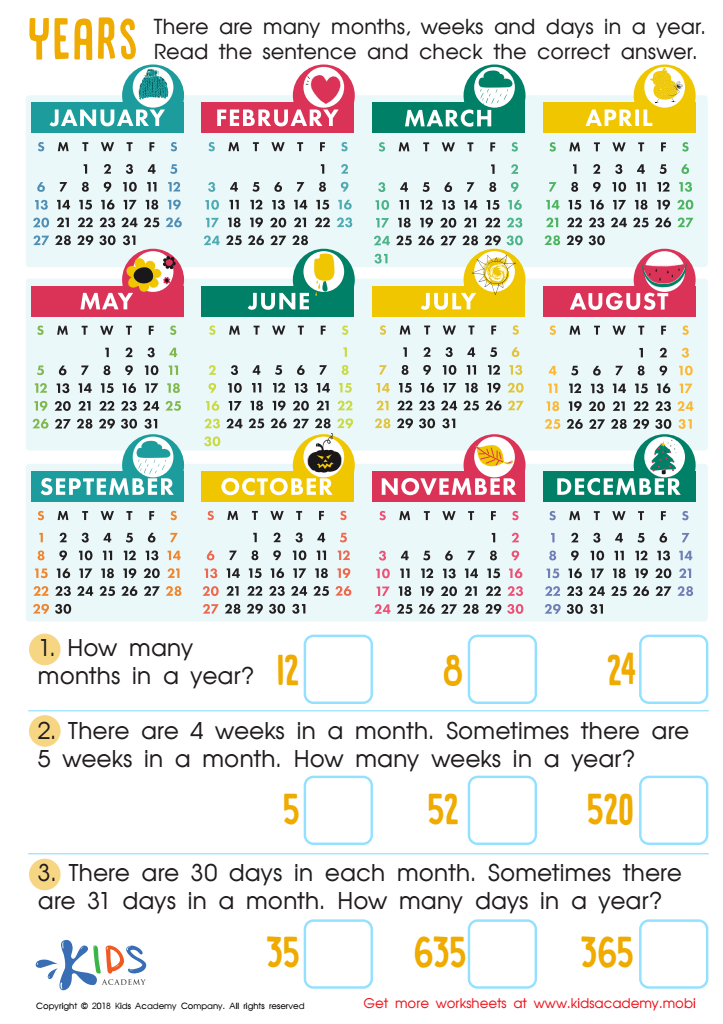
Years Worksheet
 Assign to My Students
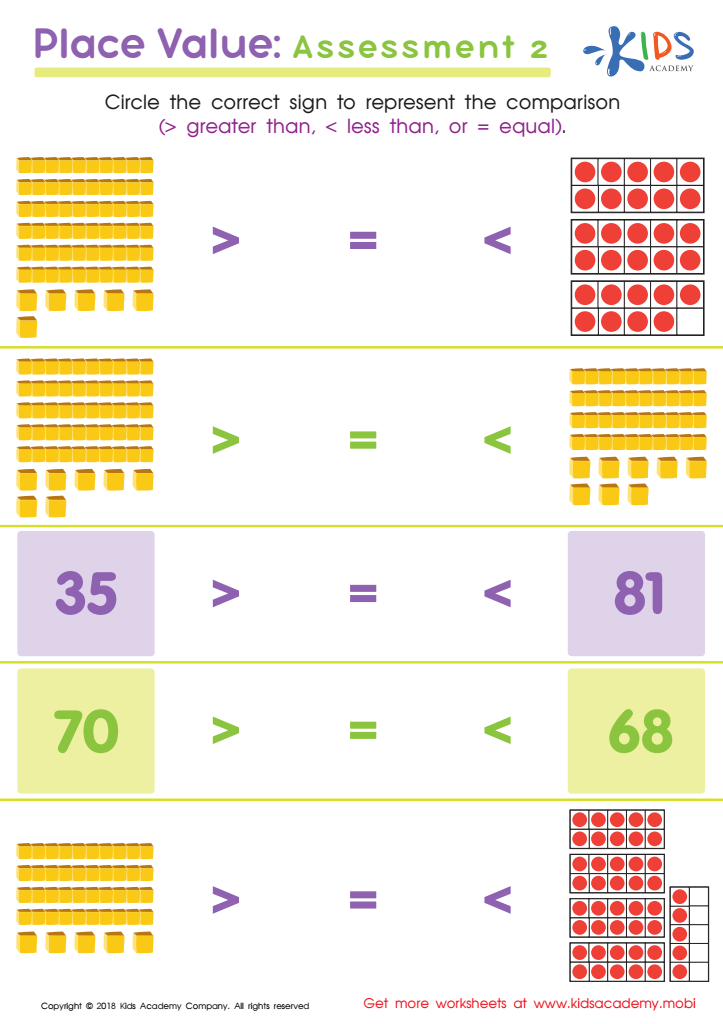
Place Value: Assessment 2 Worksheet
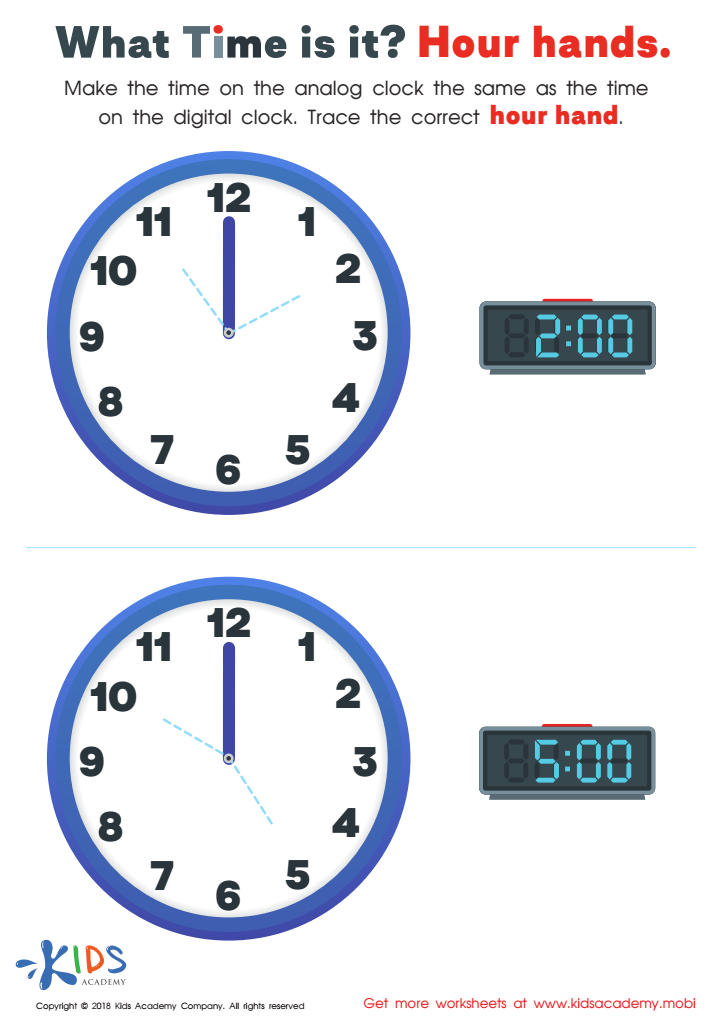
What Time Is it? Hour Hands Worksheet
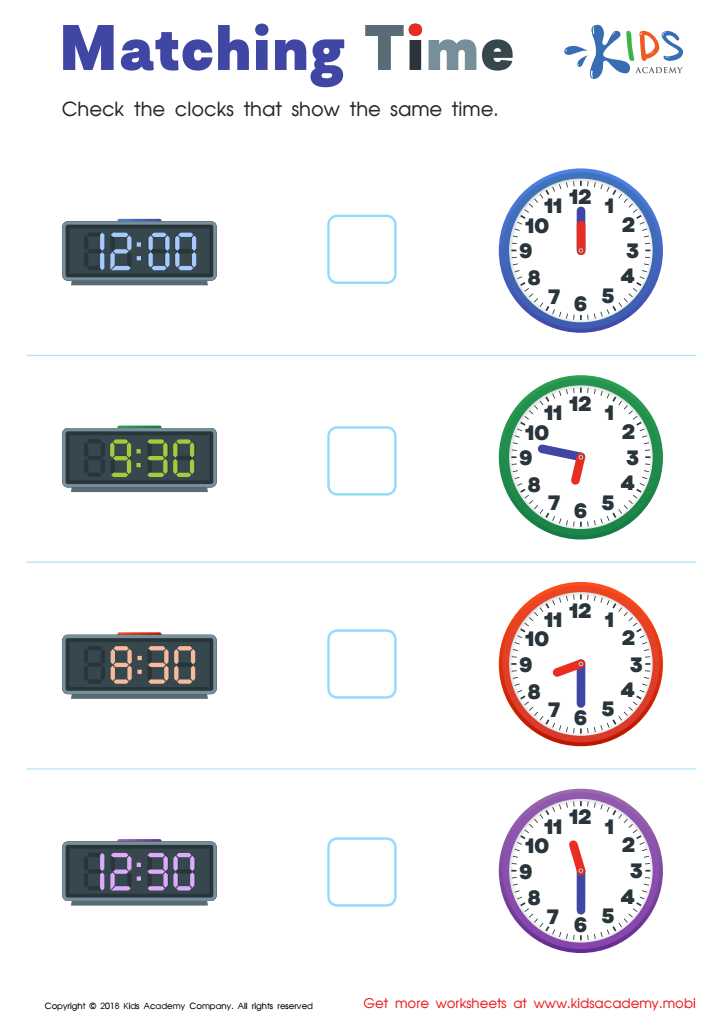
Matching Time Worksheet




.jpg)



Parents and teachers should prioritize teaching children aged 7-8 how to read clocks and understand basic math concepts associated with time for several reasons. First, time-telling is a crucial life skill that promotes independence. Knowing how to read both digital and analog clocks empowers children to manage their schedules, routines, and activities effectively, which is essential for fostering responsibility.
Additionally, time-related math activities lay the groundwork for critical thinking and problem-solving skills. When children learn about time intervals, they practice addition and subtraction, enhancing their overall mathematical abilities. For instance, calculating how many minutes are left until an event builds both estimation and calculation skills.
Moreover, understanding time promotes social awareness; it helps children recognize different time zones and the passage of time in daily life events. This knowledge encourages punctuality and respect for others’ time, ingraining valuable social skills early on.
Lastly, embedding these lessons in engaging, hands-on activities makes learning enjoyable, encouraging a positive attitude toward math and fostering a love for learning. In essence, teaching children how to read clocks is vital for their personal development and academic success.








