Times table reinforcement Math Worksheets for Ages 7-8
4 filtered results
-
From - To
Enhance your child's math skills with our engaging Times Table Reinforcement Worksheets designed specifically for ages 7-8. These worksheets provide a fun and interactive way for young learners to master multiplication tables. With diverse exercises, including fill-in-the-blanks, matching games, and timed drills, your kid will boost confidence while honing their arithmetic abilities. Perfect for classroom use or at-home practice, our worksheets promote independent learning and reinforce essential math concepts. Dive into a world of numbers and unlock your child's potential with enjoyable practice that caters to their learning pace. Equip them with the tools they need for a strong mathematical foundation!
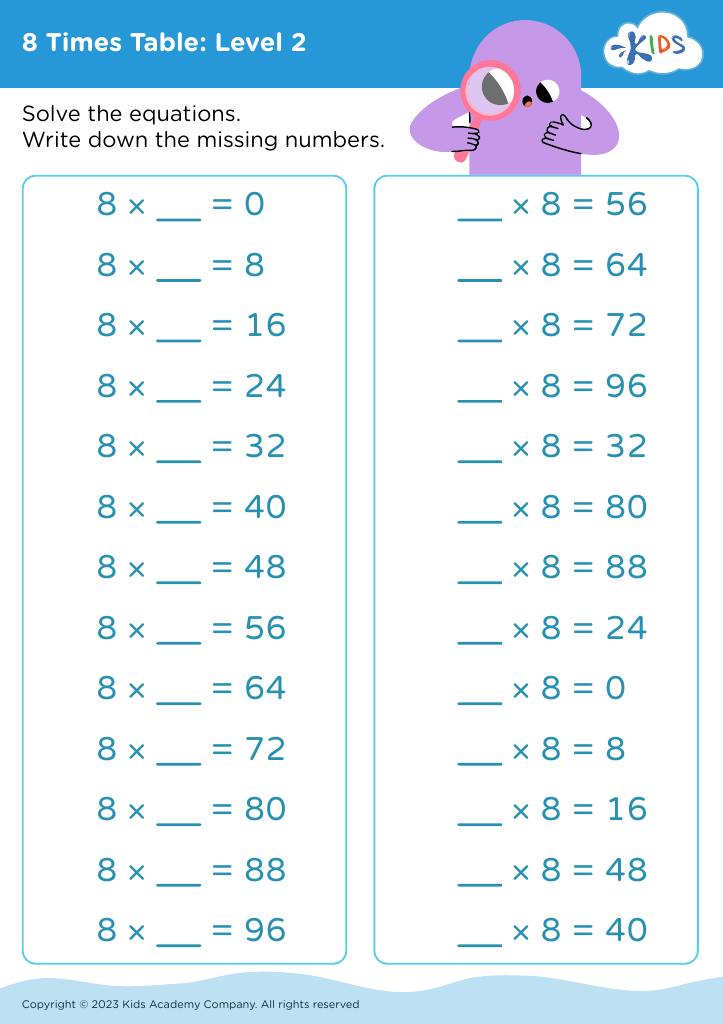
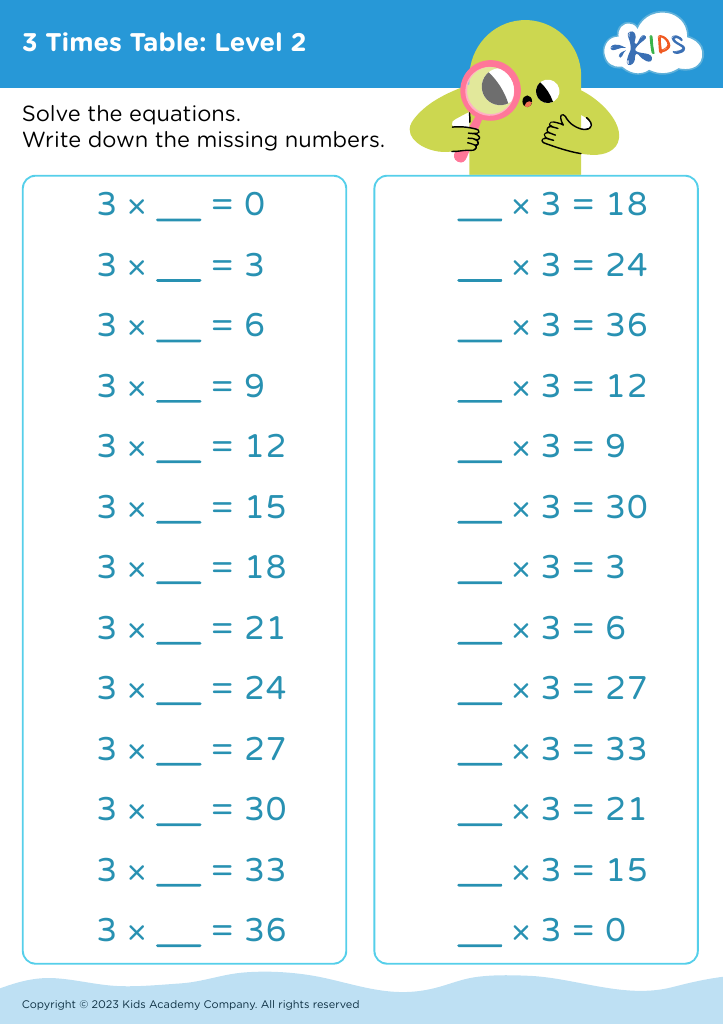
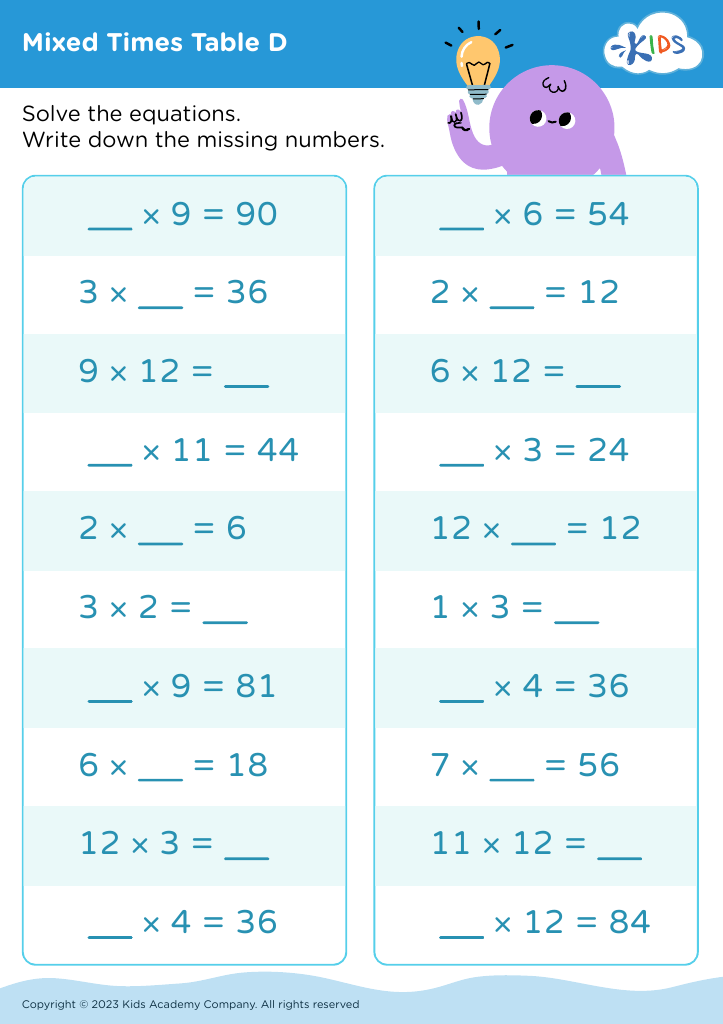
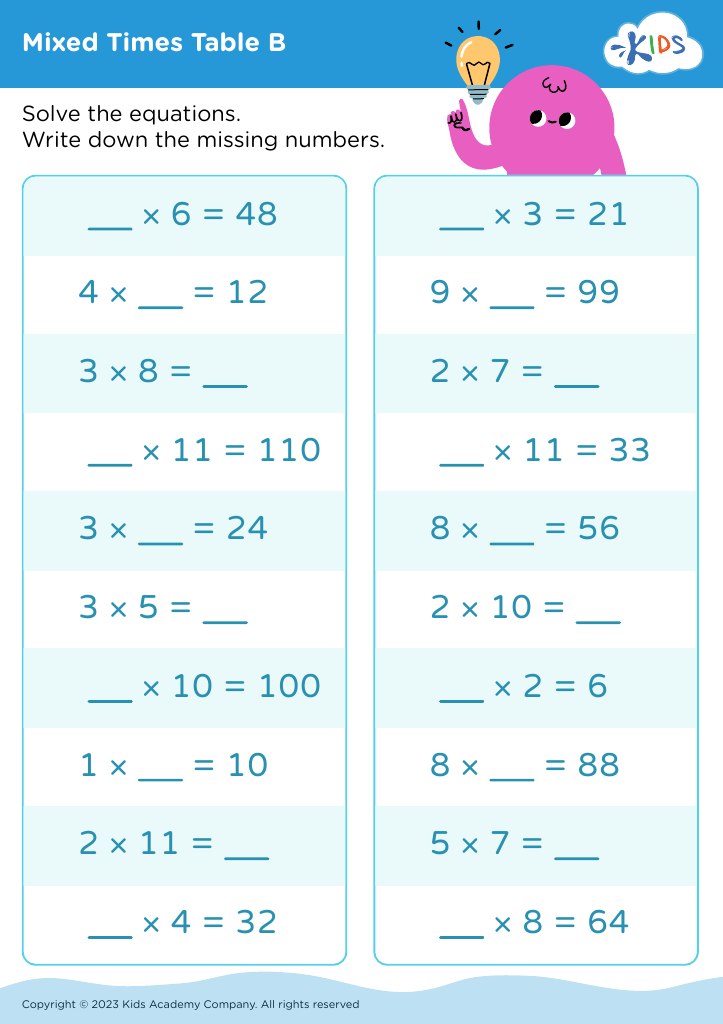







Reinforcing times tables for children aged 7-8 is crucial for several reasons. At this developmental stage, children are building foundational math skills that will support their academic journey. Understanding multiplication lays the groundwork for more complex mathematical concepts such as division, fractions, and ultimately, algebra. By mastering their times tables, children enhance their numerical fluency, enabling them to solve problems more confidently and quickly.
Additionally, strong multiplication skills improve a child's performance in various real-world applications, from calculating receipt totals during shopping to measuring ingredients in cooking. This practicality underscores the relevance of classroom learning to life skills.
Moreover, reinforcement of times tables can boost a child’s self-esteem and motivation in math. Children who feel competent in their skills are more likely to enjoy math and actively participate in learning activities.
For parents and teachers, facilitating this reinforcement can be achieved through engaging strategies like games, songs, or interactive technology, making learning both effective and enjoyable. Overall, a solid grasp of multiplication not only prepares children for higher math but also equips them with critical problem-solving skills that will benefit them throughout their education and beyond.








