Understand sequences Math Worksheets for Ages 7-8
5 filtered results
-
From - To
Discover our engaging "Understand Sequences Math Worksheets" designed for children aged 7-8! These worksheets help young learners grasp the concept of sequences through fun and interactive activities, enhancing their math skills. Featuring colorful illustrations and varied exercises, your child will explore number patterns, simple equations, and problem-solving tasks that build a solid foundation in mathematics. Perfect for home or classroom use, these resources foster critical thinking and encourage a love for learning. Watch your child's confidence grow as they master sequences and develop essential skills for future math concepts! Visit us today to access these valuable worksheets and support your child's mathematical journey!
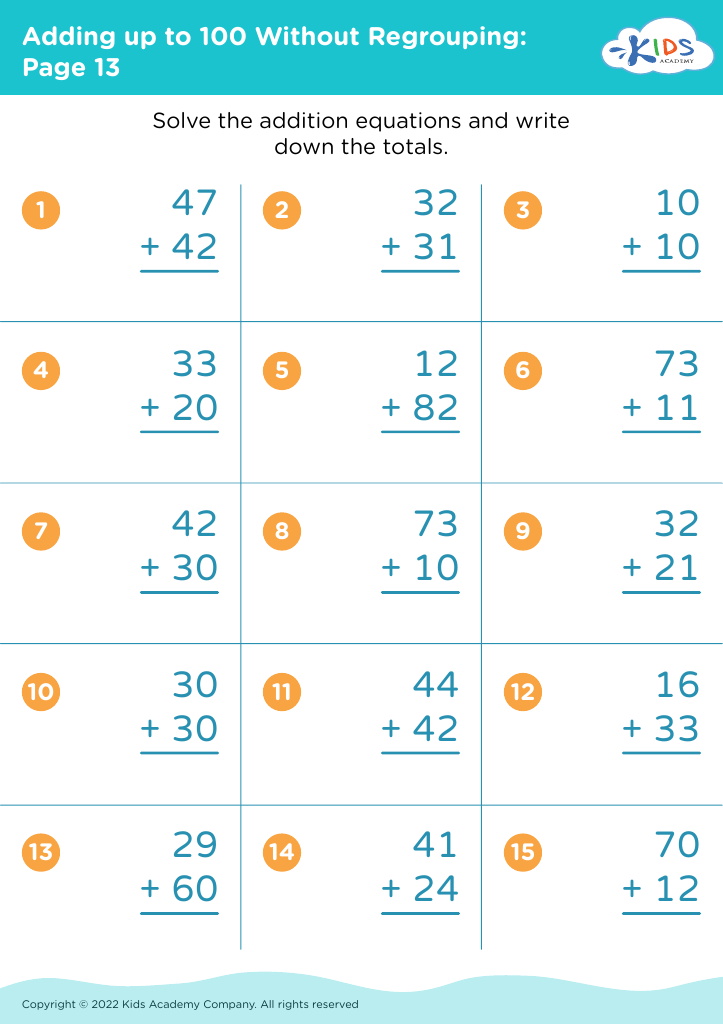
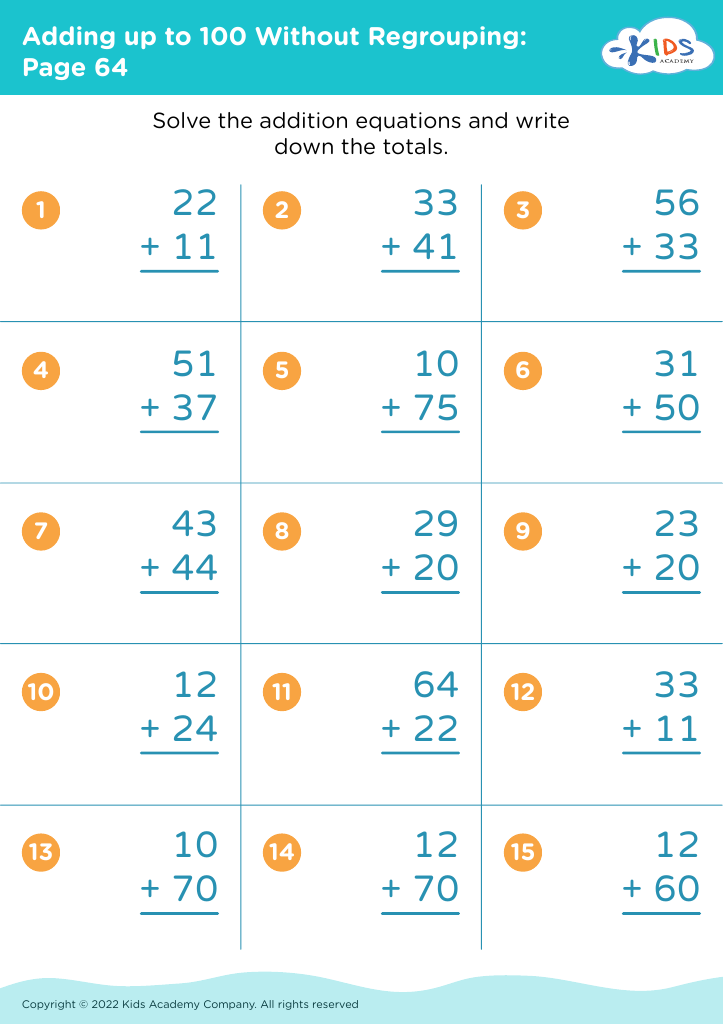
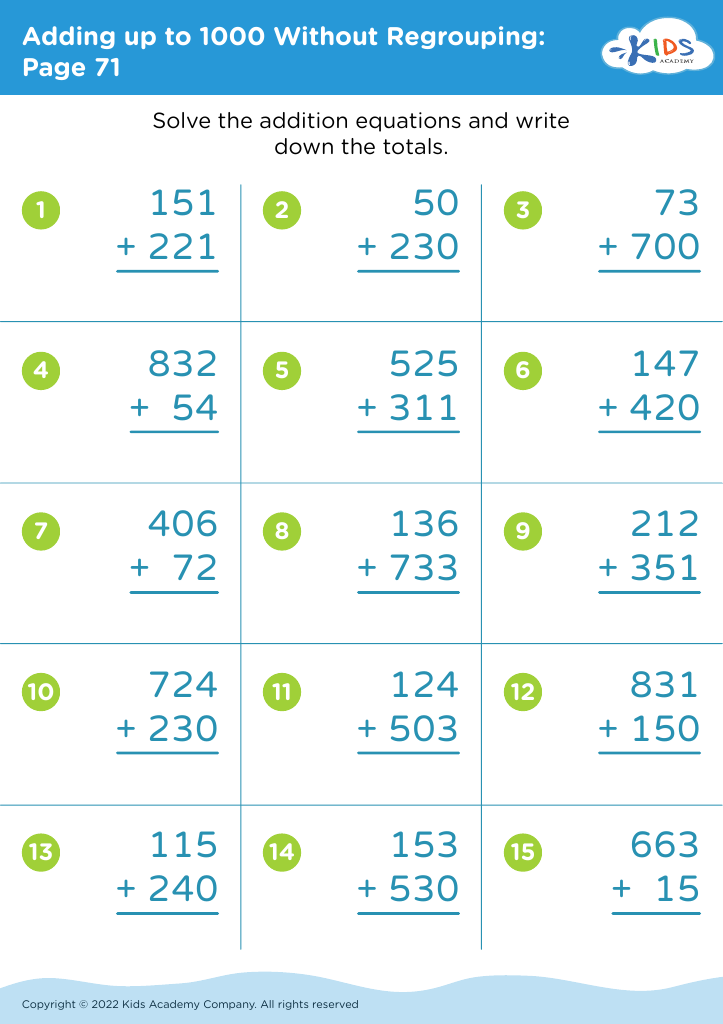
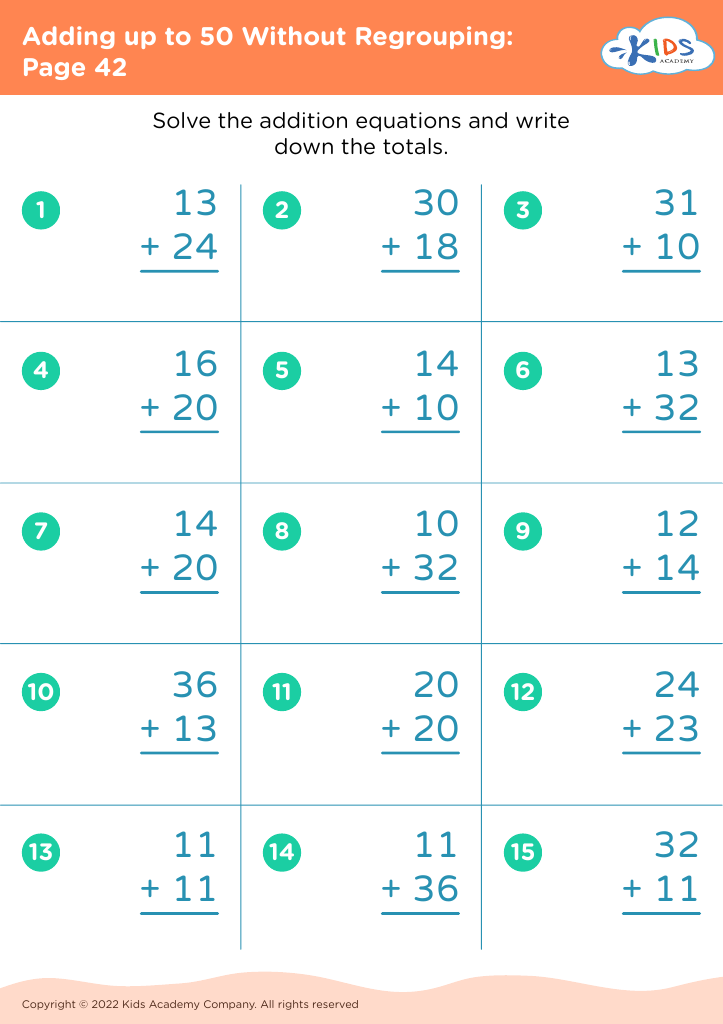
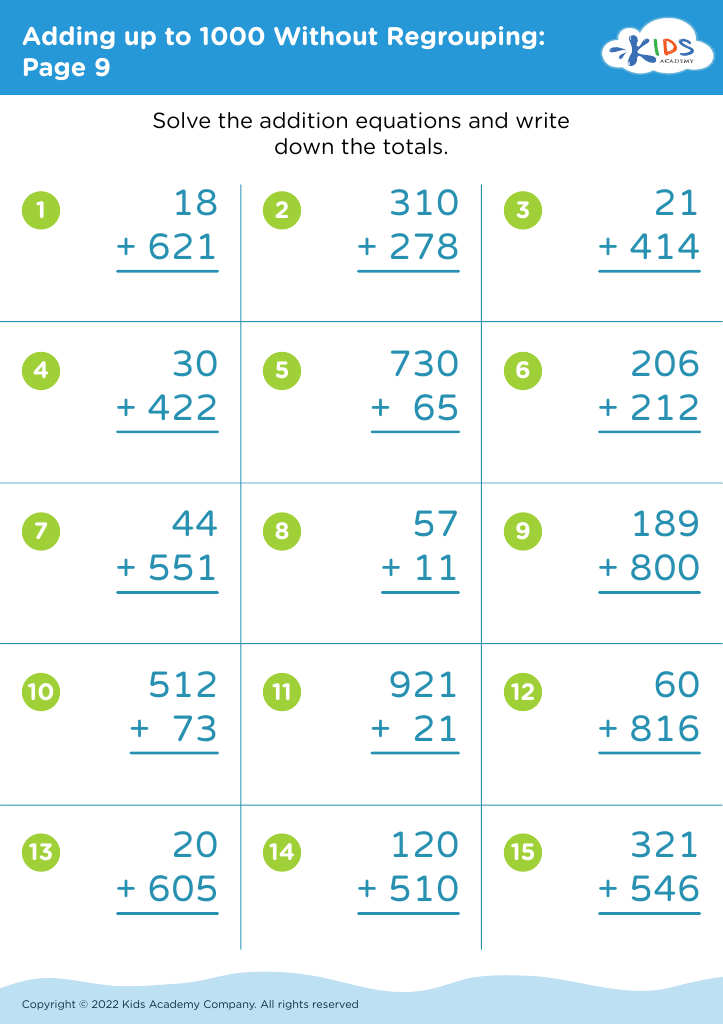








Understanding sequences in mathematics is crucial for children aged 7-8, as it serves as a foundational skill for their future learning. Careful instruction and emphasis on sequences help foster critical thinking and problem-solving abilities. Sequences introduce children to patterns, which are essential in recognizing the relationships between numbers and understanding arithmetic operations.
As students learn about sequences, they develop the ability to predict outcomes, make logical connections, and enhance their comprehension in other areas of math, such as algebra and geometry. Engaging with sequences encourages an analytical mindset, offering kids the tools they need for higher-level concepts later on. It also aids their ability to differentiate types of patterns—like increasing sequences, decreasing sequences, and alternating patterns—adding depth to their mathematical vocabulary.
Parents and teachers should also note that fostering an interest in sequences can go beyond academics; it allows children to notice patterns in everyday life, enhancing observation skills. This curiosity and enthusiasm not only support their math fluency but build a strong, confident foundation for lifelong learning. Ultimately, addressing sequences early equips children with critical skills, ensures readiness for future challenges, and cultivates a deeper appreciation for the beauty of mathematics in the world around them.








