Visual fraction representation Math Worksheets for Ages 7-8
3 filtered results
-
From - To
Explore our engaging Visual Fraction Representation Math Worksheets designed specifically for children ages 7-8! These interactive resources help young learners develop a strong understanding of fractions through visual aids and hands-on activities. Our colorful worksheets include various exercises, from identifying fractions to comparing them, ensuring that students grasp the concept in a fun and meaningful way. With clear instructions and relatable visuals, these worksheets cater to diverse learning styles and promote critical thinking. Perfect for home or classroom use, our materials encourage confidence in math while building essential skills for future success. Start your child’s fraction journey today!
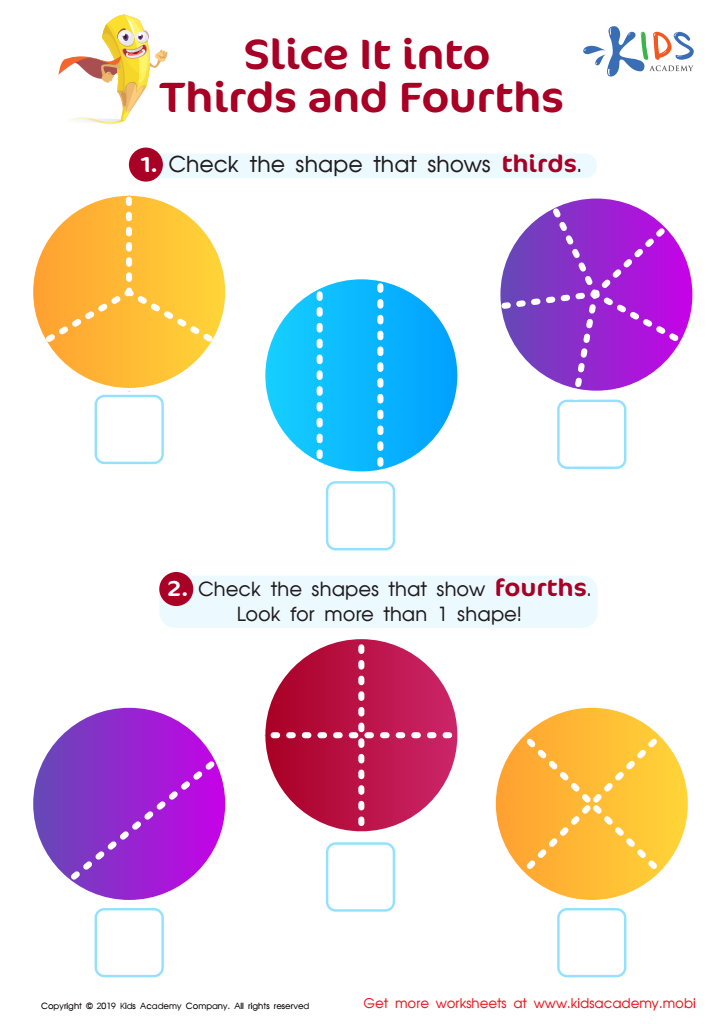
Slice in Thirds Fourths Worksheet
 Assign to My Students
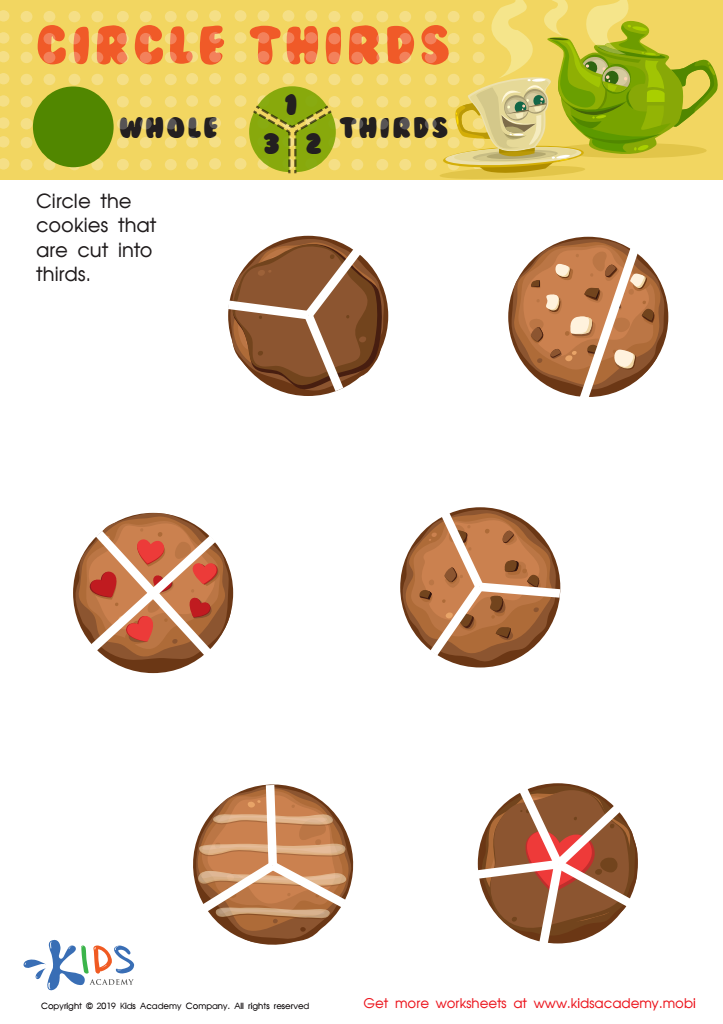
Circle Thirds Worksheet








Visual fraction representation is a crucial concept for children aged 7-8, as it lays the foundation for their understanding of fractions, an essential mathematical skill. Parents and teachers should care about this because visual aids, such as pie charts, number lines, and shapes, help children grasp the abstract nature of fractions. By using visuals, learners can intuitively see how fractions represent parts of a whole, making it easier to understand concepts like equivalency, addition, and subtraction of fractions.
Moreover, visual fraction representation caters to diverse learning styles, enhancing engagement and retention. For those who struggle with traditional numerical methods, visualization provides a more accessible means to comprehend fractions. This builds their confidence and positive attitude toward math.
Encouraging children to create their own visual representations solidifies their learning, allowing them to express mathematical ideas creatively. Additionally, a strong foundation in fractions is linked to success in more advanced math concepts, such as ratios and percentages, preparing students for future academic challenges.
Ultimately, by supporting visual fraction representation, parents and teachers foster critical thinking, problem-solving skills, and a deeper understanding of mathematics that extends beyond the classroom, essential for a child's overall cognitive development.








