Filters

9 filtered results

Clear all filters
Favorites
With answer key
Interactive

9 filtered results

Difficulty Level

Grade


Enhance your child's math skills with our engaging Vocabulary Building Math Worksheets designed specifically for ages 7-8. These worksheets focus on enriching vocabulary related to mathematical concepts, allowing young learners to grasp key terminology essential for understanding math problems. Incorporating fun activities and colorful illustrations, our worksheets help children connect words with their meanings while building confidence in their math abilities. Perfect for homework or supplemental practice, these resources are tailored to make learning enjoyable and effective. Foster your child's exploration of numbers and words today with our comprehensive collection of educational worksheets!
Check out this FREE Trial Lesson on Math for age 7-8!

Making more parts!

Favorites
With answer key
Interactive
  • 7-8
  • Vocabulary Building
  • Math
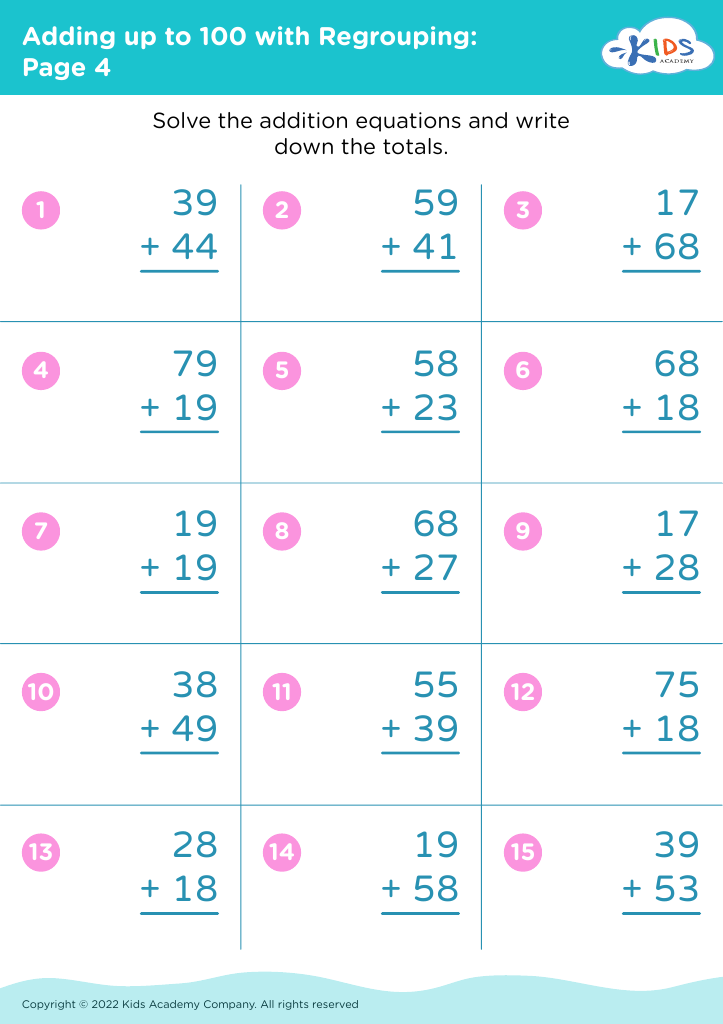
Adding up to 100 with Regrouping: Page 4
Worksheet
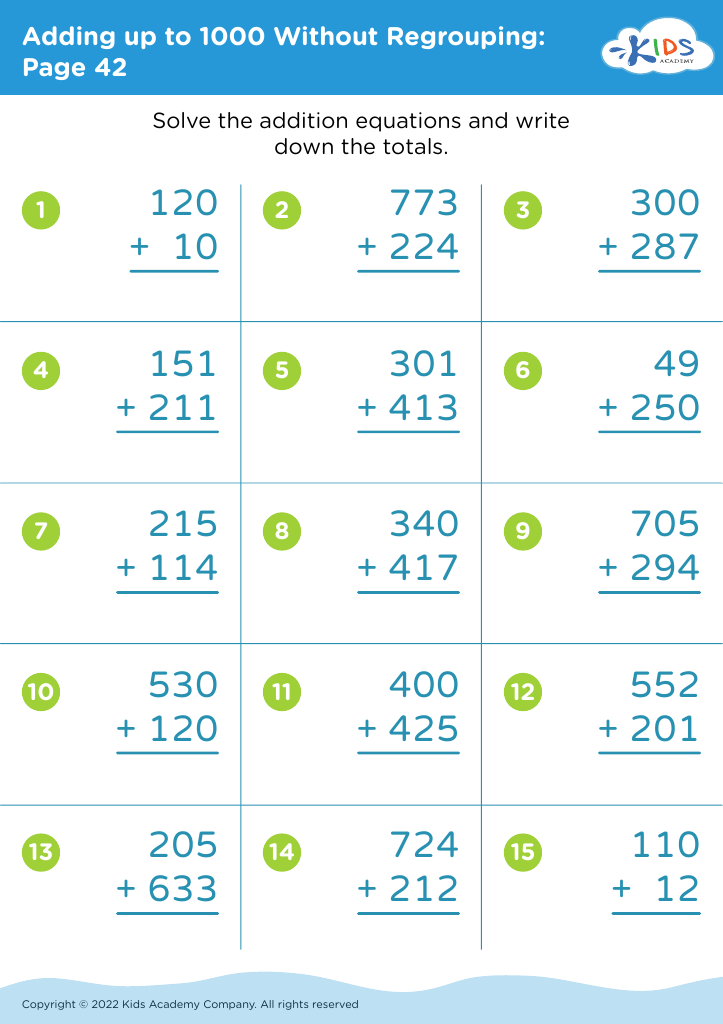
Adding up to 1000 Without Regrouping: Page 42
Worksheet
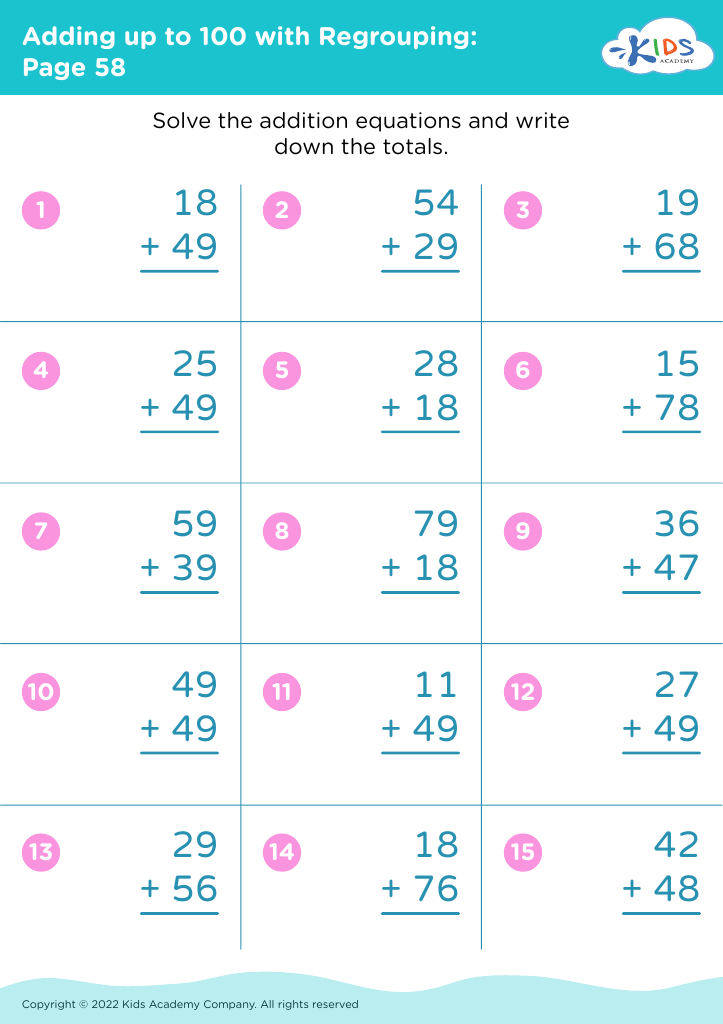
Adding up to 100 with Regrouping: Page 58
Worksheet
Animals of Amazon Worksheet

Animals of Amazon Worksheet

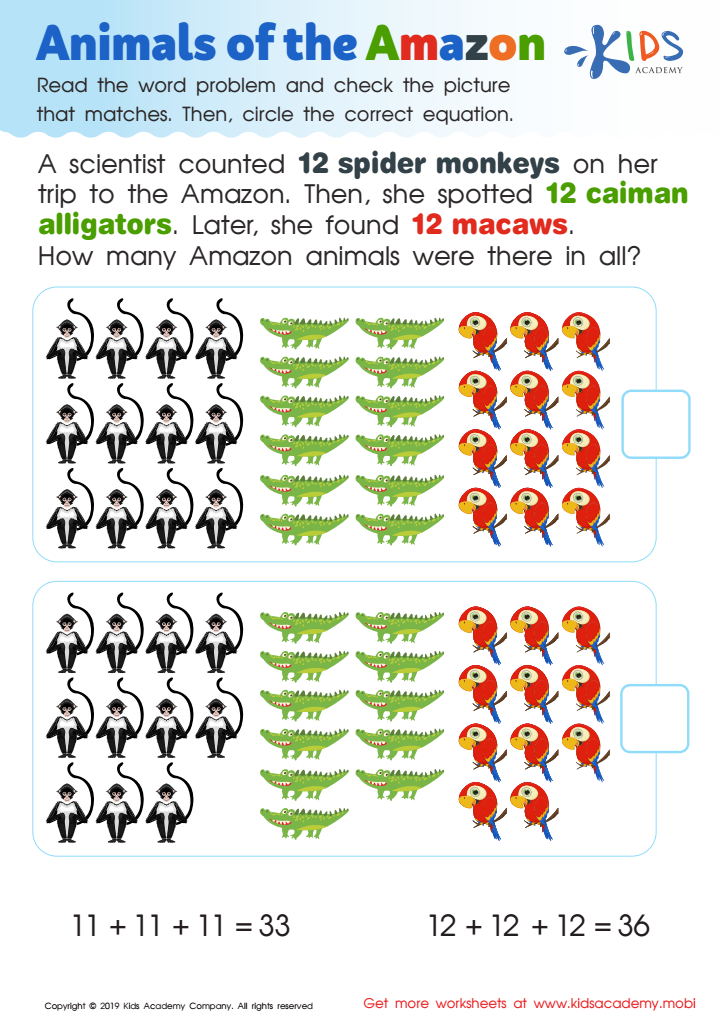
Kids will love exploring the Amazon while solving addition problems on this colorful PDF worksheet. They need to pay attention to the bolded info in each word problem to figure out the equation picture that matches. It's an exciting way to learn about the Amazon and practice adding multiple numbers!
Animals of Amazon Worksheet
Worksheet
Name the Shapes Halves or Fourths? Worksheet
Name the Shapes Halves or Fourths? Worksheet

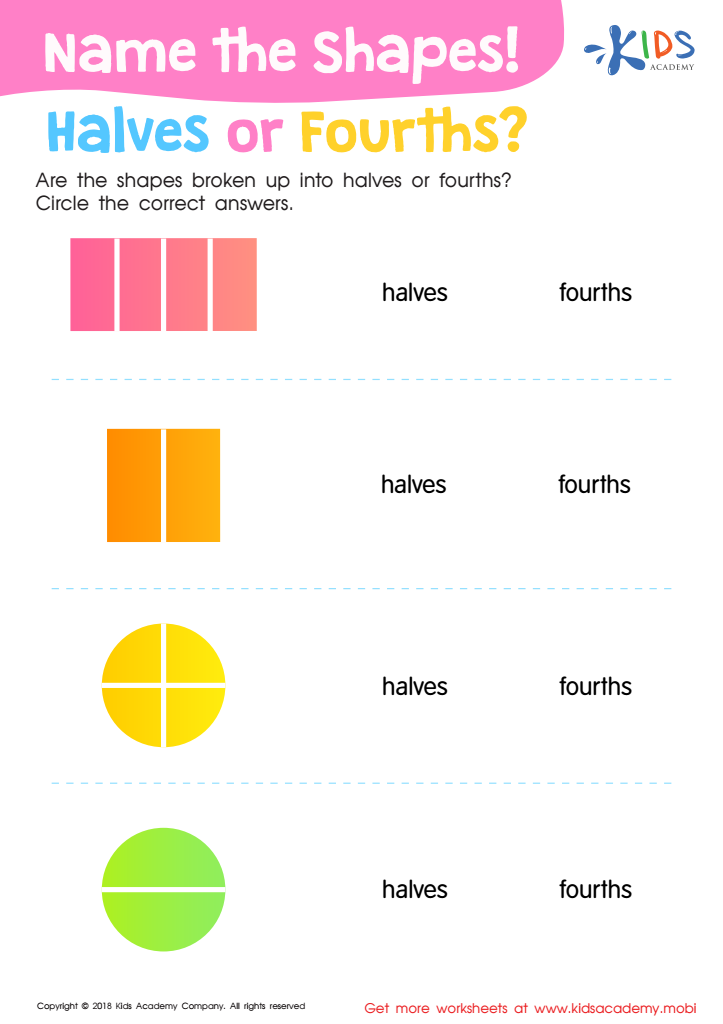
Before starting, ask your child if they understand what halves and fourths are. If they can answer correctly, move on with the worksheet. Help them circle the right option beside each shape, showing if it's split into halves or fourths.
Name the Shapes Halves or Fourths? Worksheet
Worksheet
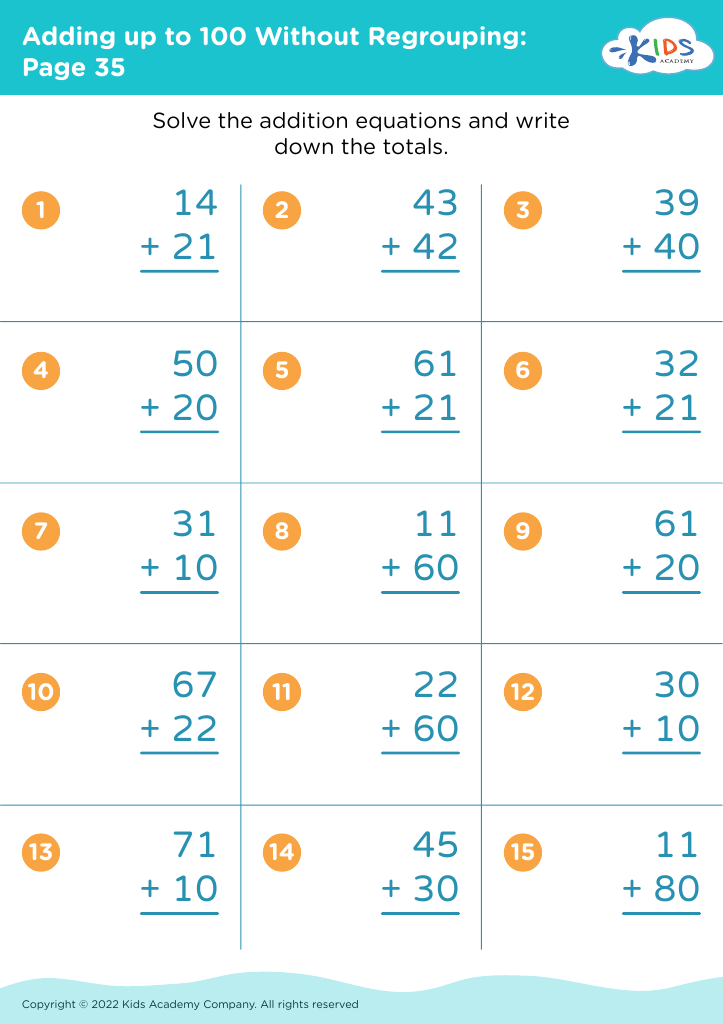
Adding up to 100 Without Regrouping: Page 35
Worksheet
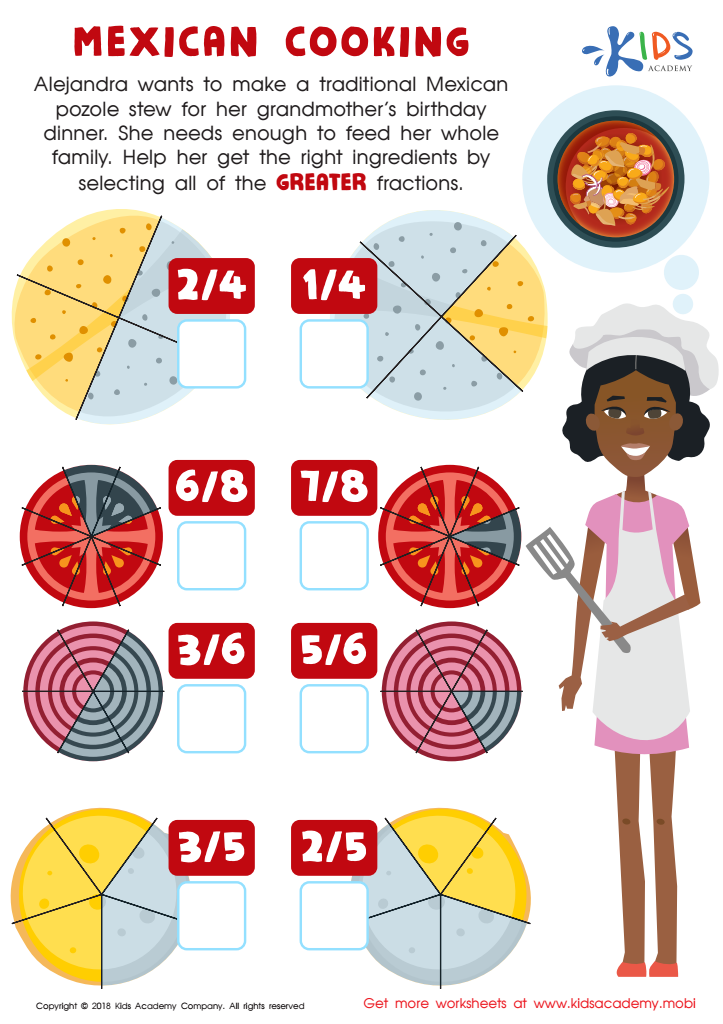
Mexican Cooking Worksheet

Mexican Cooking Worksheet

Alejandra needs to make a traditional Mexican pazole stew that will feed her whole family. Help her select the right ingredients by choosing the greater fractions in this worksheet. Mexicans have an amazing culture with many unique holidays, customs and dishes - explore it with your kids in your local neighbourhood!
Mexican Cooking Worksheet
Worksheet
Solution Matching: Hobbies. Part 2 Worksheet

Solution Matching: Hobbies. Part 2 Worksheet

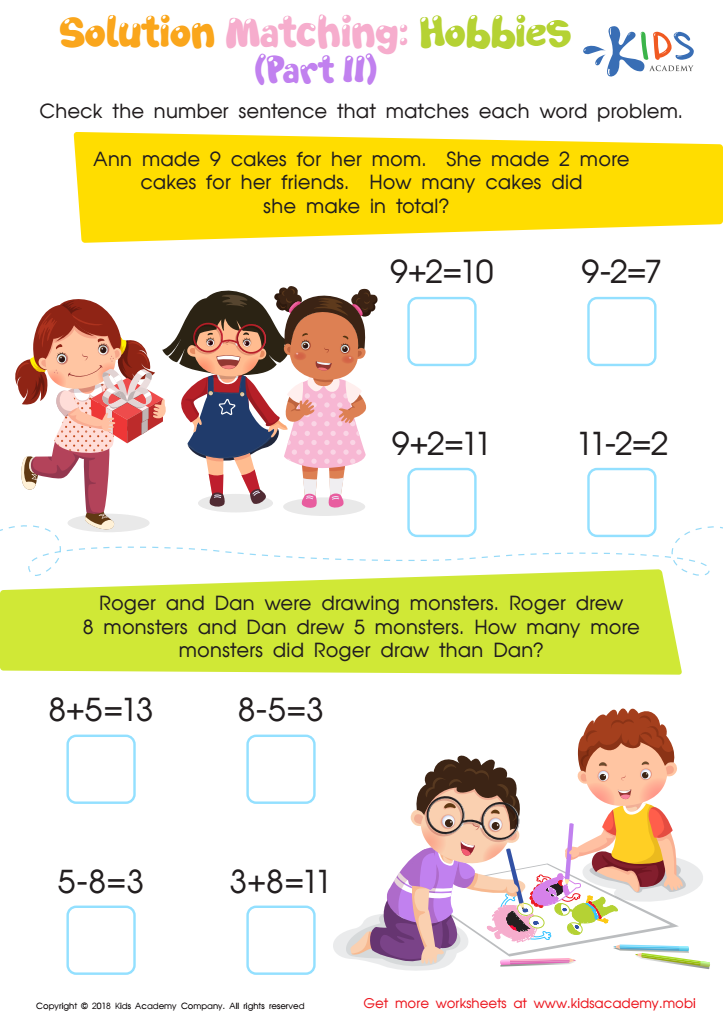
This fun printable worksheet has word problems featuring hobbies your children enjoy! With your child, read through each problem, understanding the numbers and key phrases indicating addition or subtraction. Then, match the correct equation with the solution by checking the box. Math problems are more enjoyable to solve when they’re realistic and engaging!
Solution Matching: Hobbies. Part 2 Worksheet

Worksheet
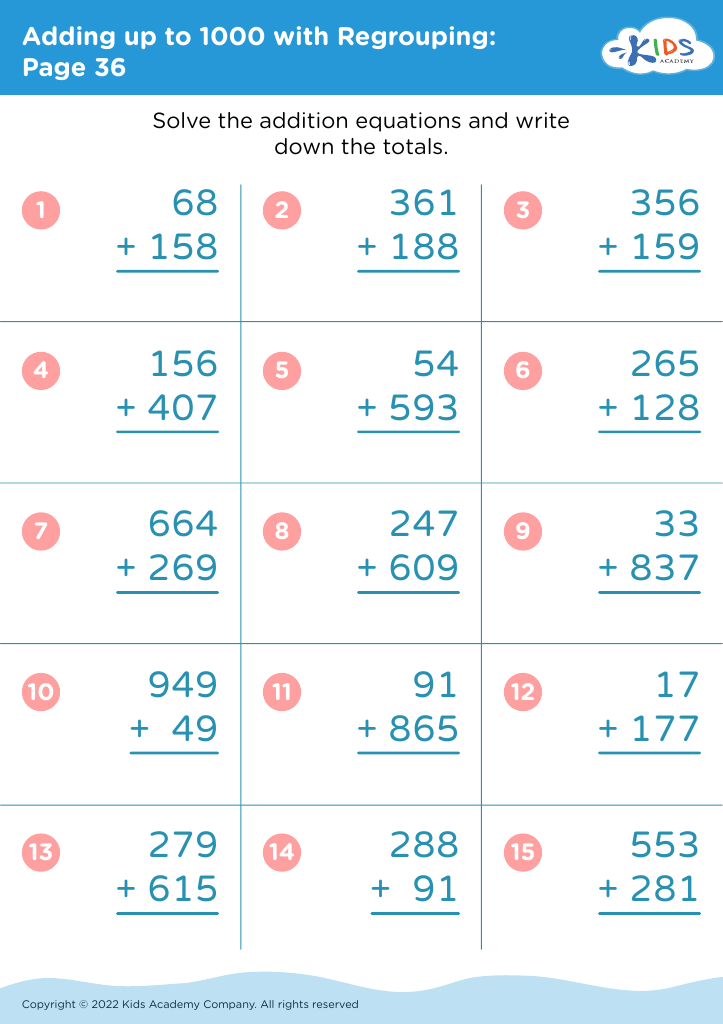
Adding up to 1000 with Regrouping: Page 36
Worksheet


Vocabulary building for math is crucial for children ages 7-8, as it lays the foundation for their mathematical understanding and problem-solving abilities. At this developmental stage, children are transitioning from basic arithmetic to more complex concepts. This is where the language of math—terms like "addition," "subtraction," "sum," "difference," and "equal"—plays a pivotal role.

Strong vocabulary skills enhance comprehension and communication in math, enabling children to articulate their thought processes and approach to math problems. When children understand mathematical terms, they are better equipped to grasp concepts, follow instructions, and explain their reasoning, which is essential for collaborative learning.

Furthermore, a rich math vocabulary encourages a greater enthusiasm for the subject. Engaging with mathematical language helps demystify concepts, fostering a positive attitude towards problem-solving. Parents and teachers should integrate vocabularic activities into math instructions, such as fun games, discussions, and reading materials that highlight math words in context.

Incorporating vocabulary building naturally integrates literacy skills, thus supporting overall academic achievement. Investing in this aspect of learning ensures students build self-confidence and develop a lifelong love for math, setting them up for future success in more advanced math topics.