
Fine Motor Skills Matching Worksheets for Ages 7-8
3 filtered results
Difficulty Level
Grade
Age
-
From - To
Subject
Activity
Standards
Enhance your child's fine motor skills with our engaging Matching Worksheets specially designed for ages 7-8! These printables offer a fun and interactive way for children to develop hand-eye coordination, dexterity, and concentration through various matching activities. Each worksheet features vibrant illustrations and age-appropriate challenges that make learning enjoyable. Perfect for classroom settings or at-home practice, these worksheets encourage independence and boost confidence as kids master essential skills. Watch your child thrive as they connect letters, shapes, or objects, laying the foundation for future learning and development. Start fostering their fine motor abilities today with our creative and educational resources!
Favorites
With answer key
Interactive
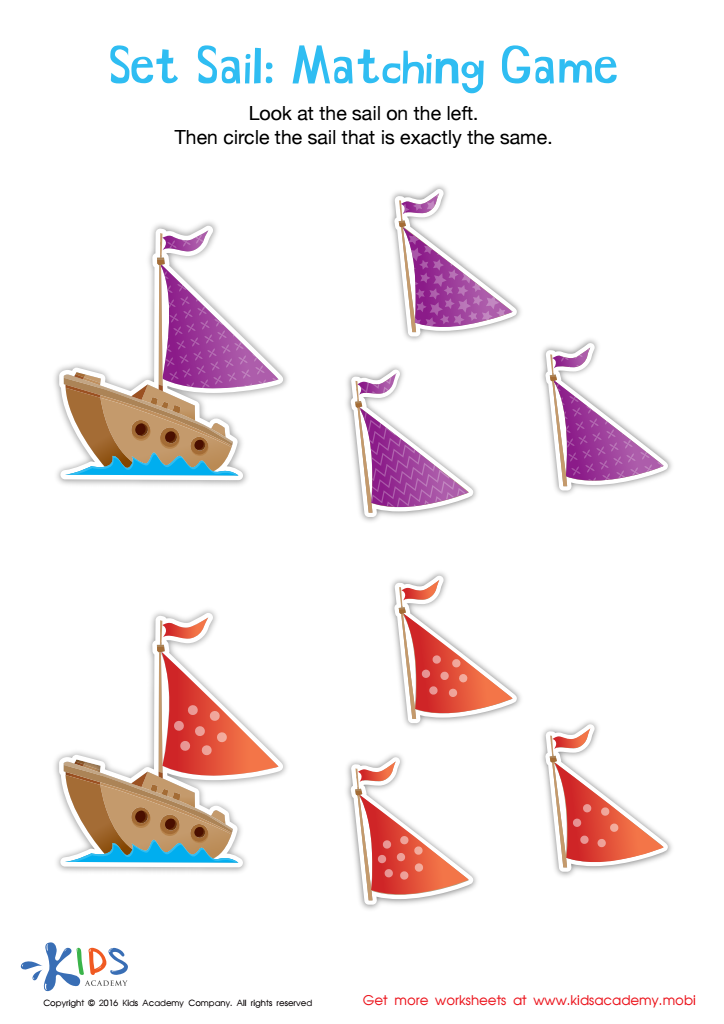
Set Sail Worksheet
Set sail with this fun matching game for toddlers! Kids will love finding the same pattern on the sails, improving their problem-solving and counting skills. Enjoy this bright and engaging worksheet!
 Assign to My Students
Set Sail Worksheet
Worksheet
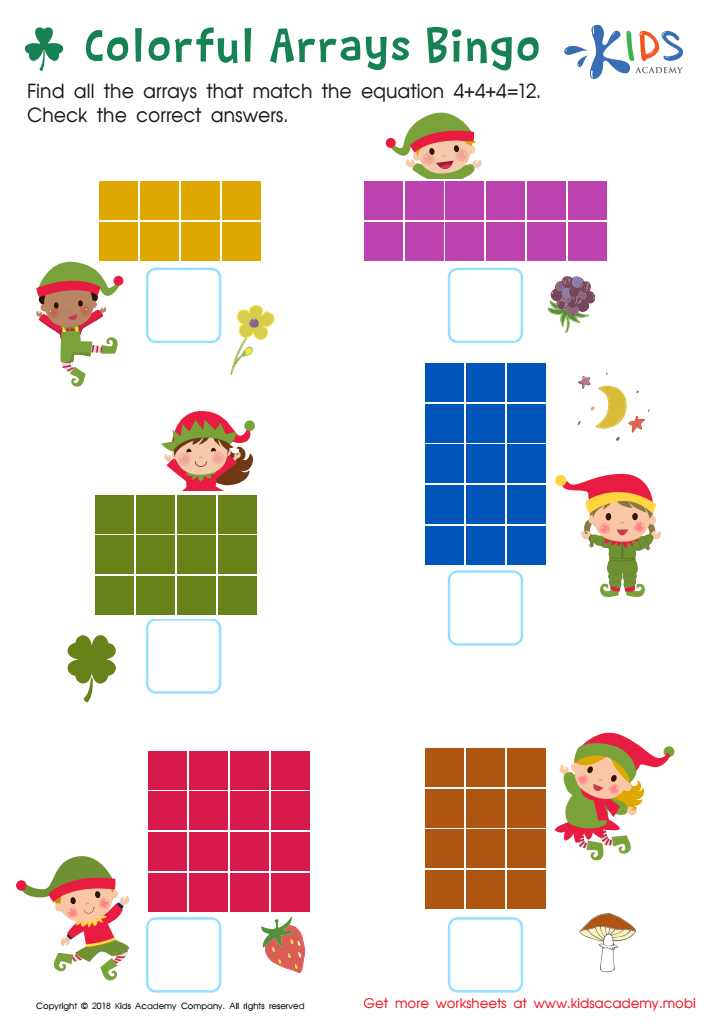
Colorful Arrays Bingo Worksheet
This worksheet stimulates thinking about arrays and how to represent them. Instruct students to count the 6 arrays and find which ones sum up to 12. Ask them to check the answers for accuracy.
Colorful Arrays Bingo Worksheet
Worksheet
Join Kids Academy for Free
Who is primarily going to use this learning content?








Fine motor skills are crucial for children aged 7-8 as they lay the foundation for many essential life skills needed for academic success and daily tasks. At this age, children are typically refining their hand-eye coordination and dexterity, which are vital for writing, drawing, and engaging in crafts. Parents and teachers should care about fine motor skills matching because these abilities not only influence a child's performance in school activities but also contribute to their overall confidence and self-esteem.
When fine motor skills are developed, children can complete tasks more efficiently, leading to improved academic engagement and reduced frustration. Moreover, fine motor skills extend beyond the classroom; they impact activities such as tying shoelaces, using cutlery, and playing sports. By focusing on fine motor skills, parents and teachers can promote critical thinking, creativity, and problem-solving through activities like puzzles and building blocks.
Additionally, fine motor skill development serves as an early indicator of potential difficulties in learning, such as dysgraphia. By monitoring and supporting these skills early, educators and caregivers can intervene proactively, ensuring children have the necessary tools for success in their future learning journeys. Therefore, investing in fine motor skills during this developmental stage is essential.








