Visual perception Measurement Worksheets for Ages 7-8
3 filtered results
-
From - To
Discover our engaging Visual Perception Measurement Worksheets designed specifically for children aged 7-8. These resources enhance critical visual skills, helping young learners improve their ability to interpret shapes, sizes, patterns, and spatial relationships. Our thoughtfully crafted activities promote active learning through fun exercises that are both educational and enjoyable. By incorporating these worksheets into your child's study routine, you can foster their cognitive development while building a solid foundation for future math concepts. Perfect for homeschooling, classroom settings, or supplementary practice, our worksheets provide valuable support in preparing kids to excel in visual perception and measurement skills. Get started today!
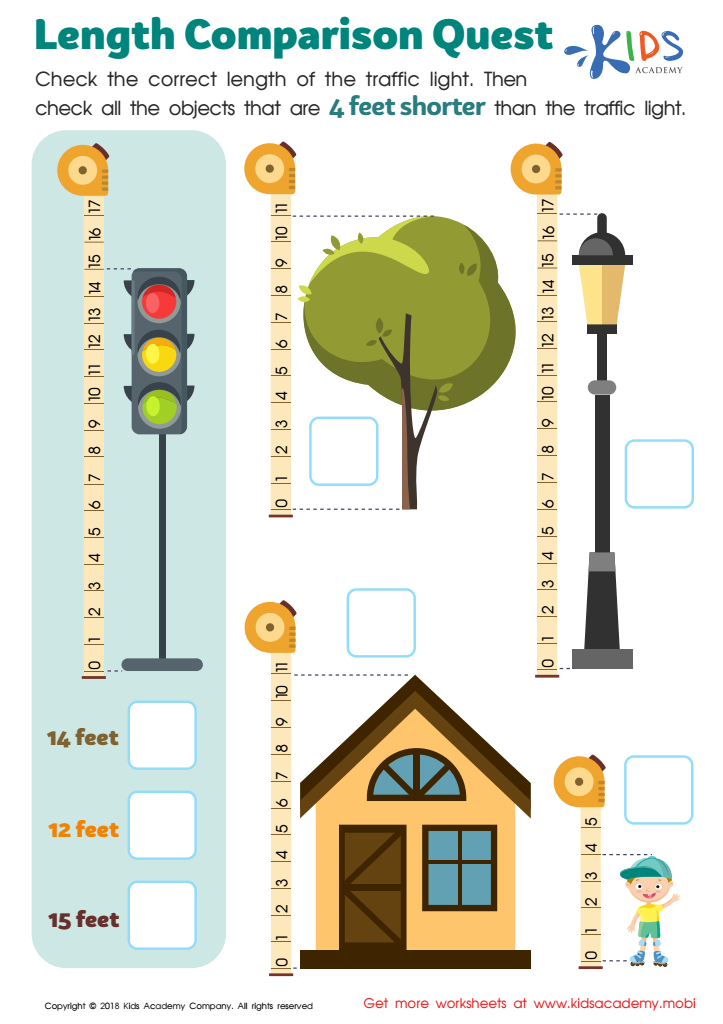
Length Comparison Quest Worksheet
 Assign to My Students
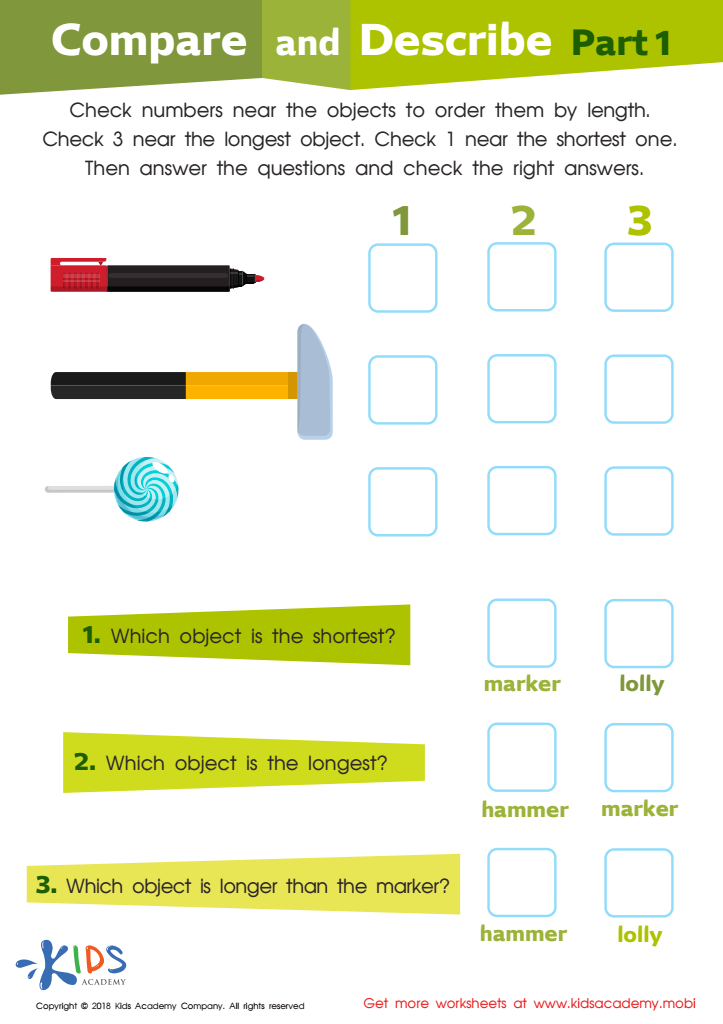
Compare and Describe: Part 1 Worksheet
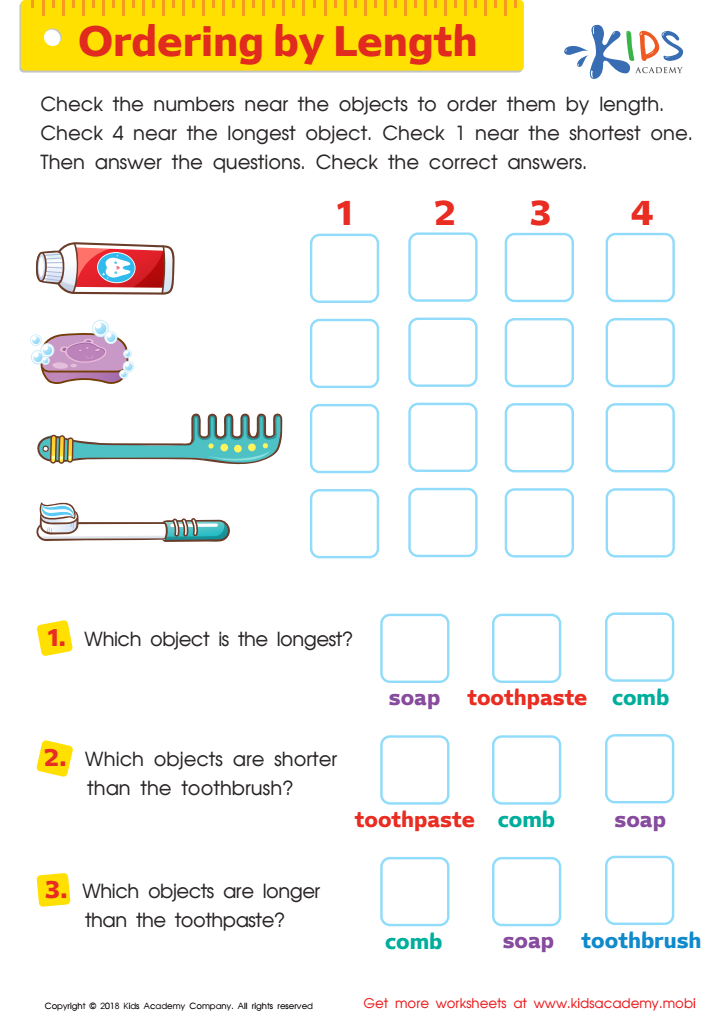
Ordering by Length Worksheet








Visual perception measurement for children aged 7-8 is essential for several reasons. At this developmental stage, children are honing vital cognitive skills that are crucial for learning and everyday life. Visual perception involves the ability to interpret and understand visual information, which plays a significant role in a child's academic performance across subjects.
Firstly, strong visual perception skills are linked to reading and writing proficiency. Children who struggle to discern letters or visual patterns may find tasks such as reading or math challenging. Early identification of visual perception difficulties allows parents and teachers to intervene, providing the support required to foster these essential skills.
Secondly, visual perception impacts spatial awareness, which is vital for motor skills and coordination. Activities like sports and even organizing personal belongings benefit from a child's ability to perceive spatial relationships accurately.
Moreover, measuring visual perception can uncover hidden learning disabilities, enabling tailored teaching strategies that accommodate each child’s unique needs. By prioritizing visual perception assessments, parents and teachers contribute significantly to a child’s educational foundation, ensuring they develop the skills necessary for lifelong learning and confidence in their abilities. Ultimately, understanding and supporting visual perception at this age paves the way for future academic success and personal growth.








