Multiplication practice Times Tables Worksheets for Ages 7-8 - Page 2
33 filtered results
-
From - To
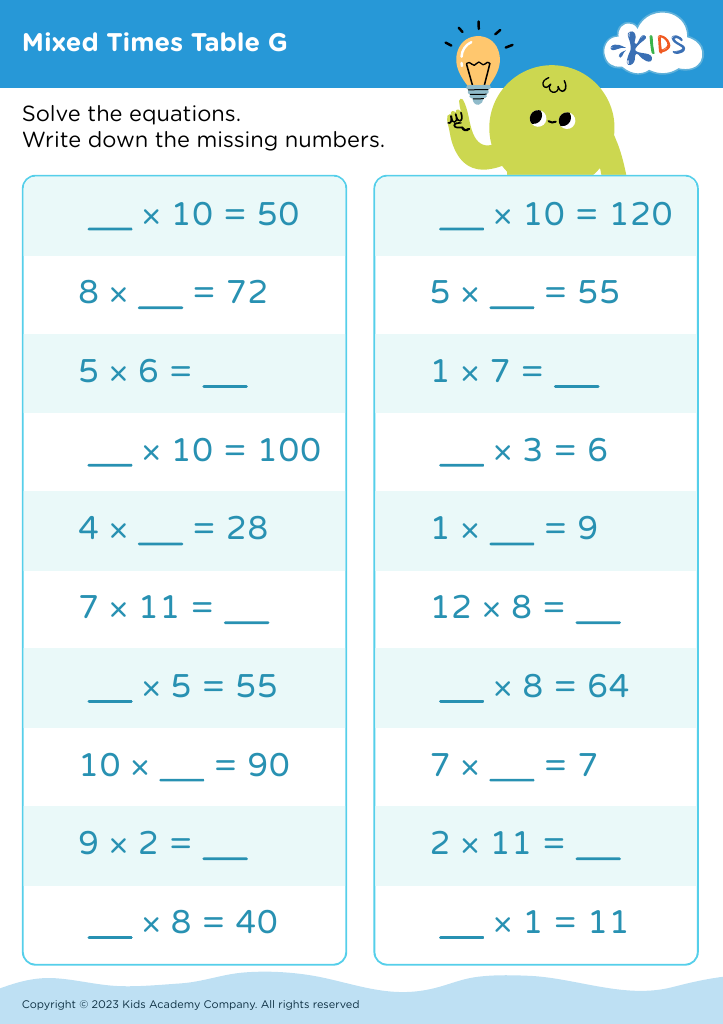
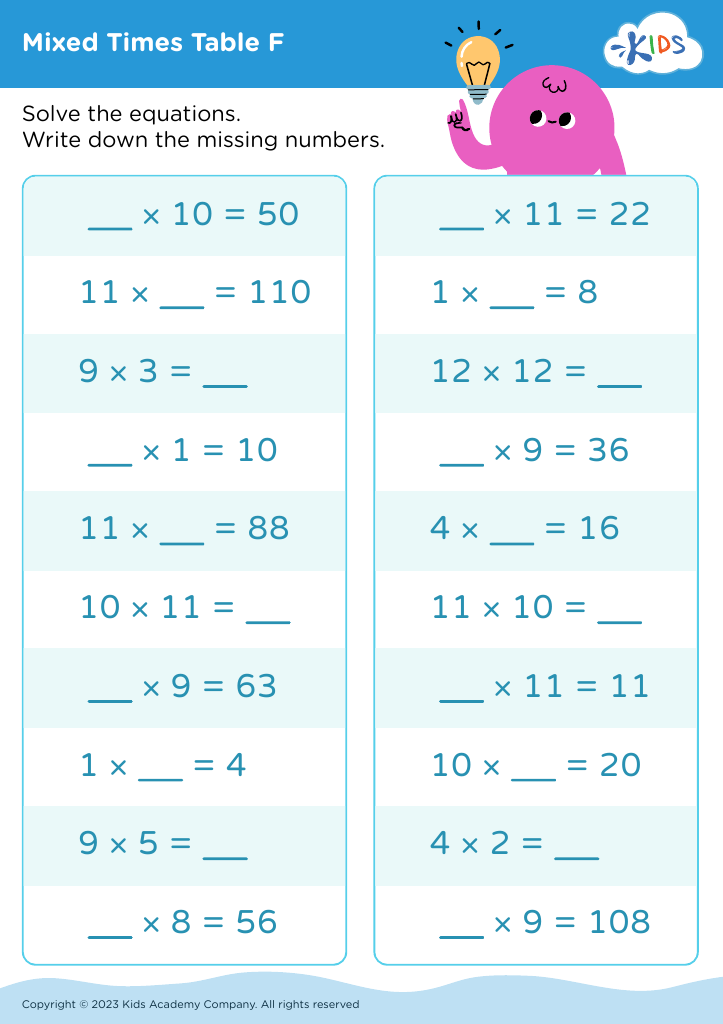
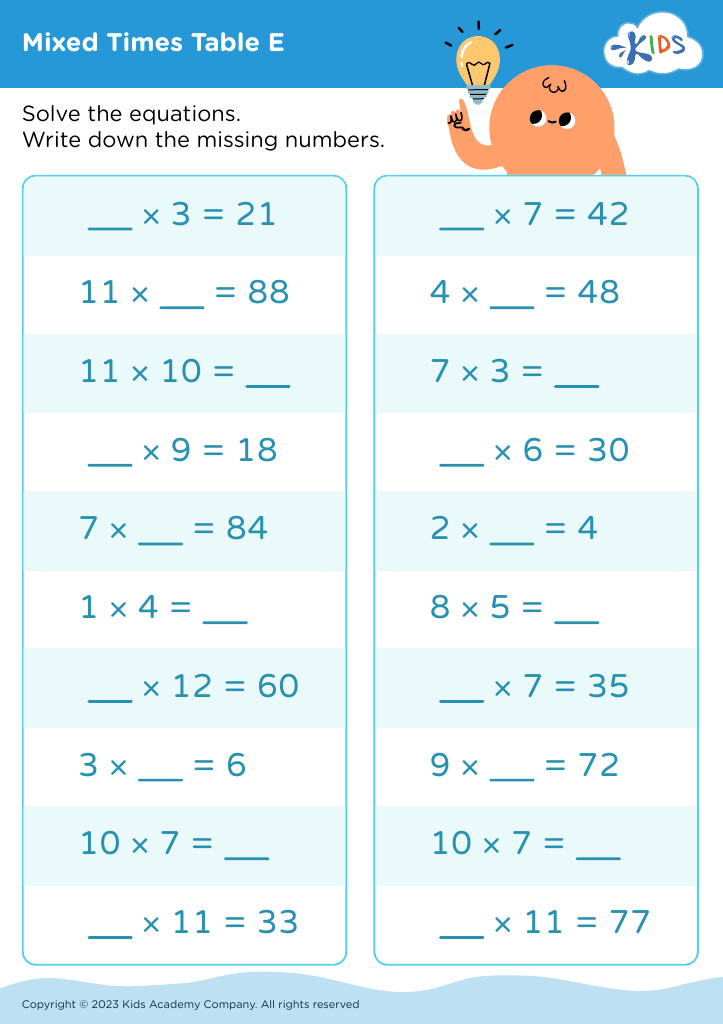
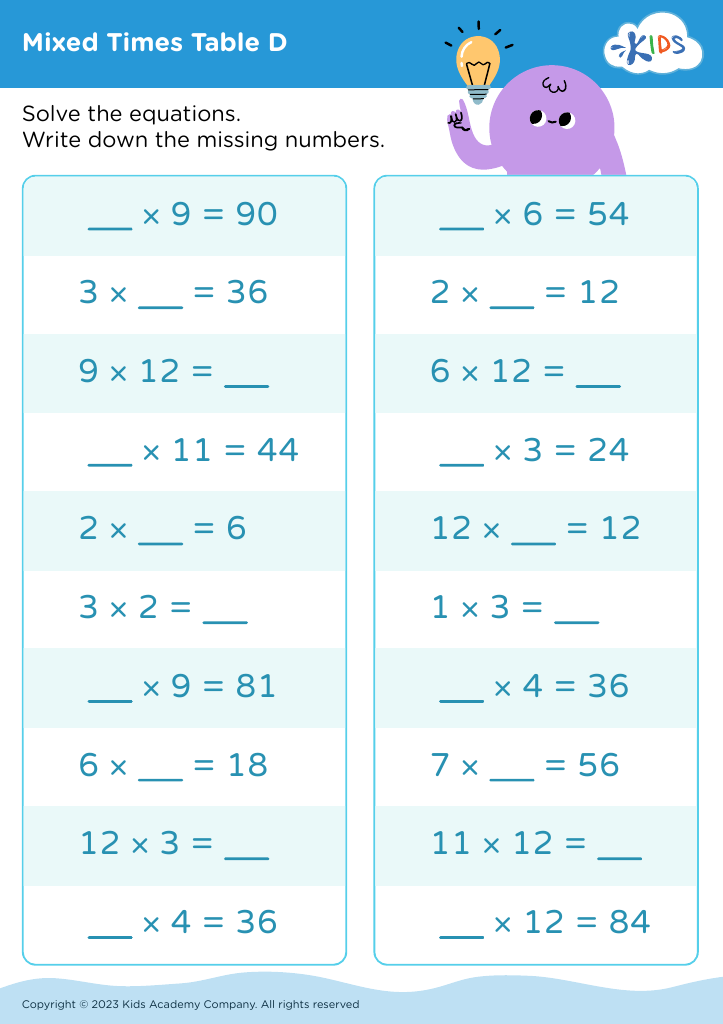
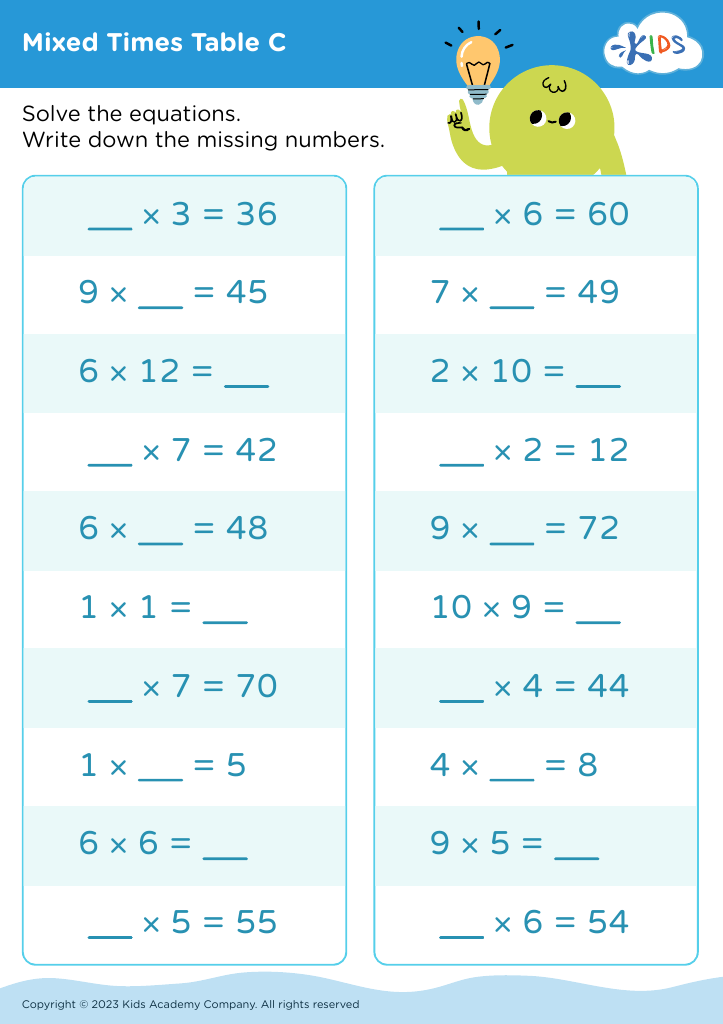
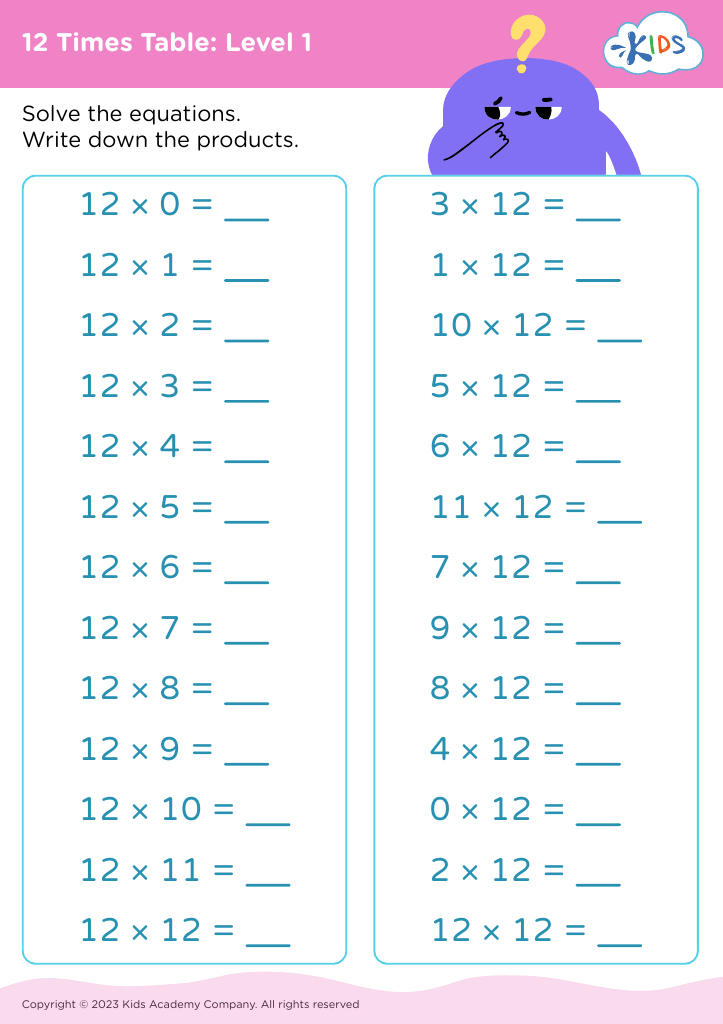
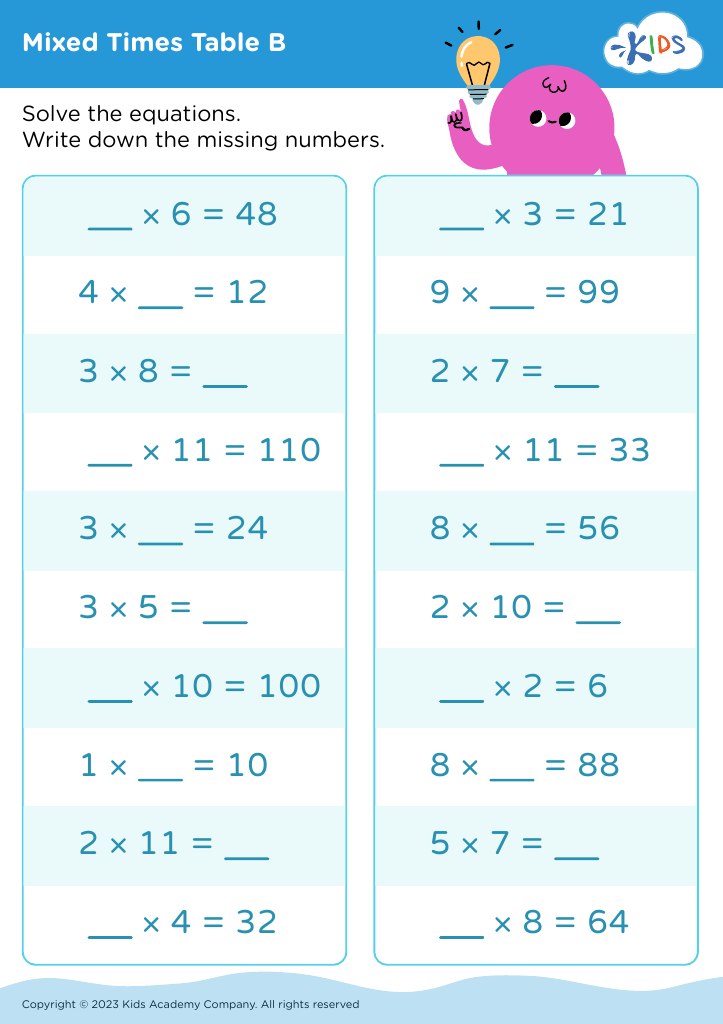
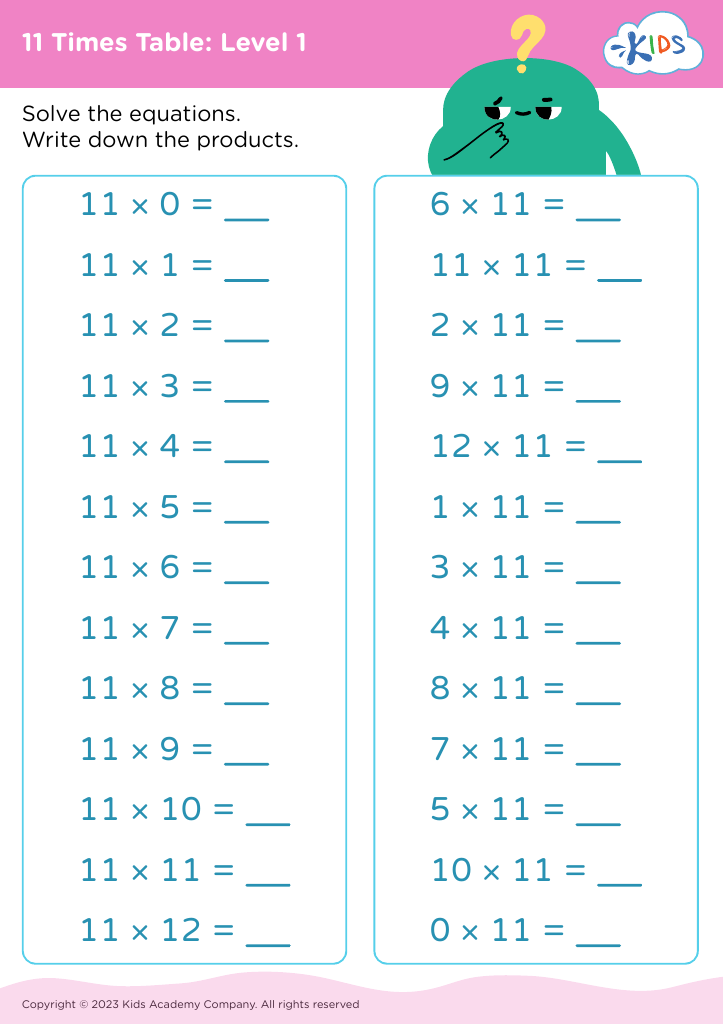
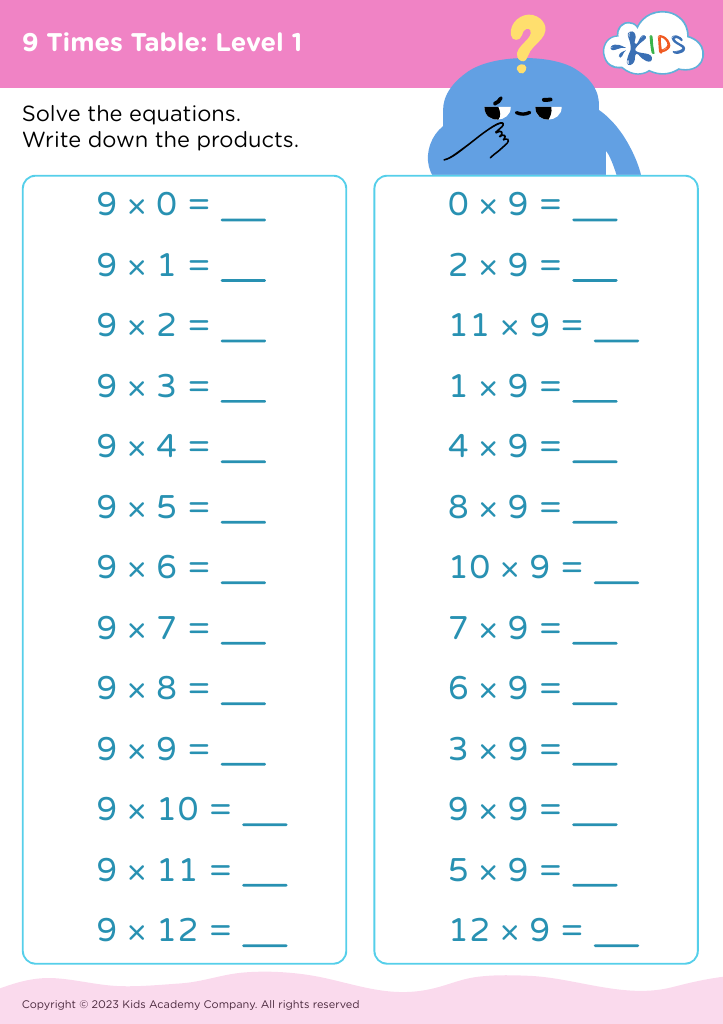




Multiplication practice, especially the mastery of times tables, is crucial for children aged 7-8 for several reasons. Firstly, this foundational math skill enhances overall numeracy. Understanding multiplication empowers children to approach more complex mathematical concepts with confidence, such as division, fractions, and even introductory algebra. Proficiency in multiplication aids in the development of critical thinking and problem-solving abilities.
Furthermore, mastering times tables fosters mental math skills, allowing children to perform calculations quickly, which is essential for everyday life situations—like handling money or measuring ingredients in cooking. It also provides a structured way to engage with mathematics, turning abstract numbers into tangible concepts.
Additionally, repetition during multiplication practice can build a sense of accomplishment and boost self-esteem. Children see their progress and gain motivation to tackle further academic challenges. Parents and teachers play an important role in creating a supportive learning environment by incorporating fun and interactive ways to practice multiplication, which can make learning more enjoyable. Ultimately, investing in times table mastery can significantly impact a child’s performance in school and their attitude toward mathematics in the future, making it a worthwhile focus for parents and educators alike.








