Visual Learning Word Problems Worksheets for Ages 7-8
5 filtered results
-
From - To
Our Visual Learning Word Problems Worksheets for ages 7-8 are designed to make math exciting and engaging for young learners. These printable resources feature colorful illustrations and clear, easy-to-understand problems that help students visualize and comprehend mathematical concepts. By integrating stories and visuals, children can enhance their analytical skills while having fun. Perfect for reinforcing classroom lessons or additional practice at home, our worksheets support important learning goals, including addition, subtraction, and basic problem-solving strategies. Watch your child build confidence and enjoy a deeper understanding of math with our expertly crafted worksheets, tailored specifically for young minds.
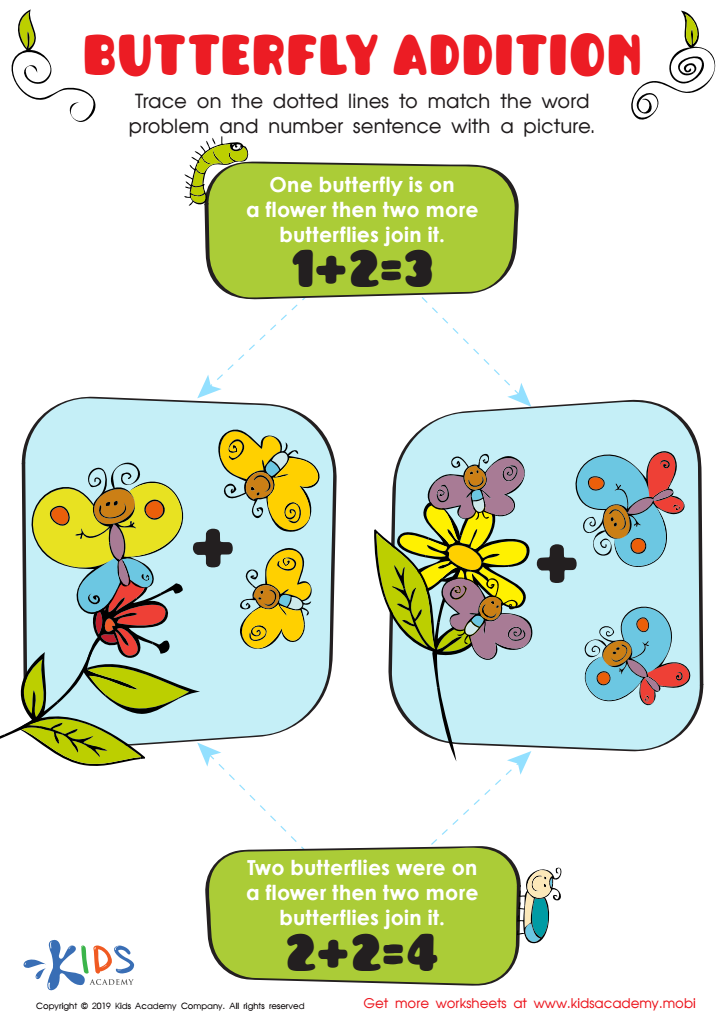
Butterfly Addition Worksheet
 Assign to My Students
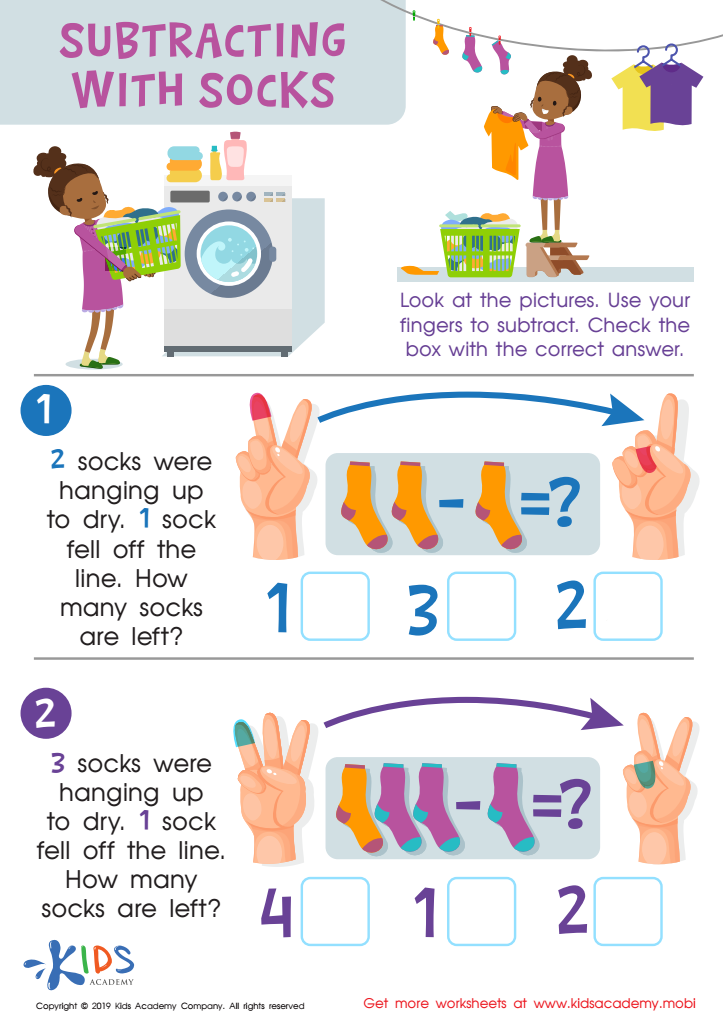
Subtracting Socks Worksheet
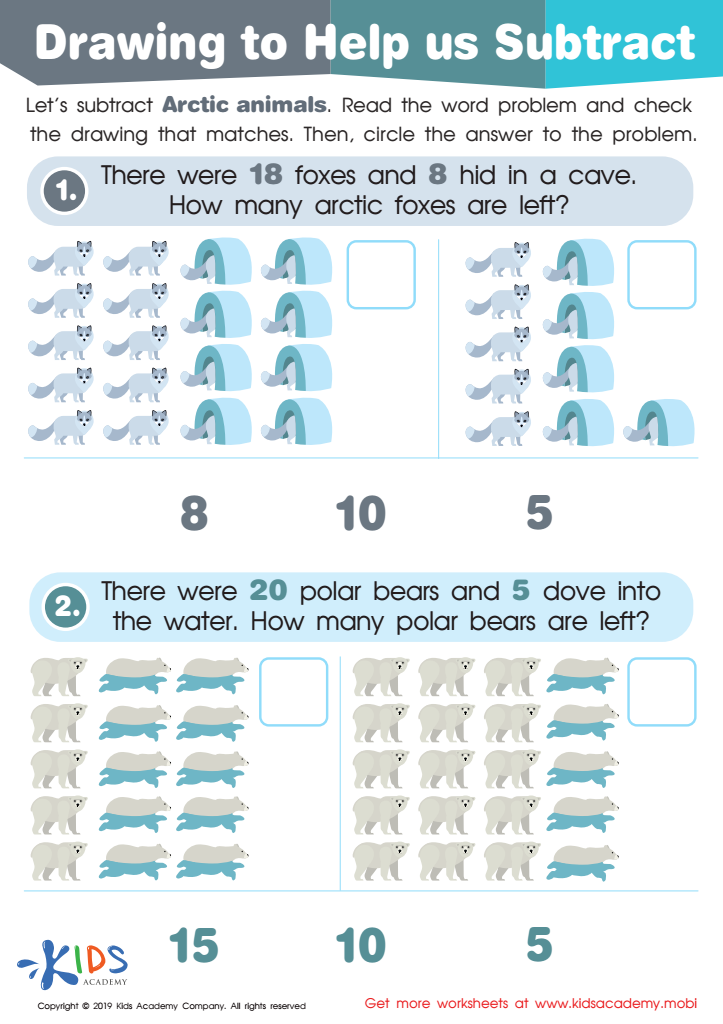
Drawing to Help Us Subtract Worksheet
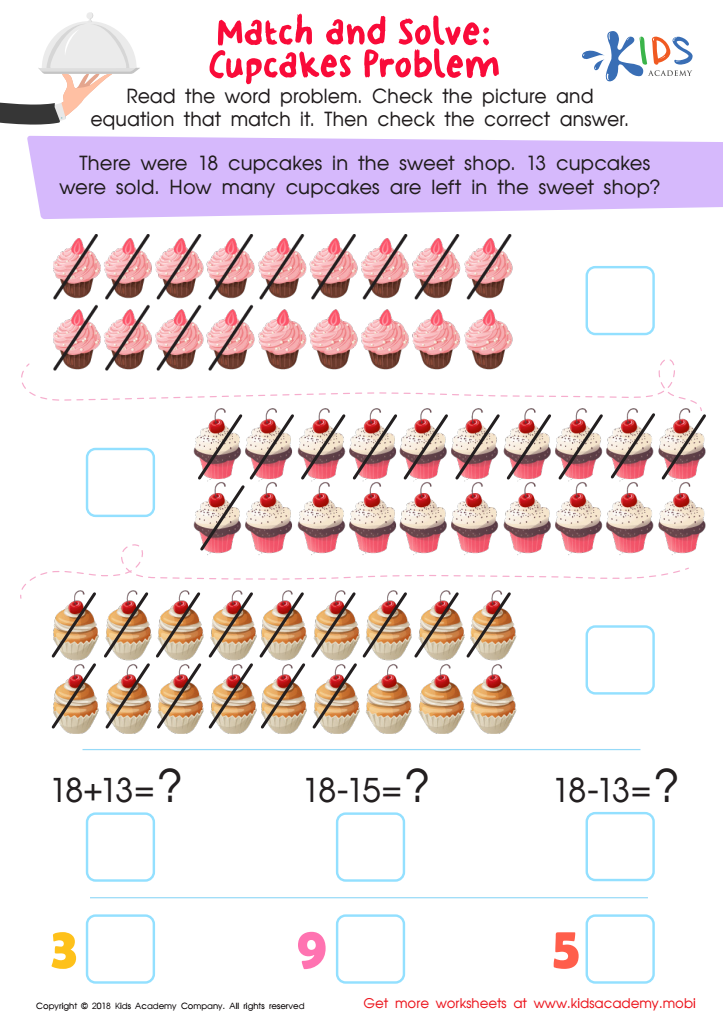
Match and Solve: Cupcakes Problem Worksheet
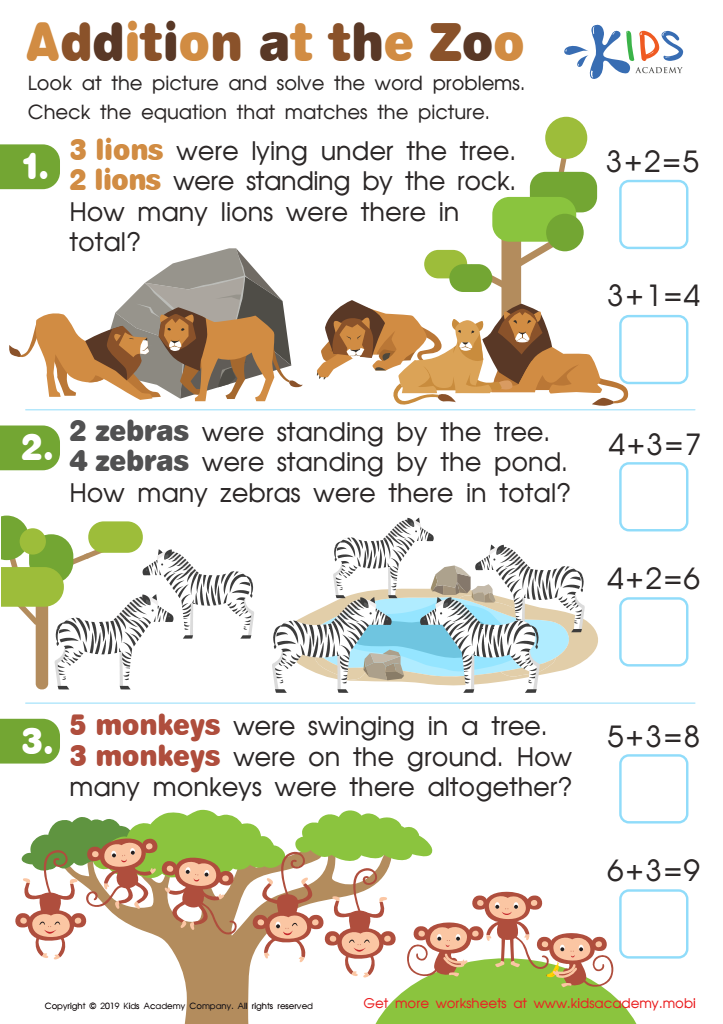
Addition at the Zoo Worksheet








Visual learning word problems are essential for children aged 7-8 for several compelling reasons. First, they turn abstract math concepts into concrete representations, aiding comprehension. When young learners can see a problem visually, they can better grasp relationships between numbers and operations such as addition, subtraction, multiplication, and division. For this age group, who are often more visually inclined, diagrams, pictures, and visual aids simplify cognitive load making it easier to understand and solve problems.
Second, visual word problems stimulate critical thinking and problem-solving skills. Instead of merely performing rote calculations, children learn to analyze information presented in different formats. They get to observe patterns, draw connections, and determine strategies to find solutions, fostering higher-order thinking skills.
Third, early exposure to such problems builds confidence. As kids successfully tackle visual word problems, they gain self-assurance in their mathematical abilities, setting a foundation for future learning. Lastly, it improves retention. Visual learning helps memories stick because humans process and remember images more efficiently than text.
For parents and teachers, integrating visual learning word problems means more interactive and enjoyable math learning experiences, critical for sustaining children’s interest in class and promoting lifelong appreciation for mathematics. Altogether, these benefits underscore why stakeholders should prioritize visual learning word problems.








