Moral lesson understanding Building Vocabulary Worksheets for Ages 7-8
3 filtered results
-
From - To
Discover an exciting collection of "Moral Lesson Understanding Building Vocabulary Worksheets for Ages 7-8" designed to merge crucial moral teachings with engaging vocabulary-building activities. Each worksheet introduces young learners to essential life values while expanding their word knowledge, through captivating stories and thought-provoking exercises. Perfect for ages 7-8, these resources seamlessly weave in character education, helping children grasp moral concepts like honesty, kindness, and respect. Equip your students with the tools to enhance their reading abilities and moral understanding simultaneously. Boost their cognitive and ethical growth with Kids Academy's expertly crafted worksheets, fostering well-rounded, socially aware individuals.
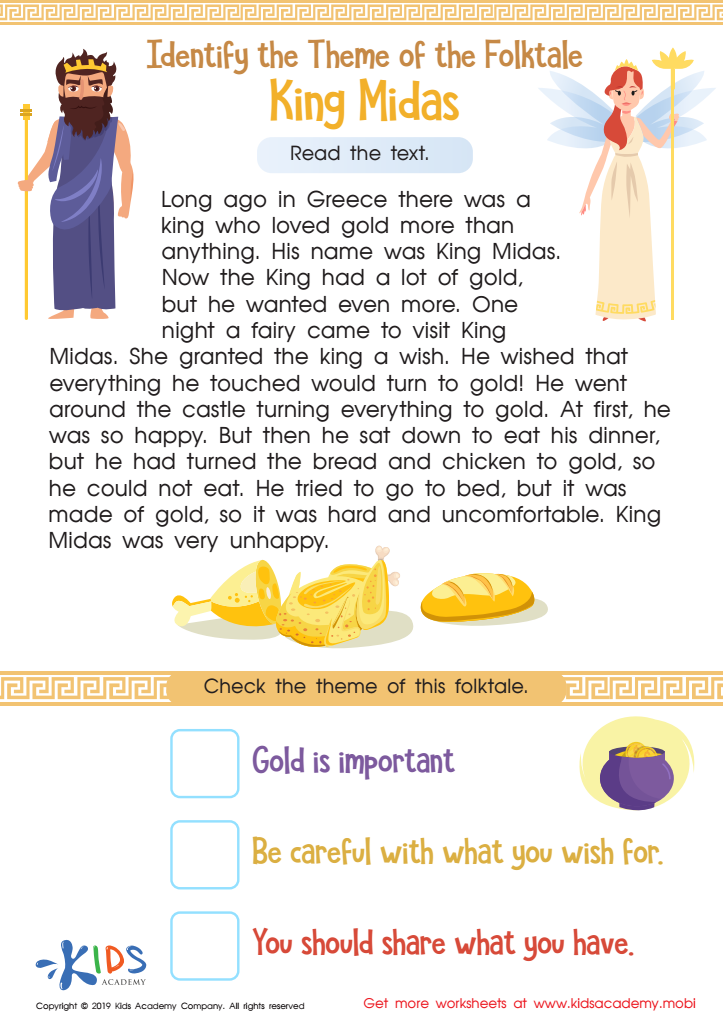
King Midas Worksheet
 Assign to My Students











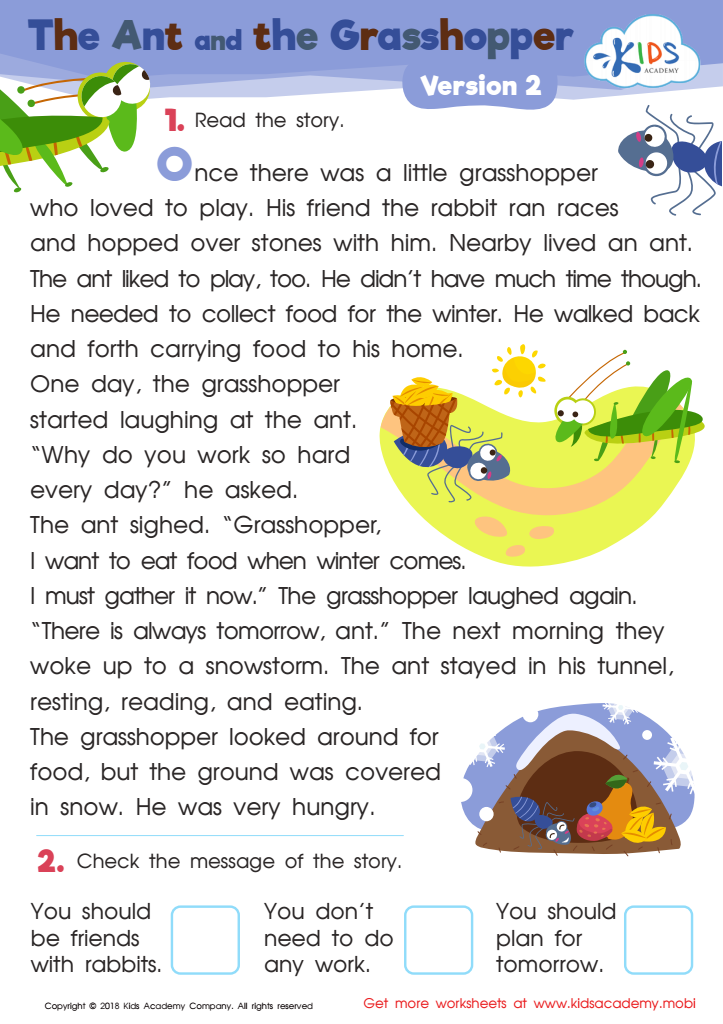
The Ant and The Grasshopper Version 2 Worksheet
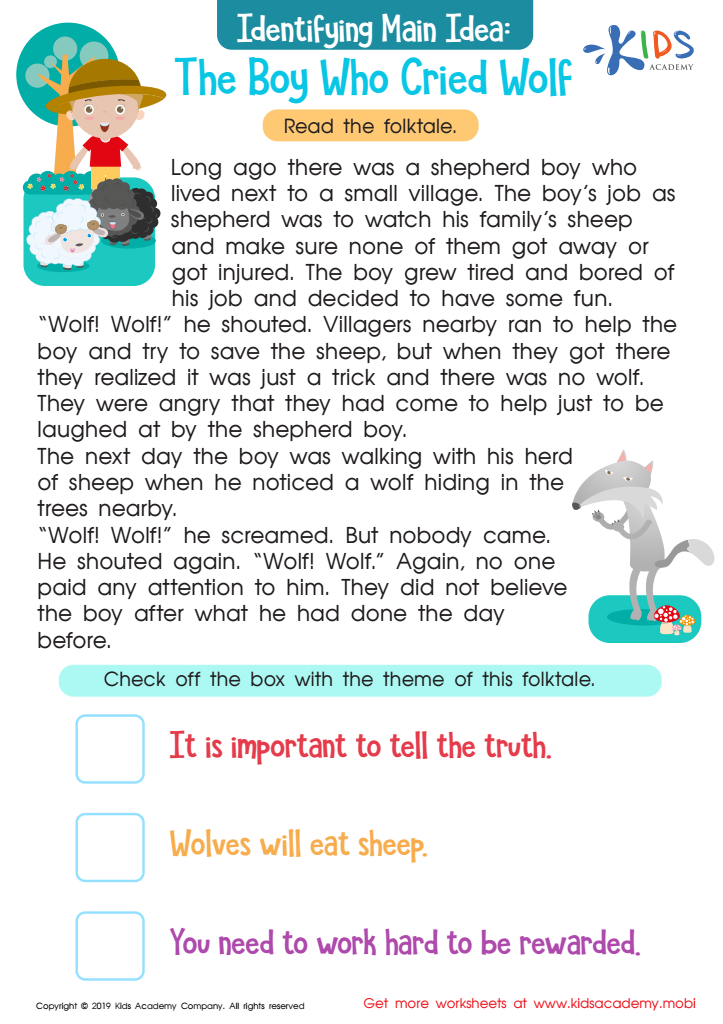
The Boy Who Cried Wolf Part 2 Worksheet


.jpg)




Understanding moral lessons and building vocabulary are crucial for children aged 7-8 because these are formative years in their cognitive and socio-emotional development. At this age, children's brains are like sponges, readily absorbing information and learning behaviors that will shape their character and social interactions.
By exposing children to moral lessons, parents and teachers help cultivate a sense of right and wrong, empathy, and respectful behavior towards others. This moral foundation supports positive relationships, reduces behavioral issues, and fosters a safe school and home environment. Kids learn fairness, honesty, and empathy, which are essential for becoming considerate and responsible adults.
Simultaneously, building vocabulary at this age expands children's communication skills. A rich vocabulary allows them to express their feelings, thoughts, and ideas more clearly and confidently. It also enhances their reading comprehension and academic success across subjects, as kids are able to understand and engage with more complex texts and instructions. Moreover, a broad vocabulary can boost a child's confidence, making social interactions more rewarding and less frustrating.
In essence, the combined focus on moral lessons and vocabulary development equips children with the tools they need for effective communication and empathetic thinking, preparing them for future challenges both academically and socially.








