Phonics recognition Building Vocabulary Worksheets for Ages 7-8
5 filtered results
-
From - To
Enhance your child's reading skills with our Phonics Recognition Building Vocabulary Worksheets, designed specifically for ages 7-8. These engaging worksheets foster phonetic awareness, helping young learners connect sounds with letters and improve their vocabulary. Each activity encourages children to practice identifying phonemes and applying them in context, making reading enjoyable and effective. With a variety of exercises tailored to different skill levels, your child will develop confidence in their reading abilities. Perfect for homeschoolers or supplemental practice, these worksheets are an essential tool for nurturing a lifelong love of reading. Download now and watch your child's vocabulary soar!
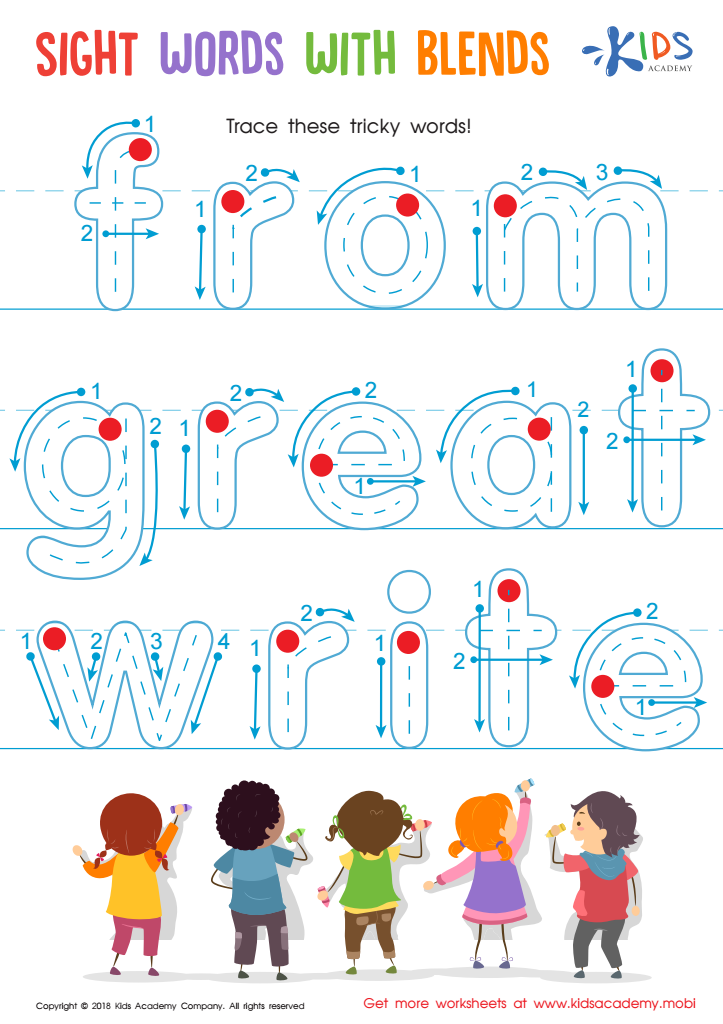
Sight Words with Blends Worksheet
 Assign to My Students











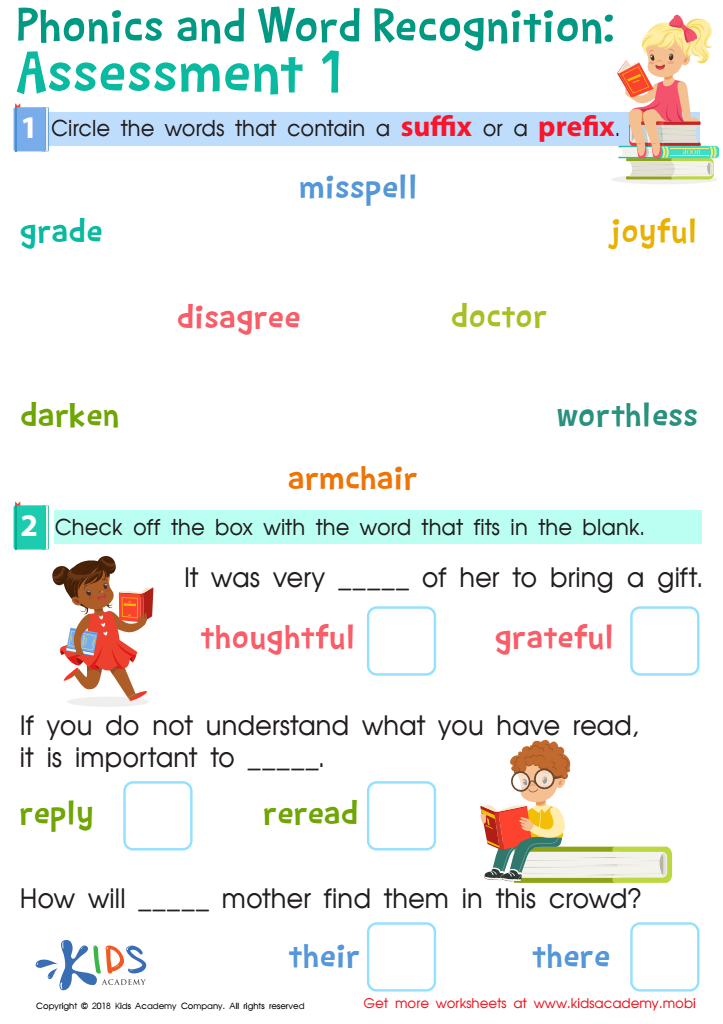
Phonics and Word Recognition: Assessment 1 Worksheet
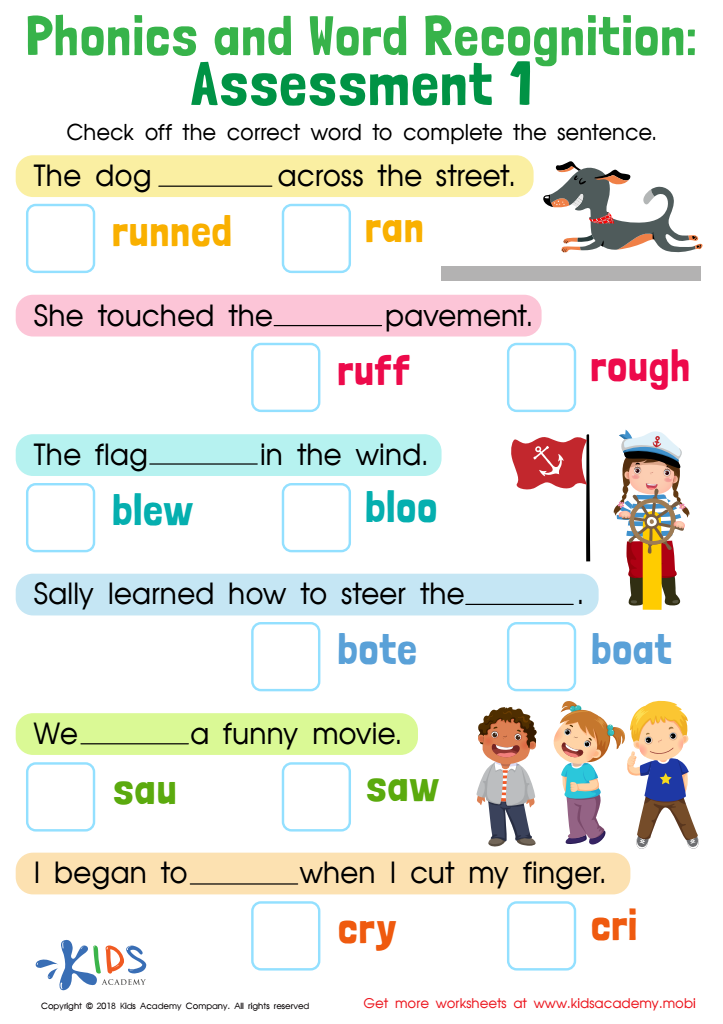
Phonics and Word Recognition: Assessment 1 Worksheet
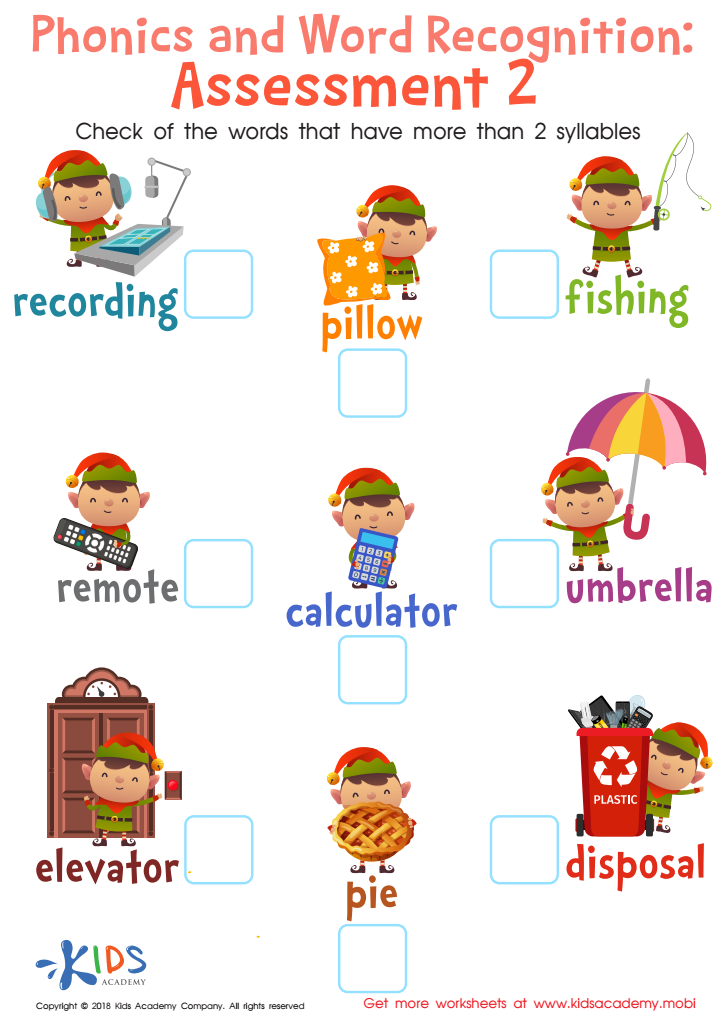
Phonics and Word Recognition: Assessment 2 Worksheet
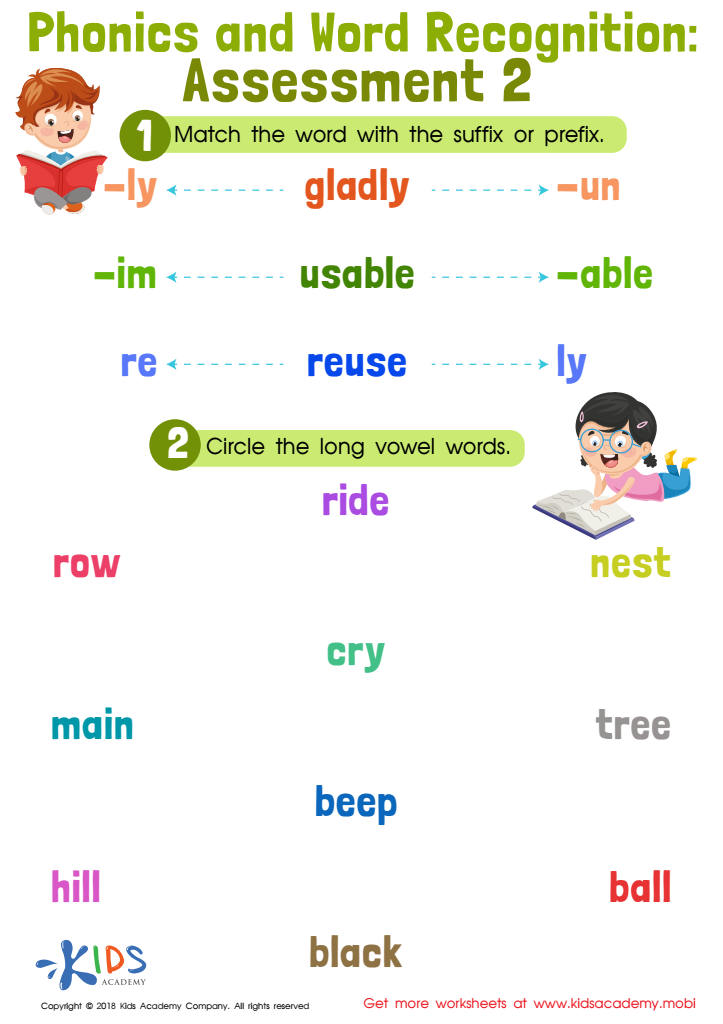
Phonics and Word Recognition: Assessment 2








Phonics recognition and vocabulary building are crucial for children aged 7-8, as they form the foundation for successful reading and lifelong learning. During this pivotal developmental stage, children refine their phonetic skills, which involve understanding the relationship between letters and sounds. Proficient phonics recognition aids in decoding unfamiliar words, making reading a more enjoyable experience and enhancing comprehension.
Building vocabulary concurrently ensures that children have the requisite words to express their thoughts, feelings, and ideas effectively. A strong vocabulary stimulates curiosity, encourages communication, and fosters critical thinking skills, all of which are essential for academic success and social interactions.
Moreover, connecting phonics and vocabulary development supports a smoother transition to higher-order literacy skills. The ability to recognize familiar patterns in text helps students feel more confident when approaching complex literature, challenges, or even standardized tests. Teachers and parents play a vital role in facilitating this learning process by providing engaging, age-appropriate reading materials and activities.
Ultimately, investing in phonics recognition and vocabulary at this age not only empowers children academically but also fosters a love for reading that enriches their lives and academic prospects.








