
Story sequencing Building Vocabulary Worksheets for Ages 7-8
3 filtered results
Difficulty Level
Grade
Age
-
From - To
Subject
Activity
Standards
Enhance your child's reading skills with our Story Sequencing Building Vocabulary Worksheets designed for ages 7-8. Our printable worksheets allow young learners to practice arranging story events logically while expanding their vocabulary. Engaging activities help kids understand the sequence of events, boosting comprehension and critical thinking. Perfect for classroom use or at-home learning, these tools ensure children not only learn to read but also to read meaningfully. Build a strong foundation in reading and vocabulary with Kids Academy's expertly crafted resources, tailored specifically for young readers on their educational journey.
Favorites
With answer key
Interactive
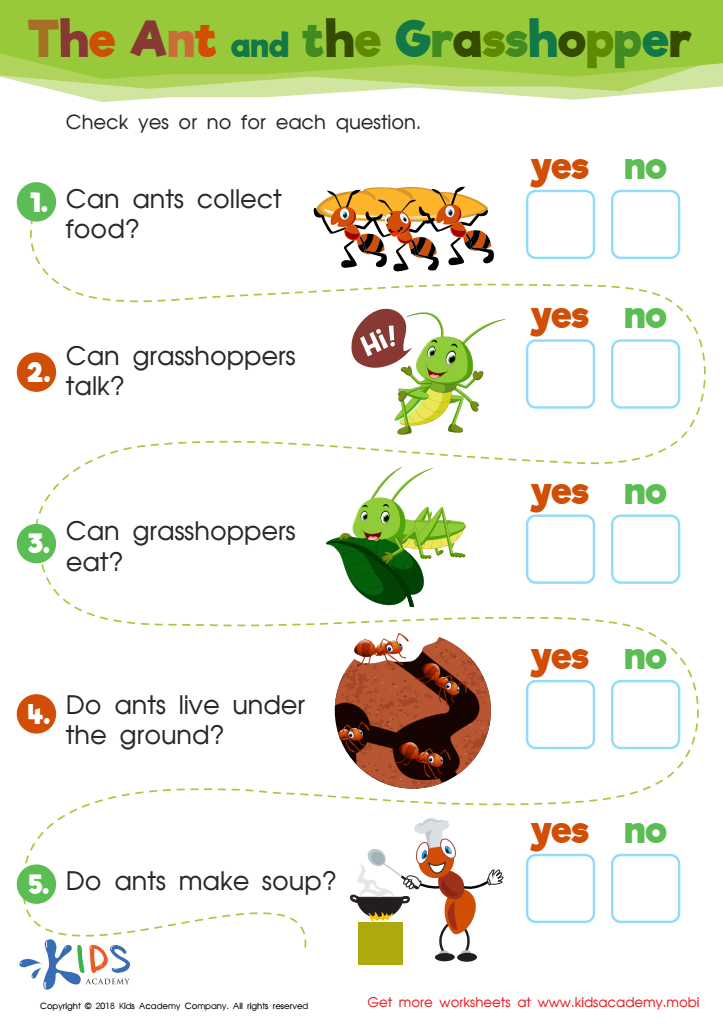
The Ant and The Grasshopper Worksheet
Does your child know about insects? If they're a nature lover or scared of them, use this worksheet to learn more. Read each of the questions and help them fill in the yes or no boxes. This may help them become less scared of insects.
 Assign to My Students
The Ant and The Grasshopper Worksheet
Worksheet











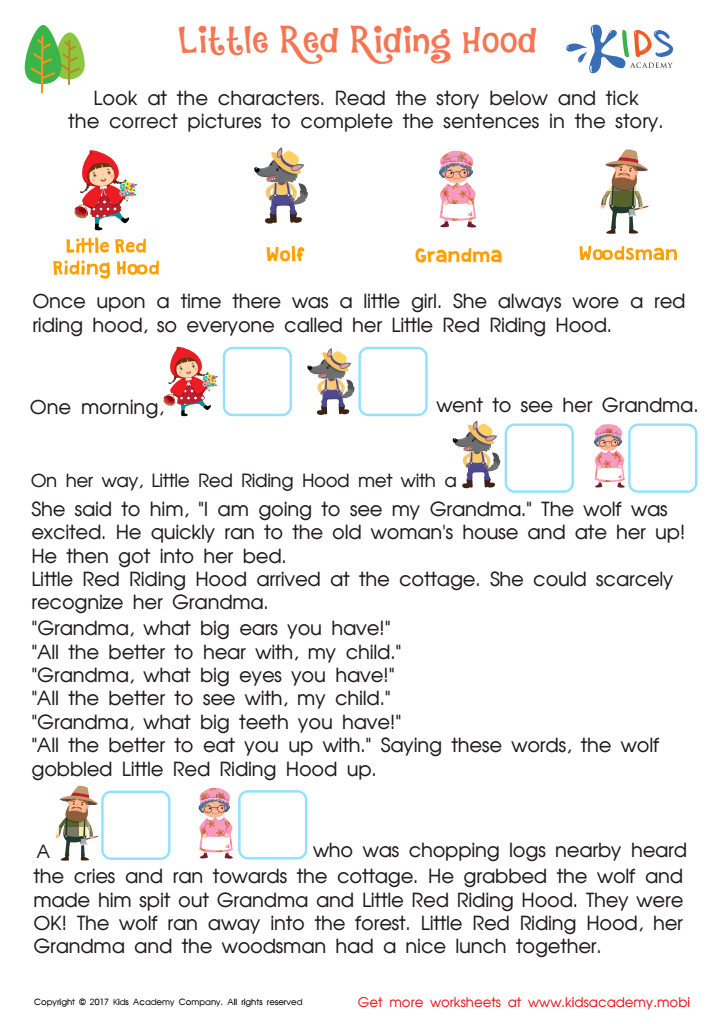
Little Red Riding Hood Printable
Give them this worksheet to practice.
Help your child strengthen their reading skills with this worksheet. It asks them to read Little Red Riding Hood and fill in the missing words using context clues from the text. Encourage your child to look at the surrounding words to determine the answer and get the best results!
Little Red Riding Hood Printable
Worksheet
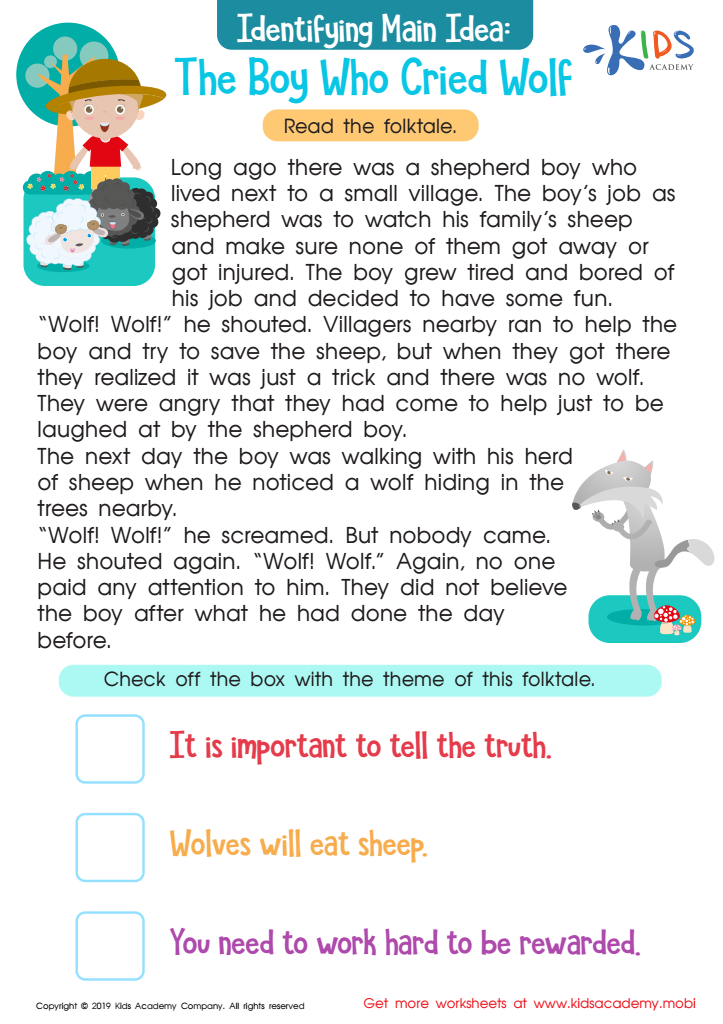
The Boy Who Cried Wolf Part 2 Worksheet
Kids love story time - no doubt they know their favorites! This worksheet tells a story with a theme or main idea. Read it carefully with your kids and ensure they understand every word. Then, help them answer the simple questions at the bottom of the page.
The Boy Who Cried Wolf Part 2 Worksheet
Worksheet
Join Kids Academy for Free
Who is primarily going to use this learning content?




.jpg)



Parents and teachers should emphasize story sequencing and building vocabulary for children aged 7-8 as these skills are fundamental to literacy development and overall academic success. Story sequencing, the ability to understand and order events in a narrative, enhances comprehension and analytical thinking. When children can sequence stories correctly, they demonstrate an understanding of the plot structure, which is crucial for both reading and writing. It helps them to organize their thoughts logically and improves their ability to recall key details, making subsequent reading activities more meaningful.
Building vocabulary at this stage is equally vital. A rich vocabulary acts as a critical tool for effective communication and cognitive development. Children with a strong vocabulary find it easier to understand new concepts, participate in discussions, and express their thoughts more precisely. Exposure to a broad range of words expands their ability to understand more complex texts and enhances their listening and reading comprehension. Moreover, a robust vocabulary provides a solid foundation for writing skills, aiding in the creation of more detailed and varied written content.
By focusing on these areas, parents and teachers lay the groundwork for future academic achievements, fostering a lifelong love for reading and learning. Supporting story sequencing and vocabulary development equips children with essential skills that are instrumental for their overall intellectual and personal growth.








