Word identification Building Vocabulary Worksheets for Ages 7-8
5 filtered results
-
From - To
Enhance your child's reading skills with our Word Identification Building Vocabulary Worksheets for Ages 7-8. Designed to boost word recognition and usage, these printable activities will help young learners expand their vocabulary and improve their reading fluency. Each worksheet combines engaging exercises with fun themes, making learning enjoyable and effective. Perfect for both classroom and home use, our worksheets are created by educational experts to ensure they meet learning standards. Give your child the tools they need to succeed in reading with these essential vocabulary-building resources from Kids Academy.
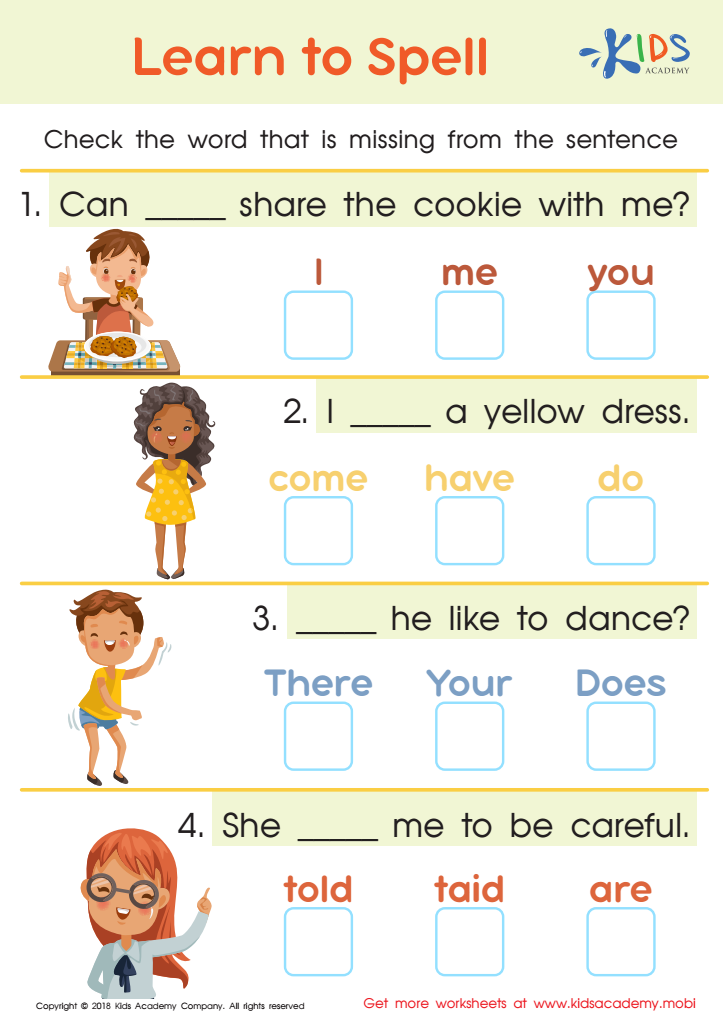
Learn to Spell Worksheet
 Assign to My Students











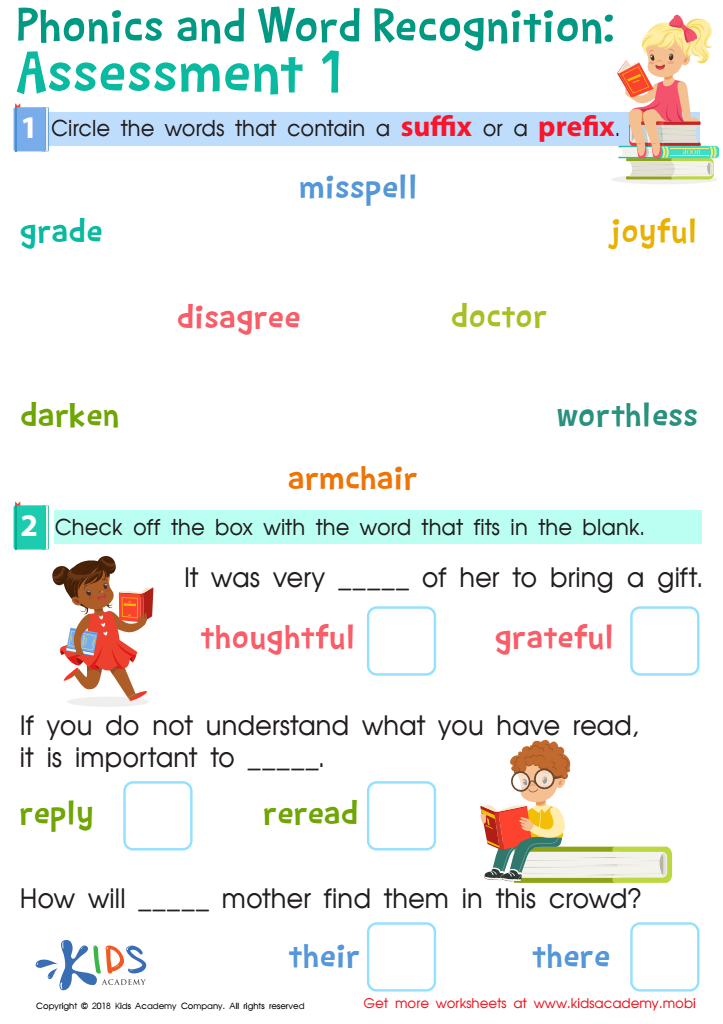
Phonics and Word Recognition: Assessment 1 Worksheet
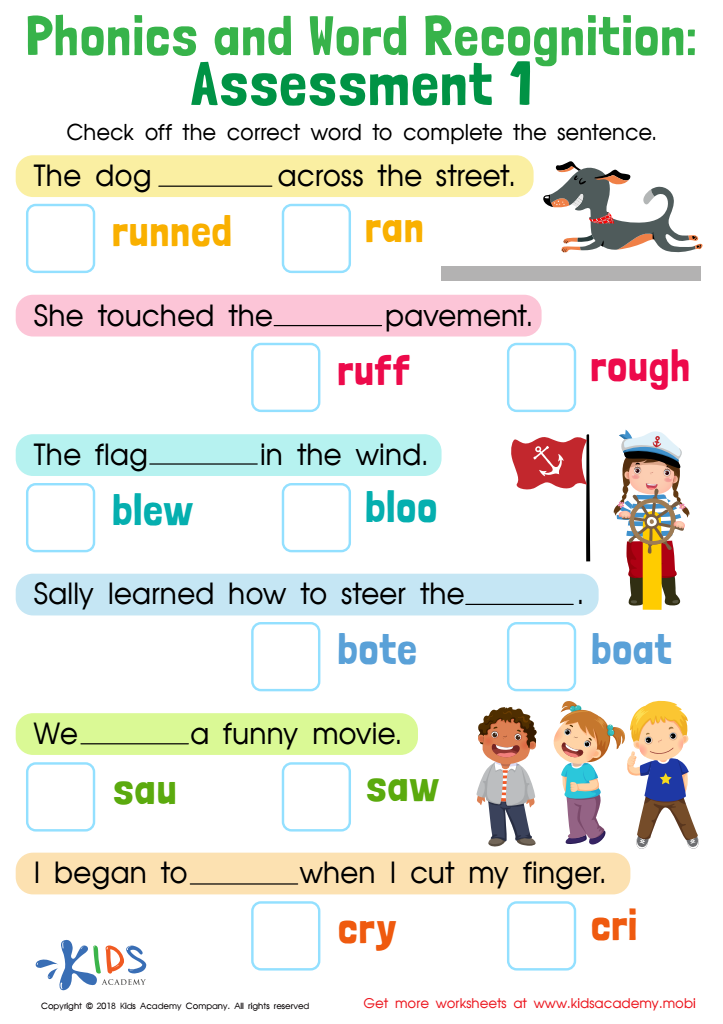
Phonics and Word Recognition: Assessment 1 Worksheet
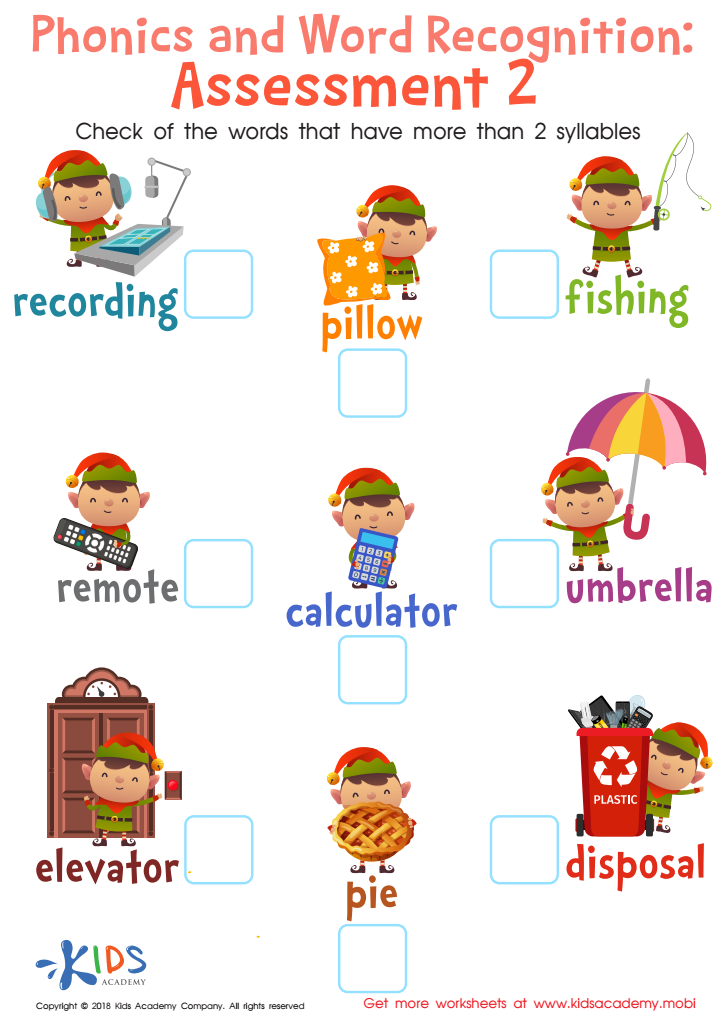
Phonics and Word Recognition: Assessment 2 Worksheet
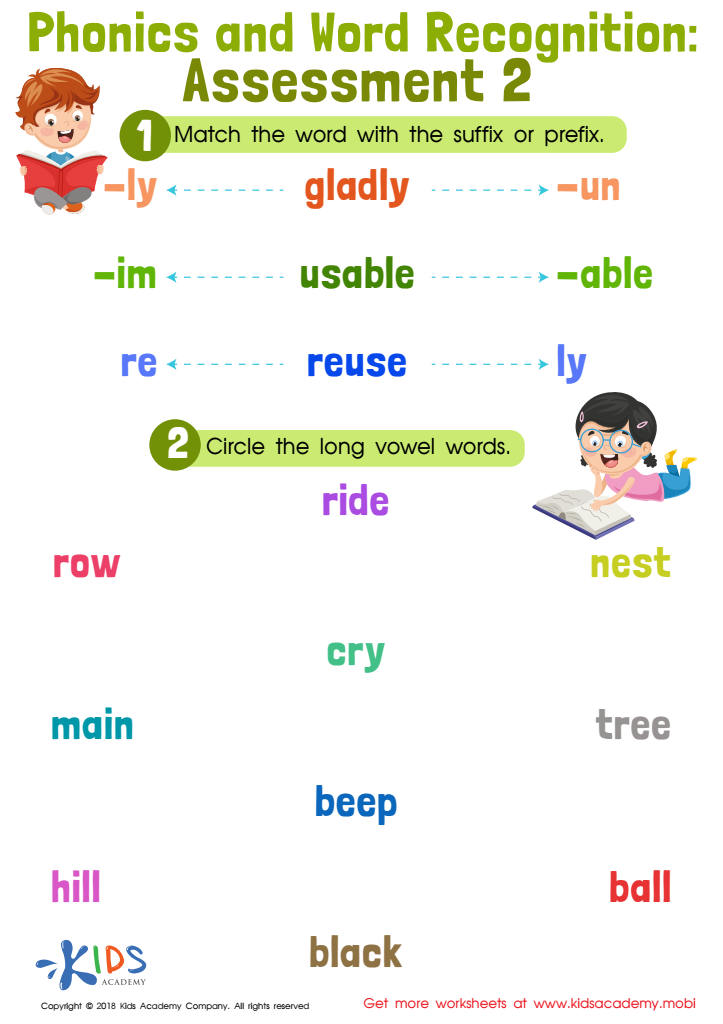
Phonics and Word Recognition: Assessment 2







Parents and teachers should deeply care about building vocabulary and word identification for children aged 7-8 because these skills form the cornerstone of effective communication and academic success. At this age, children transition from learning to read to reading to learn. A rich vocabulary enhances comprehension abilities, allowing children to better understand complex texts and instructions. Strong word identification skills boost reading fluency, helping them decode new words quickly and effortlessly, which leads to more enjoyable reading experiences and fosters a lifelong love for reading.
Furthermore, a broad vocabulary facilitates better expression and articulation of ideas, both orally and in writing. Children can communicate thoughts more precisely and creatively, which is essential for success in all subject areas and everyday interactions. Vocabulary growth at this stage also correlates strongly with overall cognitive development, including critical thinking and problem-solving skills.
Investing in vocabulary building and word identification not only aids immediate academic performance but also sets the foundation for future educational achievements and life skills. Parents and teachers who prioritize these areas prepare children for more complex literacy challenges and instill confidence in their communicative abilities, fostering an enthusiasm for continuous learning. Engaged reading, conversation, and varied exposure to language are instrumental during this formative period.








