
Story analysis Reading Worksheets for Ages 7-8
3 filtered results
Difficulty Level
Grade
Age
-
From - To
Subject
Activity
Standards
Unlock your child's potential with our Story Analysis Reading Worksheets designed for ages 7-8. These engaging worksheets encourage young readers to dive deeper into narratives, enhancing their comprehension and critical thinking skills. Each activity helps children identify key elements such as characters, settings, and main ideas, nurturing their ability to interpret stories effectively. With a variety of fun and interactive exercises, learners will develop a love for reading while building essential analytical skills. Perfect for classroom use or at-home learning, our worksheets are an excellent resource for parents and educators aiming to create confident, thoughtful readers. Explore our collection today!
Favorites
With answer key
Interactive
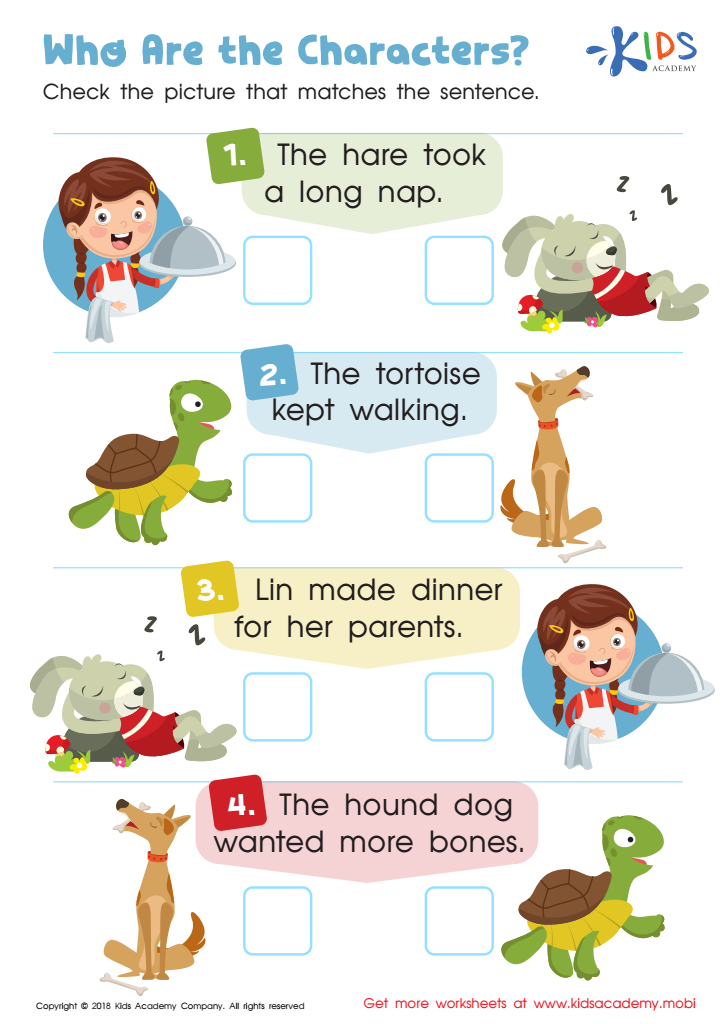
Who Are The Characters Worksheet
This worksheet tests your child's reading skills. Read each sentence out loud with them, then ask which of the two pictures match it. Help them check, then repeat this for the other sentences.
 Assign to My Students
Who Are The Characters Worksheet
Worksheet
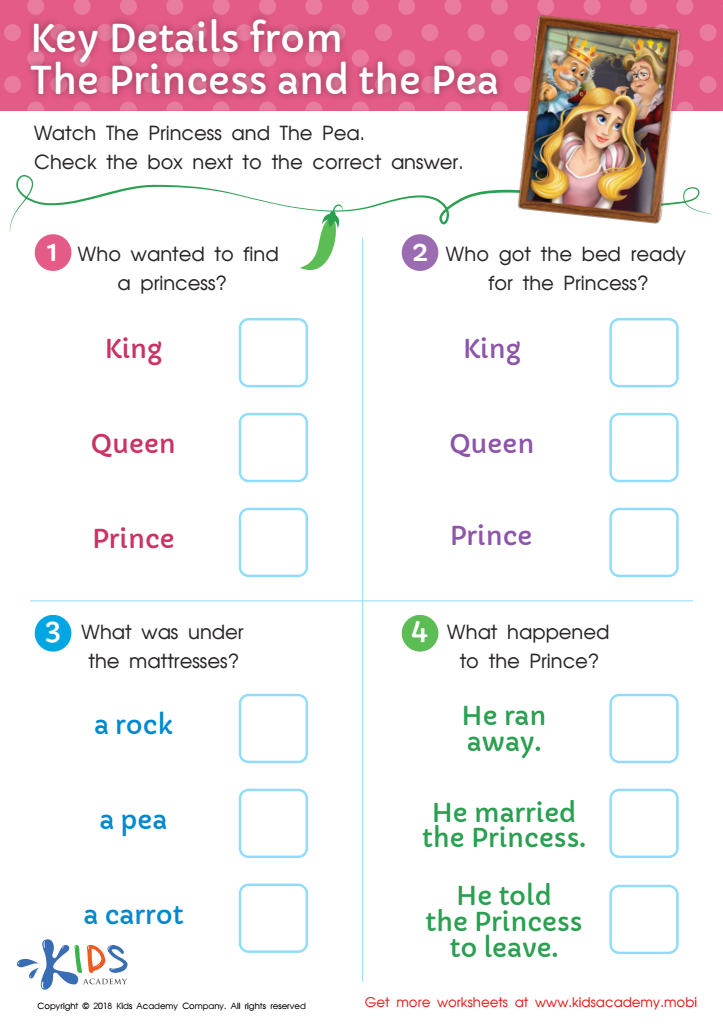
Key Details from the Princess and the Pea Worksheet
After reading The Princess and the Pea, ask your students questions to assess their comprehension of the story. Check their knowledge of key details. This printable can be used to help evaluate their understanding. Encouraging the recall of story events helps build important reading skills.
Key Details from the Princess and the Pea Worksheet
Worksheet
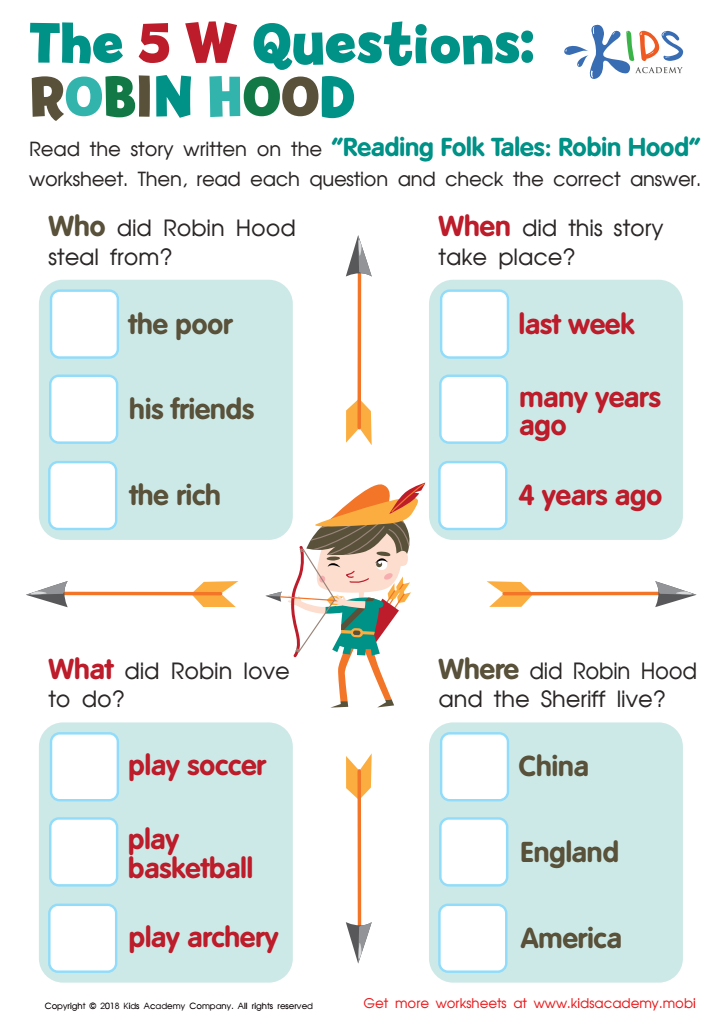
The 5 W Questions: Robin Hood Worksheet
Before embarking on this Robin Hood adventure, ensure your child reads and comprehends the 'Reading Folk Tales: Robin Hood' worksheet. Have them consider the story's lessons, and observe the details. Read the questions and help your kids select the correct answers.
The 5 W Questions: Robin Hood Worksheet
Worksheet
Join Kids Academy for Free
Who is primarily going to use this learning content?








Story analysis is essential for reading development in children aged 7-8, as it enriches their understanding of texts and enhances critical thinking skills. At this age, readers are transitioning from basic decoding to comprehending deeper themes, characters, and narrative structures. Parents and teachers should care about story analysis because it fosters a range of cognitive abilities, including inference-making, summarization, and opinion formation.
Through story analysis, children learn to identify the main idea, character motivations, and plot development. This skill not only promotes empathy—by encouraging children to consider different perspectives and understand emotions—but also supports their creative expression and writing skills. Engaging in discussions about a story’s meaning helps children articulate their thoughts, build vocabulary, and develop a love for literature.
Moreover, story analysis can be linked to important life lessons by highlighting moral dilemmas and cultural contexts. By guiding children in dissecting stories, adults nurture their ability to think critically about the world around them. Ultimately, encouraging story analysis sets the foundation for lifelong learning and can significantly impact academic success beyond the primary years, making it a vital focus for both parents and educators.








