Analytical thinking Reading Fiction Worksheets for Ages 7-8
4 filtered results
-
From - To
Enhance your child's analytical thinking skills with our engaging Reading Fiction Worksheets designed for ages 7-8. These worksheets encourage young learners to delve deeper into their favorite stories, fostering critical thinking and comprehension. Through interactive questions and activities, children will learn to analyze characters, plot developments, and themes, ultimately improving their reading and reasoning abilities. Suitable for classroom use or at home, our resources promote creativity, reflection, and discussion, making learning both enjoyable and effective. Equip your child with the tools they need to interpret texts thoughtfully and engage meaningfully with literature. Explore our worksheets today and nurture a lifelong love of reading!
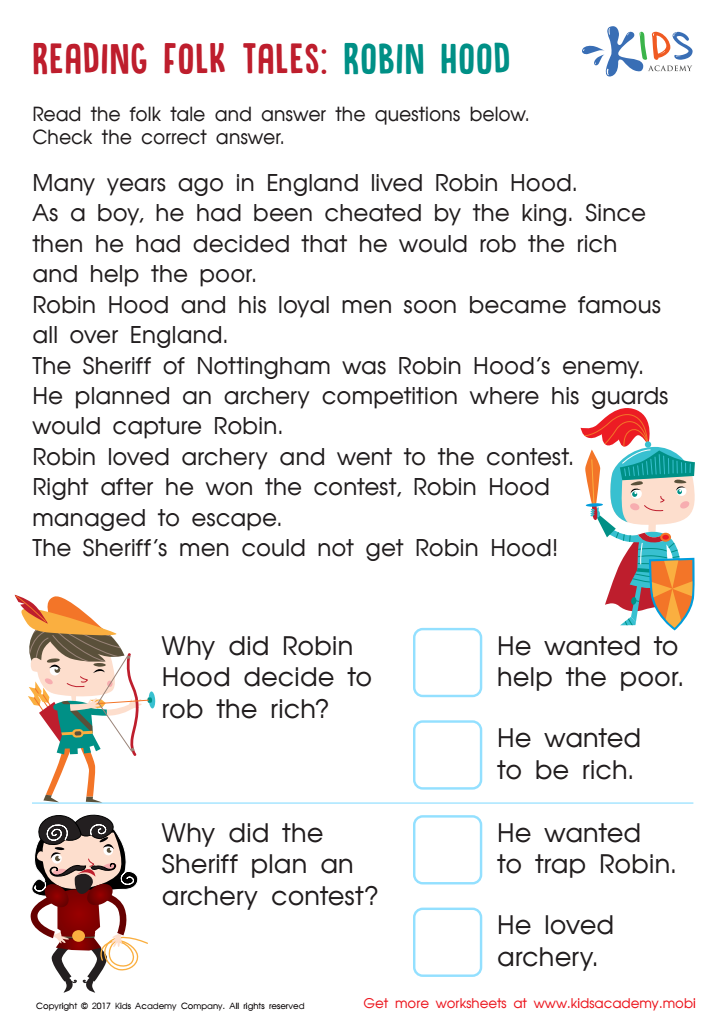
Robin Hood Folktale Worksheet
 Assign to My Students
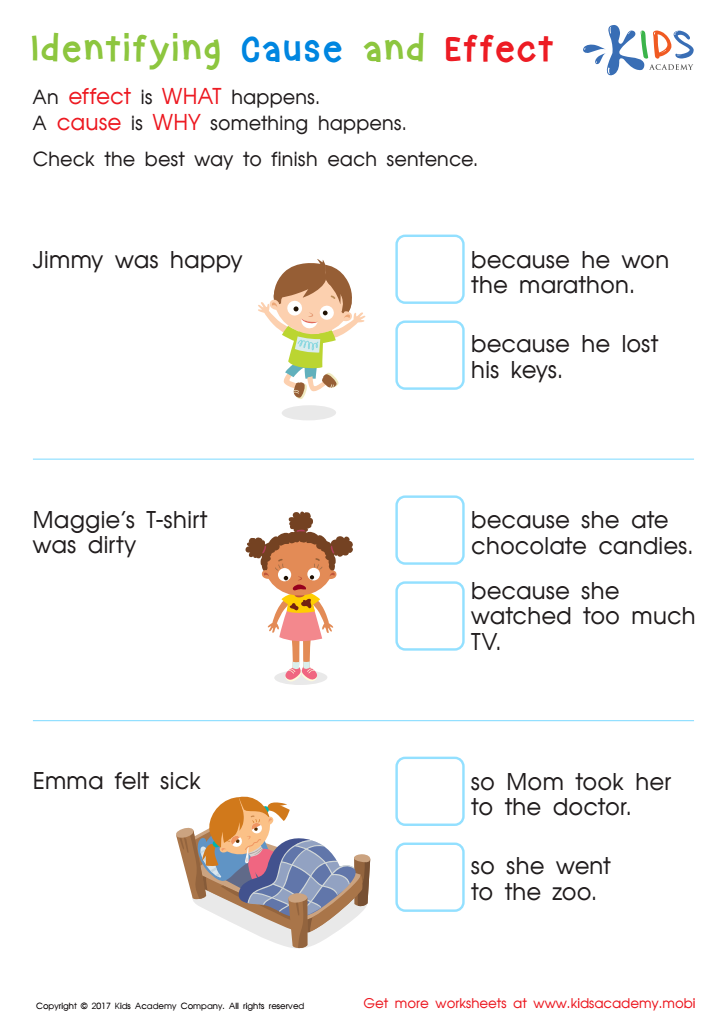
Indentifying Cause and Effect Worksheet
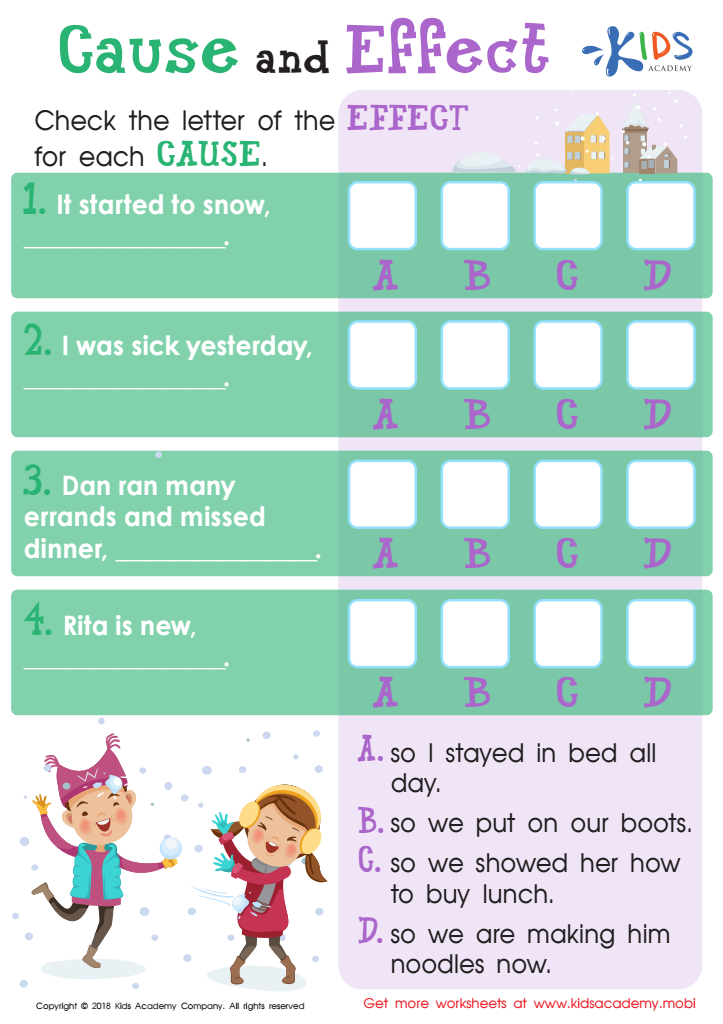
Cause and Effect Worksheet
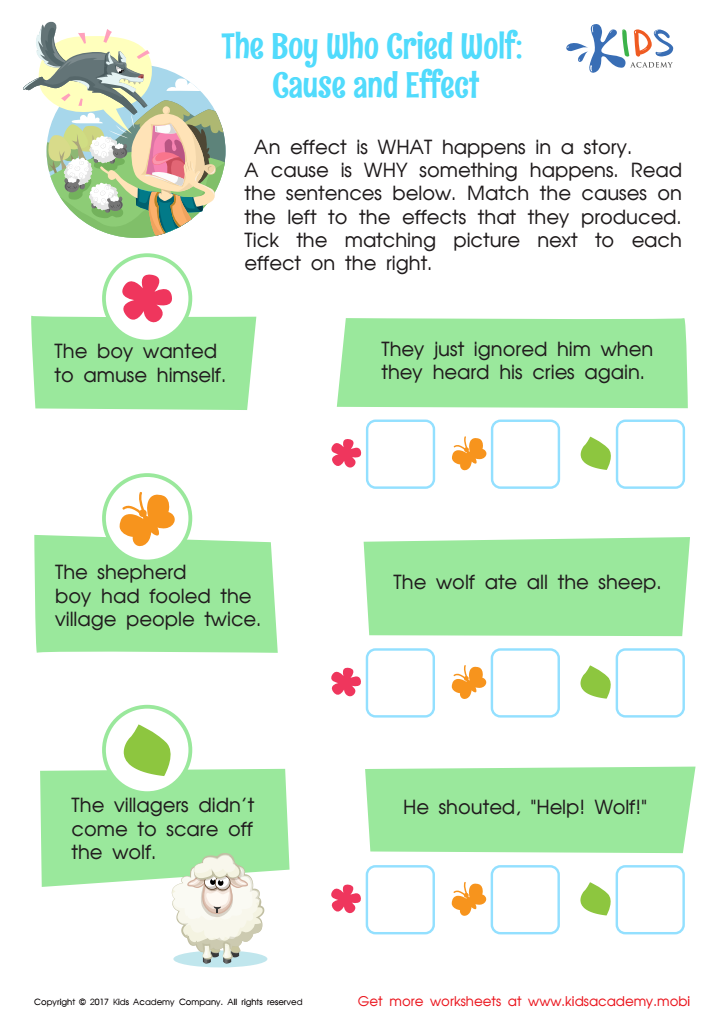
The Boy Who Cried Wolf: Cause and Effect Worksheet




.jpg)



Analytical thinking is a crucial skill that enables children to process information and make reasoned decisions. When it comes to reading fiction for ages 7-8, encouraging this type of thinking can have profound benefits. First, analyzing characters, plot, and themes helps children develop critical thinking skills. They learn to pose questions such as "Why did the character make that choice?" or "What might happen next?" This reflective questioning enhances comprehension and fosters deeper engagement with the text.
Moreover, discussing motives and consequences in a story promotes empathy, as children begin to understand different perspectives and the complexities of human behavior. This is invaluable in building social awareness and emotional intelligence.
Teachers and parents can nurture this by selecting age-appropriate fiction that offers rich narratives and complex characters, encouraging discussion and debates about the story. Incorporating activities, such as drawing conclusions or predicting outcomes, challenges young readers and strengthens their ability to analyze.
Ultimately, fostering analytical thinking through fiction not only enhances literacy skills but also prepares children to navigate the complexities of real-life scenarios, making them better problem solvers and critical thinkers as they grow. This foundation is essential for academic success and overall personal development.








