
Critical thinking skills Reading Fiction Worksheets for Ages 7-8
3 filtered results
Difficulty Level
Grade
Age
-
From - To
Subject
Activity
Standards
Enhance your child's reading comprehension with our engaging Critical Thinking Skills Reading Fiction Worksheets designed for ages 7-8. These worksheets encourage young learners to analyze, evaluate, and interpret stories while developing essential critical thinking skills. Through fun exercises and thought-provoking questions, children will explore characters, settings, and themes, fostering a deeper understanding of fiction. Our thoughtfully crafted resources not only promote literacy but also inspire creativity and imagination. Ideal for classroom or home use, these worksheets make reading an interactive and enjoyable experience. Empower your child’s learning journey by challenging them to think critically about the stories they love!
Favorites
With answer key
Interactive
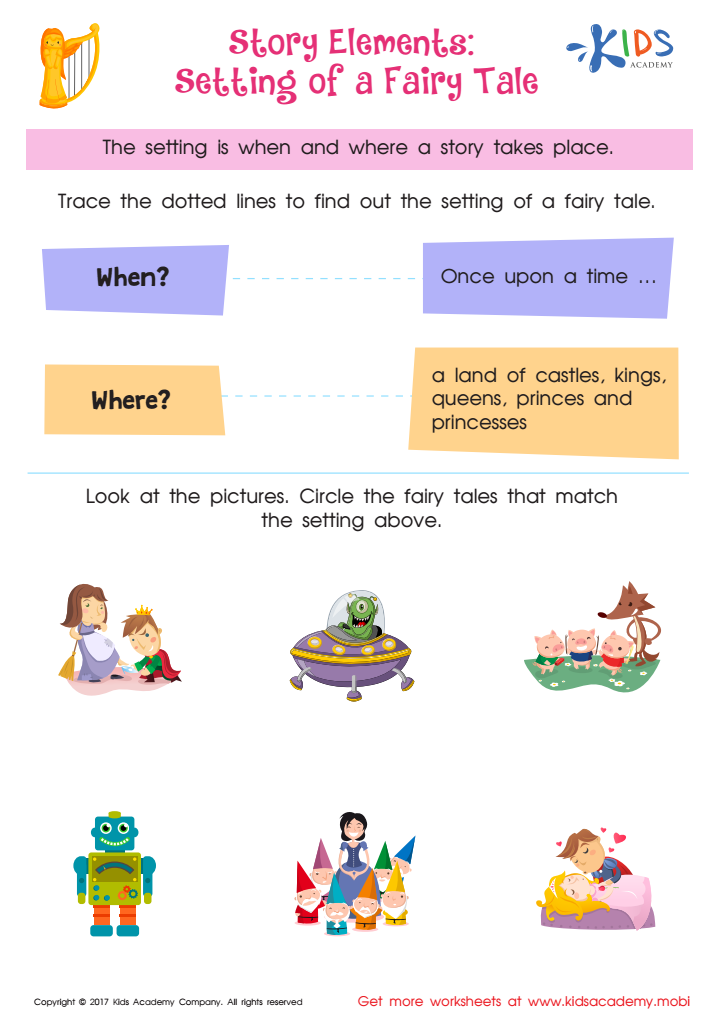
Story Elements: Setting of a Fairy Tale Printable
Help your child learn to analyze stories starting with setting. Use Story Elements worksheet to break down setting into two parts. This will help your child recognize setting quickly and understand its importance in the plot.
 Assign to My Students
Story Elements: Setting of a Fairy Tale Printable
Worksheet
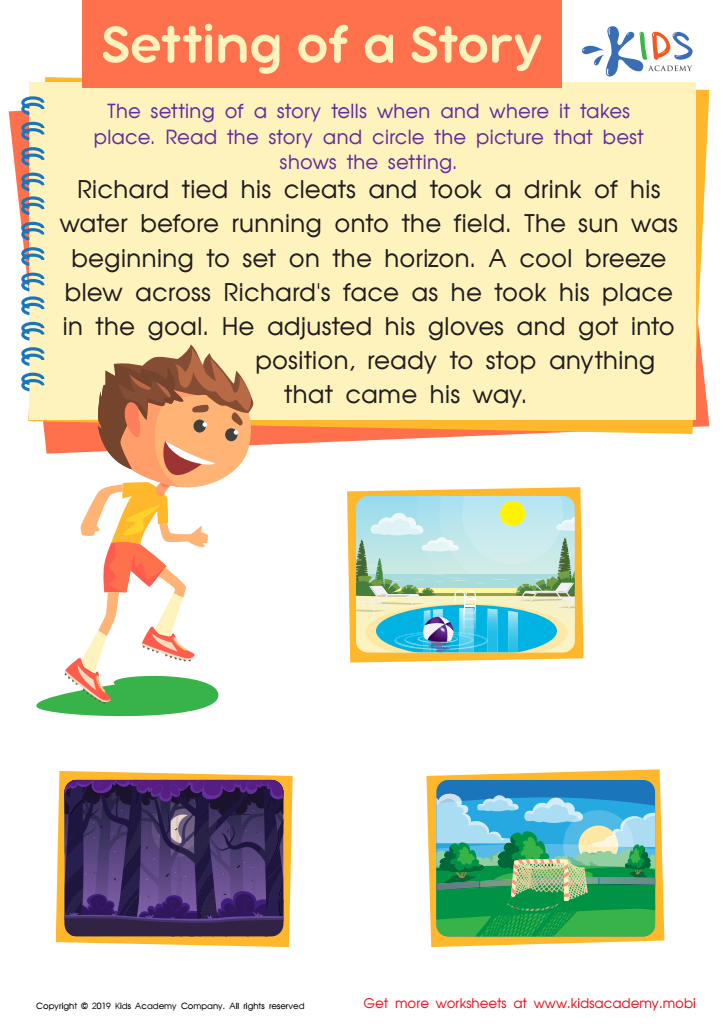
Setting of a Story Worksheet
You need characters, theme, POV, plot and setting to tell a good story. Ask your kids to explain them and use this worksheet with a story to teach them about setting. Read the story with your kids, then have them circle the picture that best shows the setting.
Setting of a Story Worksheet
Worksheet
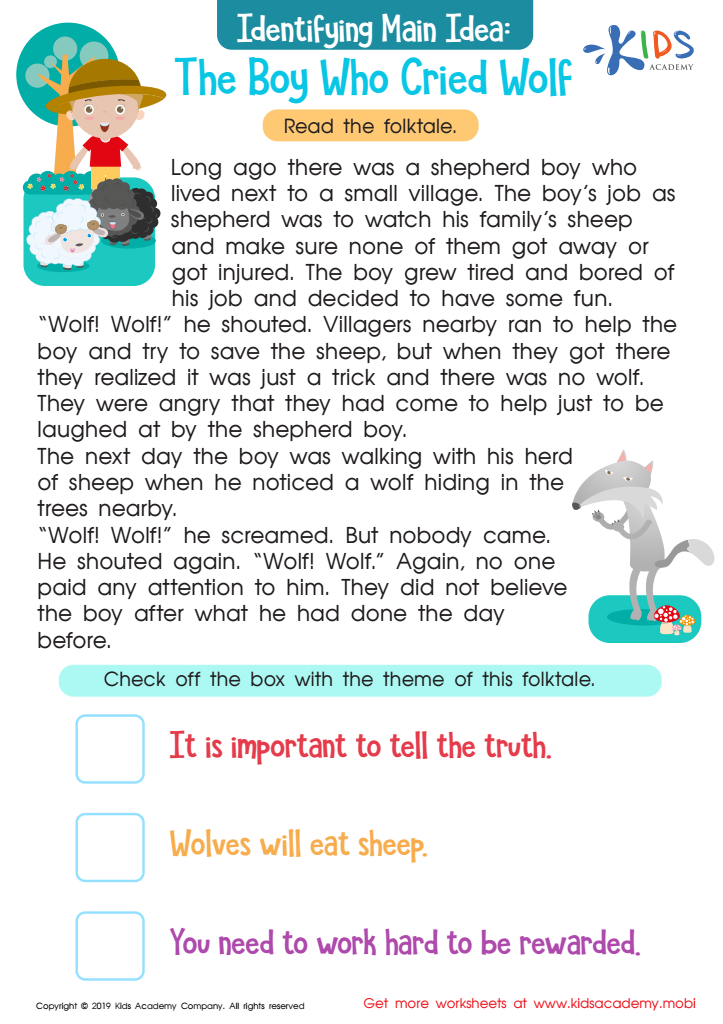
The Boy Who Cried Wolf Part 2 Worksheet
Kids love story time - no doubt they know their favorites! This worksheet tells a story with a theme or main idea. Read it carefully with your kids and ensure they understand every word. Then, help them answer the simple questions at the bottom of the page.
The Boy Who Cried Wolf Part 2 Worksheet
Worksheet
Join Kids Academy for Free
Who is primarily going to use this learning content?






.jpg)
.jpg)
Parents and teachers should care about nurturing critical thinking skills through reading fiction for children ages 7-8 because these skills are foundational for a child's academic and personal development. At this age, children become increasingly capable of analyzing narratives, understanding different perspectives, and making inferences, all of which are emphasized in fiction. Reading stories encourages them to question motives, evaluate outcomes, and connect themes to their own experiences.
Fictional narratives often present complex characters and situations, offering children the opportunity to engage in discussions about choices, feelings, and moral dilemmas. This, in turn, cultivates empathy, as readers consider viewpoints differing from their own. Critical thinking also helps children develop stronger comprehension skills, allowing them to extract deeper meanings and make meaningful connections within the text.
Moreover, fostering critical thinking through fiction supports creativity and imaginative play, vital elements of early childhood education. As children interpret and reflect upon fantastical scenarios, they enhance problem-solving abilities that transcend reading—preparing them for real-world challenges. Therefore, parents and teachers should prioritize reading fiction as a means to develop critical thinking, ultimately contributing to well-rounded, articulate, and compassionate future citizens.








