Critical Thinking Reading Fiction Worksheets for Ages 7-8 - Page 2
26 filtered results
-
From - To
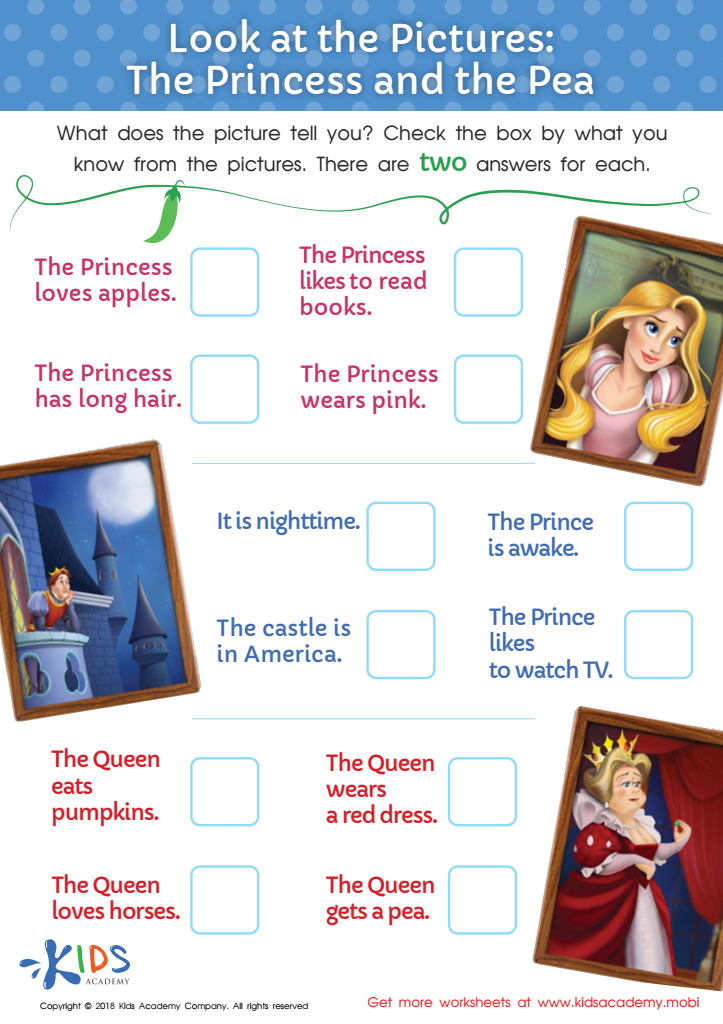
Look at the Pictures: The Princess and the Pea Worksheet
 Assign to My Students
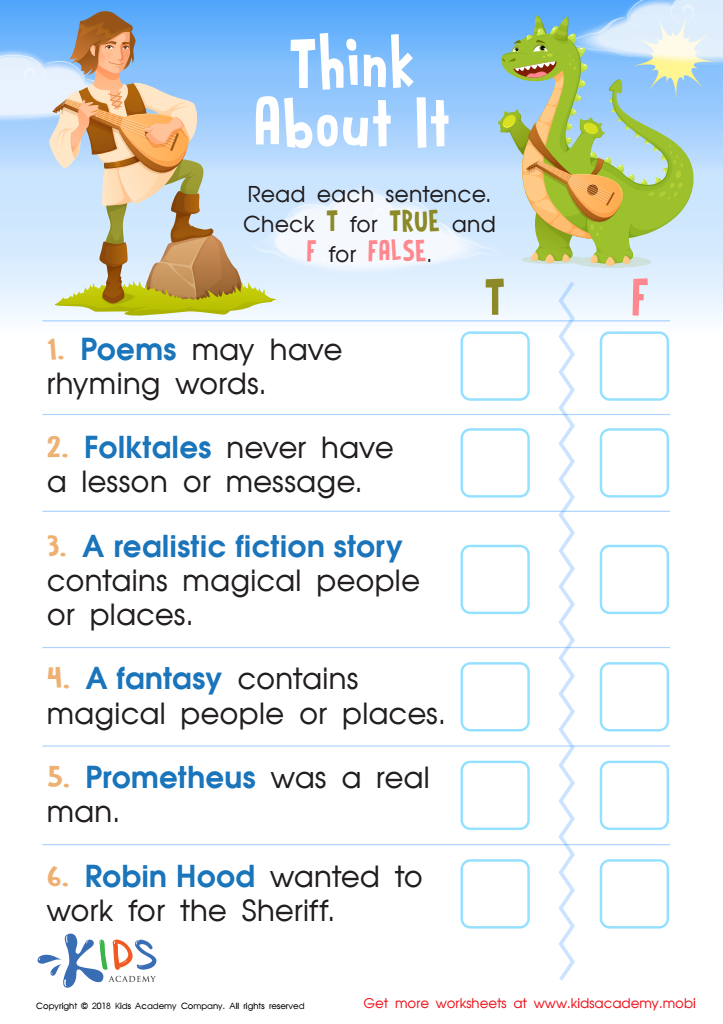
Think About It: Assessment Worksheet







Critical thinking through reading fiction is essential for children aged 7-8, as it plays a vital role in their cognitive, emotional, and social development. At this age, children are becoming more adept at understanding complex narratives and diverse characters. Engaging with fiction promotes critical thinking skills by encouraging them to analyze motivations, identify themes, and evaluate perspectives. This fosters creativity and opens pathways for imaginative problem-solving.
Moreover, reading fiction nurtures empathy by allowing children to step into the shoes of different characters. Understanding various viewpoints enhances their social skills, helping them navigate their relationships with peers. As they question plot dynamics or character choices, they learn to articulate their thoughts and opinions, honing their communication skills.
Teachers and parents should recognize that these abilities extend beyond reading; they are fundamental life skills. Critical thinking equips children to approach challenges with thoughtful strategies, empowering them to become diligent learners and responsible citizens. Thus, prioritizing critical thinking through fiction not only enriches a child's literacy experience but also lays a strong foundation for their growth as informed, compassionate individuals equipped for the complexities of the world.








