Identifying story elements Reading Fiction Worksheets for Ages 7-8
3 filtered results
-
From - To
Unlock the magic of storytelling with our "Identifying Story Elements" reading fiction worksheets tailored for ages 7-8! These engaging printables help young readers explore key components like characters, settings, plots, and themes. Through captivating exercises, children will enhance their comprehension skills and boost critical thinking. Each worksheet is designed with age-appropriate activities that make reading fiction interactive and fun. Perfect for classroom learning or at-home practice, these resources inspire a love of reading while providing essential literacy foundations. Visit Kids Academy for a delightful reading adventure that nurtures young minds and enriches their learning journey!
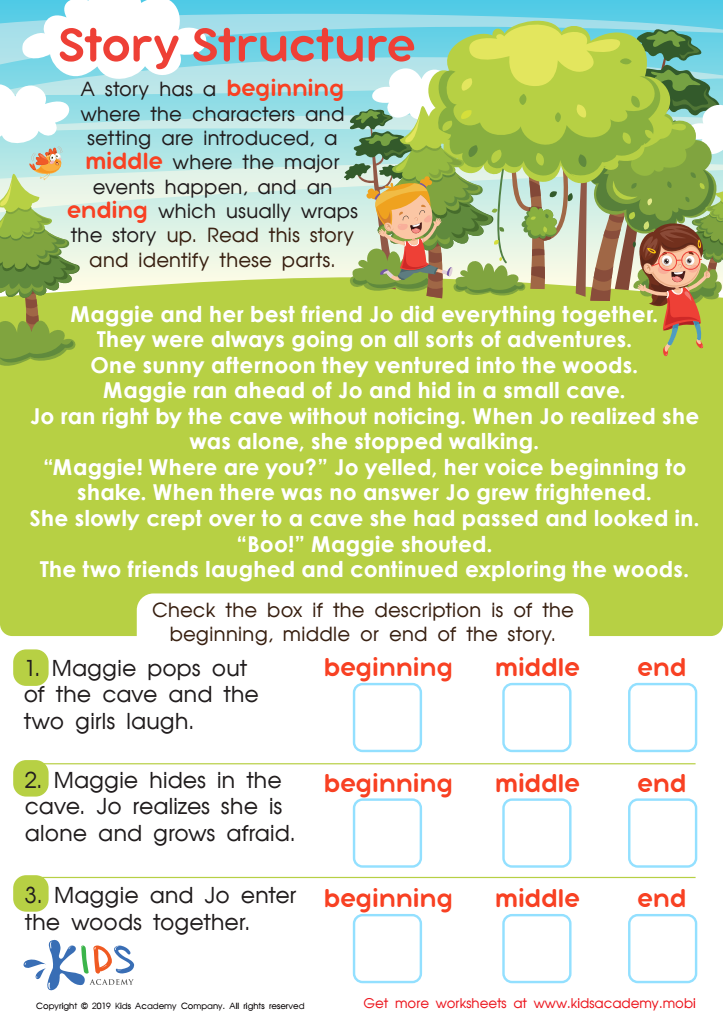
Story Structure Worksheet
 Assign to My Students
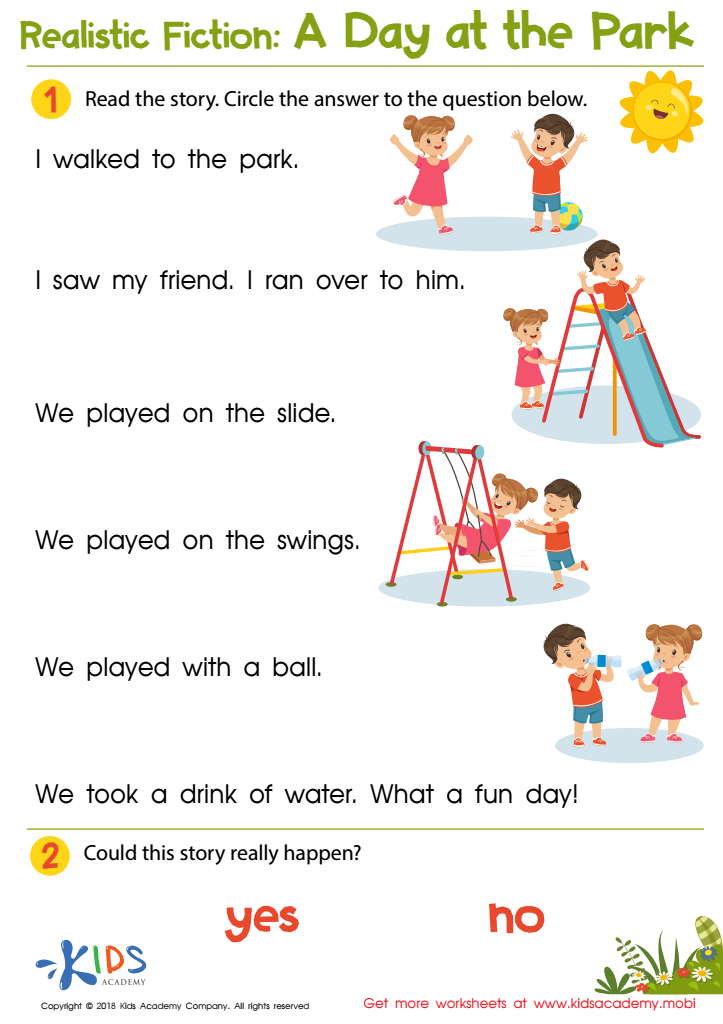
A Day at the Park Worksheet
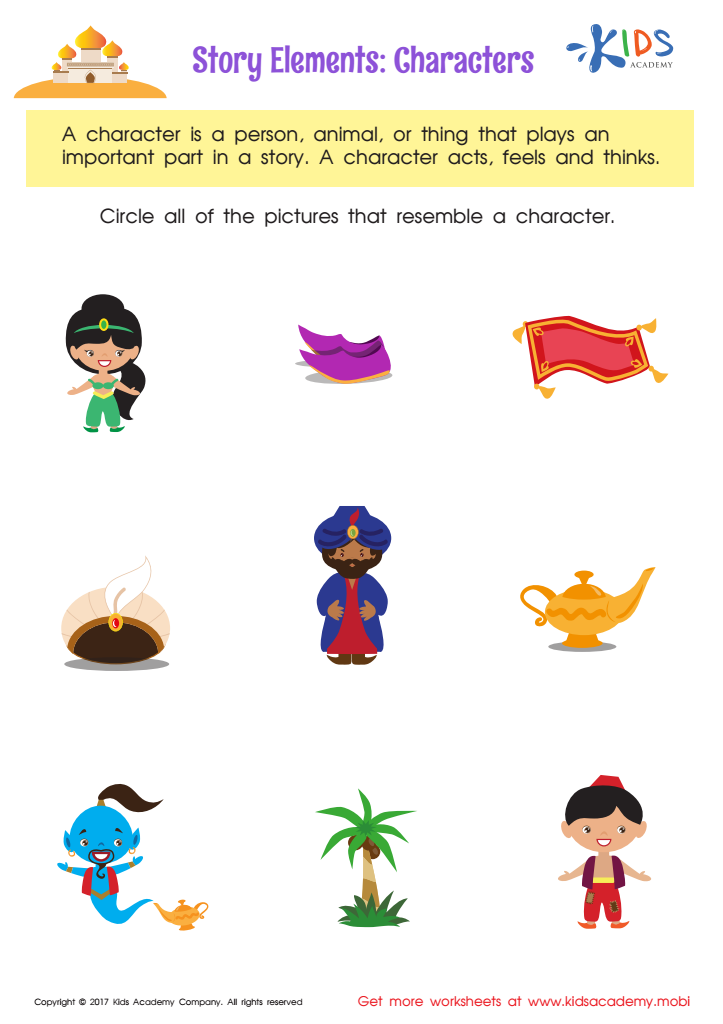
Story Elements Printable








Identifying story elements in fiction is crucial for young readers, especially ages 7-8, as it lays the foundation for strong reading comprehension and analytical skills. At this developmental stage, children are transitioning from learning to read to reading to learn. Recognizing story elements—such as characters, setting, plot, problem, and resolution—enhances their understanding of the narrative structure, helping them follow and predict story progression more effectively.
For parents and teachers, emphasizing these elements nurtures critical thinking. When children comprehend how components interconnect within a story, they become active readers, engaging more profoundly with the text. This deeper engagement can enhance their enjoyment, encouraging a lifelong love of reading.
Furthermore, understanding story elements improves students' ability to retell stories in their own words, fostering better oral communication and listening skills. It also aids in academic areas beyond reading, such as writing, by providing a framework for children to organize their thoughts, build coherent narratives, and comprehend subject matter across disciplines.
Incorporating discussions about story elements during reading time can also build a child's vocabulary, empathy, and cultural awareness by exploring diverse characters and settings. Ultimately, caring about these elements equips children with essential literacy tools for both academic success and personal growth.








