Logical Reasoning Reading Fiction Worksheets for Ages 7-8
5 filtered results
-
From - To
Enhance your child's critical thinking skills with our "Logical Reasoning Reading Fiction Worksheets" designed specifically for ages 7-8. These engaging and fun worksheets encourage young readers to analyze characters, predict outcomes, and draw conclusions from fictional texts. Each activity promotes logical reasoning and comprehension, helping children to connect the dots in storytelling and develop a deeper understanding of narratives. Our worksheets are colorful and age-appropriate, ensuring that learning feels like play. Dive into a world of fiction while fostering essential cognitive abilities. Perfect for classroom use or at-home learning, these worksheets make reading both enjoyable and educational!
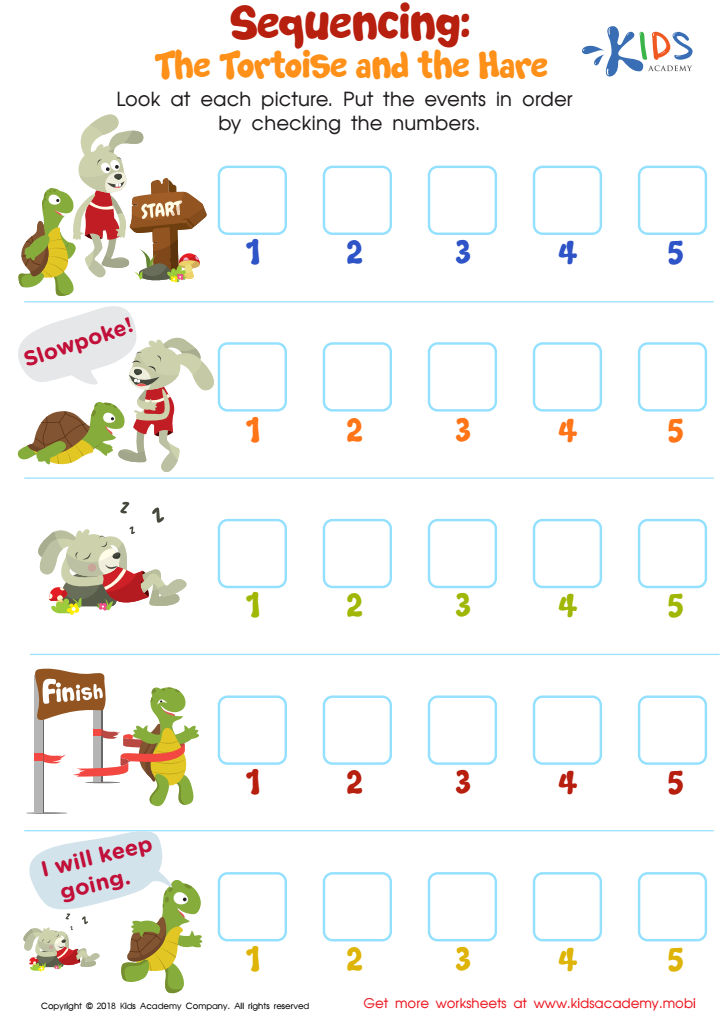
Sequencing: The Tortoise and the Hare Worksheet
 Assign to My Students
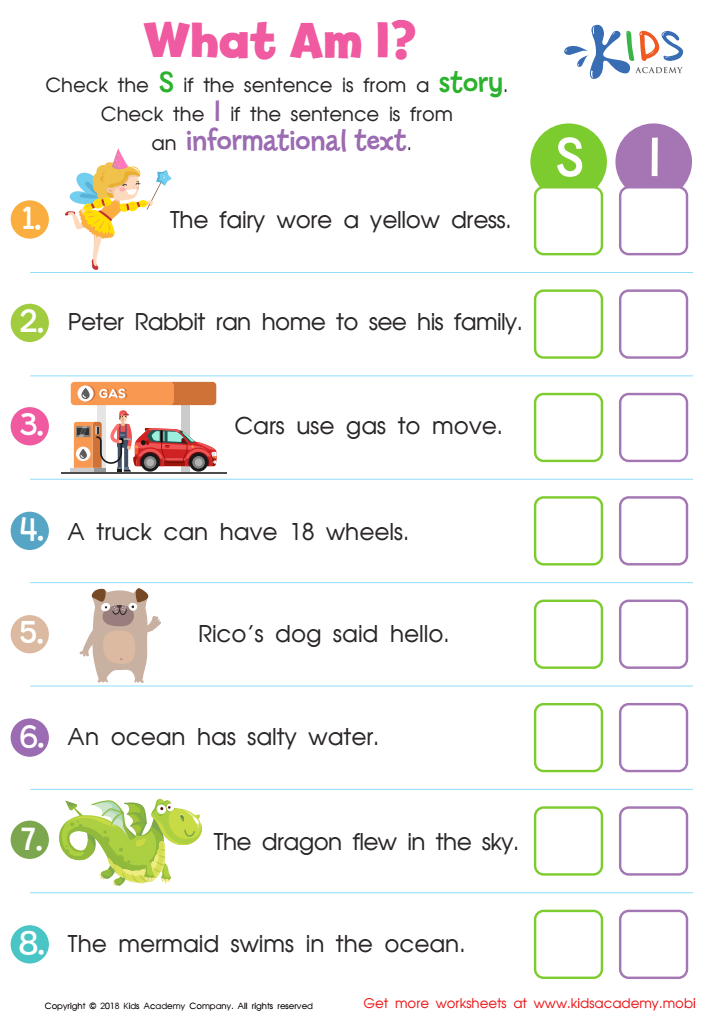
What Am I? Worksheet
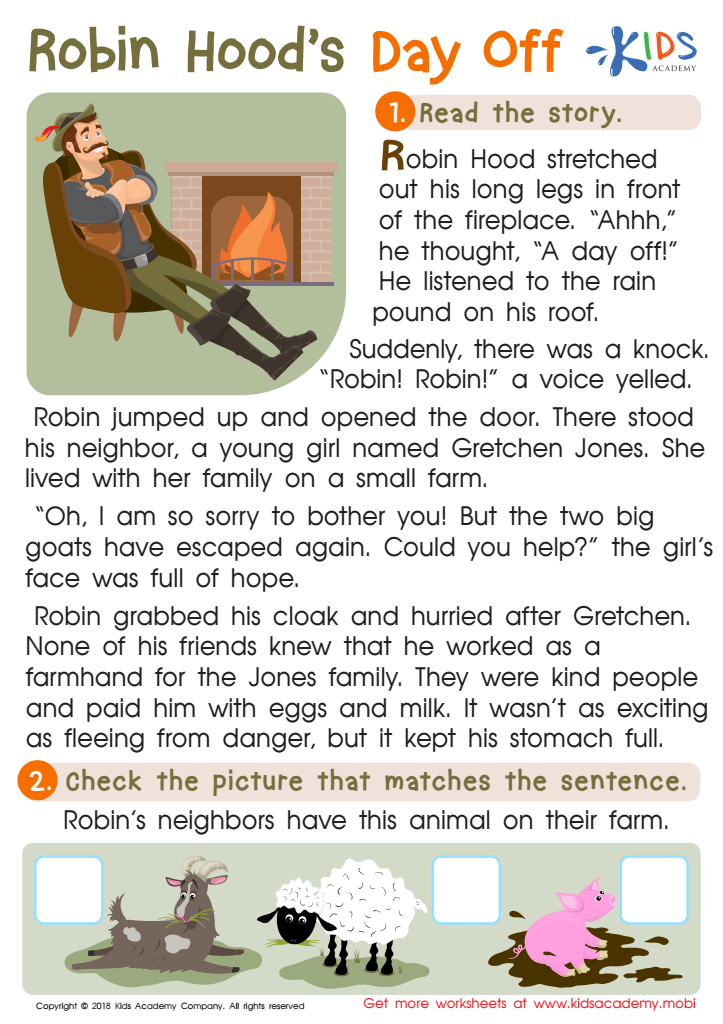
Robin Hood's Day Off Worksheet
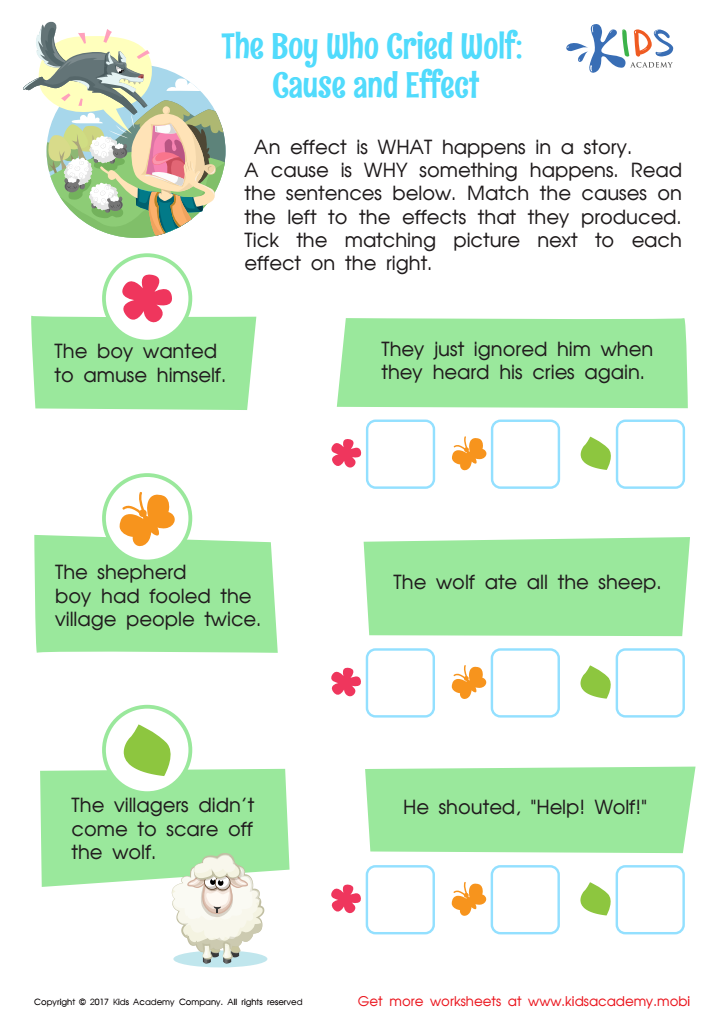
The Boy Who Cried Wolf: Cause and Effect Worksheet
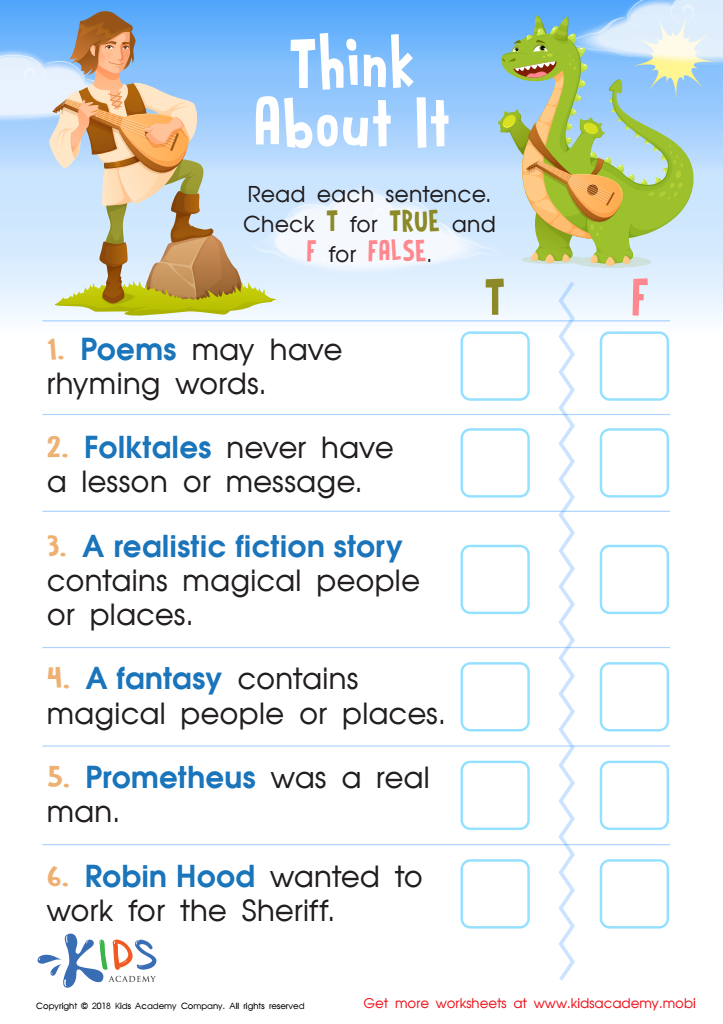
Think About It: Assessment Worksheet








Parents and teachers should prioritize logical reasoning in reading fiction for children aged 7-8 because it fosters critical thinking skills essential for academic and life success. At this developmental stage, children begin to make connections between different ideas, characters, and events. Engaging with fiction encourages them to analyze situations, infer meanings, and predict outcomes.
When children read stories, they encounter conflicts and resolutions which inspire them to think critically about motivations and consequences. This type of logical reasoning helps develop their problem-solving skills, enabling them to navigate both fiction and real-world scenarios more effectively. Additionally, reading fiction enhances their comprehension abilities, as they learn to recognize themes, context, and character development.
Moreover, fostering a love for reading enhances vocabulary and language skills, laying a foundation for articulate thought processes. Engaging discussions about the plot and characters can empower parents and teachers to encourage children to express their logical thoughts, promote group discussions, and stimulate creativity.
Ultimately, encouraging logical reasoning while reading fiction cultivates a generation of thoughtful, analytical individuals equipped with the cognitive tools to tackle complex challenges, making this practice invaluable for their overall growth and education.








