Rhyme recognition Reading Fiction Worksheets for Ages 7-8
3 filtered results
-
From - To
Explore our engaging "Rhyme Recognition Reading Fiction Worksheets" designed specifically for children aged 7-8! These fun, interactive worksheets encourage young readers to identify and appreciate rhymes within various fictional texts. Promoting phonemic awareness, our activities enhance vocabulary and improve reading fluency. Each worksheet contains carefully crafted exercises that stimulate critical thinking and creativity while keeping learning enjoyable. Perfect for classroom use or at-home practice, these resources help cultivate a love for reading through the magic of rhyme. Foster your child's reading skills and watch them thrive with our vibrant, effective worksheets today!
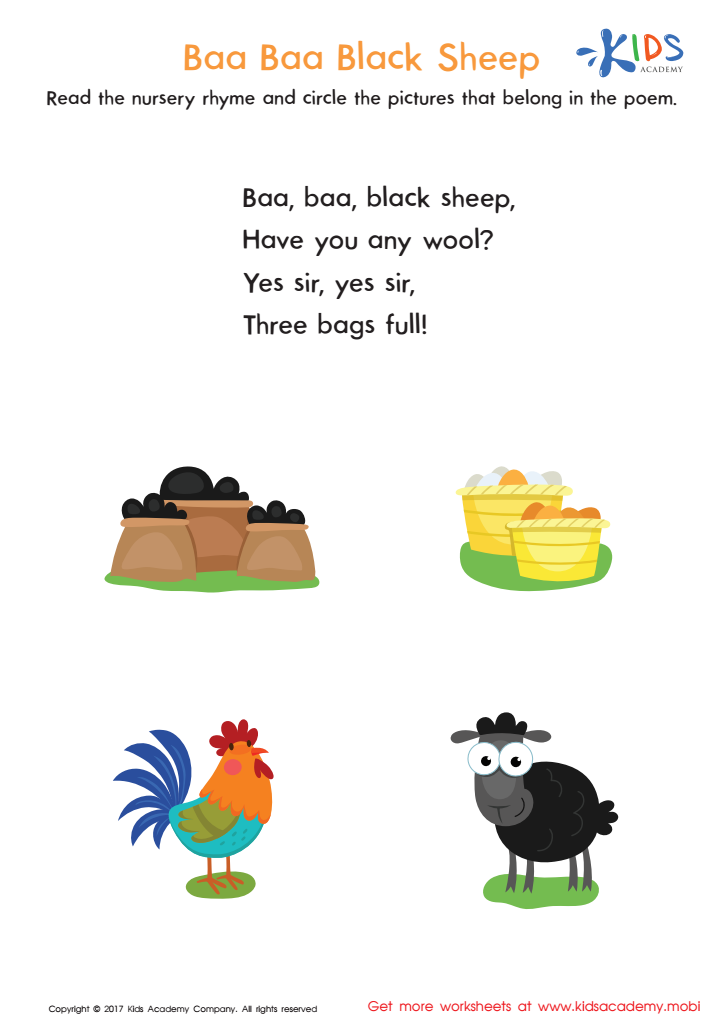
Baa Baa Black Sheep Printable
 Assign to My Students
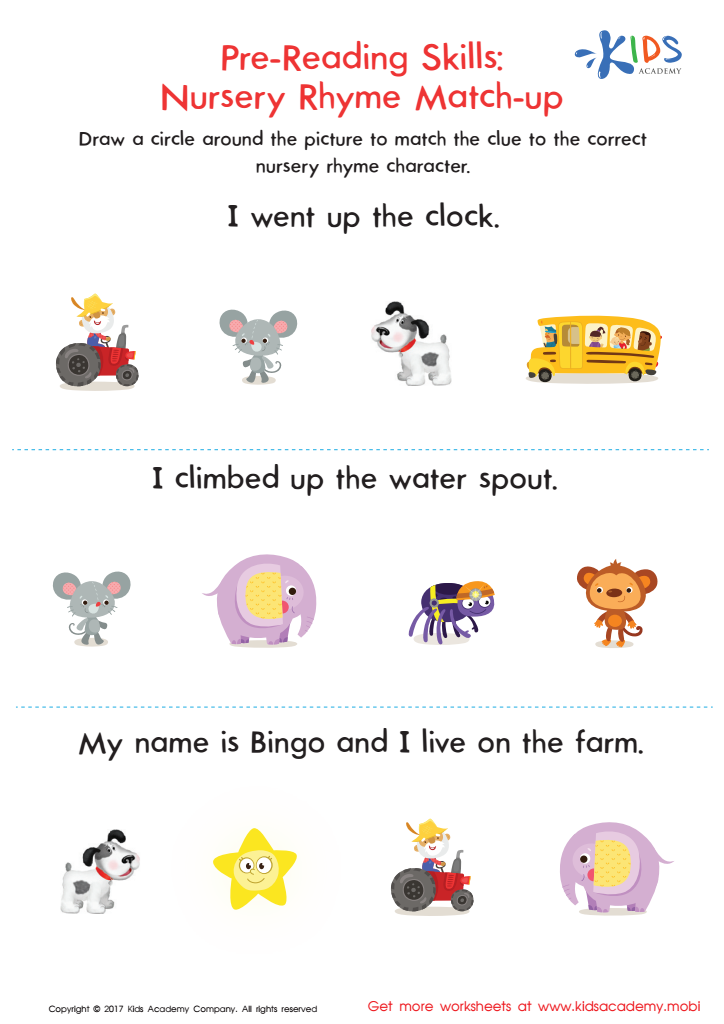
Nursery Rhyme Match–Up Worksheet
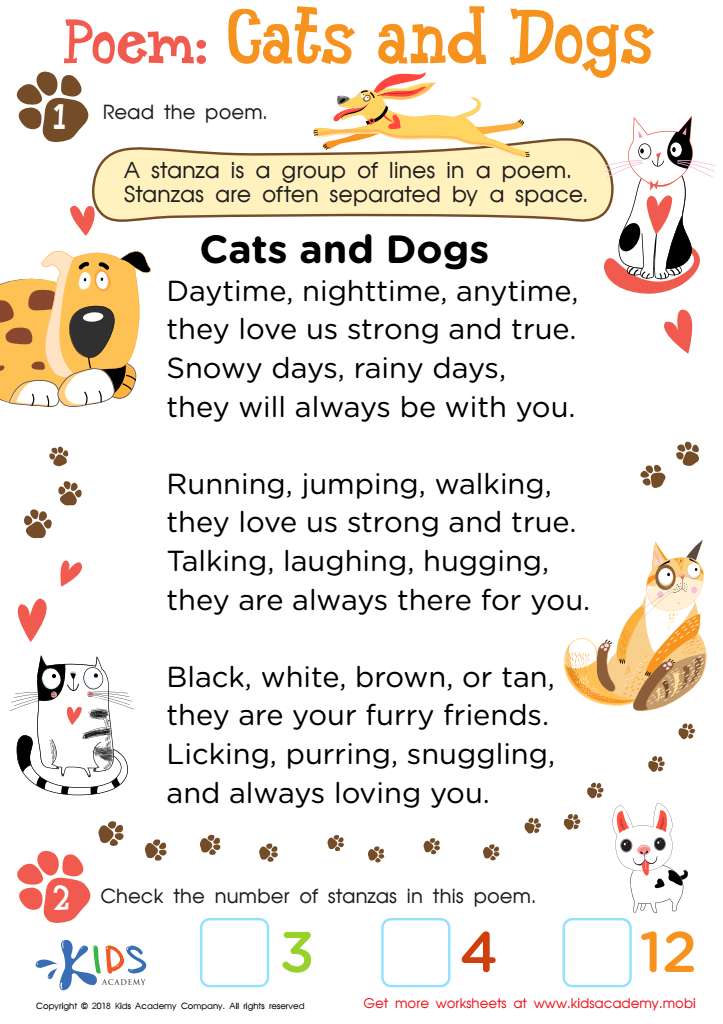
Poem: Cats and Dogs Worksheet








Rhyme recognition plays a crucial role in the literacy development of children aged 7-8, especially in reading fiction. At this age, children are honing their phonemic awareness, which is foundational for reading proficiency. Engaging with rhymes allows them to identify sound patterns and phonemes, making it easier to decode unfamiliar words and enhancing their overall reading fluency.
Moreover, rhyme recognition fosters a love for language and storytelling. In fiction, rhythmic and rhyming texts capture children's imaginations and make reading a more enjoyable experience. This enjoyment encourages them to read more frequently, building their vocabulary and comprehension skills in the process.
For parents and teachers, nurturing rhyme recognition helps in developing critical thinking and analytical skills. When children hear or create rhymes, they exercise cognitive skills such as prediction and association, which are essential for understanding narrative structures and themes in fiction. Additionally, stories with rhyme often incorporate rich vocabulary and complex ideas, allowing children to expand their language skills in a fun and engaging context.
Ultimately, emphasizing rhyme recognition in fiction not only strengthens literacy skills but also builds a strong foundation for a lifetime of reading enjoyment and academic success.








