Understanding food chains Animals Worksheets for Ages 7-8
3 filtered results
-
From - To
Explore the fascinating world of food chains with our engaging worksheets designed for children ages 7-8! Our "Understanding Food Chains" worksheets provide interactive learning opportunities that teach kids about the relationships between different animals and their roles in ecosystems. Through colorful illustrations and fun activities, young learners will discover producers, consumers, and decomposers, enhancing their understanding of nature's interconnected networks. Perfect for classroom or home use, these resources promote critical thinking and expand vocabulary. Support your child's journey in science education and spark their curiosity about the natural world! Download now and help them grasp the essential concepts of food chains!
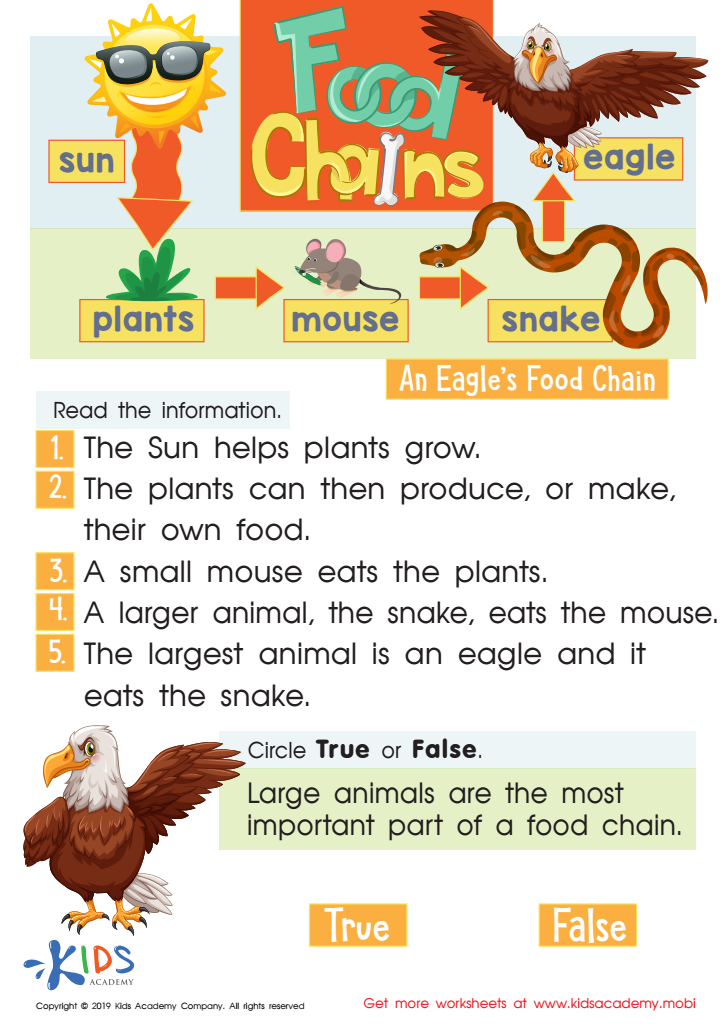
Food Chains Worksheet
 Assign to My Students
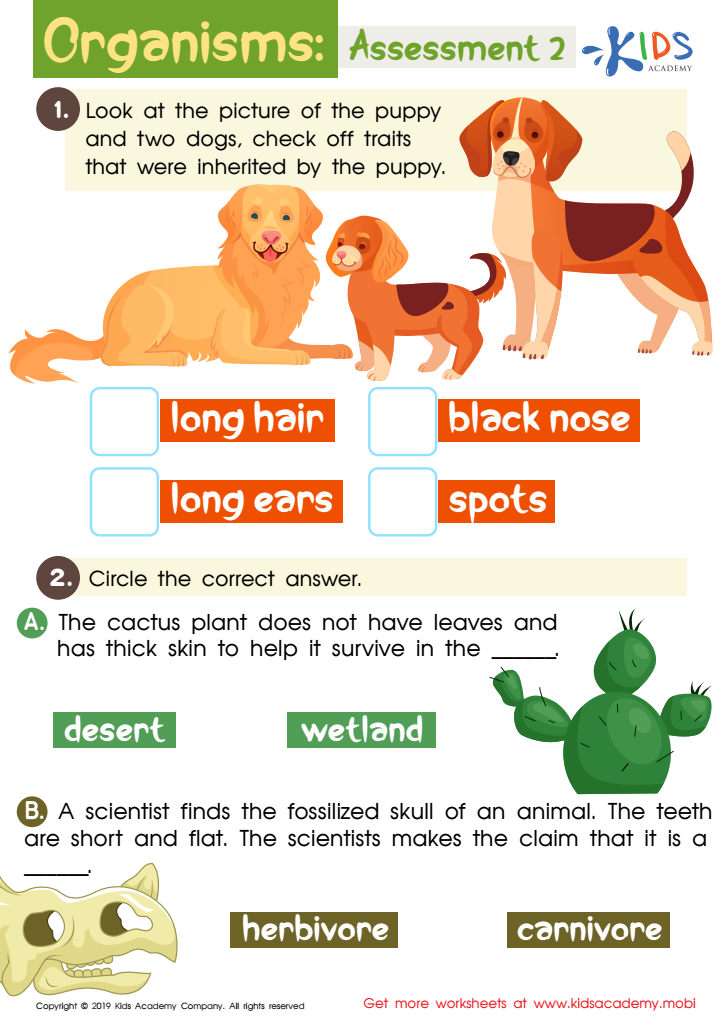
Organisms: Assessment 2 Worksheet
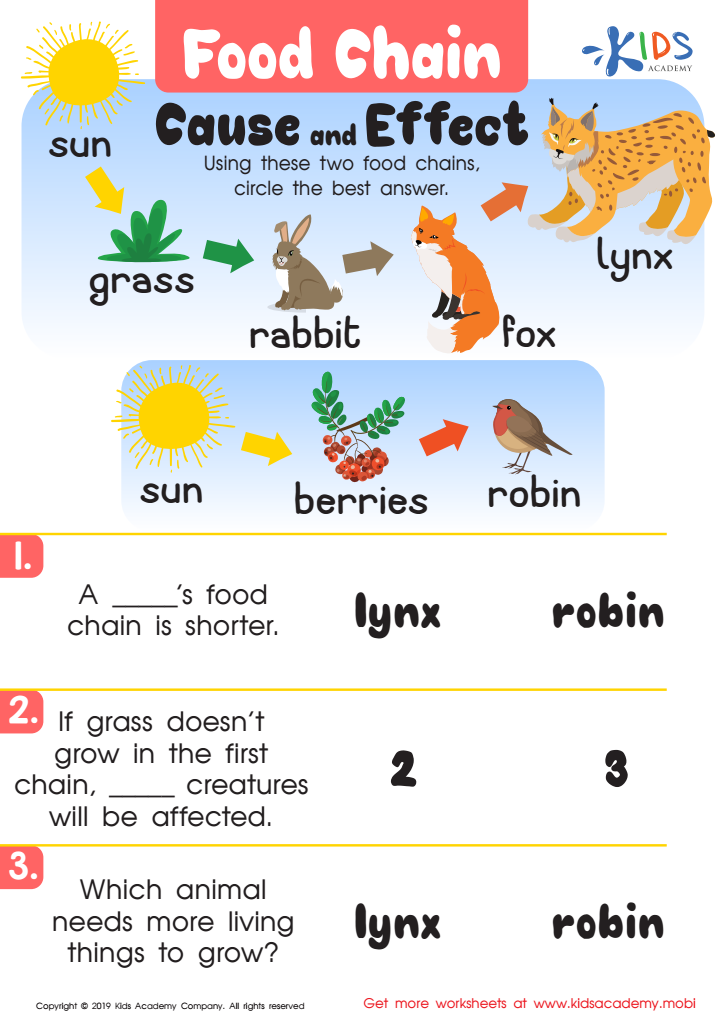
Food Chain Cause Worksheet








Understanding food chains is crucial for children aged 7-8 as it lays the foundation for their knowledge of ecosystems and environmental science. At this age, children are naturally curious about nature, and learning about food chains helps them make connections between different living organisms and their roles in the natural world.
Parents and teachers should care about this topic because it fosters critical thinking and an appreciation for biodiversity. When children learn how animals and plants interact—how some are producers, others consumers, and decomposers—they gain insight into the balance of ecosystems. This understanding encourages them to respect nature and recognize the importance of wildlife conservation.
Moreover, discussing food chains can enhance cross-curricular education. Through this topic, children can incorporate skills from reading, science, and even math—like mapping food chains with diagrams or graphs. It also presents opportunities for hands-on learning through activities such as creating food chain models or exploring local habitats.
Ultimately, comprehending food chains empowers children to engage meaningfully with their environment, promoting healthier lifestyles and responsible behaviors towards the planet, essential traits for future stewards of nature. Thus, introducing food chains in an engaging manner is vital for nurturing environmentally conscious individuals.








