Understanding patterns History Worksheets for Ages 7-8
3 filtered results
-
From - To
Explore our "Understanding Patterns History Worksheets" designed for children aged 7-8! These engaging worksheets help young learners recognize and interpret historical patterns, enhancing their comprehension of past events and trends. From timelines to relationship charts, students will develop critical thinking skills by analyzing how history shapes our present and future. Each worksheet is thoughtfully crafted to provide a blend of fun and education, making history an intriguing subject to explore. Perfect for home or classroom use, these resources will foster a curiosity about the world while enhancing essential social studies skills. Dive into history and pattern recognition today!
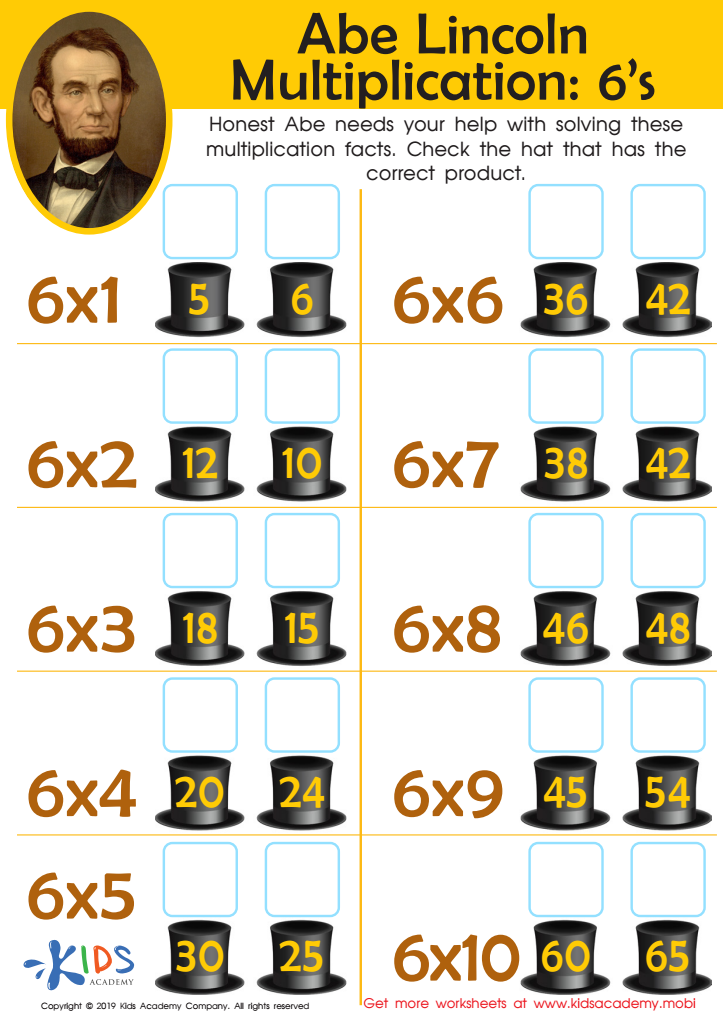
Abe Lincoln Multiplication: 6’s Worksheet
 Assign to My Students
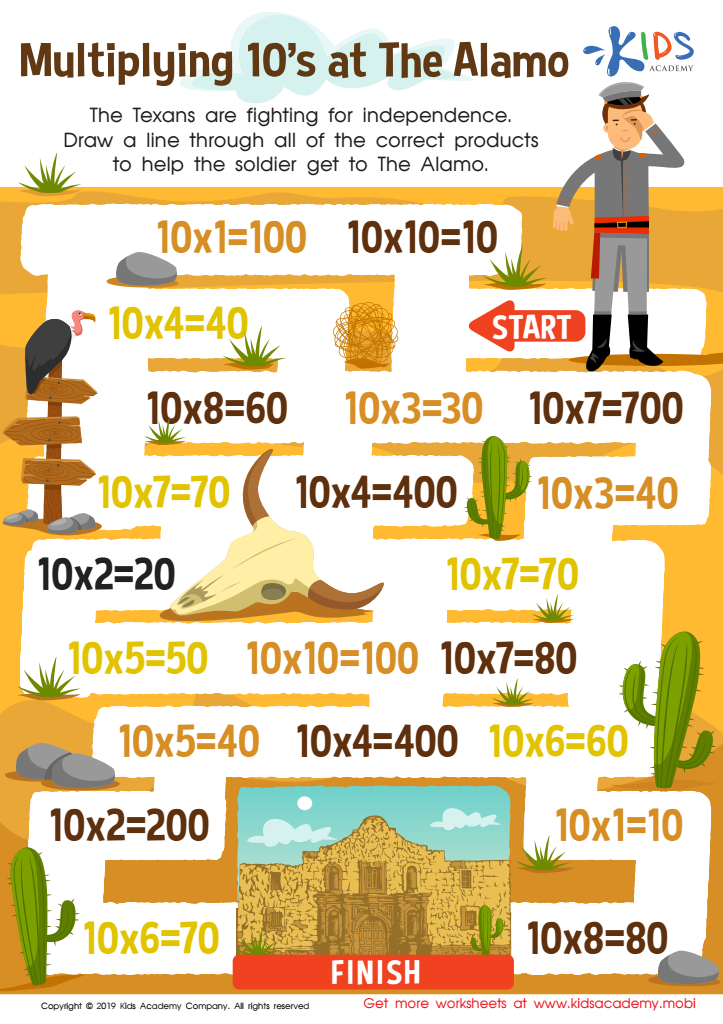
Multiplying 10’s at The Alamo Worksheet
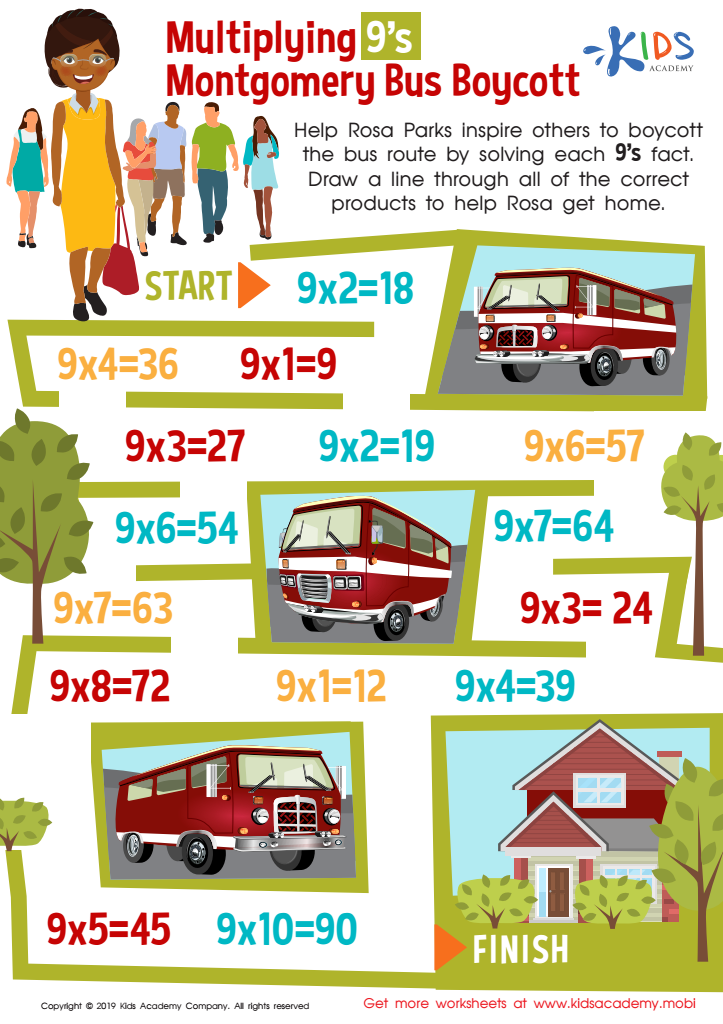
Multiplying 9’s Montgomery Bus Boycott Worksheet



.jpg)




Understanding patterns in history is crucial for young learners aged 7-8, as it lays the groundwork for critical thinking and analytical skills. At this stage, children are naturally curious about the world around them, and recognizing patterns helps them make sense of complex historical events and social changes. It fosters an ability to identify cause-and-effect relationships, which is essential for understanding how different civilizations have evolved over time.
Moreover, engaging with patterns in history enables children to draw connections between past and present. This contextual awareness cultivates a sense of identity and belonging, allowing them to appreciate their own culture while being respectful of others. Through storytelling and interactive activities, teachers and parents can make historical events come alive, encouraging children to ask questions and explore different perspectives.
Additionally, understanding historical patterns promotes empathy and social awareness. Students learn about successes and failures, which can inspire them to think about solutions for modern-day challenges. By recognizing these patterns, they gain a deeper appreciation for diversity and the importance of collaboration in building a better future. Ultimately, this foundation empowers children to become informed and engaged citizens in an increasingly interconnected world.








