Filters

9 filtered results

Clear all filters
Favorites
With answer key
Interactive

9 filtered results

Difficulty Level

Grade


Enhance your child’s number recognition skills with our "Number Recognition Cursive Numbers Worksheets for Ages 7-8." Specially designed for young learners, these engaging worksheets combine the art of cursive writing with essential math practice. Children will enjoy tracing and writing numbers in cursive, improving both their handwriting and number identification. Perfect for both classroom use and at-home practice, these worksheets help build a solid foundation for more advanced math concepts while also fostering fine motor skills and concentration. Give your child a fun and productive way to learn cursive numbers today!

Check out this FREE Trial Lesson on Cursive Numbers for age 7-8!

Sorting Objects into 3 Categories

Favorites
With answer key
Interactive
  • 7-8
  • Number Recognition
  • Cursive Numbers
Cursive Numbers: 2 Worksheet

Cursive Numbers: 2 Worksheet

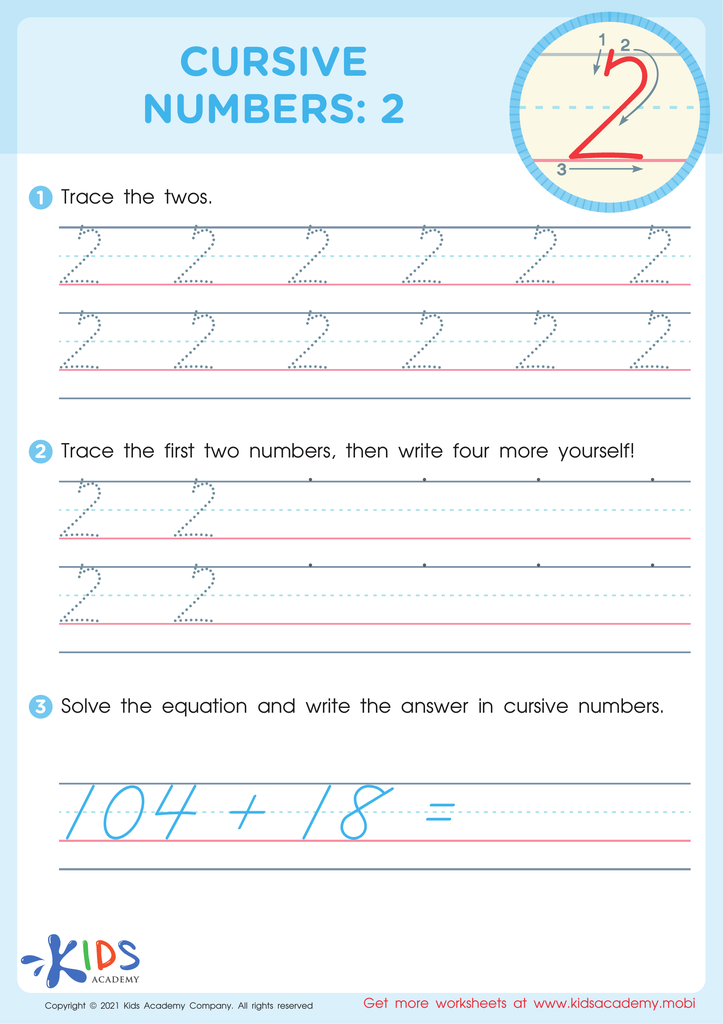
Mastering maths goes beyond basic counting and arithmetic. These tracing worksheets will help your kids practice their cursive numbers. The dotted lines are easy to follow and your kids can trace the number 2 over and over. Soon they'll be able to write it on their own. At the end of the sheet, there's a simple math equation - have your child write the answer in cursive.
Cursive Numbers: 2 Worksheet
Worksheet
Cursive Numbers: 6 Worksheet

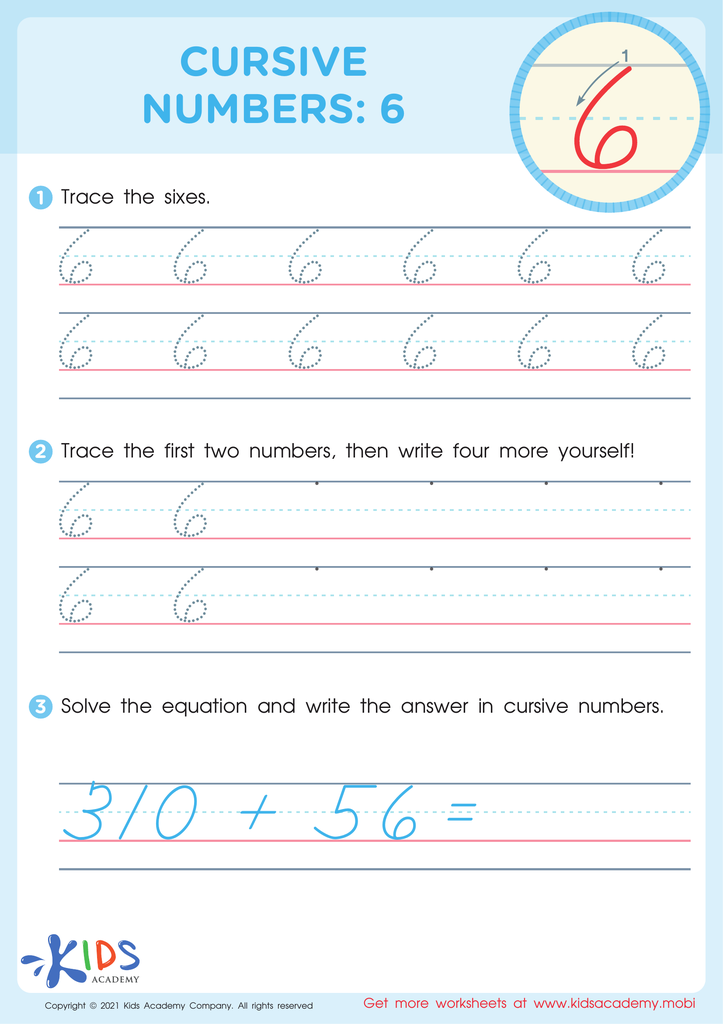
Cursive Numbers: 6 Worksheet

Help your children practice counting and writing numbers with cursive number worksheets. They'll learn to write the number six with dotted lines to guide them and space to practice writing it on their own. They can also solve a simple equation and write the answer in cursive. Let them practice as much as they need - it'll help them succeed.
Cursive Numbers: 6 Worksheet
Worksheet
Cursive Numbers: 0 Worksheet

Cursive Numbers: 0 Worksheet

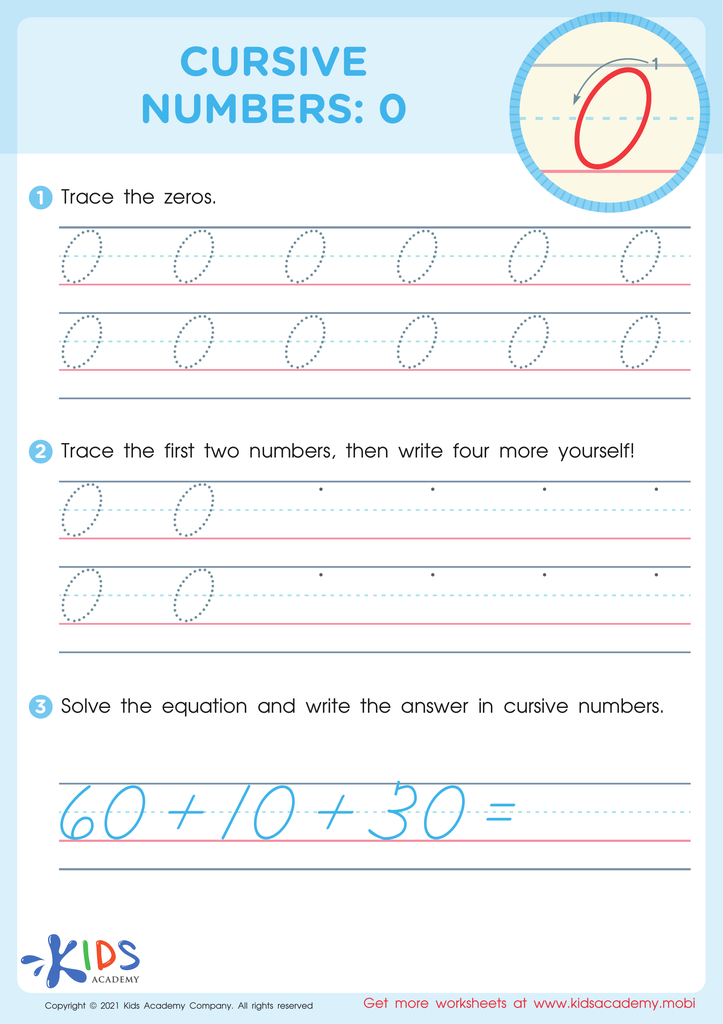
Practice makes perfect when teaching your kid handwriting. Spend time teaching them the alphabet and cursive numbers. These math worksheets have traceable numbers for them to practice with, then they can write 0 on their own. There's also a bonus math problem to solve and write the answer in cursive.
Cursive Numbers: 0 Worksheet
Worksheet
Cursive Numbers: 9 Worksheet

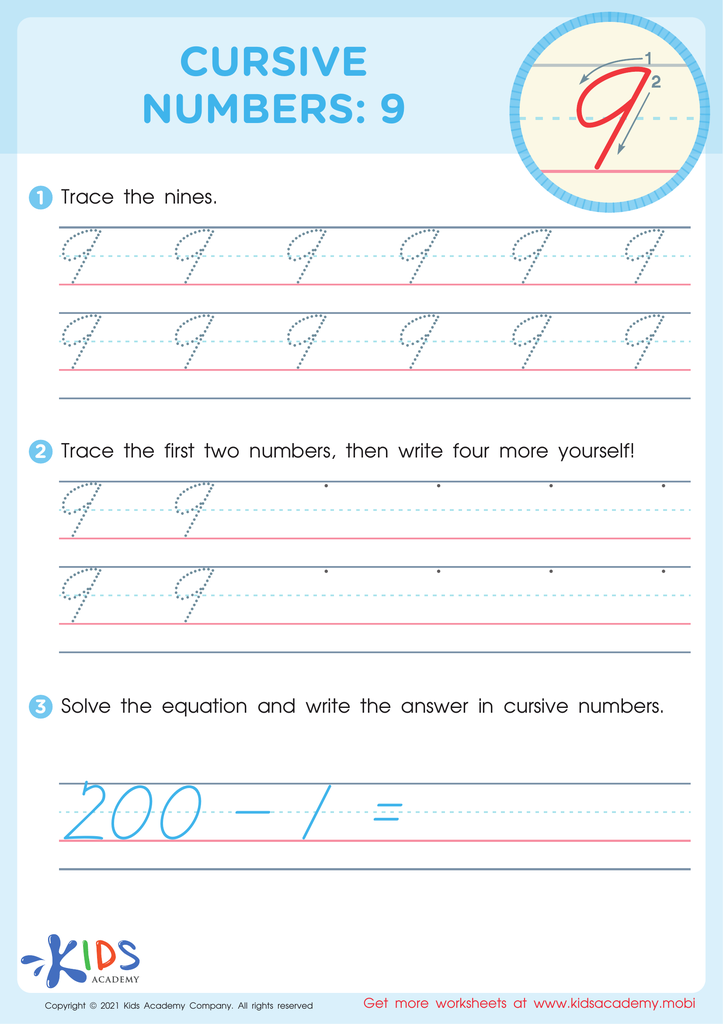
Cursive Numbers: 9 Worksheet

Identifying and writing numbers is key to math success. These worksheets help kids learn to trace the number 9 and build confidence. As they practice, they'll soon be able to write it on their own. Plus, they get to apply their learning and solve a simple equation at the bottom of the page. Writing the answer in cursive is a great way to help them remember!
Cursive Numbers: 9 Worksheet
Worksheet
Cursive Numbers: 7 Worksheet

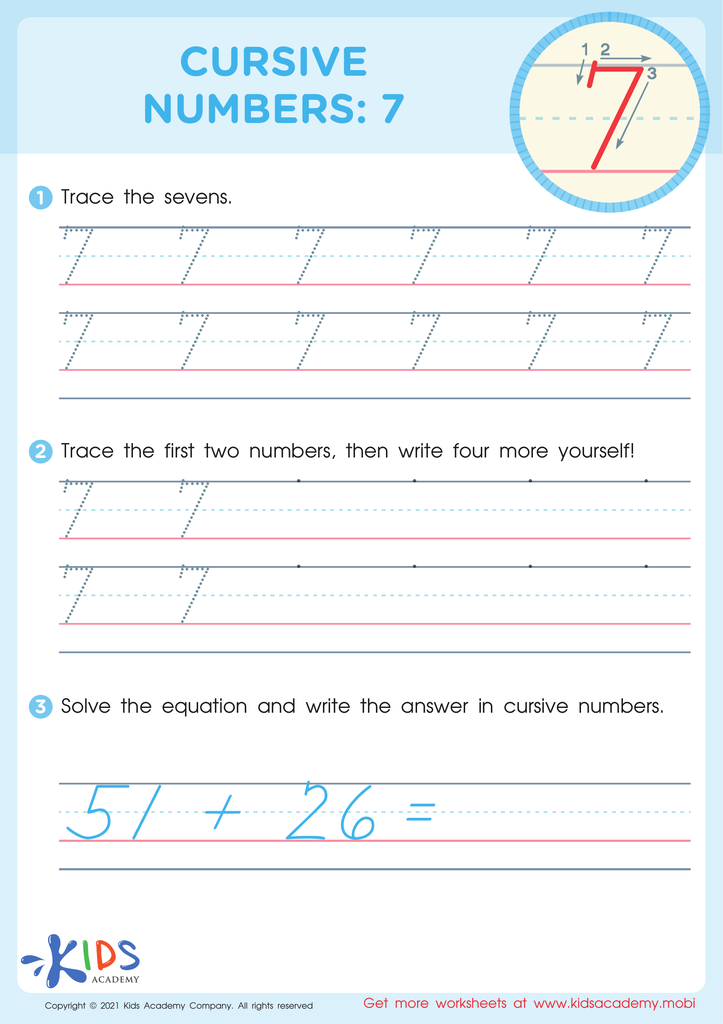
Cursive Numbers: 7 Worksheet

Kids learn best with engaging and easy-to-understand materials. This tracing worksheet is ideal for developing kids' writing skills, with two exercises to help them write the number 7. The first involves tracing the 6s provided and the second asking them to write four cursive 7s independently.
Cursive Numbers: 7 Worksheet
Worksheet
Cursive Numbers: 5 Worksheet

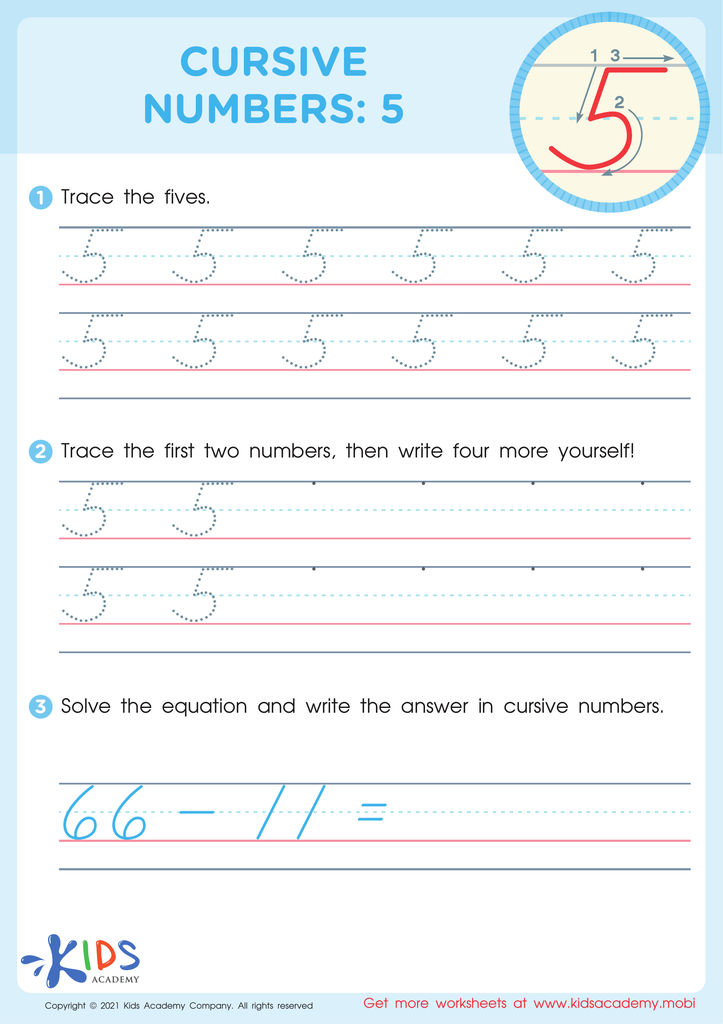
Cursive Numbers: 5 Worksheet

Ask your child to count to 10 to refresh their number knowledge. This worksheet is great for mastering the cursive number 5. Exercises are simple and keep them engaged, with the help of the dotted lines to trace. Constant practice will have your child writing the 5 like a pro!
Cursive Numbers: 5 Worksheet
Worksheet
Cursive Numbers: 1 Worksheet

Cursive Numbers: 1 Worksheet

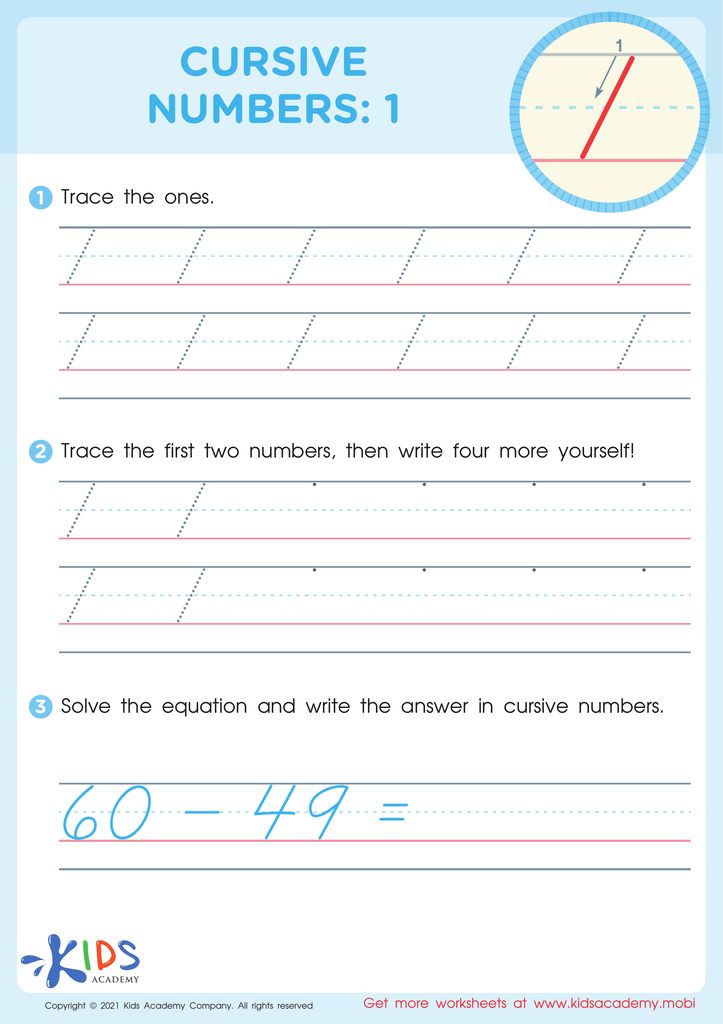
Math and handwriting are connected! Try these traceable worksheets to help your children learn cursive numbers. The tracing lines make it easy to follow, plus there's a simple subtraction exercise at the bottom for them to try. This is perfect for kids who struggle with handwriting and gives them a fun way to practice.
Cursive Numbers: 1 Worksheet
Worksheet
Cursive Numbers: 8 Worksheet

Cursive Numbers: 8 Worksheet

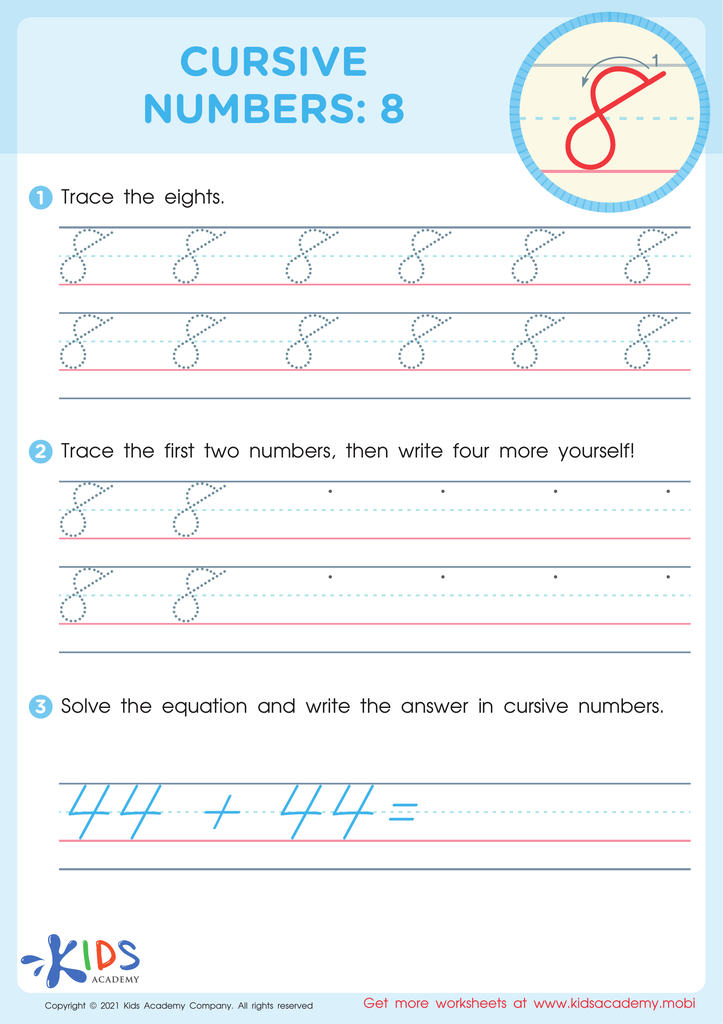
This tracing sheet helps your kids learn to write the cursive number 8. It's perfect for those struggling with handwriting. They'll trace the number 8, write it on their own, then solve a simple math equation and answer in cursive. Counting and writing numbers correctly is essential, so help your kids master it with this worksheet!
Cursive Numbers: 8 Worksheet
Worksheet
Cursive Numbers: 3 Worksheet


Cursive Numbers: 3 Worksheet

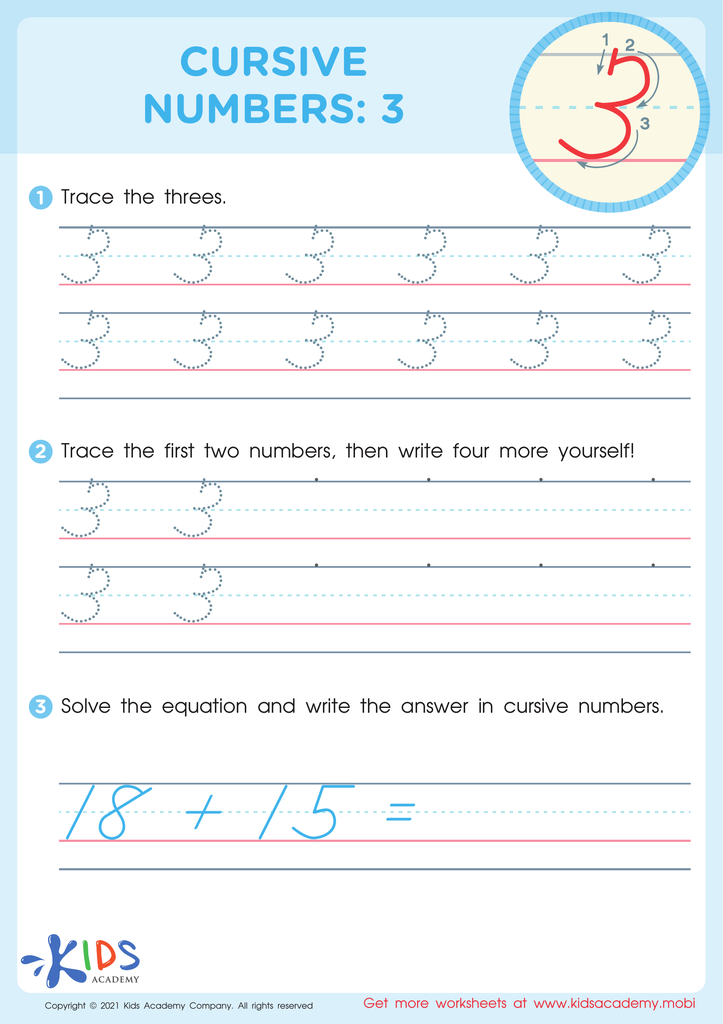
Help your child learn to write with this exercise. They'll practice tracing lines to write the cursive 3 until they gain the skill and confidence to do it on their own. Then have them write the 3 and solve the math equation on the worksheet. You can watch and encourage them as they progress. Writing is a key lesson, so offer your help to ensure they succeed.
Cursive Numbers: 3 Worksheet
Worksheet


Parents and teachers should care about number recognition in cursive for ages 7-8 for several key reasons essential to a child’s development. First, learning to recognize numbers in cursive not only reinforces basic numerical understanding but also integrates fine motor skills with cognitive processes. Cursive writing enhances hand-eye coordination and promotes neural connections that sharpens overall literacy skills, benefiting academic performance across subjects.

Secondly, being able to read and write numbers in cursive ensures children can effectively interpret diverse forms of written information—a skill valuable in real-world scenarios. Since cursive writing may still appear in various texts and historical documents, familiarity with cursive numbers bridges the gap between conventional and digital literacies, customizing to varying needs and contexts.

Furthermore, nurturing this skill boosts confidence and independence. Children who adeptly handle unique challenges such as interpreting cursive script demonstrate adaptability and a sense of achievement, which positively impacts their self-esteem. Finally, this learning process also conforms to holistic education ideology, supporting not just rote learning, but comprehensive cognitive enrichment preparing children to tackle complex tasks with a grounded, strong grasp of foundational concepts like number recognition. Both at home and in the classroom, encouraging such cross-functional learning early builds a resilient academic structure for future learning milestones, benefiting holistic children’s development.