Phonics skills improvement Grammar Worksheets for Ages 7-8
3 filtered results
-
From - To
Enhance your child’s phonics skills with our engaging Grammar Worksheets for ages 7-8! Tailored to support young learners, these worksheets offer a fun and interactive way to improve phonetic awareness, decoding skills, and overall reading proficiency. Each activity focuses on blending sounds and recognizing letter patterns, making learning enjoyable and effective. Designed by educators, our resources encourage independent practice while reinforcing essential grammar concepts. Perfect for supplementing classroom learning or as a homeschooling resource, these printable worksheets ensure your child builds a strong foundation in phonics. Discover the joy of learning and watch your child's confidence soar!
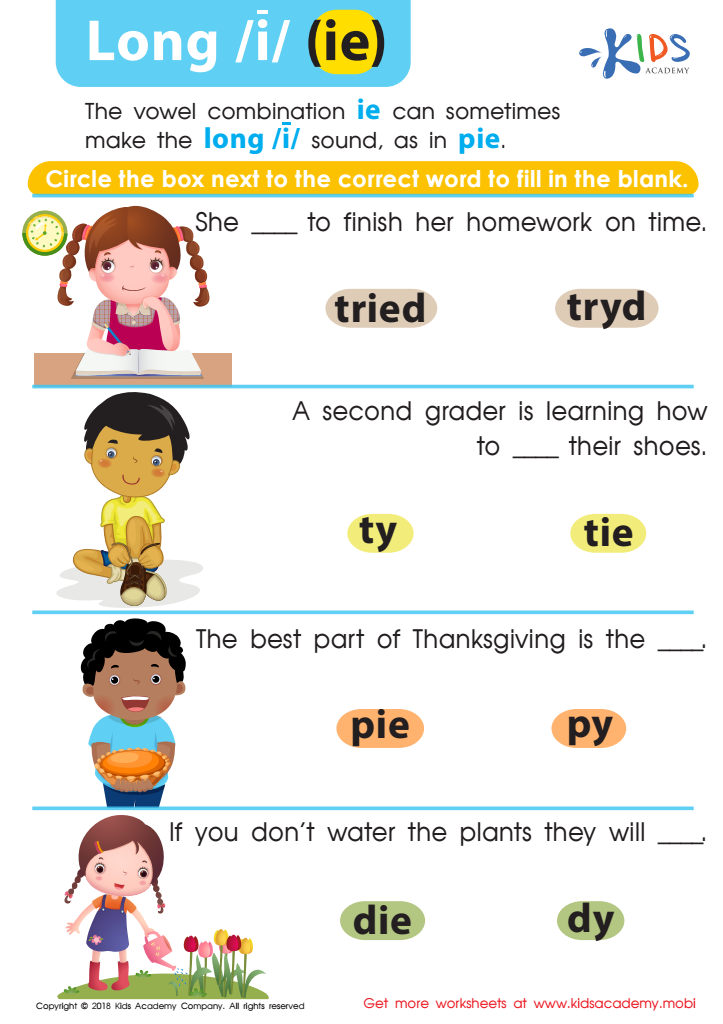
Reading: Long I and IE Worksheet
 Assign to My Students
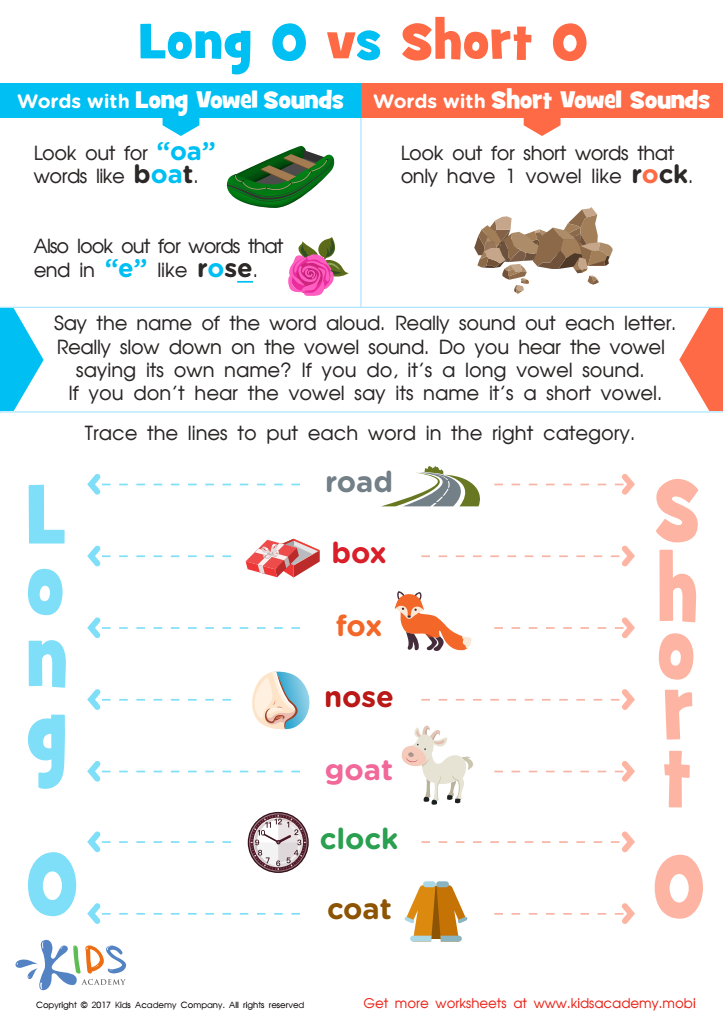
Long and Short Vowel O Spelling Worksheet
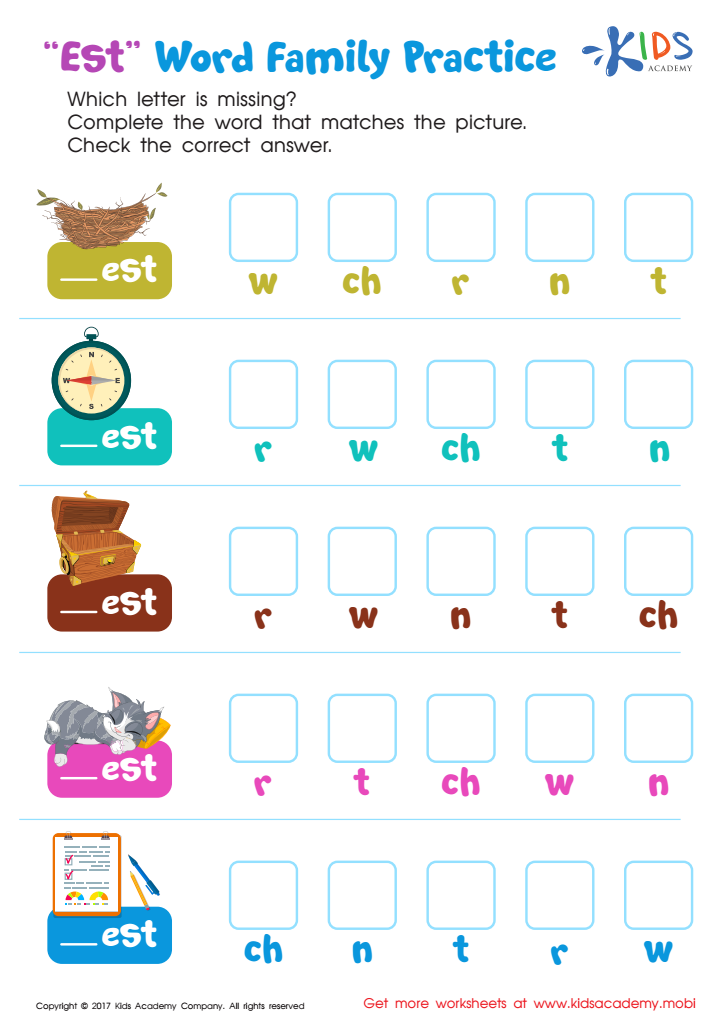
Words Family "est" Spelling Worksheet








Phonics skills are essential for children aged 7-8 as they serve as a foundation for reading and writing. At this age, children transition from learning to read to reading to learn, making phonics particularly crucial. The understanding of phonics helps children decode words, improving their ability to comprehend text effectively. When students master phonemic awareness and the relationship between sounds and letters, they become more confident readers and can tackle more complex raw material across subjects.
Moreover, phonics is intricately linked to grammar and overall literacy development. Through phonics instruction, students learn to segment and blend sounds which is directly applicable to spelling—an important aspect of grammar. Proficient spelling supports clarity in writing and communication, ensuring that a child's message is understood.
Parents and teachers should prioritize phonics instruction to provide students with the skills necessary for academic success. Improved phonics skills lead to enhanced reading capabilities, which foster a lifelong love for reading. As children progress in their literacy skills, they become more engaged learners, ultimately boosting their self-esteem and motivation in school. Supporting phonics skills in this critical age not only fosters immediate academic growth but also lays the groundwork for future learning.








